

Is PA school hard?
Here is a question I get asked all the time: Is PA school difficult?
Of course, in many ways, it is equally as rigorous as medical school.
The didactic part of PA school (your first year) is made up of traditional academic classes. In many ways, it is like studying for an important final exam for an entire year straight. You spend eight hours a day in class for the whole year, and then you go home and still have four or six hours of studying left. It is as close as you can get to cramming four years of medical school content into one year.
As students in the first year of our didactic portion at Rutgers University PA program, we took many of our classes alongside medical students.
Although we were graded independently of the medical students, we were still required to maintain a very high score.
Just one score below the required percentile landed you in remediation. Another low score was grounds for dismissal from the program! I saw this happen more than once. In fact, we lost four students in the first year from our already small class.
This led to many long nights, pondering my decision to attend PA school. The tests were extremely challenging, and the breadth of material was, at times, overwhelming.
Once I received my National Health Service Corps scholarship, I had another layer of stress: Failure to pass meant a default on my NHSC loan with a requirement to repay 3x the loan amount without a corresponding degree from PA school. Ouch!
Sitting for exams with this knowledge hanging over my head was sometimes intolerable.
Beyond The Classroom
Once you reach the clinical phase, life can either be a joy or hell on earth.
Here is an example: I had the chance to study under the esteemed tutelage of Dr. Dick during my surgery rotation. He did everything in his power to live up to his name. His pet peeve was a shaky hand on the endoscopy camera (a task often given to students). One of my classmates passed out with said camera in hand in a last-ditch attempt to remove any shaking in her knees. Nothing like waking up on the ground of an operating room with a man by the name of Dr. Dick cursing you up a storm!
- Residents could be kind and supportive or slave drivers.
- Days could be short and sweet, or long laborious hours or all-nighters.
And yes, during your clinical's you still have to find time to study for exams.
Because Your Brain Grows
My 4-year-old daughter reminded me last week that when "I make a mistake, my brain grows." I absolutely love this idea, and it is mostly accurate. That being said, this concept can be difficult to stomach in medicine, where one small mistake can mean the difference between life and death.
The truth is, PA school makes your brain grow. ALOT!
Despite the obvious stress, the challenges, and the virtual high bar, we all must clear. PA school will make a better version of yourself.
Like all brain growth, it can be painful before it is rewarding.
Looking back, I am so glad I pushed through the self-doubt, the mistakes, and the difficulties.
At times, the process is arduous, but if you love medicine, science, puzzles, and people, the path is one of total joy and fulfillment.
You may also like
 Who Gets Into PA School in 2026? Here’s What You Need to KnowLeslie Mean is a 23-year-old single white female who presents to the PA school admissions committee on her second attempt to get …
 How Much Money Do Physician Assistants (PAs) Make?How much do physician assistants make in 2026? The latest AAPA, BLS & NCCPA data: $140K median pay, top-paying specialties, all 50 …
 The Perfect PA Program Picker: PA School Search, Sort, Match, and ApplyChoosing where to apply is one of the highest-stakes decisions of your pre-PA journey — and the data you use should never …

CASPA Personal Statement Help
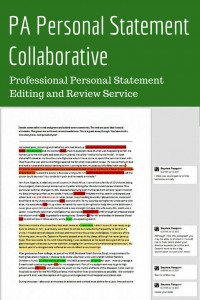 We offer comprehensive, start-to-finish personal statement assistance or help to perfect a draft you already have. We have services to fit every budget.
 Schedule a Live Recorded PA School Video Interview
We offer 60-minute mock PA school interviews with post-interview feedback and advice. Includes a recorded video of your interview that you can watch, download, or share with family and friends. There is no better way to prepare!
Schedule an InterviewPre-PA Consulting and Advising
 Our pre-PA coaching service consists of a 1-hour phone consultation focused on addressing your specific questions or concerns about becoming a PA and applying to PA school.


Thank you so much for this. Very well said.