 Trying to decide whether your PA school application is competitive can turn into a miserable comparison game fast. You see someone with a 3.9 science GPA, 5,000 hours of patient care, and a perfect-looking application. Five minutes later, your own path feels smaller than it did before.
This page is here to make comparison useful. Below are 117 anonymized, self-reported profiles from people who worked with The PA Life during the 2020–21 CASPA cycle. They include GPAs, GRE scores, health care experience (HCE), patient care experience (PCE), shadowing, volunteering, research, and more.
One important warning: These are applicant profiles, not 117 verified matriculant records, and they are not national averages. They are a snapshot of one group from one application cycle. Use them to notice patterns and possible gaps, not to predict whether you will be accepted.
What current PA school applicant data shows
The 117 profiles are still useful, but they need current context. The latest national figures available from the PA Education Association (PAEA) are much larger datasets:
- In the 2025–26 CASPA Applicant Trend Report, PAEA counted 35,280 applicants. Their average cumulative undergraduate GPA was 3.48, and their average cumulative undergraduate science GPA was 3.37.
- In the 2024–25 CASPA Matriculant Report, PAEA counted 13,195 matriculants. Their average cumulative undergraduate GPA was 3.68, and their average cumulative undergraduate science GPA was 3.61.
- PAEA's Student Report 6, based on survey responses from students who entered PA school in 2022, found a median self-reported undergraduate GPA of 3.7. Among respondents reporting prior direct patient contact, the median was 3,200 hours. The report also found that 96.1% of respondents had worked in a health care field before PA school.
Those numbers are reference points, not admissions cutoffs. The reports cover different cycles and populations, and the detailed student survey does not include every PA student or program. You also do not need to look exactly like the average. A strong upward academic trend, thoughtful program selection, meaningful patient care, service, recommendations, writing, and interview performance can all change how an application is read.
What would these applicants match with today?
I ran three of the better-documented profiles below through PA Program Match AI on September 2, 2026. I entered only what each person reported. I left prerequisite courses, location, tuition, PA-CAT, and CASPer blank because the old profiles did not include them.
| Archived profile | Stats entered | Free score | Programs eligible |
|---|---|---|---|
| Applicant 33 | 3.39 cGPA, 3.41 sGPA, 4,920 PCE hours, 1,338 HCE hours, 18 shadowing hours, GRE taken | 76/100 | 352 of 356 |
| Applicant 65 | 3.73 cGPA, 3.54 sGPA, 972 PCE hours, 70 HCE hours, 56 shadowing hours, GRE taken | 77/100 | 277 of 356 |
| Applicant 107 | 3.51 cGPA, 3.36 sGPA, 2,900 PCE hours, 320 HCE hours, 25 shadowing hours, GRE not reported | 76/100 | 353 of 356 |
The surprise is applicant 65. This person had the highest GPA and the highest overall score of the three, but qualified for the fewest programs. The reason was simple: 972 PCE hours fell below the published minimum at 79 programs. The tool found that reaching about 1,000 hours would open most of them.
These are partial-profile results, not admissions odds. "Eligible" means a program passed the filters we could test with the information reported in 2020. Missing prerequisites or other program-specific requirements could shorten each list, and the totals will change as schools update their requirements.
Run your own stats through PA Program Match AI. The free report gives you a competitiveness score and your current eligible-program count. Add your prerequisite courses for a more useful result.
Already interviewing? This is the point where GPA and PCE stop doing the talking for you. You can practice two complete PA school interview questions free with Maya and get immediate coaching on the clarity, structure, and specificity of your answer.
Use comparison as research, not a verdict
I know the feeling. I have looked at someone else's 10,000 volunteer hours, 3.86 cGPA, or impossibly polished pre-PA profile and felt that familiar drop in my stomach.
Comparison itself is not the problem. The trouble starts when “she has a higher GPA” becomes “I am not good enough.” That leap feels convincing, but it is not useful and it is rarely true.
Instead, treat comparison as research. Find applicants who look roughly like you across two or three measures, then ask a practical question: What can I still improve?
Maybe a 3.90 science GPA is not realistic before you apply, but two strong upper-level science courses are. You may not have gone to a prestigious university, but straight A's at a community college still count. If you are short on patient care, you can choose a role that adds real contact with patients and gives you experiences worth discussing later.
If you find a weak spot, replace “I am not good enough” with something that leaves room to move:
- I'm working on it.
- I'll get there too.
- I'm on my way.
- I'm grateful for what I already bring.
Then make the comparison concrete. Check your target programs' current prerequisites, minimums, deadlines, and experience rules in the PA Program Picker. If a metric needs attention, read how to address a weakness without making it the center of your personal statement. And remember, there is no single perfect PA school candidate.
117 self-reported CASPA applicant profiles from 2020–21
These profiles were shared by clients who worked with The PA Life on mock interviews or personal statement editing. We have kept their original figures and wording as a historical snapshot.
Abbreviations include cumulative GPA (cGPA), science GPA (sGPA), biology/chemistry/physics GPA (BCP GPA), health care experience (HCE), patient care experience (PCE), and letters of recommendation (LOR). CASPA asks applicants to choose the experience category that best matches their duties, but program definitions and requirements can differ.
One final caution before you start: the GRE scores below reflect the 2020–21 cycle. Do not assume your programs still require the exam. Confirm the current policy on each program's official admissions page before you spend time or money preparing for it.
- GPA: 3.36 sGPA: 3.66 BCP GPA: 3.71 HCE Hours: 6,000 as a Paramedic 4,000 as an EMT-Basic Volunteer experience: 100 hours as an EMT/Front desk receptionist for a non-profit organization providing primary care for low-income Nevada-Residents. Research experience: 500 hours in organic chemistry, synthesizing lipophilic beta-lactam antibiotics for Citrus Greening Disease
- GPA: 3.0, 3.3 Science, 3.9 last 60 hours ~750 hours Physician Shadowing in Emergency Department ~130 hours PA shadowing in Psychiatrists, Geriatrics, Family Medicine ~12,000 hours, or 5 years of direct patient care experience in acute inpatient psychiatric, Emergency Psychiatric, Pediatric Emergency Department and Wound care as a nurse assistant and medical scribe. -3.97 GPA post-bachelor GPA, including all pre-requisites, and most sciences showing a significant upward trend in coursework compared to undergraduate GPA of 2.9.
- GPA: 3.4 SGPA: 3.18 Last 60 credits GPA: 4.0 HCE hours: 5,000
- GPA: 3.54 SGPA: 3.29 post baccalaureate: 47 units at 4.00 HCE Hours: 9,000 Non- healthcare volunteer hours: 2,000
- GPA: 3.6 MCAT: 512 Direct Patient Care Hours: More than 2000
- Graduate of the University of Texas at Austin with honors, May 2017, University GPA 3.7792 CASPA GPA overall undergraduate 3.82 CASPA Science overall 3.59 CASPA overall non-science 3.93 Complete CASPA application is attached
- GPA: 3.57 SGPA: 3.73 HCE HOURS: >4,090 PA shadowing hours: 50 MD shadowing hours: 50
- GPA: 3.75-3.8 SGPA: 3.75-3.8 HCE Hours: 2,000+ as a MA, 2000+ as scribe/implementation manager at scribe company
- GPA: 3.48 SGPA: 3.20 HCE: over 4,000 GRE: 322 (160 Q / 162 V) 5.0 writing
- GPA 3.86 SGPA 3.86 HCE ~4000
- I have 2,892 HCE hours (most of them coming from working as a MA in a cosmetic surgery office, 250 hours from hospital volunteering, 260 hours from a primary care clinic, 75 shadowing hours with 3 PAs, etc. 3.75 GPA, 22 years old, first-time applicant
- GPA-3.5, I am currently working at a hospital as a MA and unit secretary
- CGPA- 3.83 SGPA-3.77 Last 60 credits- 3.92 GRE-321 Patient care hours -3000 BLS instructor- 100 hours 3 associate degrees- liberal arts, elementary education, and radiography Bachelors (4/21) General studies with concentrations in- health science, math, psychology
- cGPA is 3.58 and sGPA is 3.2 (based on my own calculations). My aim is to apply as early as I can once CASPA opens this cycle, and I should have a total of about 2,200 direct patient care hours. I also have about 130 hours right now as a Crisis Counselor for the Crisis Text line, 20 hours for NY Cares, and 245 hours with Red Cross. I have 558 hours of hospital volunteering at a Brooklyn hospital. I had also been a private tutor for about 3 years, teaching elementary school kid’s basics of math and science and helping them with schoolwork and homework.
- cGPA: 3.12 sGPA: 3.1 Last 90 Cr GPA: 3.9 PCE Hrs.: 4000
- GPA-3.42 SGPA-3.26 About 2100 hours scribing in the emergency department
- GPA: general: 3.4 science: 3.7 HCE + PCE: 1000+
- GPA: 3.5 HCE hours: 1300 GRE: 300
- GPA- University of Michigan 3.75 GRE- 316 Verbal and Quant PCE Hours- Around 2500 hours
- HCE hours: 7,659 hours undergraduate GPA: 3.11 undergraduate sGPA: 2.92 post-baccalaureate GPA: 3.87; 13-semester units I am a first-generation college student striving to add diversity to the healthcare field. My goal is to work in primary care to offer medical services to underserved and underrepresented communities. Despite my academic setbacks, I have continued to enhance my academic record by enrolling in a post-baccalaureate program, thus demonstrating my commitment to the PA career, and ultimately the underserved communities that I wish to serve.
- GPA: 3.6 SGPA:3.46 PCE: 2100 HCE: 394 Research: 192 - I have around 22 hours of Virtual Shadowing, I could not find any shadowing opportunities during COVID. - Letter of Recs: Clinical Manager, Director of Eye Mobile, Professor (Medical Anthropologist) *** No PA letter
- GPA: 3.41 SGPA: 3.46 HCE/PCE: 6,500 hours combined from ambulance, urgent care, and emergency room Shadowing: 60 hours in ortho PA clinic Volunteer: 200 hours LOR: Charge nurse in ER, ER nurse, ER physician assistant
- Undergrad Major: Neuroscience Overall GPA: 3.3 SGPA: 3.25 HCE Hours: 1850 GRE: 316 Volunteer hours: 500 Research: 200 hours Shadowing: 150 hours
- Undergrad GPA: 3.7 Certificate in Molecular and Biological sciences GPA: 3.30 Broward College required coursework GPA: 4.0 HCE hours (volunteer scribe): 650 hours
- Science GPA: 3.67, cumulative GPA: 3.5, 6,000+ clinical hours, and about 6,000+ volunteer hours.
- GPA: 3.4 SGPA: 3.12 HCE Hours: 3,308 Volunteer Hours: 336 Multiple service immersion trips to third world countries.
- GPA: 3.23 SGPA: 3.17 HCE/PCE: ~10,000 Volunteer Hours: ~500 Shadowing Hours: ~50
- Science GPA: 2.90 Cumulative GPA: 3.4 HCE: 3500 hours 1 $125.00
- 3.24 GPA, 3.45 sGPA 4k+ hours as a medical scribe Simulator assistant for ER residents Volunteer hours 100 3 years restaurant experience
- Stats are included in CV cGPA - 3.37. sGPA - 3.72. post-baccalaureate GPA - 3.95(70+ credit hours.)
- 3.08 sGPA, 3.46 cGPA, and about 3000 PCE at the time of application.
- Undergraduate GPA - 3.2 Graduate School GPA - 3.7 Clinical Hours: 8,000+ Consisting of medical scribing, optician, ABA therapist, back-office manager, and ophthalmologist technician Volunteer experiences consist of grant writing, hospital volunteer, and soup kitchens.
- Overall GPA: 3.39 Undergrad Science GPA: 3.41 post-baccalaureate science: 4.00 GRE verbal: 163 (93%) GRE quant: 167 (90%) GRE written: 5.0 (90%) Patient Care hours: 4,920 Healthcare hours: 1,338 Research hours: 379 Shadowing hours: 18 Volunteer hours: 290
- GPA: 3.32 SGPA: 3.4 HCE Hours: 2974 Volunteer Hours: 240 Research Hours: 2738
- HCE hours: Therapy Aide 248 hours Research Assistant 3,384 hours PA Shadowing 192 hours GPA: Undergrad overall 3.33 Overall with post-baccalaureate work 3.46 Overall science 3.36
- GPA: 3.8 HCE HOURS: about 1,500 maybe a little over that SHADOWING HOURS: 156; 120 in a primary care setting and 36 in orthopedics
- GPA: 3.6 HCE: 1,920 PCE: 2, 060
- CASPA generated overall science: 2.97 CASPA generated post-bac science: 3.93 CASPA generated baccalaureate science: 1.38 CASPA generated baccalaureate: 2.92 **The school I applied to recalculates the CASPA GPA for repeated courses 397.42 hours of CNA paid work experience ongoing community service since high school
- GPA: 3.32 SGPA: 3.22 HCE hours: 3043
- GPA: 3.4 SGPA: 3.12 HCE Hours: 3,308 Volunteer Hours: 336 Multiple service immersion trips to third world countries.
- GPA: 3.23 SGPA: 3.17 HCE/PCE: ~10,000 Volunteer Hours: ~500 Shadowing Hours: ~50
- Science GPA: 2.90 Cumulative GPA: 3.4 HCE: 3500 hours
- GPA: 3.48 SGPA: 3.33 GRE: 315 HCE: 2100 (as an ER tech and PCA at an orthopedic surgery hospital) Volunteering: ~100 (medical mission trip to Nicaragua and a big brother's big sisters program) The only area where I am really lacking is my shadowing hours, I do not have any official shadowing hours of a PA, however in my application I addressed that I had tried since March but it was very difficult with COVID, and my experiences working directly alongside PAs in the ER gave me a strong comprehension of the PA role.
- GPA: 3.56 SGPA: 3.15 HCE: ~4500 Hours, CNA, Half in Neuro ICU, Half in Pediatric ICU
- GPA: 3.45 SGPA: 3.38 Patient Care Experience: 1056 Healthcare Experience: 2124
- Cumulative GPA: 3.54, Cum Laude Healthcare hours: total: 2,536 hours
- Overall GPA: 3.21 Science GPA: 3.25 GRE: 320 ED medical scribe for 2.5 years 5,200 MA at a rheumatology office since
- Interviewing for Texas Tech University, re-applicant and did not get an interview last cycle. Overall GPA: 3.31, Overall SGPA: 3.30 Undergrad GPA: 3.20, Undergrad SGPA: 3.11 Graduate GPA: 3.90 Graduate SGPA: 3.90 Post-Baccalaureate SGPA: 4.00 Healthcare Hours: 4600+
- Oregon State University: GPA: 3.58; Major: Biology; Minors: Chemistry, Psychology, Medical Humanities post-baccalaureate at Portland State: GPA: 4.00
- GPA: 3.56 SGPA: 3.38 HCE: Clinical care extender 300 hours and Scribe over 1000 hours
- A non-traditional applicant with a degree in Business Administration GRE - 315 GPA - 3.48 SGPA - 3.42 HCE Hrs. - 4100 PCE Hrs. - 1831 BLS, ACLS, First Aid certified
- Overall GPA 2.8, SGPA 3.27, Post-bac 3.95, post-bac science 3.95, PCE hours 5168, HCE hours 1248, volunteer hours 1058.
- cGPA: 3.36 sGPA: 3.46 HCE: 220 hours as a pharmacy technician PCE: 1944 hours - Very strong upward trend in GPA (last 60 credits ~3.9)
- BA GPA: 3.1 post-baccalaureate: 3.8 HCE hours: 3k+ Veteran - 11 yrs. active duty
- GPA: 3.62 sGPA: 3.24 Hours: 1,040 as a rehabilitation aide
- GPA science 3.7, GPA cumulative 3.63 265 service hours 35 hours shadowing
- SGPA- 3.60, GPA- 3.47, Post Bac- 4.00 15,000 HCE hours
- Cornell University GPA: 3.297 Utah Valley University GPA: 4.0 CNA HCE Hours: 750 hours Research at Cornell University: about 2 years with a paper about to be published
- Undergraduate GPA - 3.82 master’s in science GPA 3.4 master’s in teaching GPA 3.82 Healthcare hours - Volunteer for Hospital Elder Life Program - similar to physical therapy aide (August 2016-March 2020) 4 years 632 hours - Medical Assistant - Podiatry (Summer 2005) 520 hours
- GPA 3.1, SGPA 2.97, HCE hours 26,000 Last 100 hours GPA 3.76
- cGPA: 3.62 sGPA: 3.51 PCE hours: approx. 1000
- Overall GPA: 3.41 Science GPA: 3.33 Direct Patient Care Hours: 2520 Healthcare Related hours: 2680
- Health care experience: 6550 hours Medical technologist: 6300 hours (3 years and a couple of months) Research experience: 250h Patient contact hours = 253 hours so far GPA 3.30 Shadowing hours(non-pa): 137 hours Other volunteer hours: 25 hours
- -GPA: 3.64 -SGPA:3.43 (undergrad) - post-baccalaureate courses science and overall GPA: 4.0 -HCE: 2 years as a medical assistant (1 year in Women's Health, 1 year in Orthopedic Surgery) -Volunteer: 125 hours of volunteer work in the Emergency Department of Antelope Valley Hospital in California -I Played collegiate lacrosse, was a junior and senior captain
- Bachelor of Science in Neuroscience from The Ohio State University Cumulative GPA: 3.73 Science GPA: 3.54 GRE Scores: Verbal- 158, Quantitative- 154, Analytical Writing- 4.5 Patient Care Hours as of 10/23/2020: Around 972 hours as a Patient Care Assistant at Nationwide Children's Hospital HCE: 70 hours from volunteering at a hospital Shadowing PA hour: 56 hours Volunteering hours: 156 hours
- As reported by my undergraduate school (3.64 Overall GPA, 3.46 Science GPA). As reported on CASPA (3.55 Overall, 3.40 Science) 2,000 healthcare experience hours as a Patient Care Technician on a medical-surgical unit at Samaritan Hospital in Troy, NY. 35 hours of shadowing a hospitalist PA
- GPA-4.0 SGPA- 4.0 HCE HOURS- 1500
- GPA: 3.35 SGPA: 3.28 These were my calculated GPAs at the time of submission, but I since have taken 2 classes that are also on my application. ~800 HCE, ~400 PCE
- GPA: 3.56 SGPA: 3.33 HCE Hours (at time of applying): 1,400 as a medical assistant, 350 as a behavior technician, and 618 as a CNA
- GPA: 3.82 HCE hours: Around 220
- HCE Hours - 4,500 GPA: 3.7 SGPA: 3.5
- cGPA: 3.11 sGPA: 3.09 BCP GPA: 3.07 HCE: 16,000 EMT and ED tech
- 2000+ Clinical hours working as an A-EMT for a 911 service in the 5th largest county in TN GPA 3.58 5 Years professional experience managing a pediatric office. Total of 2 years spent abroad in Central and South America. for 7 months, I was enrolled in one-on-one Spanish lessons.
- GPA 3.66 SGPA 3.66 Patient care hours as a transporter: 1400 hours
- GPA- 8.2 HCE Hours- 220
- overall GPA: 3.3 Science GPA: 3.8
- GPA: 3.73 SGPA: 3.51 BCP: 3.41 Patient contact hours: 10,788
- GPA: 3.29 SGPA: 3.01 HCE Hours: 1838 and counting
- 5 years US Navy Corpsman with ~10000 hrs. of HCE in military 2 years as a PET/CT assistant with ~2000 hrs. HCE 1 year of Medical Assistant Certified Float ~2080 HCE Weekend duties of COVID-19 testing 3.11 sGPA ~50 hrs. of PA shadow hrs.
- GPA:3.52 SGPA:3.59 PCE: ~10,800 2nd cycle applying
- GPA 3.5 HCE- around 5000 hours
- Overall GPA: 3.94 Patient Care Hours -CNA: 500 hours -PCA: 237 hours (currently working part-time while taking classes)
- GPA 3.02, HCE hours 9408 as a Paramedic and 1248 as an EMT. I was a member of SWE, Society of women engineers, where I held a leadership position to support the HeForShe movement across the country. I shadowed at Arrowhead regional medical center ER for 40 hours and gave me a better view of the daily task of a PA.
- 68 GPA, 2500 HCE (unpaid) Hours, 50 PA shadowing hours
- overall GPA - 3.14 / science GPA - 3.10 / last 118 units including prerequisites - 4.0 / undergrad GPA from 1999 - 2.3 - HCE hours (ED scribe) - 400 - volunteer hours (food bank, kitchen, hospital) - 600 - GRE - 327 (164 Q, 163 V) - Second career applicant with a 20-year career in entertainment marketing
- Overall GPA: 3.39 Science GPA: 3.26 - Undergraduate: University of Washington Seattle - Biochemistry major, Geography minor - Post-Bac: Local community college - Gen chem, psych, major cellular - Graduate Certificate: University of Washington Bothell - Software engineering PCE Hours: 2367 - Medical Renal CNA = 1023 - Assisted Living Medication Technician = 1176 - Assisted Living CNA = 168 HCE Hours: 1144 - Primary Care Scribe = 888 - Primary Care Scribe Ambassador (leadership position) = 256 Research = 343 - Neurology Undergraduate Research Assistant = 343 Teaching Experience: 24 - Computer Science / Biology College Tutor = 24 Non-healthcare hours = 2200 *Working since age 16. The 2200 hours is from undergraduate years* - Restaurant cashier = 1760 - Starbucks Barista = 440 Volunteer: ~100 - Volunteer driver for cancer patients = 20 - Teacher assistant at Guatemalan school = 80 Shadow hours: 16 - ARNP = 8 - PA-C = 8 Letter of Recommendations: 4 - RN: Med Tech Supervisor at Assisted Living - Senior Associate Faculty (Biology) - MD: Family Physician (used to teach medical students and PA-S, unsure if this was mentioned in LOR) - Senior Lecturer (Computer Science)
- GPA - 3.64/4.00 SGPA - 3.57 HCE hours - direct: 2192, indirect: 864
- My GPAs are BCP - 3.86, bachelors GPA - 3.6, post-baccalaureate GPA - 3.94, sGPA - 3.86, overall GPA - 3.73. Before joining the Peace Corps, I volunteered three or so hours a week for six months as a patient-visitations volunteer (68 hours). I have 250 hours as a volunteer medical interpreter on eight medical brigades in Ecuador over a six-year period, some of which were while I was a Peace Corps Volunteer, and others were after I completed my service. I started volunteering as a medical interpreter at the student-run clinic at CU this month, and last month I got a job as a dialysis patient care technician, which will be all direct patient care. I'm still in training and haven't started cannulating patients yet, but I collect patient data like symptoms and vitals and calculate and program their treatment into the dialysis machine. I think I'll have started cannulating and removing needles before my interview date, but I will not have fully completed training yet. I have only shadowed two PAs, but I have interacted with a lot of PAs through our state organization, the Colorado Academy of Physician Assistants (CAPA). I'm a member and have a small role on a committee.
- GPA - 3.913 health care hours - 300+
- GPA 3.67 Worked as a sport’s medical assistant and phlebotomist through college x 4 years, pathology tech x 2 years, medical assistant x 1 year, scribe x 3 months, care coordinator currently. Shadowed PAs in pediatric oncology, general surgery, ENT. Really want to go into surgery
- GPA 3.1 24000 HCE hours
- GPA: 3.58 SGPA: 3.43 HCE: 2,500 (~2,200 patient care experience) GRE: 149V, 159Q, 4.0A
- MD from Overseas in the middle east GPA 3.1. Hours are over 7000 hrs. hands-on patient care
- GPA: 3.78 SGPA: 3.64 PCE: 980
- GPA: 3.22 SGPA: 3.17 HCE Hours: 2706 to date PCE Hours: 3978 to date
- cGPA: 3.69, sGPA: 3.70 HCE: 1240 (1800 now)
- Here are my stats: GPA 3.66 sGPA 3.62 GRE v160 q164 writing 4.5 HCE 7940 clinical research PCE 1166 As of 9/23 - 2 interviews completed: 1 waitlisted (in-person MMI/group/individual/essay)
- Institutional GPA: 3.5 Cumulative GPA 3.2 >500 direct pt. care hours as an EMT
- GPA: 3.46 SGPA: 3.37 HCE Hours: Around 2,900 Attached is my Resume & Personal statement on the same document.
- A non-traditional applicant with a degree in Business Administration GRE - 315 GPA - 3.48 SGPA - 3.42 HCE hrs. - 3146 PCE hrs. - 1831 BLS, ACLS, First Aid certified
- GPA: 3.5 for a biology degree. 4.0 for surgical technology certification Patient contact hours: around 7,000 total
- GPA 3.95 SGPA 3.91 HCE ~ 4k
- GPA: 3.45 SGPA: ~3.5 HCE Hours: ~6,000
- CASPA Overall GPA: 3.54 CASPA Overall Science GPA: 3.70 HCE + PCE about 6,000 hours 5 LOR's
- My GPA for the required sciences is 4.0. I am an unconventional student (RN for 11 years and returned to school in my late 30s for PA school pre-reqs) which I think has advantages and disadvantages as an applicant.
- GPA-3.67 SGPA-3.11 HCE- 5325 hours
- cGPA: 3.51 sGPA: 3.36 PCE: 2900 hours HCE: 320 hours Volunteer: 224 hours Research: 100 hours Shadowing: 25 hours I have a significant upward trend in my GPA. In chronological order, the GPAs for my 8 semesters were 3.13, 2.78, 3.72, 3.60, 3.38, 3.92, 3.91, 4.00.
- Overall GPA 3.3 Overall Science 3.2 applied with 3100 PCE hours 400 Volunteer hours 230 HCE hours 302, 4.0 GRE
- GPA - 3.33 SGPA - 3.31 HCE Hours - 1,044 hours Relevant information: I withdrew from medical school last summer. This information has been explained in my personal statement as well as in most secondary applications.
- 3.84 = overall GPA, 3.88= science GPA, 2,000 HCE Hours now (1,600 when I applied)
- GPA: 3.69 SGPA on a trimester system: (freshman year) 3.57, 3.77, 3.19 (sophomore year) 3.78, 3.42, 3.75 (junior year) 3.44, 3.91, 3.90 (senior year) 3.78, 4.00, 4.00 HCE hours: 2500+ hours of direct hospital clinical care, 80 hours of direct patient care on a service trip
- Overall GPA: 3.40, Science GPA: 3.23 Freshman GPA: 3.12, Sophomore GPA: 3.31, Junior GPA: 3.50, Senior GPA 3.74 Cs in chemistry was able to retake one class. Got a D in biology but the college allowed me to retake it and the D was excluded from my college GPA, I do understand it is included in CASPA calculations. Internship at Chiropractic Office - Scribe/Medical Assistant - 462 hrs. EMT - 153 hrs. Shadow NP Obstetrics Unit - 32 hrs. Shadow PA Oncology Unit - 20 hrs. Shadow NP, PA, MD at Medical Office - 24 hrs. Teaching Assistant for Anatomy and Physiology - 450 hrs.
- HCE HOURS: 1,234 (PCE and HCE combined)
- GPA: 3.71 SGPA: 3.51 PCE: 550
- Overall GPA: 3.55 Science GPA: 3.50 Non-Science GPA: 3.64 PCE Hours: 1,426 HCE Hours: 90 PA Shadowing: 27 Volunteer Hours: 1,130 Extracurricular Hours: 1,560 (Zamana Bollywood Dance Team)
- GPA - 3.22 SGPA - 3.22 HCE - 632 volunteered in several settings PCE - 3400 as an EMT-B Research - 780 during undergraduate Shadowing - 63 only one PA I started college at a community college. At the time, I didn't know what I wanted to do, and I didn't put any effort into the classes. This caused my GPA to suffer greatly. I transferred to a four-year school and got all As and Bs except two Cs. The first was gen chem 2 and the second was biochemistry. Retook both and got an A in gen chem 2 and a B in biochemistry I am most concerned with biochemistry
- GPA: 3.26 GRE: Verbal 160 (86th Percentile) / Quantitative 150 (37th Percentile) / Analytical 4.5 (81st Percentile) HCE Hours: 0 PA Shadowing Hours: 82 Current Occupation: Naval Aviator, United States Navy Active-Duty Military Experience: 8 years Deployments: two
What should you do with your comparison?
Pick one or two changes that could genuinely strengthen your application, then stop comparing and get to work. If your GPA needs context, look at your academic trend and program minimums. If your experience is thin, focus on the quality and relevance of the hours you can still earn. If your list of schools is built mostly on name recognition, use the PA Program Picker to rebuild it around fit.
And if an interview invitation has arrived, congratulations. Your written application opened the door. Now practice saying the stories behind these numbers out loud, clearly and honestly, with Maya in The PA Life Interview Studio.
Sources and update notes
- PAEA CASPA Resources for Programs: 2025–26 Applicant Trend Report and 2024–25 Matriculant Report, updated May 19, 2026.
- PAEA Student Report 6: data from the 2022 Matriculating Student and End of Program Surveys, released in 2025.
- CASPA: How your GPA is calculated.
- CASPA experience categories and definitions.
Last reviewed September 2, 2026. The 117 applicant profiles remain a 2020–21 archive; the national benchmarks above were updated from the most recent public PAEA reports available on that date.
You may also like -
 CASPA Video Tutorial Section Three: Supporting InformationWelcome to part three of a five-part CASPA video series walking you through every step of your CASPA application from start to finish! In this video, we'll go over the third section of the CASPA application: Supporting Information.
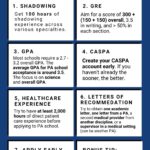
- The Ultimate PA School Applicant Cheat Sheet With 7 Quick Tips for Getting into PA SchoolHere is my ultimate PA school applicant cheat sheet with 7 quick tips for getting into PA school.
Do these seven things for the best chance of getting into PA school and becoming a physician assistant!
1. Shadowing: Get one […]
- 200+ PA Schools That Don’t Require the GRE
Are you like me and looking to dodge the GRE?
Does the thought of studying for the GRE exam make your palms sweat and your heart flutter?
Wouldn't it be great if you could find PA schools that don't require the GRE and simply avoid […]

CASPA Personal Statement Help
 We offer comprehensive, start-to-finish personal statement assistance or help to perfect a draft you already have. We have services to fit every budget.
 Schedule a Live Recorded PA School Video Interview

We offer 60-minute mock PA school interviews with post-interview feedback and advice. Includes a recorded video of your interview that you can watch, download, or share with family and friends. There is no better way to prepare!
Schedule an InterviewPre-PA Consulting and Advising
 Our pre-PA coaching service consists of a 1-hour phone consultation focused on addressing your specific questions or concerns about becoming a PA and applying to PA school.


Leave a Reply