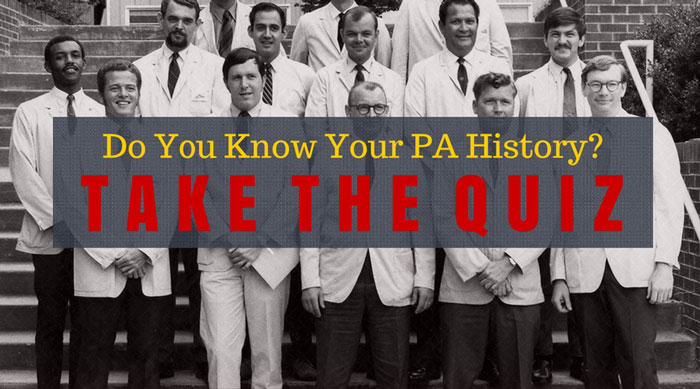
And the answer is . . .
You will have to take the quiz below to find out!
"Whoever wishes to foresee the future must consult the past."
I wish the title of this blog post were an attention grabbing exaggeration, but sadly it is true, I scored a 3 out of 25 on my PA history quiz.
Statistically speaking I would have done better had I let my cat pick the answers.
The truth is, even after 13 years in the PA profession and over three years writing content for this blog, I know very little about the history of my profession.
- Which nationally syndicated cartoon comic strip featured a physician assistant as a leading character?
- What year was the first national certifying examination for PAs administered?
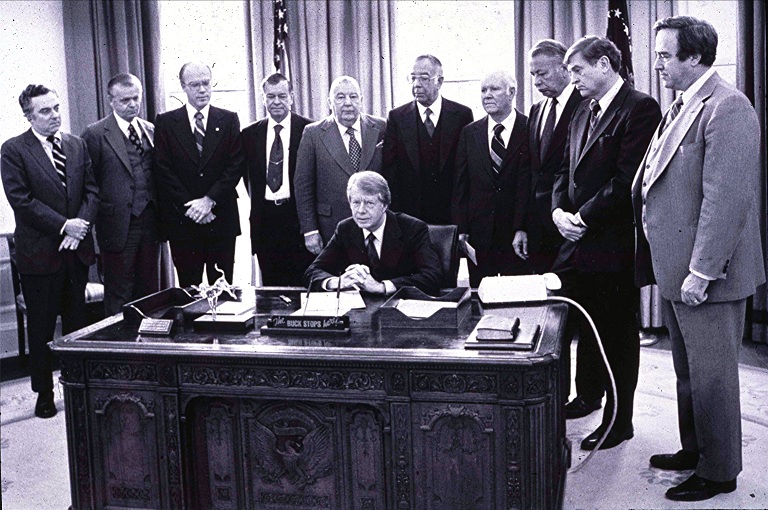
- Which First Lady attended and spoke at an AAPA Annual Conference while her husband was still in office?
Know your PA history and Ace your PA school interview
Want another reason to know your PA history?
When you are preparing for your PA school interview, you must make it a point to have a solid understanding of our profession. It will help you answer questions about why you want to be a PA. You will be able to explain what this means, not just from a personal perspective but a historical one.
How do we as PAs address the many professional challenges ahead? We look to the past and learn from it.
Know your history, and you will be hard wired to impress!
Below is a compilation of five quizzes offered by the Physician Assistant History Society. I have gathered these 25 questions into an interactive quiz that you can take below.
A serious thank you for the amazing work of the PA History Society for celebrating our profession and creating the quiz content.
I encourage you to take time and follow the links embedded in the exam, go down the "rabbit hole," read about and understand every element of our history. It will give you confidence, not only during your PA school interview but as you make a life and career for yourself as a physician assistant.
Now go ahead and see if you can beat my score.
PHYSICIAN ASSISTANT HISTORY EXAM
How much do you know about the PA profession
Question 1 |
A | New Jersey |
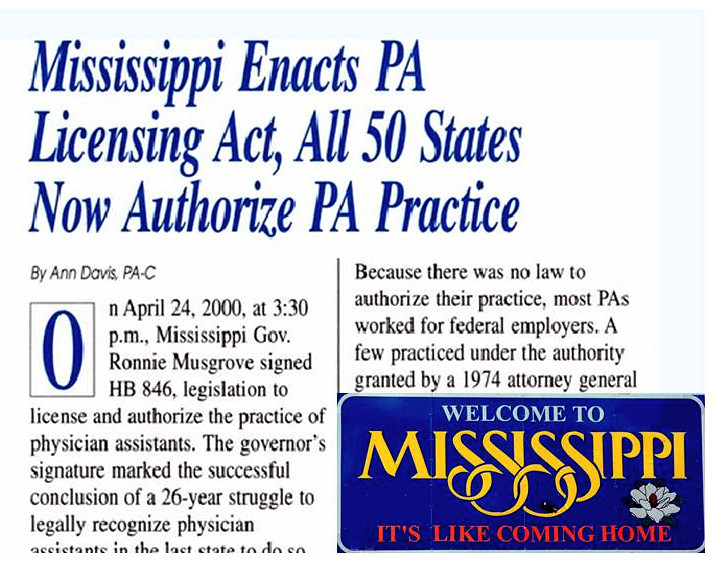
B | Mississippi |
C | Montana |
D | Louisiana |
Question 2 |
A | Dr. Hu Myers |
B | Dr. Eugene A. Stead, Jr. |
C | Dr. Richard Smith |
D | Dr. Charles Hudson |

Question 3 |
A | J. Jeffrey Heinrich |
B | Alfred Sadler |
C | William Stanhope |
D | Reginald Carter |
Question 4 |
A | Life Saver Then - Care Giver Now |
B | God Loves a Grunt |
C | Angels and Brothers |
D | Corpsman Up |
Question 5 |
A | Working as a nurse's aid in a long-term care facility |
B | Doing janitorial work |
C | Washing a car windshield at a gas station |
D | Grilling hamburgers at a fast-food restaurant |
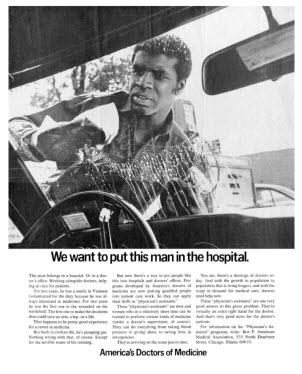
The accompanying photograph shows him washing the windshield of a car with the caption, “We want to put this man in the hospital.” The accompanying text relates that this young man spent two years as a medic in Vietnam on the battlefield saving “an arm, a leg—or a life.” Now in civilian life, “he’s pumping gas… a terrible waste of his training.” The advertisement goes on to inform the public and potential PA candidates about the development of PA educational programs to train individuals to help solve the shortage of doctors. “They’re [PAs] virtually an extra right hand for the doctor. And that’s very good news for the doctor’s patients.”
From the Military Corpsmen RanksQuestion 6 |
A | Cathy |
B | Mary Worth |
C | Gasoline Alley |
D | Beetle Bailey |
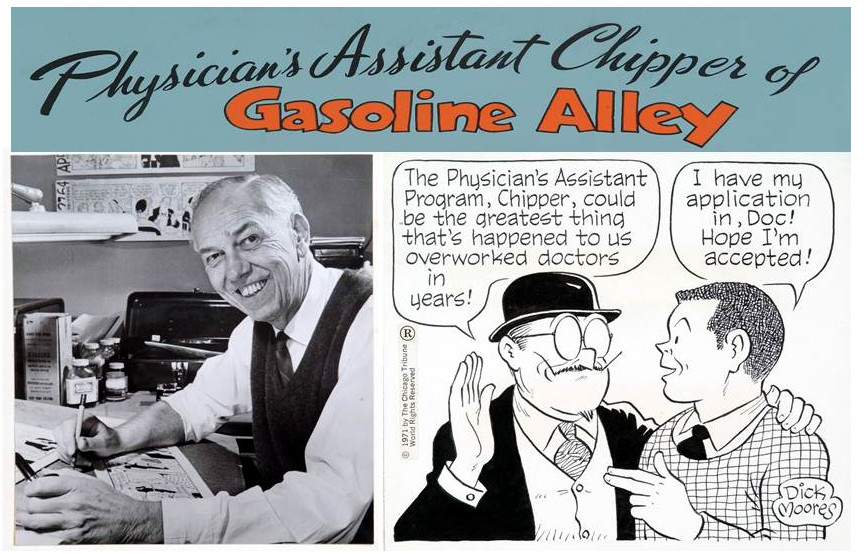
In 1970, Dr. Robert Howard, the director of the Duke University PA Program, contacted cartoonist Dick Moores to ask him to consider having a PA included in the comic strip, Gasoline Alley. The following year, with background material supplied by Howard, Mr. Moores depicted Doc, the town's general practitioner, introducing Chipper Wallet to the PA concept. Chipper was an ex-military corpsman who served in the US Coast Guard in Vietnam. In the strip, Doc encourages Chipper to apply for PA training and return home to help him with his practice. Dick Moores joined Frank King, the creator of the comic strip Gasoline Alley, in 1956.
Marketing the PA ProfessionQuestion 7 |
A | Montefiore Medical Center |
B | Norwalk Hospital/Yale University |
C | Howard University Hospital |
D | Cedars-Sinai Medical Center |
Montefiore's Physician Assistant residency is the oldest postgraduate residency program in the country. It was established in 1971 at the Montefiore Medical Center in Bronx, NY by Marvin Gliedman, MD, Richard Rosen, MD, and Clara Vanderbilt, R-PA. Montefiore became the first hospital to include PA's as house officers on inpatient surgical services. Those PA's quickly became an integral part of the surgical team at Montefiore and their clinical experience was formalized into a 12 month residency in general surgery and surgical specialties.
Montefiore PA Surgical Residency ProgramQuestion 8 |
A | Physician's Assistants: Partners in Health Care |
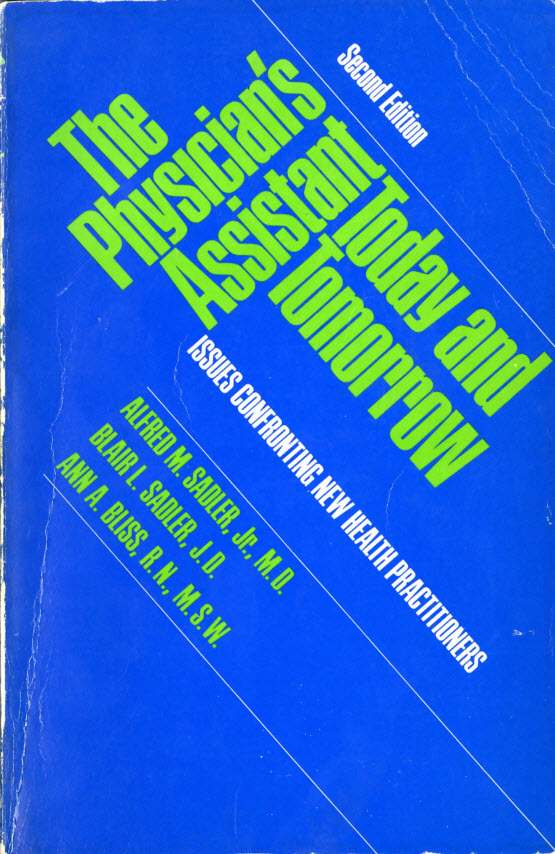
B | The Physician's Assistant: Today and Tomorrow |
C | The Physician Assistant: Innovation in the Division of Medical Labor |
D | Physician Assistant: Their Contribution to Health Care |
The Physician's Assistant: Today and Tomorrow was published by Yale University Press in 1972. The three authors, Alfred Sadler, Jr. a physician who headed the Trauma program at Yale, his twin brother Blair, a lawyer also on faculty at Yale and Ann Bliss, a nurse and psychiatric social worker, were all heavily involved in the development of Yale's Physician's Associate Program. The authors provided an overview of issues confronting the newly emerging health professional, i.e., PAs, focused on lessons learned from the past, especially in nursing, and called for the development of better interdependent relationships between PAs and other health professionals.
Read the book: The Physician's Assistant: Today and Tomorrow 2nd EditionQuestion 9 |
A | 1968 |
B | 1973 |
C | 1975 |
D | 1978 |
Question 10 |
A | 1972 in Durham, NC |
B | 1972 in Washington, DC |
C | 1973 in Wichita Falls, TX |
D | 1973 in New Orleans, LA |
Question 11 |
A | American College of Physician's Assistants |
B | American Association of Physician's Assistants |
C | American Academy of Physician's Associates |
D | American Academy of Physician's Assistants
|
Question 12 |
A | Hillary Clinton |
B | Barbara Bush |
C | Nancy Reagan |
D | Rosalynn Carter |

Question 13 |
A | Sherri Stuart Hint: 1991 Sherri Stuart became the second woman to head the Academy. |
B | Judith Willis |
C | Sherrie Borden Hint: Sherri Borden held the office between 1996-1997 |
D | Clara Vanderbilt Hint: Clara Vanderbilt was first woman to serve as vice president of the organization between 1975-76. |
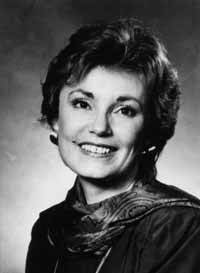
Judith Willis was the first woman elected to serve as president of the AAPA. She served as the Academy's president from 1984-85, the 14th person to do so in the Academy's 17th year of existence. In 1985, the Academy's membership surpassed the 10,000 mark. Many women have held the presidential office since 1991 when Sherri Stuart became the second woman to head the Academy. Sherri Borden held the office between 1996-1997. Clara Vanderbilt was first woman to serve as vice president of the organization between 1975-76.
Read the full biography of Judith B WillisQuestion 14 |
A | 1975 |
B | 1980 |
C | 1985 |
D | 1990 |
Question 15 |
A | Duke University, Durham, NC |
B | University of Colorado, Denver, CO Hint: In 1974, the Child Health Associate Program based at the University of Colorado became the first program to offer graduates a master's degree. |
C | Alderson-Broaddus College, Philippi, WV |
D | University of Washington, Seattle, WA |
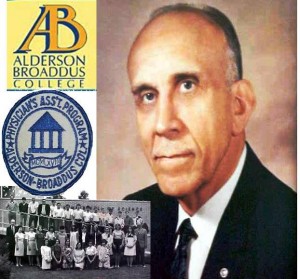
Dr. Hu C. Meyers founded and served eight years as the director of the nation's first degree program for physician assistants at Alderson-Broaddus College in Philippi, West Virginia. The first students were enrolled in September 1968 and graduated four years later in 1972. It was the first program to offer a liberal arts-based baccalaureate degree, the first to accept students just out of high school and the first to accept students without previous medical experience - a major departure from Dr. Eugene Stead's PA model at Duke University and Dr. Richard Smith's MEDEX model at the University of Washington. In 1974, the Child Health Associate Program based at the University of Colorado became the first program to offer graduates a master's degree.Question 16 |
A | The Young Lawyers |
B | The Storefront Lawyers |
C | The Bold Ones |
D | Marcus Welby, MD |
Question 17 |
A | Physicians’ Associates Education Research Foundation (PAERF) |
B | American Registry of Physicians’ Associates (ARPA) |
C | National Registry of Physician’s Associates (NRPA) |
D | American Board of Physician Associates (ABPA) |
Question 18 |
A | Steve Turnipseed |
B | Joyce Nichols |
C | Prentiss Harrison |
D | Henry Treadwell |
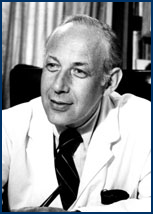
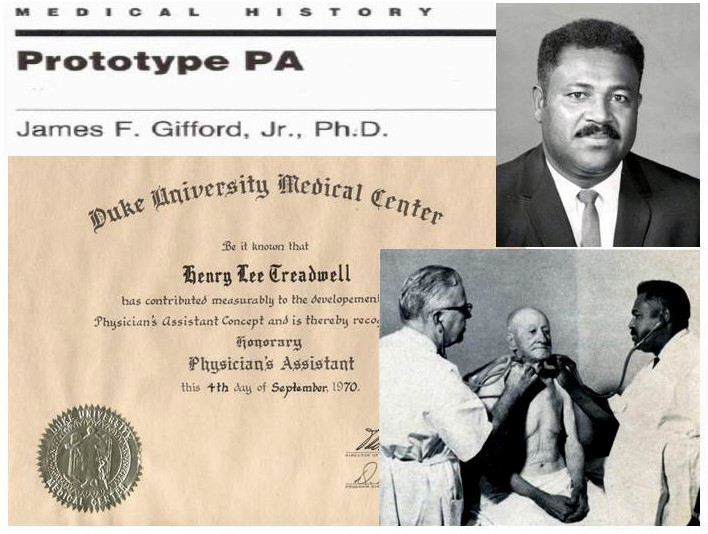
Prior to the development of the physician assistant program at Duke University in 1965, many physicians were training their own assistants on the job. Stead was aware particularly of one such proprietary trained assistant, Mr. Henry Lee 'Buddy' Treadwell, who was trained by and worked with Dr. Amos Johnson in general practice in Garland, North Carolina. This relationship crystallized Stead's vision of how a physician's assistant could be used to help over-worked doctors deliver health care services.Question 19 |
A | University of Alabama/Birmingham |
B | Weill Cornell Medical College/New York |
C | The State University of New Jersey/Rutgers |
D | Emory University/Atlanta |
Question 20 |
A | Federal Economy Act of 1970 |
B | Comprehensive Health Manpower Training Act of 1971 |
C | Health Professions Educational Assistance Act of 1963 |
D | Higher Education Act of 1972 |
Question 21 |
A | Med-ical Ex-tenders |
B | Med-icine Ex-tension |
C | Med-ical Ex-terns |
D | M-edically Ed-ucated Ex-tenders |
Dr. Richard A. Smith is assigned to Pacific Northwest by Surgeon General William Stewart to develop physician assistant training program. He develops the MEDEX (Med-icine Ex-tension) model with a strong emphasis on the deployment of students and graduates into medically underserved communities.
Biography:
Question 22 |
A | Chicago, IL |
B | Durham, NC |
C | Washington, DC |
D | Atlanta, GA |

Question 23 |
A | California |
B | North Carolina |
C | West Virginia |
D | Washington |
Shasta County, California v Whittaker is a seminal event that helped institutionalize the PA profession. The trial’s notoriety and adverse outcome for the defendants caught the national attention of many medical societies, medical boards, and individual physicians who supported the use of informally trained assistants to help reduce physicians’ workloads. In the end, many notable physicians rallied to the cause, and California’s health care professionals and politicians were prompted to become one of the first states to define the PA profession.
People v. Whittaker: The Trial and its Aftermath in CaliforniaQuestion 24 |
A | David L Glazer |
B | Lawrence M. (Mac) Detmer |
C | Donald W. Fisher |
D | William D. Stanhope |
Lawrence M Detmer served as Secretary of the Accreditation Review Committee on Educational Programs for Physician Assistants (ARC-PA) from 1972 to 1991 (when AAPA assumed responsibility for the administration of the ARC-PA). In this role he helped develop the initial policies and procedures used to accredit physician assistant programs based upon a set of Essentials. The Essentials were adopted by the American Medical Association's (AMA) House of Delegates in December 1971 upon recommendation of several medical specialty societies composed of a sufficient number of physicians providing primary patient care.
Biography:
Question 25 |
A | Ruth Webb |
B | Brenda Jasper |
C | Peggy Valentine |
D | Joyce Nichols |
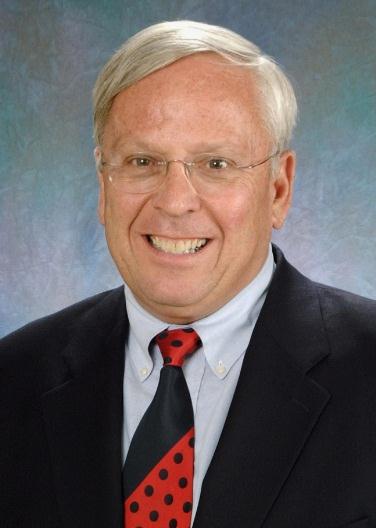
Joyce Nichols is the first woman to be formally educated as a physician assistant (PA). She also happens to be the first African-American woman to practice as a PA. Nichols was working as a licensed practical nurse (LPN) at Duke University when Dr. Eugene A. Stead, Jr. established his 2-yr PA educational program in 1965. She learned about the program from a former Navy corpsman who worked with her in the cardiac unit. The program was originally designed to build on the past experience and training of ex-military corpsmen. Thus, Nichols had to overcome a number of obstacles to gain entrance into the program. She was a woman; she did not have a corpsmen background; she was an African-American; and she had little money to pay for her education. However she was persistent and gradually won the faculty’s confidence and support. She entered and graduated from the Duke PA Program in 1970.
Biography:
← |
List |
→ |
| 1 | 2 | 3 | 4 | 5 |
| 6 | 7 | 8 | 9 | 10 |
| 11 | 12 | 13 | 14 | 15 |
| 16 | 17 | 18 | 19 | 20 |
| 21 | 22 | 23 | 24 | 25 |
| End |
So how did you fare? Post your score in the comments section below, and I will send the first three commenters a FREE copy of our new ebook "How to Write Your PA School Personal Statement"... A $15 value!
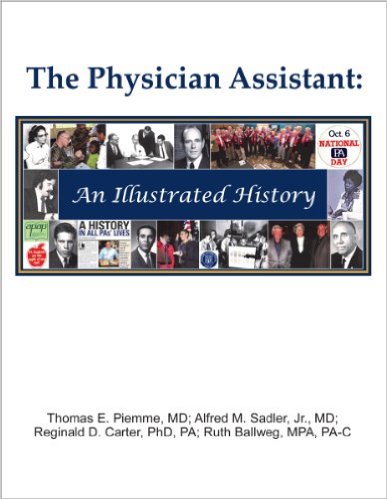
If you want to learn all about the PA profession (which you should, especially if you have an upcoming PA school interview), make sure to spend some time at the Physician Assistant History Society Website, take in some PA History video at PAFLIX or purchase The Physician Assistant: An Illustrated History on Amazon. It will blow the socks of the admissions committee if you show up with this one under your arm! This may be the best $15 you ever spend 🙂
Check out The Physician Assistant: An Illustrated History
Have a beautiful day!
Stephen Pasquini PA-C
You may also like -
How Much Money Do Physician Assistants (PAs) Make?According to the latest NCCPA data, the average projected salary of certified PAs in 2024 is $120,204 per year or $57.74/hour, $10,017/month, and $2,313/week. The median projected annual salary of a PA is $115,000 per year. This is 218% […]
The Top 46 Physician Assistant Applicant Interview Questions
Physician Assistant school interviews are extremely challenging.
Here is a comprehensive list of forty-six high-frequency pa school interview questions you will likely encounter.
This list of the "Top 46 Physician Assistant […]
Podcast Episode 85: Ten Mixed Multiple Choice QuestionsWelcome to episode 85 of the Audio PANCE and PANRE PA Board Review Podcast.
Join me as I cover ten PANCE and PANRE Board review questions from the SMARTYPANCE course content following the NCCPA™ content blueprint (download the FREE […]
Download Your FREE 300 PA School Interview Questions and Answers Workbook
Sign up below to receive your free 65 page 300 PA school interview questions and answers workbook.
You have Successfully Subscribed!
Join our Webinar
Schedule a Live Recorded PA School Video Interview

We offer 60-minute mock PA school interviews with post-interview feedback and advice. Includes a recorded video of your interview that you can watch, download, or share with family and friends. There is no better way to prepare!
Schedule an InterviewDownload Your Free Copy of the How to Write Your PA School Essay Workbook
We created a free workbook to help you craft a personal statement that the admissions directors will be dying to read. Tell us where to send your free copy.


I got a 60% which isn’t too good since I lived thru most of that history. Fun to take and read the answers – thanks for taking the time to do this.
Billie
Im 22 and was intrested in making PA my major i decided to take the quiz with basically no knowledge of it and scored a 61%
I got 13/25! But I gotta say, I guessed some of them! Thanks for the posting the quiz!
Way to go… graded on the curve that definitely counts as an A+! 🙂
48%!! Got some more to study!
Hi Naia, I think you still did better than most 🙂
I got 8 correct out of 25. Need to improve a lot ?
I got 4 right
6 correct at 53%. Since I am still in my BSHS, I have a little time to study 🙂
Not bad at all!!! I think the founders would be proud ?
I’m the 5th comment, 60 %.
Hi Alex, 60% on the curve gives you an A++ ! Unfortunately, a couple other commenters beat you to the ebook, but I will do this again so stay tuned.. Thanks for taking the time to take the test and post your score!!
– Stephen
I got 80% 🙂 still could be better!
Hi Sarah, if the PA History society sees your score you just may get a job offer… Way to go! Unfortunately a couple other commenters beat you to the ebook, but I will do this again so stay tuned.. Thanks for taking the time to take the test and post your score!!
– Stephen
Just 20%
Great job John! Thanks for taking the time to take the quiz and post your score. Since I grade on a curve 20% is still a B+ 🙂 Way to go! I just sent over a copy of your free ebook to your email address, take care and have a great day!
– Stephen
I got a 62% ! I definitely need to brush up on my PA history..
Great job Sam! Thanks for taking the time to take the quiz and post your score. A 66% is going be hard to beat, I think you join the ranks of official PA historian 🙂 I just sent over a copy of your free ebook to your email address, take care and way to go!
– Stephen
I scored a 44%…. Looks like I need to brush up on my PA history!
Great job Maddie! Thanks for taking the time to take the quiz and post your score. I think a 44% is exceptional! I just sent over a copy of your free ebook to your email address, take care and have a great day.
– Stephen