

You have 12 tabs open. One program says 500 patient-care hours. Another says 1,000. One wants the GRE. Another moved to the PA-CAT. One school says prerequisites must be recent. Another says only anatomy and physiology expire. You start with a neat spreadsheet and, somewhere around row 27, you begin to wonder whether you are applying to PA school or trying to decode an ancient medical riddle written by committee.
So when the 2026 Virtual PA Admissions Fair rolled around, I wanted to know one thing:
What are admissions directors and program representatives actually telling applicants when the questions get specific?
Not the polished brochure language.
Not the generic "we review applicants holistically" line that every applicant has heard a hundred times.
I mean the real stuff: the little clarifications, warnings, patterns, and pearls that show up when pre-PA students ask direct questions in real time.
After reviewing the program rooms, chats, resource links, and admissions Q&A from the fair, one theme kept showing up:
The strongest PA school applicants are not the ones following generic pre-PA advice. They are the ones who learn each program's exact language and then build an application that matches it.
Here are the biggest takeaways:
★ Straight From the Program — 2026 PAEA Virtual Admissions Fair
Note: For participating schools, I added a fair-specific insider note box to their PA SchoolFinder profile. Use those boxes as quick, program-level context before you apply. They are not a substitute for the official program website, CASPA, the PAEA Program Directory, or ARC-PA, but they are exactly the kind of “what did the program actually say?” detail applicants usually wish they had.
Start with the Duke example, then look for the same box on other participating PA SchoolFinder program pages.
👉 To see the full list of programs with enhanced "before you apply" bios, click here.
1. Submitted does not always mean complete

The safest deadline is not the official deadline. It is the date your application can be verified, complete, and ready for review.
This may be the single most important deadline lesson from the entire fair.
Several programs made it clear that applicants should not think of the deadline as simply the day they click submit.
Stanford's room had the clearest warning: submitting by the deadline does not necessarily mean you meet the deadline. Your application may need to reach a complete status and maintain that status through the deadline.
That distinction matters.
CASPA submission, CASPA verification, test score receipt, supplemental requirements, transcript processing, and program-specific completion rules are not always the same. If you submit close to the deadline, you may feel like you made it, while the program still sees an incomplete file.
The practical lesson:
Build your personal deadline at least several weeks before the official deadline.
Do not ask, "What is the last possible day I can submit?"
Ask:
- When does CASPA need to be verified?
- When do transcripts need to be received?
- When do test scores need to arrive?
- Does the program require a supplemental application?
- Does the program use rolling admissions?
- Are interview days already being filled?
Fairleigh Dickinson's room offered another reminder: if a program is already scheduling interview days, an open deadline may still be late in the real admissions cycle.
Nova Southeastern also discussed rolling admissions and campus-specific interview timing. MCPHS noted that patient-care hours are calculated at submission and that updates may not be accepted after CASPA verification.
In other words, timing is not just an administrative detail. Timing can change the strength of your application.
2. Patient-care experience is not one universal category
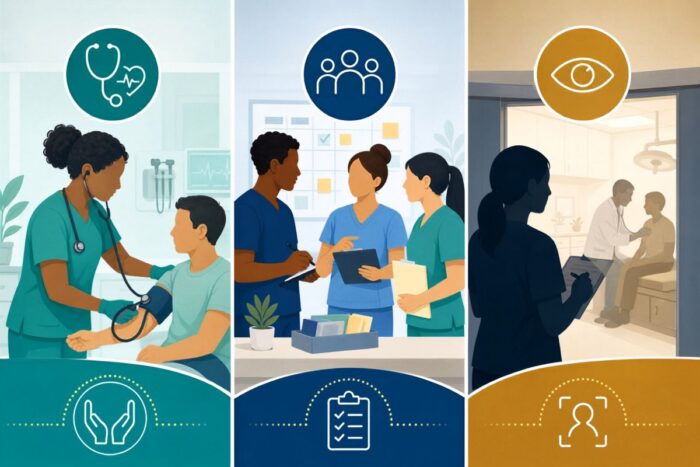
PCE, HCE, and shadowing may look similar on a pre-PA resume, but programs can define them very differently.
If there was one topic that came up everywhere, it was patient-care experience.
And here is the frustrating truth:
Programs do not all define patient-care experience the same way.
MCPHS described the patient-care experience as a role in which you are directly responsible for a patient's care. Examples included procedures, triage or evaluation, bedside care, drawing blood, EKGs, vital signs, and treatment-related responsibilities.
Lincoln Memorial University-Knoxville gave one of the clearest breakdowns I saw:
- Patient-care experience can involve direct hands-on care or support for a provider providing hands-on care.
- Shadowing is strictly observational.
- Healthcare experience is a support role without hands-on patient interaction.
That distinction is gold for applicants.
It means your hours spreadsheet should not just say "1,200 hours." It should say what type of hours those were, what you did, who supervised you, whether you touched patients, whether you made decisions, and whether the role matches how each program defines patient care.
Campbell offered another example. The program said translator work may count as direct patient care when the experience meets its requirements.
FIU emphasized paid direct patient-care experience. High Point talked about direct patient responsibility. Carroll said it did not value one specific type of PCE over others and named roles such as medical assistant, CNA, EMT, phlebotomist, and patient-care tech.
The takeaway is not "this job always counts" or "that job never counts."
The takeaway is:
You need a program-by-program patient-care glossary.
Before you apply, read each program's definition carefully. Then write your CASPA experience descriptions in plain, concrete language:
- What did you do?
- How close were you to the patient?
- What responsibilities did you carry?
- What skills did you use?
- How did the experience shape your understanding of PA practice?
Do not make admissions committees guess.
3. Holistic review does not mean requirements are optional
"Holistic review" is one of those phrases that gives applicants hope and confusion at the same time.
It is encouraging because it means you are more than a GPA.
But it can also be dangerous if you interpret it as, "Maybe they will ignore the minimums."
They probably will not.
Chamberlain University's room was very clear on this point. The representative described holistic review, but also said applicants must satisfy admissions requirements and that the minimum GPA requirement cannot be waived.
Marist University was similarly direct: applicants must meet GPA requirements to be considered for admission and will not be interviewed if they do not.
Mercy University gave a helpful CASPA reminder: repeating a course can show improvement and may strengthen a science GPA, but CASPA includes all course attempts when calculating GPA. The old grade does not simply disappear.
This is where applicants sometimes get themselves into trouble. They build a beautiful story around resilience, service, growth, and patient care, but overlook a hard requirement sitting quietly on the program website.
Holistic review means your story matters.
It does not mean the spreadsheet disappears.
Your job is to do both:
- Meet the minimums.
- Then use the rest of the application to show who you are.
4. Reapplicants need a new application, not the same application twice
One of my favorite themes from the fair was how programs talked about reapplicants.
Duke's advice was simple and painfully useful: reapplicants who show growth can do well, but you should not turn in the exact same profile again.
That line should be printed and taped to every reapplicant's laptop.
If you are reapplying, the question is not just, "How do I explain what went wrong last time?"
The better question is:
What is meaningfully different now?
Carroll said improvements depend on the applicant, but examples included improved grades, additional patient-care hours, and another year of life experience that leads to more maturity.
High Point mentioned increased patient-care experience, PA shadowing in different settings, and stronger letters of recommendation.
Duke pointed to upward academic trends, strong recent coursework, and revising essays rather than resubmitting the same written material.
That gives reapplicants a practical framework:
- Did your academic evidence improve?
- Did your patient-care experience deepen?
- Did your understanding of the PA role mature?
- Did your personal statement change because you changed?
- Did your letters get stronger?
- Did your school list get smarter?
Reapplying is not a character flaw. Plenty of excellent PAs were reapplicants.
But the second application should feel like it came from a changed applicant.
5. Your interview starts before the interview

A strong essay gets you part of the way there. The interview asks whether you can say the same things clearly, honestly, and out loud.
Carroll University's room had a sharp piece of advice: it is not enough to write a good essay about why you want to be a PA. You have to be able to talk about it, too.
That sounds obvious until you have watched applicants freeze when asked a simple question:
"So, why PA?"
College of Saint Mary emphasized being prepared, knowing your passion, and letting the committee see the person behind the application.
Pace-Lenox Hill gave another beautiful version of this: be genuine and show that you are the kind of person faculty could imagine caring for them or their loved ones.
That is the interview in a sentence.
Can they imagine you with patients?
Can they imagine you under stress?
Can they imagine you on a team?
Can they imagine you receiving feedback, growing, and still showing up with humility?
If your interview answers sound like memorized LinkedIn content, you are in trouble.
Practice out loud. Tell real stories. Choose patient encounters that changed how you think. Be able to discuss adversity without turning it into a melodrama. Be able to explain why PA without insulting physicians, nurses, or other healthcare professionals.
And please, do not just say, "I like medicine and I want lateral mobility."
That may be true, but it is not enough.
6. Questions about clinical rotations are one of the best questions you can ask
Applicants spend a lot of time asking whether they can get in.
They should also ask what happens after they get there.
The fair made this very clear. Rotation structure varies tremendously, and the details matter.
Campbell University described a home-base model and said it does not use a lottery system.
Carroll said clinical coordinators work with students one-on-one and that underserved-focused placements may be possible.
Pace-Lenox Hill said students complete at least one rotation in a health professional shortage area or medically underserved area, and described a clinical network that includes major academic hospitals and city hospitals serving underserved populations.
Marist University discussed nine total rotations with two electives and possible opportunities beyond local sites.
West Coast University raised a very practical issue: clinical rotations take place in the Los Angeles area, so applicants should think realistically about travel, relocation, or housing.
These are not small details.
A program's clinical rotation model affects your finances, family life, stress level, specialty exposure, and sometimes your first job.
Ask better rotation questions:
- Who finds the sites?
- Are placements guaranteed?
- Is there a lottery?
- Can students suggest sites?
- How far might I travel?
- Are there housing supports?
- How many electives are there?
- Is underserved care required or optional?
- Are rotations mostly local, regional, national, or a mix?
This is the kind of question that makes you look thoughtful, not picky.
7. Mission fit has to be concrete
Almost every program uses mission language.
Service. Equity. Primary care. Underserved communities. Cultural humility. Leadership. Resilience. Professionalism. Patient-centered care.
Those words matter, but only if you can connect them to something real.
Pace-Lenox Hill connected mission to required underserved rotations and its NYC clinical network.
LMU-Chattanooga discussed service-learning and community service.
FGCU framed its mission around primary care, evidence-based practice, collaboration, and patient-centered care.
Mount St. Mary's listed attributes like cultural humility, empathy, compassion, equity, integrity, leadership, maturity, and resilience.
Palm Beach Atlantic discussed Christian community, service, mission trips, mentorship, and servant leadership.
Stanford encouraged applicants to use its self-assessment checklist and show how their experiences align with program goals.
That is the key: mission fit is not a decorative sentence at the end of your essay.
It is evidence.
If a program cares about underserved communities, show where you have served, what you learned, and how that changed your understanding of access to care.
If a program cares about leadership, show the moment you led when it was inconvenient.
If a program cares about resilience, do not just say you are resilient. Show the evidence.
8. Military and nontraditional applicants should not hide the detour
Several rooms offered excellent advice for military and nontraditional applicants.
UNT Health encouraged veterans to translate military experience into admissions language: leadership, teamwork, adaptability, service, high-pressure environments, communication, problem-solving, and healthcare experience when applicable.
Campbell and LMU-Chattanooga encouraged military applicants to give the full picture in CASPA, including detailed experience entries.
Yale's student room offered one of the best nontraditional applicant reminders: be able to explain how your background prepared you for PA training and why you chose the path you did.
That matters because nontraditional applicants sometimes write as if they need to apologize for not taking a straight line.
You do not.
The detour may be the point.
Your job is to translate it:
- What did your previous career teach you about people?
- What did military service teach you about pressure and teamwork?
- What did research teach you about evidence?
- What did caregiving teach you about communication?
- What did failure teach you about humility?
Do not bury the experience that makes you interesting.
Make it useful to the committee.
9. Current students may tell you what the brochure cannot
One of the most underrated pieces of advice came from SCUHS: when considering an offer, ask programs whether you can access current students.
I love this advice.
Not because current students are always perfectly objective. They are not. One student's experience may not be yours.
But students can tell you things that websites rarely capture:
- Are faculty accessible?
- Do students help each other?
- Is remediation supportive or punitive?
- Does the schedule feel humane?
- Are clinical placements organized?
- Do students feel known?
- Is the program responsive to feedback?
Yale's student room was a perfect example. The student perspective revealed details about advising, open-door faculty culture, cadaver lab, early patient contact, systems-based learning, student leadership, and the emotional reality of waiting after applications.
Stanford's student-life room added details about mentorship, student organizations, schedule structure, scholarly work, and rotations.
If you are accepted to multiple programs, congratulations. Then do the harder work:
Talk to students.
Ask what support looks like when someone struggles.
Ask what surprised them.
Ask what they wish they had known before choosing.
10. The best applicants are specific
After reading through the fair conversations, this is the simplest way I can summarize the advice:
Specificity wins.
Specific hours.
Specific patient-care duties.
Specific prerequisite rules.
Specific reasons for PA.
Specific examples of growth.
Specific mission fit.
Specific questions about clinical rotations.
Specific proof that you understand the program.
Generic applicants sound like this:
"I am passionate about helping people and want to become a PA because the profession is flexible."
Stronger applicants sound like this:
"Working as an ED technician taught me how much I value team-based care, fast decision-making, and patient education under pressure. I am drawn to your program's emphasis on underserved clinical placements because my volunteer work at a free clinic showed me how often access, language, transportation, and trust shape outcomes before a patient ever reaches the exam room."
See the difference?
One is a slogan.
The other is a person.
PA admissions directors advice checklist for applicants
Before you submit, go program by program and answer these questions:
- Is my application submitted, verified, and complete by the program's definition?
- Do I understand how this program defines patient-care experience?
- Have I entered my experiences in CASPA with enough detail?
- Do I meet every minimum requirement?
- Are any prerequisites expired, outstanding, online, repeated, or in progress?
- Do I know whether the program uses rolling admissions?
- Do I know how test scores are handled?
- Can I explain why PA out loud without sounding rehearsed?
- Can I discuss real patient encounters?
- If I am a reapplicant, what has changed?
- If I am nontraditional or military, have I translated that experience clearly?
- Do I understand the clinical rotation model?
- Have I asked current students what the program feels like, and checked the next PAEA virtual admissions fair if I still need program-specific answers?
If you can answer those questions clearly, you are already applying with more maturity than many applicants.
Final thoughts
The most encouraging thing about the fair was not that admissions teams are looking for perfect applicants.
They are not.
They are looking for prepared applicants. Reflective applicants. Applicants who understand the PA role, know their own story, meet the requirements, and can show evidence of growth.
That should give you hope.
You do not need to be flawless.
But you do need to be precise.
You need to know the rules of the programs you are applying to. You need to understand how your experiences will be read. You need to be honest about your weaknesses and intentional about your growth.
And above all, you need to sound like a human being who has actually spent time with patients and learned something from them.
That is what came through again and again from the admissions professionals at the 2026 Virtual PA Admissions Fair.
Not perfection.
Readiness.
And readiness is something you can build.
- Stephen Pasquini PA-C
Explore the Program-Specific Fair Pearls on PA SchoolFinder
We added a ★ Straight From the Program — 2026 PAEA Virtual Admissions Fair note to participating PA SchoolFinder program profiles. Use these pages to compare schools, collect better follow-up questions, and see the fair-specific admissions pearl in context.
- AdventHealth University
- Campbell University
- Carroll University
- Chamberlain University
- College of Saint Mary
- Duke University Medical Center
- Elon University
- Endicott College
- Fairleigh Dickinson University
- Florida Gulf Coast University
- Florida International University Herbert Wertheim College of Medicine
- High Point University
- Ithaca College
- Lincoln Memorial University - Knoxville
- Logan University
- Marist University
- Marshall B. Ketchum University
- MCPHS University (Boston)
- Mercy University
- Mount St. Mary's University
- Nazareth University
- Nova Southeastern University, Fort Lauderdale
- Oregon Health & Science University
- Pace University-Lenox Hill Hospital, NYC
- Palm Beach Atlantic University
- Pfeiffer University
- South University, Tampa
- Southern California University of Health Sciences
- Stanford University
- Trevecca Nazarene University
- Tufts University
- University of Mount Union
- University of North Texas HS Center Ft Worth
- Ursuline College
- Weber State University
- Weill Cornell Medicine
- West Coast University - California
- Yale University Physician Associate Program
Note: these fair pearls are event-derived applicant notes. Always verify current requirements, deadlines, accreditation status, and policies directly with the program before applying.
You may also like
 50 PA School Supplemental Essay Prompts You Need to KnowIf you are applying to PA school, you know that writing a strong personal statement is not enough. You also need to …
 CASPA Video Tutorial Section Two: Academic HistoryThis is part two of a five-part CASPA video series walking you through every step of your CASPA application. This video will …
- 200+ PA Schools That Don’t Require the GREAre you like me and looking to dodge the GRE? Does the thought of studying for the GRE exam make your palms …
CASPA Personal Statement Help
 We offer comprehensive, start-to-finish personal statement assistance or help to perfect a draft you already have. We have services to fit every budget.
 Schedule a Live Recorded PA School Video Interview
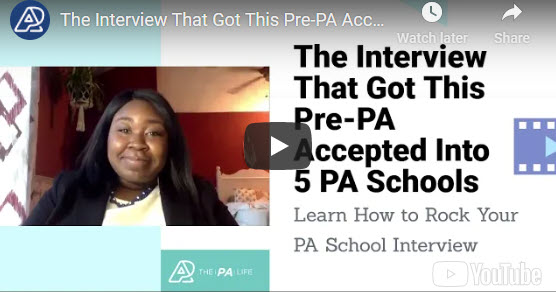
We offer 60-minute mock PA school interviews with post-interview feedback and advice. Includes a recorded video of your interview that you can watch, download, or share with family and friends. There is no better way to prepare!
Schedule an InterviewPre-PA Consulting and Advising
 Our pre-PA coaching service consists of a 1-hour phone consultation focused on addressing your specific questions or concerns about becoming a PA and applying to PA school.


Leave a Reply