
 Free. No sign-up. Make a copy to your own Google Drive and it's yours for good.
Two years from now you're going to open the CASPA experience section, and it's going to ask you for the name, phone number, email and address of the supervisor at a job you left eighteen months ago. Then your start date. Your end date. Your average hours per week across that exact date range.
Nobody remembers that. I certainly didn't.
That's what this logbook is for. It isn't a research tool and it isn't a program directory — it's the running record of your own experience, kept in the exact shape CASPA is going to ask for it.
→ Open the logbook, then File > Make a copy. It lands in your own Drive, and nobody but you can see it.
What's inside
Four hours logs — HCE/PCE, Volunteer, Shadowing, and Non HCE/PCE Work. One row per position, with supervisor name, phone, email and address, paid or unpaid, start and end dates, hours per week, total weeks, and a running cumulative total up top.
Those columns aren't arbitrary. They mirror the CASPA experience entry form. Fill this in as you go and the section that makes most applicants miserable turns into a copy-and-paste job.
One rule catches almost everybody: you can't count the same hour twice. CASPA is blunt about it — if one job spans two categories, you enter that position in both sections and divide the hours between them. Splitting a year of shifts from memory is miserable. Splitting this week's shifts on Sunday takes thirty seconds. (Still sorting out which bucket your job belongs in? Start with the healthcare experience guide and what admissions directors say about patient contact hours.)
My Programs — this is the one tab you never type. Run the Prerequisite Planner, pick the programs you're applying to, tick off the courses you've already finished, and click Copy for my logbook. Come back here, click cell A2, and paste.
What lands is your actual school list: the prerequisites you still owe at each program, that program's coursework expiration policy, whether it accepts AP or CLEP credit, its minimum prerequisite GPA, its CASPA deadline, and a link to its full requirement list. Columns A through J come straight from the live PA School Finder database and are verified against each program's own admissions page, so don't hand-type them. Paste again any time you want fresh numbers. The last three columns — Applied?, Status and My notes — are yours to keep.
Requirements move between cycles, and a spreadsheet has no way of knowing when they do. Pasting takes ten seconds and it's right. Typing takes an hour and it's stale by the end of the month. Run the planner once a term, paste, done — that's the entire maintenance routine.
Stories and Experiences — memorable moments, things patients have said to you, criticism you were given, the shifts you struggled through, and the ones that reaffirmed why you want this. Write them down the week they happen.
This is the most valuable tab in the file and it's the one everybody skips. Every strong personal statement I've ever read was built out of specific moments, and specific moments do not survive two years in your memory. They survive in writing. When you finally sit down to draft your essay, you won't be staring at a blank page — you'll be choosing between things that actually happened to you. (Then go turn one of them into a hook that works.)
Honors/Awards for the line items you'll forget you earned, a Costs tab for what this cycle is actually costing you — CASPA fees, supplemental fees, transcripts, travel to interviews — and a Resources tab with the links worth keeping within reach.
How CASPA is going to ask for your hours
Worth knowing before you log anything, because it changes what you write down. These are CASPA's own definitions, not mine:
- Hours go in as an average per week across a date range, not as one lump total. That's exactly why the log keeps hours-per-week and number-of-weeks in separate columns.
- Your supervisor is a person programs can contact to verify you — not a job title. A name and a phone number that still works.
- Patient Care Experience is work where you're directly responsible for a patient's care. Healthcare Experience is paid or unpaid work in a health-related field where you're not directly responsible for care but may still have patient contact. The same hour can't be both.
- Shadowing is time spent officially observing a provider at work. Virtual shadowing counts, and it belongs in its own category.
- Volunteer, in CASPA's language, means volunteer work outside healthcare — Habitat builds, tutoring, the blood drive. Unpaid work in a clinic is healthcare experience, not volunteering.
How to actually use it
- Make your copy today, even if you've only got twenty hours logged. Starting late is the whole problem.
- Update it the same week, not at the end of the year. Fifteen minutes on a Sunday.
- Get your supervisor's details while you still work there. This is the tip that will save you the most pain. People move jobs, clinics close, managers stop answering email — and CASPA still wants a phone number.
- Write one line in Stories every time something lands. A patient said something that stuck. You got feedback that stung and was right. You had a shift that made you certain. One line. That's all.
- Re-run the planner once a term and paste the results back into My Programs, so your school list and your coursework never drift apart.
- Sanity-check your totals before you apply. Who gets into PA school and the big list of applicant statistics will show you where you actually stand.
Brand new to all of this? Start with the Getting Started Guide, then come back and set up your logbook.
You're going to be at this for a while. Keep the receipts. 🙂
Thanks for reading — I'm here for you.
— Stephen Pasquini PA-C
You may also like -
 How to Become a Physician Assistant (PA) in 8 Easy Steps
So, you want to become a physician assistant?
Congratulations, you have taken the first step on a lifelong journey filled with many joys, significant struggles, and a lifetime of free pastries.
Becoming a PA is relatively […]
How to Become a Physician Assistant (PA) in 8 Easy Steps
So, you want to become a physician assistant?
Congratulations, you have taken the first step on a lifelong journey filled with many joys, significant struggles, and a lifetime of free pastries.
Becoming a PA is relatively […]- The Pre-PA Advisor Series: Patient Contact Hours and Healthcare Experience
The Pre-PA Advisor Series
Welcome to the PA Advisors Series - a special series of posts where PA school applicants like yourself ask the tough questions and admissions directors from top-ranking PA schools provide the […]
- The Perfect PA Program Picker: PA School Search, Sort, Match, and ApplyChoosing where to apply is one of the highest-stakes decisions of your pre-PA journey — and the data you use should never be out of date. The Program Picker below is powered by the live PA School Finder verified directory: every […]


CASPA Personal Statement Help
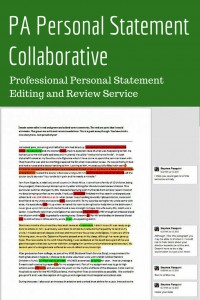 We offer comprehensive, start-to-finish personal statement assistance or help to perfect a draft you already have. We have services to fit every budget.
 Schedule a Live Recorded PA School Video Interview

We offer 60-minute mock PA school interviews with post-interview feedback and advice. Includes a recorded video of your interview that you can watch, download, or share with family and friends. There is no better way to prepare!
Schedule an InterviewPre-PA Consulting and Advising
 Our pre-PA coaching service consists of a 1-hour phone consultation focused on addressing your specific questions or concerns about becoming a PA and applying to PA school.


Leave a Reply