
Are you ready to get started? Choose your package, and we will begin today!
Single Edit One-on-one Service Supplemental Essays
Your success is our passion. (See just some of our 100's of testimonials and comments below). We are ready to help. Our current PA school essay editing service status (25th October 2026): Accepting New Submissions

(Photo: Me circa 1987, just thinking about my future PA School Essay)
- Are you struggling to write your physician assistant personal statement?
- Are you out of ideas, or just need a second opinion?
- Do you want an essay that expresses who you truly are and grabs the reader's attention in the required 5,000-character limit?
We are here to help perfect your PA school essay
I have written countless times on this blog about the importance of your personal statement in the PA school application process. Beyond the well-established metrics (GPA, HCE/PCE hours, requisite coursework, etc.), the personal statement is the most crucial aspect of your application.
This is your time to express yourself, show your creativity, skills, and background, and make a memorable impression in seconds. This will be your only chance, so you must get it right the first time.
For some time, I had been dreaming about starting a physician assistant personal statement collaborative.
A place where PA school applicants like yourself can post their PA school essays and receive honest, constructive feedback followed by an acceptance letter to the PA school of your choice!
I have been reviewing a ton of essays recently, so many in fact that I can no longer do this on my own.
To solve this problem, I have assembled a team of professional writers, editors, and PA school admissions specialists who worked to revise and perfect my PA school application essay.
 Beth Eakman has taught college writing and worked as a professional writer and editor since the late 1990s. Her projects have involved a wide range of disciplines and media, from editing scientific research and technical reports to scriptwriting for television. Her writing has appeared in academic, professional, and popular publications. Beth lives with her family just outside Austin, Texas. She enjoys the unique opportunity that The PA Life offers to combine her training as a writer and editor with her experience teaching in order to support PAs and aspiring PAs in achieving their professional goals.
 Carly Hallman is a professional writer and editor with a B.A. in English Writing and Rhetoric (summa cum laude) from St. Edward's University in Austin, Texas. She has worked as a curriculum developer, English teacher, and study abroad coordinator in Beijing, China, where she moved in 2011. In college, she was a Gilman Scholar and worked as a staff editor for her university's academic journal. Her first novel, Year of the Goose, was published in 2015, and her first memoir is forthcoming from Little A Books. Her essays and creative writing have appeared in The L.A. Review of Books, The Guardian, LitHub, and Identity Theory, among other publications.
Read more client testimonials or purchase a revision
We Work as a Team
Our team of professional editors is wonderful at cutting out the "fluff" that makes an essay lose focus and sets people over the 5,000-character limit. Their advice is always spot-on.
Sue, Sarah, and Carly are amazingly creative writers who will take your "ordinary" and turn it into entirely extraordinary.
I mean it when I say this service is one-of-a-kind! We have spent countless hours interviewing PA School admissions directors and faculty from across the country to find out exactly what it is they are looking for in your personal statement.
We even wrote a book about it.
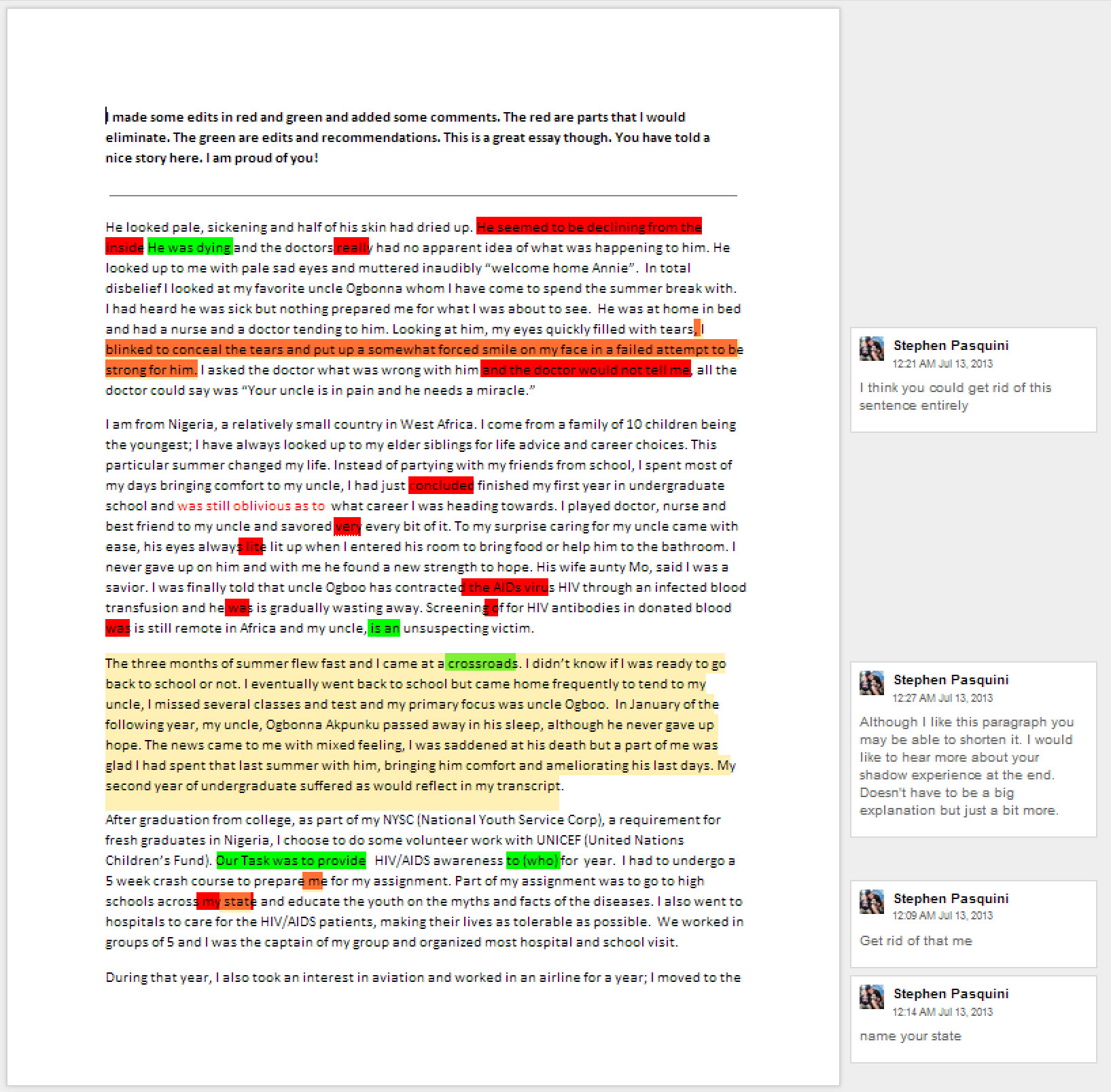 To collaborate, we use Google Drive. Google Drive is free, has an intuitive interface with integrated live comments in the sidebar, the ability to have a real-time chat, to collaborate effortlessly, and to compare, revise, or restore revisions on the fly. Google Drive also has an excellent mobile app that will allow you to make edits on the go!
Our team has worked with hundreds of PA school applicants within the Google Drive environment, and we have had enormous success.
The Physician Assistant Essay and Personal Statement Collaborative
I have set up two options that I hope will offer everyone a chance to participate:
- One-of-a-kind, confidential, paid personal statement review service
- A collaborative, free one (in the comments section)
Private, One-On-One Personal Statement Review Service
If you are interested in the paid service, you may choose your plan below.
The Personal Statement Review Service is:
- Behind closed doors within a private, secure network using Google Drive.
- It is completely interactive, meaning we will be able to provide real-time comments and corrections using the Google Drive interface.
- Telephone consultations are included with all edits above the single edit level. It’s often hard to communicate exactly what you want hundreds of miles away; for this reason, we offer the option to edit right along with us over the telephone while sharing in real-time over Google Drive. This is an option available to all our paid clients who purchase above the single edit level.
- We provide both revision and editing of all essays. What’s the difference? See below
- We will provide feedback, advice, and help with brainstorming and topic creation if you would like.
- We will help with a “final touch-up” before the big day, just in case your essay needs a few minor changes.
Why Choose Our Service?
- It’s not our opinion that matters. We have gone the extra step and personally interviewed PA school administrators from across the US to find out exactly what they think makes a personal statement exceptional.
- We are a team of PAs and professional writers, having worked over ten years with PA school applicants like yourself, providing countless hours of one-on-one editing and revision.
- Our clients receive interviews, and many go on to receive acceptance into their PA School of choice.
Because we always give 100%, we will open the essay collaborative for a limited number of applicants each month and then close this depending on the amount of editing that needs to be done and the time that is available.
Our goal is not quantity but quality. We want only serious applicants who are serious about getting into PA school.
Writing is not a tool like a piece of software but more like how a photograph can capture your mood. It’s more like art. The process of developing a unique, memorable personal statement is time-intensive, and it takes hours to compose, edit, finalize, and personalize an essay.
As Antoinette Bosco once said:
And this is why I am charging for this service. We love helping people find stories that define their lives, and we love helping individuals who have the passion to achieve their dreams. It’s hard to describe the feeling I get when an applicant writes back to tell me they were accepted into PA school.
There is no price tag I can place on this; it’s the feeling we get when we help another human being. It’s just like providing health care. But this takes time.
Interested? Choose your plan below.
Read more client testimonials.
Free Personal Statement Review
Post your essay in the comments section for a free critique
We want to make this opportunity available to everyone who would like help with their essay, and that is why we are offering free, limited feedback on the blog.
You post your essay in the comments section, and you will get our critique. It is that easy. We will try to give feedback to every single person who posts their COMPLETE essay here in the comments section of this blog post.
Also, by posting your comment, we reserve the right to use your essay.
We will provide feedback on essays that are complete and fit the CASPA requirements (View CASPA requirements here). We will not provide feedback on partial essays or review opening or closing statements. Your essay will be on a public platform, which has both its benefits and some obvious drawbacks. The feedback is limited, but we will try to help in any way we can.
Note: Comment Rules: Remember what Fonzie was like? Cool. That’s how we’re gonna be — cool. Critical is fine, but if you’re rude, I will delete your stuff. Otherwise, have fun, and thanks for adding to the conversation! And this should go without saying: if you feel the need to plagiarize someone else’s content, you do not deserve to go to PA school.
* Also, depending on the time of year, it may take me several weeks to reply!
We love working with PA school applicants, but don't just take our word for it!
How to submit your essay for the paid service
If you are serious and would like to have real, focused, and personalized help writing your personal statement, please choose your level of service and submit your payment below.
After you have submitted your payment, you will be redirected to the submissions page, where you can send us your essay as well as any special instructions. We will contact you immediately upon receipt of your payment and essay so we may begin work right away.
Pricing is as follows:
Choose your plan, then click "Buy Now" to submit your essay, and we will get started right away!
Every purchase includes a FREE digital copy of our new 100-page eBook, How to Write Your Physician Assistant Personal Statement, Our 101 PA School Admission Essays e-book, the expert panel audiobook, and companion workbook. This is a $65 value included for free with your purchase.
All credit card payments are processed via PayPal over a secure HTTPS server. Once your payment is processed, you will be immediately redirected back to the essay submission page. There, you will submit your essay along with some biographical info and all suggestions or comments you choose to provide. You will receive immediate confirmation that your essay has been securely transmitted as well as your personal copy of "How to Write Your Physician Assistant Personal Statement." Contact [email protected] if you have any questions, comments, or problems - I am available 24/7.
The hourly service includes your original edit and one-on-one time over Google Drive. It is simple to add more time if necessary, but you may be surprised at what a difference just a single edit can make. We find our four-hour service to be the most effective in terms of time for follow-up and full collaboration. We are open to reduced-rate add-ons to suit your individual needs.
Writing and Revision
All writing benefits from rewriting when done well.
When you are in the process of writing a draft of an essay, you should be thinking first about revision, not editing.
What’s the difference?
Revision refers to the substantial changing of text. For example, it may include re-organizing ideas and paragraphs, providing additional examples or information, and rewriting a conclusion for clarity.
Editing, on the other hand, refers to correcting mistakes in spelling, grammar, and punctuation.
We perform both revision and editing on all submissions.
How to submit your PA school essay for the FREE editing service
Follow the rules above and get to work below in the comments section. I look forward to reading all your essay submissions.
– Stephen Pasquini PA-C
View all posts in this series
- How to Write the Perfect Physician Assistant School Application Essay
- The Physician Assistant Essay and Personal Statement Collaborative
- Do You Recognize These 7 Common Mistakes in Your Personal Statement?
- 7 Essays in 7 Days: PA Personal Statement Workshop: Essay 1, “A PA Changed My Life”
- PA Personal Statement Workshop: Essay 2, “I Want to Move Towards the Forefront of Patient Care”
- PA Personal Statement Workshop: Essay 3, “She Smiled, Said “Gracias!” and Gave me a Big Hug”
- PA Personal Statement Workshop: Essay 4, “I Have Gained so Much Experience by Working With Patients”
- PA Personal Statement Workshop: Essay 5, “Then Reach, my Son, and Lift Your People up With You”
- PA Personal Statement Workshop: Essay 6, “That First Day in Surgery was the First Day of the Rest of my Life”
- PA Personal Statement Workshop: Essay 7, “I Want to Take People From Dying to Living, I Want to Get Them Down From the Cliff.”
- Physician Assistant Personal Statement Workshop: “To say I was an accident-prone child is an understatement”
- 9 Simple Steps to Avoid Silly Spelling and Grammar Goofs in Your PA School Personel Statement
- 5 Tips to Get you Started on Your Personal Essay (and why you should do it now)
- How to Write Your Physician Assistant Personal Statement The Book!
- How to Write “Physician Assistant” The Definitive PA Grammar Guide
- 101 PA School Admissions Essays: The Book!
- 5 Things I’ve Learned Going Into My Fourth Physician Assistant Application Cycle
- 7 Tips for Addressing Shortcomings in Your PA School Personal Statement
- The #1 Mistake PRE-PAs Make on Their Personal Statement
- The Ultimate PA School Personal Statement Starter Kit
- The Ultimate Guide to CASPA Character and Space Limits
- 10 Questions Every PA School Personal Statement Must Answer
- 5 PA School Essays That Got These Pre-PAs Accepted Into PA School
- 7 Questions to Ask Yourself While Writing Your PA School Personal Statement
- 101 PA School Applicants Answer: What’s Your Greatest Strength?
- 12 Secrets to Writing an Irresistible PA School Personal Statement
- 7 Rules You Must Follow While Writing Your PA School Essay
- You Have 625 Words and 2.5 Minutes to Get Into PA School: Use Them Wisely
- What’s Your #1 Personal Statement Struggle?
- 31 (NEW) CASPA PA School Personal Statement Examples
- How to Prepare for Your PA School Interview Day Essay
- Should You Write Physician Associate or Physician Assistant on Your PA School Essay?
- Meet the World’s Sexiest PA School Applicants
- PA School Reapplicants: How to Rewrite Your PA School Essay for Guaranteed Success
- How to Write a Personal Statement Intro that Readers Want to Read
- PA School Reapplicant Personal Statement Checklist
- How to Deal with Bad News in Your Personal Statement
- Inside Out: How to use Pixar’s Rules of Storytelling to Improve your PA Personal Statement
- Ratatouille: A Pixar Recipe for PA School Personal Statement Success
- Personal Statement Panel Review (Replay)
- Mind Mapping: A Tool for Personal Statements, Supplemental Essays, and Interviews
- Start at the End: Advice for your PA School Personal Statement
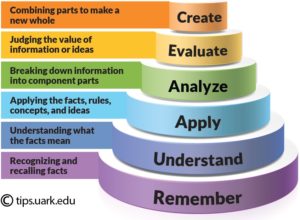
- Elevate Your Personal Statement: Using Bloom’s Taxonomy for Impactful Writing
- How to Write a Captivating Hook for Your PA School Personal Statement
- 3 Surprising Truths About the New CASPA Life Experiences Essay (And Why You Can’t Ignore It)
- 3 PA School Personal Statement Mistakes Our Editor Sees Again and Again
You may also like
 Elevate Your Personal Statement: Using Bloom’s Taxonomy for Impactful WritingThe most common advice writers often give pre-PAs is to "show, don't tell" in your essays. (Though we like to encourage showing …
 Who Gets Into PA School in 2026? Here’s What You Need to KnowLeslie Mean is a 23-year-old single white female who presents to the PA school admissions committee on her second attempt to get …
 Start at the End: Advice for your PA School Personal StatementNot sure what to include in your personal statement? Start at the End! The conclusion should summarize your entire essay. Consider the …


CASPA Personal Statement Help
 We offer comprehensive, start-to-finish personal statement assistance or help to perfect a draft you already have. We have services to fit every budget.
 Schedule a Live Recorded PA School Video Interview

We offer 60-minute mock PA school interviews with post-interview feedback and advice. Includes a recorded video of your interview that you can watch, download, or share with family and friends. There is no better way to prepare!
Schedule an InterviewPre-PA Consulting and Advising
 Our pre-PA coaching service consists of a 1-hour phone consultation focused on addressing your specific questions or concerns about becoming a PA and applying to PA school.


Hi this is my first draft of the personal statement. Your insight is so greatly appreciated!
April Fools’ Day, 2012 – It was a rather gloomy day, the ominous gray clouds had engulfed the sky. As any ordinary college sophomore who had stayed up the night before would, I dragged myself out of bed at 8AM to attend Sunday service. My mother called me on my way to church, her voice shaken as she shouted in Mandarin, “Your dad is dead, he’s dead!” Then the intermittent radio static in the background took over and her phone call dropped. It’s not easy to revisit that day, an April Fools’ joke never seemed so realistically paralyzing.
There had been a car crash involving a tractor-trailer with my father, my aunt, and her 5-months old son. My aunt was the sole survivor. Several hours later, I arrived at the ICU where my aunt was fighting for her life. I was in serious denial up until the moment I saw my aunt lying on the hospital bed being supported by all types of medical devices, she looked lifeless.
I spent 19 days in the hospital with her, mostly translating for family members and caring for her. During that time, I interacted with physicians, nurse practitioners, physician’s assistants, nurses, and nurse techs across a myriad of medical disciplines. Honestly, I have never been seriously interested in healthcare professions before then. There were two PAs that really made an everlasting impression for me. The qualities that each of them exhibited were not so disparate from each other. The PAs frequently updated us on her condition, viable options for future care, answered questions with the utmost patience and understanding, and were professionally knowledgeable. Most importantly, I trusted and valued their medical care for my aunt.
Nevertheless, life moves on. Our family had to be rebuilt and we relied on our faith more than ever. As a freshman, my future seemed nebulous, and my career interests seemed to sway with every direction of the wind. A year after the tragedy, I could not imagine doing anything else with my life other than providing health care. After college, I immersed myself in a patient care setting as a certified nursing assistant. I now work alongside physicians, physician’s assistants, nurse practitioners, and nurses on an oncology floor. Every day before I went into work, I prayed that I would be in a posture of patience, understanding, and professionalism in my delivery of care to my patients.
Working as a nurse tech opened up a world of opportunities and experiences into the world of medicine. There is one particular PA that I work with, whom I believe to be the epitome of a care provider. The PA allowed me to shadow him not only when he visits patients, but also when he does procedures such as bone marrow biopsies. He displays immense knowledge and insight when he listens to patients’ and their family members’ concerns. There’s one specific case of a patient who has had diarrhea for a few months and also Clostridium difficile infection for weeks, his condition was not improving. The patient even had a fecal transparent weeks earlier before coming to our hospital. The PA asked me what the patient’s condition was like on a daily basis, what his diet was, the number of times he has had diarrhea in a day, and his overall strength. Upon evaluating his case, the team had decided to stop his consumption of Ensure and milk, and to greatly encourage him to consume only solid foods. The assumption was simple, he may have developed lactose intolerance and is unbeknownst to it. The patient’s diarrhea decreased and eventually ceased altogether.
I love the nature of my work because I enjoy working with patients. On a daily basis, I work with 8-12 patients each with varying conditions and diagnoses. My patients have nicknamed me Sunshine and one even wrote a song incorporating my name in it. I value being genuine with my patients and caring for them the way they deserve to be cared. However, I wished I could do more. I wish I could help make decisions in their treatment plan and be someone who they can depend on to have their best interest in mind. I’ve seen many pairs of fear-filled eyes as those patients laid completely helpless as they battled cancer and some eventually lost the fight. Those eyes were filled with the same fear that I saw in my aunt when she was in the ICU. Patients are strong-willed people who are eager to fight alongside care providers who they can place their trust in. I am ready to work hard not only during PA school, but for the rest of my PA career. Patients require me to be the best PA I can be, and that is also my commitment and responsibility to them. I am filled with alacrity as I prepare for this opportunity to join a community of healthcare professionals.
Hey, I have decided to write a completely new personal statement and scratch the old one. Please take a look and tell me what you think. Thank you!
When I began working as a certified nursing assistant 18 months ago, I did not fully grasp the depth of what bedside care would all entail. Furthermore, the PAs roles in providing patient care were also novel to me, up until this point, I had only been a patient to PAs. As a young 22-year old, I only knew for certain that I wanted to care for the sick.
Then the journey began, I was alacritous about my new job on the hematology oncology unit of Emory Hospital. There is a general sense of melancholy at the mention of cancer, and on my floor, we housed 24 individuals battling leukemia/lymphoma on any given day. I began as a nurse tech who frankly, did not even know if it was appropriate to joke around my patients to slowly learning to laugh with them. For example, one patient became confused during the middle of the night and proceeded to walk out of her room, pull down her pants, squat, and urinate on the kitchen floor. After taking her back to her room and cleaning her up, I asked her if she knew what had just happened. She responded, “boy, am I embarrassed, you’re telling me that I just peed in the kitchen?” The next day, she repeated the whole scenario to her daughters and we all shared a good laugh. Of course, nothing is seriously funny in taking care of the ill. However, my patients taught me to laugh with them and how to battle alongside them. I try my best with every patient to display a combination of professionalism, compassion, understanding, and humor.
I honestly love my patients. I enjoy having the time to genuinely listen to their concerns about life, faith, family, and sickness. Anyone can get sick, from the rich to the poor, from the young to the old, from the apparent healthy to those with many other comorbid conditions. They are all a part of my patient demographic across many cultures and traditions, and I have learned how to respect and care for them. However, I have no medical training that allows me to help them further in their treatment. As a nurse tech, I studied their diagnosis, clinical notes, history, and the list of medications they were taking just to be able to take a glimpse into the complexity of their disease. There were many medications and medical terms that I did not recognize, but I am now familiar with these definitions.
There is one particular PA who I work closely with and have shadowed him in many of his procedures and patient visits. One particular patient we took care of together was an elderly male who has had diarrhea for several weeks. He had Clostridium difficile and even had a fecal transplant a couple of weeks before being admitted to our hospital. The PA never went into the patient’s room without first speaking with the nurse and me about how he has been doing. He really understood the team-model of patient care and exercised it to deliver a comprehensive treatment. He asked me for the diet patterns of the patient, what he ate, what he drank, and the frequency of his diarrhea. I answered that the patient only drinks milk and Ensure, drinks water only with medication, and hardly eats any solid foods. Then he talked with the team and came back to the patient with a proposal. We are asking the patient to consume solid foods, limit Ensure to two a day, and completely cut out milk and dairy products. He was not an easy patient to convince. In his own words, “I have been drinking milk the moment I was.” At this point, I have been taking care of him for 2 weeks and have helped him to the bedside commode during every single one of his diarrhea episodes. I witnessed every moaning and painful moments and really didn’t want him to go through that anymore. So I reiterated to the patient that the pain that follows every bowel movement and the general weakness that he feels all day could be eliminated if he will give it a try. I also had to be firm when he asks for milk to respond with a reminder that this is something we have agreed to try out. After a few days, his diarrhea decreased drastically.
That was just one patient out of the many that we cared for together. The PA listens well and teaches well, while being thorough and competent in his knowledge and training. I want to be like him but with my own sense of quirkiness and way of loving patients. Of course, I have worked also with nurse practitioners, physicians, therapists, registered nurses, but I strictly chose physician assistant as the best fit for me. After speaking to many PAs about the nature of this career, it is apparent that physician assistants have a “sweet spot” of autonomy depending on the field of practice. One PA told me that “You want your physician to trust your medical judgment and training, but as a PA, this trust is earned by acknowledging what you don’t know.” My goal is to have the necessary medical training and knowledge to take excellent care of various types of patients knowing that I will also have the support of a physician.
This is my first draft of my personal statement. Any feedback would be greatly appreciated! Thanks!!
There was no single extravagant event in my life that initially drew me to the PA profession, but rather countless experiences each furthering my dedication to the profession. I realized that health care was my calling when I was in middle school and then once I got to college I began the daunting task of determining which direction in health care to pursue. I talked to people in every position I could think of. It wasn’t until my junior year at UW Madison that I was talking to a physician who suggested that I look into the PA field. After doing some research I was confident that this was my calling. Ever since that realization I have had multiple experiences that have strengthened my dedication to this choice, each one further confirming that this is what I am meant to do.
Marina was a 92-year-old resident at a retirement facility where I was employed. She moved to America from Spain when she was 43. I first met Marina when she was living in the independent living wing of the facility and I was working at reception. We immediately bonded, as I was able to speak with her in Spanish. She had recently moved into the community as her husband had just died and she was unable to live completely on her own. She would come down to my desk to tell me stories about her life and she took an interest in my life. Shortly after she moved in, I quit my job to go and study abroad. When I returned I got a job working in the assisted living wing as a resident assistant. To my joy and sadness I found that Marina had been moved to the memory care floor of the facility. She could no longer speak in English and she spent most of her days agitated and confused. She would refuse most cares, even if she had soiled herself. When I got to the floor for the first time, Marina had no idea who I was. While I knew that that was a possibility, it was difficult for me, as I had started to think of Marina as an adopted grandmother. Within five minutes of being on the floor Marina was having an episode, refusing to take her medications or use the restroom. I was able to explain to her in Spanish what was going on. After a few minutes she was calmed down, had taken her medications, and had used the bathroom. It was a huge success for her and it helped me realize that I need to work in a profession that promotes clear communication with patients as a priority.
My shadowing experience in Tanzania deepened my commitment to the PA profession as well. We spent our days in a teaching hospital in Iringa, Tanzania that did not have any physician’s assistants on staff. The primary language there was Swahili, but the medical professionals were taught to speak in English in the hospitals. The medical students would present each case to the doctor in English while the patient sat there looking confused and terrified. After each presentation it was not uncommon for everyone to just leave the patient without any explanation of what was going on. The doctors were so busy that they did not have the time to talk with each patient to make sure that he or she was comfortable with or even understood the treatment plan. It was heartbreaking. While this is an extreme case, it engendered excitement for my future to be able to work with patients, to answer any questions that they may have and make sure that they understand what is going on with their bodies.
While in Tanzania, I also became more excited about the opportunity to work in different specialties throughout my career. I had the opportunity to shadow in pediatrics, surgery, and OB-GYN. These three specialties all intrigue me and I am excited to have the option to work in more than one area over the course of my career. I love to be challenged and love the possibility that is involved in the PA profession to broaden my horizons and work in more than one specialty.
My job with the American Red Cross has been the final confirmation for my choice to become a PA. I have had the opportunity to work with countless different blood donor, each with his or her own unique story. Many of them have asked about my plans for my future, and when I tell them that I intend to go to PA school I have received an overwhelming amount of support. The majority of the donors that I work with have had some sort of experience with both physicians and physician’s assistants and they sing praises of the PA role in their health care. The most common comment that I get from these donors is that their PA’s really listen to them and take the time to make sure that they are happy with their care. This career is a perfect fit for me.
I have done extensive research on the different career options within the medical field and it has all lead me to a confident decision that the PA position is where I belong. I look forward to the challenge that PA school will provide and the opportunities that will be available following school. This profession is the perfect fit for me and I am excited to dedicate my life to it.
Hello! Thanks so much for providing this service. I’ve included my personal statement minus my conclusion. I am having a lot of difficulty thinking of how to wrap up my entire personal statement. Right now I am 25 characters over the limit. I know that my second paragraph is quite lengthy but I am having difficulty knowing what parts to cut out so any advice on that would be great. Thanks so much!
After I graduated from UC Davis I had time to reflect on what was important to me for my professional career. I knew that I had a desire to treat and help people live a more healthy life and that I wanted to work with underserved communities. After shadowing several physician assistants and obtaining my clinical hours, I’ve realized that the physician assistant profession is the job that I have been looking for. It allows me to combine my skills and desires into one profession, which I believe will allow me to become the best provider that I can be.
At UC Davis I studied Exercise Biology. In one of the courses that I took, Exercise and Aging in Health and Disease, we learned how exercise could be used to treat and prevent some of the most common diseases in our society today. This included type 2 diabetes, hypertension, and chronic obstructive pulmonary disease. We also learned how Hispanic and Native American people have some of the highest rates of these diseases. This fact was startling for me because I personally identify as both of these ethnicities and I thought about my family. I thought about my grandmother who has been smoking for the last 40 years of her life but refuses to go to the doctor because she is afraid they might find something is wrong. I thought about my aunt who has been told she is on the brink of becoming diabetic but refuses to take care of herself and I thought of my grandpa who has congestive heart failure and chronic kidney disease. I realized all of these important people in my life could have better health if they knew what I knew or if they had someone there to teach them. The material that I was learning in class was no longer facts I needed to know for an exam but a reality for me. I wanted to understand why these communities were at a greater risk. Was it genetic, socioeconomic, cultural, or all of the above? I realized that I needed to further my education to better understand these health discrepancies that exist today and I developed a passion and desire to work with these underserved communities. When I reflected on how I could combine these goals I knew that becoming a primary care physician assistant and obtaining my Master of Public Health would be the best approach. I’ve decided to attend UC Davis’ Master of Public Health program to help me better understand the epidemiology of these diseases and as a physician assistant I will be able to work with and improve the health of these underserved communities that I am passionate about.
Working as a medical scribe in the emergency department and as a physical therapy aide, I’ve realized that my passion for learning is what motivates me in many situations. Everyday at the physical therapy office, therapists had to make modifications to exercises for patients or come up with new ideas so that they could perform their workouts at home. There were times when an exercise worked for a patient one day but wouldn’t the next. I was always impressed at the therapist’s abilities to come up with a new plan in minutes. Working as a medical scribe in the Emergency Department I again saw the constant need to think and adapt to a situation. Although a patient may present as simple, one lab result or an unexpected finding in their CT scan completely changes their plan of care. The opportunity to constantly learn inspires me to practice medicine and become a physician assistant. As a physician assistant, the opportunity to learn from my patients and coworkers will be presented everyday. Medicine is constantly evolving and new research is always being published. I like the challenge and opportunity to be in a field that allows me to grow and constantly learn.
During one of my shifts in the emergency department we had a young woman come in on a 5150 hold. The police had found the patient wandering in the middle of the street and stating that she wanted to take her own life. When Dr. Bustos and I went to go see the patient she was withdrawn and would not look him in the face to talk to him. She kept stating how embarrassed she was for her actions, but she would not answer the doctor’s questions. Even after several minutes of the patient refusing to answer, Dr. Bustos did not give up. He kept talking to the patient and was able to slowly ease her into confiding in him and telling him what she had been going through. I began to notice a trend with Dr. Bustos and his patient’s. He always seemed to spend that extra couple of minutes to get the whole story and he always had a way of making his patients feel comfortable. As I think about the type of provider I want to be, I realized that I want to be the one that spends those few extra minutes. Every shift that I work with him, he shows me how spending that extra time completely changes a patient’s experience. As a physician assistant I have the opportunity to have one on one time with my patients and make them feel heard. I believe that patient centered care is one of the most important things a physician assistant or physician can provide for their patients. As a physician assistant I have the opportunity to show my patient’s that they are important to me and that I am here to help them.
Over the past year, I have had the opportunity to shadow physician assistants in the emergency department, an orthopedic pediatric PA, and a primary care PA. A typical day for each of the individuals was completely different, but similar in one aspect which was the idea of teamwork. All of the physician assistants that I shadowed showed me the importance of working with and having good communication with your lead physician. All of the physician assistants were able to work alone, but if there was a question about the plan of care there was never a hesitation to consult with the physician. I have always been a team oriented individual and in team oriented situations I am often the most successful. I believe that the team oriented atmosphere that is created by the physician, physician assistant dynamic not only improves the quality of patient care, but creates an environment that I would be successful in.
[conclusion]
Here is an updated version I am 10 characters under the word count. Thank you!
The Physician Assistant (PA) profession allows me to combine my skills and desires into one profession.
During my last quarter at UC Davis I took a course, Exercise and Aging in Health and Disease, where we reviewed the disparities in health between people of different ethnicities. We learned that Mexican Americans and Native Americans have some of the highest rates of type 2 diabetes and hypertension. This fact was startling for me because I personally identify as both of these ethnicities. My first thought was my grandpa. I remembered when he had his first heart attack at 68 years old and was later diagnosed with congestive heart failure and chronic kidney disease. Now I see him take 13 pills throughout the day and go to see a different specialist every 2 weeks. I realized that many of these issues were likely caused by untreated hypertension that he probably never knew he had. If he had only gone to the doctor to check his blood pressure he could have a better quality of life and have saved himself thousands of dollars in medical bills. I became inspired and motivated to want to give back to my community and better understand these health discrepancies. I decided that I wanted to become a primary care PA and obtain my Master of Public Health. I will be attending UC Davis’ Master of Public Health program to help me better understand the epidemiology of these diseases and as a PA I hope to improve the health of these underserved communities.
For the past year I have worked as a medical scribe, which has enhanced my insight into the patient/provider relationship by showing me the importance of patient centered care. Two months ago I had my first shift with one of the PA’s, Tony Bustos. During the shift we had a young woman come in for positive suicidal ideations. When Tony and I went to see the patient she was acting withdrawn and evasive. Although she refused to answer his questions for several minutes, Tony was adamant on taking the time to care for the patient. Slowly he eased her into confiding in him and we were able to come up with a treatment plan. I began to notice a trend with Tony, he always spent extra time to get the whole story and he had a way of making his patients feel comfortable. Every shift, he shows me how spending a few extra minutes can completely change a patient’s experience and I see the joy he gets when his patients are grateful for the time he spent. I realized how emotionally rewarding the PA profession is when patient centered care is a priority and my desire to pursue the profession was enhanced. As a PA I have the opportunity to have one on one time with my patients and make them feel heard. Tony has inspired me to be the best provider possible and like him I plan to show my patient’s that they are important to me.
Over the past year, I have had the opportunity to shadow physician assistants in three different specialties. I noticed that one aspect of their workday remained the same: teamwork. They never hesitated to consult with their lead physicians for assistance with a patient or to reaffirm their plan of care. As a medical scribe I constantly work as team with the provider. I need their assistance in order to complete the electronic medical record and I assist them by keeping track of when imaging and lab results are completed for our patients. By having an open line of communication, we are able to work together to not only complete the notes in a timely manner, but also provide the best and most efficient patient care. I have always excelled in cooperative work environments, and working as a medical scribe has only enforced my belief in my ability to do so. I believe that the team oriented atmosphere that is created by the physician and physician assistant dynamic not only improves the quality of patient care, but also creates an environment that I would excel in.
After working in several physical therapy offices, I’ve realized that my passion for learning is what motivates me in countless situations. During my junior year at UC Davis, I had my first my first internship at an outpatient physical therapy office. I was always impressed at the physical therapists ability to make modifications to exercises for patients within seconds. At my current job as a physical therapy aide, I’m able to test my own ability to think quickly and adjust a patient’s routine. It is exciting for me when I am able to rapidly come up with a plan, but it is also interesting to learn different ideas from my peers. As a PA, the opportunity to learn from my patients and coworkers will be presented everyday. Medicine is constantly evolving and new research is always being published. I like the challenge and opportunity to be in a field that allows me to grow in knowledge every day.
As a PA I will give back to my community and improve the lives of my patients. I find the profession to be an emotionally rewarding and intellectually satisfying career that I can see myself excelling in.
Any advice would be greatly appreciated!
It is my father who inspires me to seek out a career that I will enjoy going to every day. My father is a physician. This past year was more challenging than I thought it was going to be for both of us. After 25 years of working for the same company, my dad’s job was on the line, simply through a “business decision”. While anxiously beginning preparations for acceptance to PA school, it has been very difficult to watch a man who is so passionate and loves his job struggle with the next step for his career. I admire his dedication to his chosen career, despite this year’s obstacles, and hope to emulate his continuing passion for helping others.
Through shadowing, volunteering, working and conversing with many physicians, I have found that they do not all share in my father’s passion for their careers. When I was first debating on going to medical school many physicians would respond by saying, “Oh no, you do not want to do that!” I have found many physicians to be burned out and even regretful of going to medical school. It was also through shadowing that I first met and learned what a Physician Assistant (PA) did. In contrast, every single PA I met absolutely loved their job. I stood next to PA students in operating rooms who told me how amazing their experiences have already been and how happy they were with their career choice. I understand not all Physicians and PAs feel the same way about their jobs, as my father, but that so many PA’s expressed such enthusiasm was an observation that really stood out and influenced me. Job satisfaction was one of the first reasons why I decided that I wanted to become a PA.
I cannot pinpoint one exact experience or moment that made me decide I want to become a PA. It is a combination of many factors and experiences that has led me to this realization. One of these experiences happened while I was shadowing a PA at the Charles George Veterans Affairs Hospital. Post-Traumatic Stress Disorder (PTSD) is commonly found among combat veterans. I witnessed how true this was firsthand. After being present for many pre-operative history and physical exams, I learned when the question was coming. “Do you suffer from PTSD?” the PA would ask. For many the answer was “yes.” “And what about depression?” Again a “yes” was not an uncommon answer. It was the next question that was the hardest for me to hear. “Do you ever have thoughts or plans to harm yourself or others?” I tried my best to not make the patient feel uncomfortable by my presence, as this question was not always an easy one for the veterans to answer. Most veterans gave a reassuring, “No, of course not!” A few, however, admitted they had such thoughts before. This sort of information cannot be ignored and it was then the responsibility of the PA to address the issue further. Some veterans were shy and reluctant to address the subject, while others explained their whole story. At times I felt uncomfortable, feeling like I was intruding on personal information. The PA though, showed sympathy, compassion, and persistence. This clarified one reason why I want to be a PA. The PA is there to help the patient in any way possible without judgement. I wish to learn and develop the tools to feel comfortable in similar situations, so I may help the patient however I can. I believe that because PA school has such a broad curriculum, reaching across many specialty options, PAs gain the ability to help patients in numerous ways and varying situations.
While shadowing at the VA hospital I was introduced to countless nurses, physicians, and physician assistants. When the PA I was following introduced me to colleagues I would at times hear, “She is going make a great PA”. While I appreciated the compliment, I was always somewhat confused when they would say this. They did not know what classes I had taken, my grades, or my test scores; how could they know that I would be a good PA? What they did know about was my interaction with the patients, how interested and intrigued I was, and how I kept coming back for more. While in the process of applying to PA school it is easy to focus only on grades and test scores, but at the VA I discovered that being a PA is so much more. I learned that being a PA is a hands-on job, that you cannot just read a book and memorize what to do. Knowing how to interact with a variety of patients, adapting to different and new situations, and having the passion and drive to become a PA is something that cannot be taught. I think it is something that grows from within, fed by experiences. I noticed the PA I followed would ask me for feedback on how she handled a difficult patient or challenging situation. This showed me that this is an occupation in which you have to learn, change and grow every day. I value all these aspects that encompass being a PA, and I trust when others say I am going to be a good PA.
I am very eager and excited to begin this phase of my life. In this past year I have worked hard taking more classes, working as an EMT, and volunteering at the VA hospital and for a medical mission trip to Honduras. All of these things have reinforced my desire and passion for learning and becoming a PA. I am very excited for the future; to learn more, to do more and be a part of more people’s lives as a PA.
As Gus flew across the zipline I realized that being a healthcare provider is about the moments that can change someone else’s life, and sometimes these moments might change your own life in the process.
Gus was a Caupernan student with Cerebral Palsy attending Woodleaf Summer Camp and we met every morning at the doctors to take his daily medication. One morning I was discussing ziplining with Gus an activity he showed interest in with his excitement. That same morning I decided to see if there was a way to get Gus on the zip line. After lunch, the doctor and I were building a neck brace and fastening a rope to secure Gus to the zip line. We brought Gus down to the bottom of the zip line, secured the brace and harness and we pulled him up the zipline. Once we were halfway we let go and Gus Flew through the air gyrating his body with excitement and smiling. That was probably the best day of Gus’s life and without the dedication of the doctor, Gus would have never been able to experience that moment. This doctor allowed Gus to feel empowered by showing him love and compassion. This moment was about the opportunity that this doctor took to go above and beyond to impact Gus’s life. This type of acceptance initiated my eagerness to learn more about healthcare.
I was determined to confirm the compassion I witnessed from the healthcare staff that summer. I started working at Sun River Medical as a receptionist/medical assistant. I observed and assisted with minor procedures and assisted the physician with rooming patients and taking vital signs. Observing the physicians at this practice affirmed my beliefs about the compassion and acceptance present within healthcare. The physicians treated their patients as a whole person addressing all of their needs beyond the walls of the medical office. I observed how treating and diagnosing patients as a whole person leads to a foundation of trust and the development of a strong patient relationship. This is what I crave to emulate as a future PA.
Throughout my undergraduate career I decided to explore different healthcare careers. I started by volunteering as an intern for the Oregon Health Authority learning about the process of improving lifelong health and increasing the quality, reliability, and availability of healthcare to everyone. I learned that there is more to healthcare than treating and diagnosing patients within the office. This experience showed me that as a future PA that it is important to educate patients on the options that they have to obtain quality affordable healthcare. I learned that the spread of medical knowledge is a fundamental aspect of expanding access to quality healthcare and eliminating healthcare disparities. As a future PA I am going to advocate and facilitate the education of patients to assist in eliminating health care disparity. However, this experience lacked the direct patient contact that I longed for.
After my internship I knew that I wanted to pursue the clinical side of healthcare. I began shadowing a PA at Redwood Orthopedic Associates. I noticed that the technicians, PA’s and nurses spent more time with the patients and I found this more appealing than the responsibilities of a physician. While shadowing I noticed that PA’s have the ability to shift between multiple specialties and work with patients who have a wide range of medical conditions. This aspect of the PA profession appeals to me. Additionally, I learned that the PA’s effort to educate the patients put the patients more at ease. This inspired me to be apart of a medical practice that empowers their patients through compassion and acceptance. These experiences, combined with my yearning for helping others and inherent interest in medicine has developed my desire to pursue a career as a physician assistant.
When I graduated college I knew I wanted to work as medical assitant at a practice that utilized physician assistants. I began working at a pain management practice working with doctors and PA’s that work primarily with workers comp and medicare patients. The patient interaction coupled with working alongside a PA on a daily basis reassured my desire to pursue the career path as a PA. As a medical assistant some of my responsibilities included obtaining medical histories, assisting with injections, and informing patients about pre and postoperative care. The most rejuvenating part of my day was the time spent with the patients after consulting with the provider. I would go over treatment plans, often clarifying how and when to use their prescribed medications. It was fulfilling to be able to reassure and help patients clarify their visit. As a medical assistant I listened to the frustrations of many patients regarding workers compensation insurance and the difficulties obtaining the medical care that they need. Listening to their concerns reinforced my appreciation for the challenges that medicine faces between providing quality patient care and the ability for patients obtain health care insurance. Helping these patients get the treatment they need made me more eager to not only treat and diagnose, but implement healthcare education to provide quality comprehensive care.
I am confident that my clinical experiences combined with my passion towards medicine will contribute to my success as a Physician Assistant. As a PA, I hope to make every patient have their moment like Gus, a moment that allows them to be their true self and feel empowered. I will achieve this by providing a lifelong commitment to advocate for and educate patients coupled with true compassion and going beyond the bounds of treating and diagnosing.
Thank you in Advance for your help 🙂
It is 5666 characters and I need to figure out where information is unnecessary that can be removed. I most likely need alot of help with other aspects of my essay as well.
Please disregard this essay. I have a more final draft that i posted one week ago. I can post it in this comments section if that makes it easier to find.
Here is my close to final draft essay. Any comments would be appreciated
Launching from a platform high in the pine trees, Gus flew down the zipline toward the lake. His limbs gyrated chaotically with excitement. His fellow campers cheered from the dock as they watched his descent. His smile stretched from ear to ear as he plunged upside down into the water and was righted by his counselor. This moment transformed Gus into a camp hero, as he was no longer perceived as the boy in the chair. I, too, was transformed by this experience because I was a part of making Gus’s ride possible.
Gus was a typical 14 year old boy, despite the limitations caused by his cerebral palsy (CP). He was one in a small group of disabled children attending the Young Life camp at Woodleaf. His days were spent in a motorized wheelchair with added supports for his weakened neck and leg muscles. He spent hours at the edge of the dock watching the other campers ride the zip line wishing he could join. One afternoon I was sitting with Gus on the dock and asked if he would like to ride the zip line. He gyrated and vocalized with excitement at the suggestion. Since I was helping the camp doctor that summer, I asked if we might figure out a way to get Gus on the zip line. That afternoon we worked together on a brace to support his head and neck, and a pulley system to pull him to the platform. When I saw his smile as he came out of the water to the cheers of his fellow campers, I realized I was part of something special. For a moment, Gus was free from his disability and accepted as a normal teenager. This was one of the early experiences that sparked my interest in healthcare.
In high school I worked at Sun River Medical Group as a receptionist/medical assistant. I assisted with minor procedures, helped room patients and measured vital signs. Observing the physician work and the relationship he enjoyed with patients was appealing and stimulated my further exploration of the healthcare world.
During college I volunteered for a five week internship under the Chief Privacy Officer for the Oregon Department of Human Services and the Oregon Health Authority. I reviewed old HIPPA policies, and updated the language to reflect updates in the law under the direction and review of the privacy officer. I learned that good health policy is important in the protection and promotion of quality, reliable, and accessible healthcare. I also learned that health policy is complex, and that it is important to help patients understand how to navigate the health system in order to eliminate disparities. This work was primarily focused on healthcare policy; I wanted to experience direct patient care.
One aspect of the PA profession that appeals to me is the ability of a PA to practice in many different specialties. After my internship in Oregon, I had the opportunity to see the role of a PA in a surgical specialty when I shadowed at Redwood Orthopedics. I noticed the physicians in the practice spent a fair amount of time in a supervisory capacity, while the PAs spent their time involved directly in patient care and education. This experience helped me better understand the role of a PA within a healthcare team, a team I am eager to be a part of.
For the last year and a half, I have worked as a medical assistant in a pain management practice alongside physicians and PAs treating primarily injured workers. Working with a PA on a daily basis has solidified my desire to become a PA. Currently my responsibilities include obtaining medical histories, assisting with injections, and informing patients about pre and postoperative care. I particularly enjoy spending time with patients after their appointments reviewing instructions for their prescriptions, and helping to clarify information in preparation for procedures. Often I listen to patients as they express frustrations with workers compensation insurance, and difficulties accessing the medical care they need. The PAs within this practice work hard to advocate for their patients despite the challenges they face. This has been an inspiring experience for me. As a PA, I will be committed to providing quality comprehensive care despite the obstacles within the healthcare system.
I am confident that my experiences combined with my passion for medicine will contribute to my success as a Physician Assistant. I am committed to patient care, advocacy, and envision a lifetime working to improve healthcare. My goal is for my patients to feel well-cared for and valued regardless of their background, their diagnoses, or the difficulties within the healthcare system. When I think of the smile on Gus’s face that day on the zip line, I feel privileged to have been a part of that experience for him. A PA has the unique opportunity to impact the lives of their patients. I hope all my patients will have their “Gus moment”.
Thank you for your feedback! I really appreciate it!!!
At the age of 16, I remember frantically searching for my first job. I applied everywhere, hoping that I could finally be deemed as employed. I finally received a call back from the nearby assisted living facility, offering me my first job as a dietary aide. My job was rather simple, but yet profound. Even though the task of collecting all of the resident’s meal orders was mundane, the brief interaction period with the residents changed my life. One of the residents, Roy, was always eager to greet me, proceeding to call me “his angel.” He was always found smiling, with his wrinkles suddenly evaporating, seemingly eliminating the welcoming effects of inevitable age. Often, I would become catchy myself becoming lost in Roy’s mesmerizing deep sea green eyes. I would always look forward in seeing Roy, and giving him a hug, as he sat hunched over in his wheelchair. One day, returning back to work, Roy was no longer there, with the hushed utterings that he was finally welcomed “home.” I then realized that Roy was now my “angel,” smiling from up above with his soul-permeating smile. My life was forever impacted because of his touching words and presence. But more importantly, a fire of passion was started, that could not die.
Once my time ended at the assisted living facility, my life continued to unfold, uncovering my love for the elderly population. I continued on finding myself engrossed with the wisdom, and knowledge of the elderly, creating the ultimate classroom. I yearned for more time in the classroom. I craved the opportunities to be the learner, sitting on the edge of my seat, begging to be taught about life experiences. In order to continue on learning, I found myself actively engaged with the elderly community. I would attend my grandpa’s high school reunions and accompany him to his senior church services. I would volunteer at retirement communities learning to serve one another. I would participate in cycling clubs that catered to the elderly. And lastly, I would find myself at yoga classes geared towards those in the “silver sneakers club.” Somehow, someway, I found my passion. But only after several years was I able to connect my passion with the career goal in becoming a Physician Assistant (PA).
Shortly after discovering my passion, I was offered a job as a medical scribe at the nearby Emergency Department (ED). As a medical scribe, I was actively engaged with the providers, writing detailed notes about each patient. I was also involved in the medical decision making process, including why labs were ordered and why specific differential diagnoses were ruled out. During my time at the ED, I had the opportunity to work with a PA, Greg. Greg was particularly concerned about the connection he would establish with his patients. He would take the time to understand the patient’s complaints, developing the necessary trust. One day, a patient arrived to the ED seeking answers in regards to a possible pregnancy. After several arduous hours of waiting, Greg had devastating results for the patient. Once she was told of these results, a river of tears began streaming down her face. Greg politely asked if he could give her a hug, and she weakly nodded up and down. Instead, Greg held the patient in his arms, providing what little comfort he could. He continued to hold the patient through her uncontrollable sobs. The compassion that was shared in this experience was unforgettable.
It was during this experience in the Emergency Department that solidified my desire to become a PA and merge my passion into serving the elderly. However, I first had to overcome my previous struggling grades from my undergraduate years. I decided to enroll in a graduate program, earning my master’s degree in physical education and exercise science. Furthermore, I repeated all of my science and biology courses, earning a combined grade point average of 3.7. I was able to overcome my previous educational disappointments, and push forward, overcoming these trials. I was taught that determination will prevail for all sought endeavors.
With every senior citizen that enters my life, I am reminded of Roy’s sea green eyes. I am reminded of his tender spirit, and his undeniable brilliance. When I look back on my life several years from now, as I am sitting at the breakfast table ordering from the senior discount menu, I would like to reflect upon the number of lives I perhaps made a positive impact on. Like Roy, at his tender age, I hope to ignite the fire of passion in other individual’s lives.
I accidentally did not save from my new draft. Disregard my spelling mistakes within the first paragraph, of “looking into his eyes.”
*It’s way too long, about 6,500 characters including spaces. Thanks for your help!*
After spending 4 weeks volunteering in the slums of India, 10 weeks in the bush of Northern Mozambique, and 10 days in Cambodia’s crowded capital city I returned to my mid size Indiana hometown feeling like I had truly experienced the depths of human need. I had worked alongside physicians and nurses as they provided health care to communities who had until recently had no access to any kind of health care services. In high school, I was fascinated as I was introduced to the inner workings of the human body through my anatomy and physiology class and I knew I wanted to pursue a career in medicine. However, it was in these overseas cities, each so culturally and geographically different, that something in me came alive to the idea that I could use my skills as a Physician Assistant to bring hope and solutions in the midst of the pain and difficulty that occurs in the world.
I learned so much as I stepped out of my comfort zone and into people’s lives across the world. I learned to persist in breaking down barriers as I spent a month in India assisting a local physician in a free clinic located in a very poor area. Every day a young boy named Rojit would wander into the clinic barefoot with nervous tears in his eyes. He had an open wound across his chin, and every day I would clean it, apply ointment, and attempt to apply a bandage that would endure his living conditions. We did not know how to say any of the same words, but every day I got creative in communicating with him. I would act out what I was about to do to his chin so he would know what to expect and I would try to communicate that he needed to try to keep this bandage on. Each day, he cried a little less and smiled a little more during our interactions. Health care providers have a unique opportunity to interact with people in some of their most vulnerable states. It is encountering people in their vulnerability, sharing in their distress, and bringing hope that I am most interested in.
My time spent overseas stretched me and gave me opportunity to discover what kind of life and career I want to pursue and my motivation behind it, however these lessons I learned on the other side of the world actually began during my college years in Indiana. When I was an undergraduate student, I worked nights and weekends as a medical scribe in the ER at an Indiana University teaching hospital. I enjoyed the close working relationship I had with the providers that I worked alongside and had a front row seat to the process of examining, testing, and diagnosing a patient. I was also privilaged to be able to work alongside MDs, DOs, PAs, and NPs in my role as a scribe. Some of these providers even served as preceptors for medical students and PA students doing their clinical rotations. Working in this environment gave me great exposure to the roles of different health care providers and even the training required to get there. While working as a scribe I observed the value of collaboration amongst providers. The physicians and midlevels all discussed their patient cases, bounced ideas off each other, and valued each other’s input into the patient’s care. I admired how the PAs in particular managed to have meaningful interactions with their patients while still keeping up with the demanding pace of the ER. During this time, I was working almost every weekend and frequent overnight shifts before full days of classes, and I believe I also have this determination to work hard while still managing my time and maintaining a priority on connecting with people and being relational. I was also encouraged by the respect the PAs had garnered in this environment and the collaboration I witnessed among the PAs and doctors, and I believe I would thrive in that type of working relationship.
During my last 2 years at Purdue I worked with a professor to study and improve the process of Community HealthNet, a clinic in northwest Indiana dedicated to serving the low-income residents of the area. As I shadowed the pediatricians and family practice physicians in this clinic, I gained an awareness of the importance of primary care providers, establishing a continuum of care, and patient education. Many patients presented to this clinic with medical issues that could have been prevented by lifestyle modifications such as diet and smoking, but most of these patients simply did not have the resources or prior knowledge to manage their health and their children’s health. I witnessed one pediatrician in particular take time to sit down with a mother and her son who was struggling with medical problems that were exacerbated by his obesity. She had known this family for several years and had treated this patient over the course of that time. She counseled them on what lifestyle modifications they could realistically make, and she took their financial and family situation into consideration as she gave suggestions. I was struck by how she catered her medical advice to this family’s particular struggle, and I think PAs are uniquely suited to fill this role in the medical community.
When I returned to my hometown after several months of lifechanging experiences around the world to take another job in the Emergency Room, I felt as if this beautiful season of growth and discovery had come to an end, however, I have found that my journey has less to do with my physical location and position and more to do with my willingness to pay attention and take advantage of opportunities to learn and challenge myself. When I began working as an ER technician, I found myself struggling to have the compassion that came so easily when I was in the third world. In my work overseas I had embraced the mother whose child would surely die from malnourishment without intervention, and just a few months later I found myself irritated as I tried to draw blood from some very flat, dehydrated veins of a young man who was brought into the ER unconscious from a drug overdose. But through my struggle with choosing compassion and my experiences with people of all backgrounds, I’ve learned that everyone has a story, and the man who chose to use illegal substances to dull the pain in his life needs help just as the malnourished child does. As I pursue PA school, I expected to be deeply challenged, but I will carry with me the lessons that have shaped me and the convictions I’ve developed in myself: conviction for stirring up compassion in myself for all people regardless of their background or my personal bias, for being fully engaged with my mind and emotions in a difficult situation yet always maintaining hope, and for balancing working hard with genuine connection with people.
I was cleaning the blood off of a newly vacant hospital bed, just as I did every Sunday while volunteering in the emergency department of my local hospital. It caught me off guard when Leya, a young physician assistant working the emergency department, asked for my assistance. I was eager to help, as this was my first time volunteering that I was asked to aid one of the ED providers. We walked into the room to see a patient, who I will call John, clearly in distress. I looked down and saw John’s right big toe dangling from his foot. While preparing for a digital block, Leya informed me that John’s chainsaw had slipped out of his hands and nearly severed his entire toe. She then explained how a digital block worked to numb the entire digit and let me help her decontaminate the area with saline flushes. While coaching me through her every step, she simultaneously discussed with John her treatment methods, comforting and reassuring him by talking about work, family, and even joking with him to ease his stress. I was able to stabilize his foot while she stitched the jagged edges of the tendon back together. I was mesmerized by Leya’s ability to perform a task that many patients would believe only a physician to be capable of, with such confidence, composure and compassion. On that day, I saw in Leya exactly what I hoped to be as future healthcare provider. Rather than observing and assisting, I could do better by leading efforts that will ultimately improve a patient’s outcome and wellbeing.
This drive to do better is clearly illustrated in my academic career at UNH. As a first generation college student, and the only one of my high school friends to go on to obtain a bachelor’s degree immediately after graduation, I had a difficult time adjusting to the heavy academic course load during my first year at college. During my first semester at UNH, I received my first C in Intro to Biology. I was devastated at the thought that I might have to change career paths due to my academic performance. I shadowed physical therapists and dentists, but knew that I wanted more diversity in my future career. As I spent a lot of time studying the roles of various healthcare providers, the role of physician assistants became more familiar to me. This profession embodied all of the characteristics that I was looking for in my future career. It is a field where I can correspondingly study, practice, and teach medicine, while working both autonomously and with fellow healthcare providers. I was intrigued by PA’s ability to work in multiple specialties simultaneously without having to complete lengthy residencies, and still provide the same level of care. Working under a physician as a PA would also provide a motivation to be steps ahead of where my colleagues expect me to be. This was a career where I could do more for others by diagnosing and treating my own patients, allowing me to build relationships with them. I could spend time with my patients independently, while still working as part of a larger team.
My desire to push myself towards PA school boosted my motivation to where I was able to drastically improve my GPA over the next few years, eventually being inducted into the health preprofessional honor society. I participated in multiple organizations, including the co-ed community service fraternity Alpha Phi Omega, held a part-time job and spent time shadowing and volunteering with PAs to help me better understand their roles in the vast world of healthcare. This not only made me a better student, but taught me how to successfully balance these commitments. While in school I obtained my EMT license, which gave me the opportunity to treat and build relationships with my own patients. Through my experiences shadowing, assisting PAs as a medical assistant at Northeast Dermatology, and volunteering in various healthcare settings, I was exposed to the daily duties of PAs and discovered the hard-work, dedication and passion that is required of a PA in order to be successful. As a future physician assistant, I am confident that I will be able to adequately balance all that is asked of me, while always providing the best level of care to my patients.
The experiences that I have encountered on my journey to PA school have taught me traits that a successful PA must manifest, such as those that I saw in Leya that day in the emergency department. Having only moments to make treatment decisions as an EMT has taught me to think logically under stress, as well as the responsibly that comes with treating my own patients. Working at Northeast Dermatology emphasized the importance of building relationships with your patients by taking the time to listen and empathize with them, and the impact that it has on their trust in you. These opportunities have helped me gain tremendous insight into the role of a PA in the ever-growing world of healthcare. Spending time with patients and providers has showed me the positive impact that physician assistants can have on their patients. My acquired skills provide me with a well-rounded foundation to be a successful PA student and practicing professional. As a PA, I plan to utilize and master these skills to allow me to provide optimal care to my patients by continuously learning and practicing medicine, while simultaneously educating my patients. Overall, I will work diligently to improve my patent’s overall outcomes and lives.
There is a certain point in a health care providers career that becomes a defining moment. Whether it is a patient, a procedure, or a learning experience it changes the outlook on medicine forever. For me, that was Atle, my first direct care patient. He has a million different things in his chart and is in and out of the hospital every month. It all stems from the fact that Atle was born with Emanuel Syndrome, a rare 11:22 chromosomal disorder.
Just two years ago I had little interest in working with nonverbal, special needs children. I didn’t know how to connect with them. The day I met Atle, I couldn’t get him to go to the bathroom. It was a personal defeat, waiting for a small, 5-foot, 100-pound boy to get up and move. He was significantly smaller than me; I could have picked him up easily, but I was inexperienced and let him sit for another 20 minutes. Finally, I resorted to all I had left, my silly side, and began to sing. I started with country – nothing. I moved on to classic rock – laughter, but no movement. Finally, I went to children’s classics, and it turned out Old McDonald’s Farm was hilarious enough to get him up and going. I learned that to treat patients well, you have to earn their trust – even if you have to act ridiculous.
Recently, I was asked how I was going to change the world! I thought about it, broke it down, and suggested this: I don’t believe changing the world is limited to one person. I think it starts with one person having an impact on another person. I want to help make small changes that ultimately have the potential to change the world. I have been to many appointments with Atle and his mother and watched doctors, nurses, PAs, and NPs address him in the way they address all patients. But that doesn’t resonate with Atle. He communicates differently, as does every special needs child. I believe as a PA I could provide knowledge and shed light on the underserved special needs population, a group that is often overlooked or even looked upon as hopeless.
In my senior year at North Carolina State University I was given the chance to shadow PAs at Duke University Hospital. Each time I switched specialties I was asked why I wanted to become a PA. The question was daunting, but it taught me about myself. The first time I was asked the question I tried to please the PA by telling her what I thought she wanted to hear. It was all true: I like science, I like problem solving, I work well with others, and I like the flexibility of the work. All good things; however, I failed to mention that I have heart. I love healthcare. I love my patients. I love walking into a hospital everyday with the hope I can see and learn something new that will make me a better provider. I have never in my 22 years of life been able to think of one other thing I would rather do. I didn’t tell her any of that, and I sold myself short. As soon as I responded I knew my answer wasn’t me, and so did the PA. I want to become a PA because I have passion for helping patients.
Hi Gabrielle,
Your essay is very unique, which makes it a little risky. Either Admissions folks will love it, or they’ll think it doesn’t say enough about why you’ve chosen the PA profession.
To err on the side of caution, I’d probably add some of what you’ve seen shadowing. Perhaps you shadowed a like-minded PA who worked with patients in the way you work with Atle — creatively. That’s certainly one option. You’ve got plenty of room, almost 2000 character/spaces. I’d play with it and see what you can come up with.
Other than that, I don’t have anything to suggest. I really loved the essay, My only concern is that readers may want a little more.
I hope this helps.
Sue Edmondson
http://www.thepalife.com
I am over limit, but I do not know how to cut it down.
Crash. One moment can change a person’s life. It was a Saturday afternoon in Cooperstown, NY, and it was a great day for baseball. Just before the fifth inning, I looked to the stands to see a scout that had been talking to me about a future career with the Boston Red Sox. Halfway through the inning, a ball was hit to the outfield; the runner rounded third and headed for home plate. As the center fielder threw the ball home I thought,” This is it. This is the moment that will change my life. Just hold the ball and secure a spot in next year’s draft.” Crash.
My helmet flew toward the dugout, the runner’s in the opposite direction, the crowd roared as the dust settled. I looked into my mitt and held it up with pride as the umpire made the call. I got up slowly and made my way to the dugout while pain shot down my legs. I played the rest of the game but after waking up the next morning with the same, shooting pains, I decided to see the team trainer who immediately sent me to have an X-ray of my back.
I walked into the clinic where I was greeted by a less than enthusiastic secretary who told me to take a seat. After an hour of waiting, I was sent to a room where I met my executioner. Though I do not remember this man’s name, I remember his title. He was a physician assistant (PA). I remember this because my father had just left behind his career as a janitor to do the same. The PA told me that the sharp pains moving down my legs are most likely due to a slipped disc, but he wanted to make sure nothing was broken before sending me for an MRI.
After the X-ray was taken, the PA walked into the room with a disgruntled look, sat next to me and spoke in a somber tone, “I’m sorry to tell you this, but you have a compression fracture at one of your vertebrae.” I must have looked concerned because he stopped telling me the treatment plan and wrapped his arm around me in comfort. I asked if this was the end of my baseball career. “It looks that way. I’m sorry.” He still wanted me to get an MRI, but I never did. He told me all I needed to know at the time. I was to wear a brace and undergo physical therapy for the duration of the summer and beginning of the next school year.
I received a few phone calls that summer: friends and family showing pity, scouts telling me they are no longer interested, old coaches reminiscing, but one call stood out. The PA from New York called me for a checkup. This call meant more to me than all of the rest. He didn’t call to show pity or to tell me what I already knew. He called me to ask how I felt. I told him that my back was feeling better despite my noncompliance with treatment, and he reiterated its importance. Right before we said our goodbyes, the physician assistant told me that I will be just fine. Somehow I knew he wasn’t talking about just my physical health. This was the moment, the crash that changed my life. It was at this moment I realized I want to do what this PA does, I want to change lives.
The next month I moved to Tallahassee with a new career in mind. I declared Exercise Science as my major and earned dean’s list honors each semester until my Junior year. The summer before starting my junior year, I decided to visit my mother in south Florida. As I left her house for school, I noticed a tear in her eyes. I have only seen my mother cry on three occasions, so this was serious. I leaned against my car and refused to leave until she explained herself. She told me she just wasn’t happy. My mother and father had gotten a divorce, my brother had move to New York City, my sister moved to Denver, where my mother’s siblings lived, and now I was off to Tallahassee where she wouldn’t see me until Christmas break, maybe. Crash. I remembered the PA from NY, my moment, and how I felt a need to change lives. “Go back to Colorado, Mom. I can take care of myself.” She sobbed, but eventually agreed. She packed for the next couple of months before taking off for Denver. In order to assure my mother I didn’t need her to take care of me, I decided to accept the promotion offered at my part time job. I was now a restaurant manager working 50+ hours per week to offset bills and living expenses. My mother no longer had to worry about me, but in helping change her life, I allowed my grades to slip. Though I still passed every class, I didn’t show my full potential as a student.
I graduated from Florida State University in 2014 with my Bachelors of Science in exercise science. As I looked at PA schools, I noticed I was not ready to apply. At the time, I very little volunteer or health care experience, and I hadn’t shadowed a PA. At the time, I knew I wanted to become a physician assistant, but I didn’t know what that meant.
I began volunteering at a nearby church that makes sure to help the underserved every week. Each Sunday, before service, the church sends a shuttle to the homeless shelter where they pick up those in need and bring them back to church for a meal. Every few months, we take the vitals of some of the underserved to make sure they know the importance of health. If they have an abnormal reading, we ask them to go to the free clinic to have a better evaluation. Every day of volunteering helps prepare me to change lives.
I began shadowing PAs in multiple fields such as internal medicine, Family practice, urgent care, and pediatrics. While shadowing, I ask multiple questions to the physician assistants that helps me understand the role they play in medicine. Every day of shadowing helps me prepare to become a great physician assistant.
I started a new job as a scribe in the emergency room to gain health care experience. As a scribe, I am able to help PAs and doctors with assessments and procedures while enhancing my knowledge of medical terminology, medications, and anatomy. In a couple years of working in the field I have been taught countless aspects of medicine including reading EKGs, finding signs of specific illnesses, and determining the best plan of treatment while the providers make sure to explain their reasoning for certain diagnosis? Every day at the ED, I become more prepared to live my moment. Crash.
Hi Joseph,
You’ve really been through a lot. Congratulations though, on overcoming the disappointment to move on to a new career.
There are a ton of places to cut from your essay. This is one — “After an hour of waiting, I was sent to a room where I met my executioner.” In essence, you called the PA an executioner, not an ideal thing to do in an application to PA school. I know that’s not what you meant, but that’s what you wrote!
It also sounds odd that someone who is interested in a career as a PA doesn’t follow the PA’s medical advice. You could leave all of that out.
Most of the paragraph about your mother could be deleted. I’d recommend you shorten it to something like this:
“The next month I moved to Tallahassee with a new career in mind. I declared Exercise Science as my major and earned Dean’s List honors each semester until my Junior year. My parents divorced and I no longer had their financial assistance. I decided to accept the promotion offered at my part time job. I was now a restaurant manager working 50+ hours per week to offset bills and living expenses and as a result, I allowed my grades to slip. Though I still passed every class, they did not show my full potential as a student.”
Now, these are my words, but the point is to show you that there are shortcuts to take. Also, I recommend you not use contractions in personal statements — they’re disfavored in academic essays. I capitalized Dean’s List because of the context. It seemed as if you were using it as a specific name. Otherwise it would not be capitalized. There are lots of other places to cut, too. Just read each word and ask yourself if it will really matter to someone who wants to know why I want to be a PA.
Despite the length of the essay, you don’t give any specifics about why the PA profession appeals to you or why you’d be good at it. After this sentence, “Every day of shadowing helps me prepare to become a great physician assistant,” take the opportunity to explain why.
The conclusion really isn’t a conclusion, and the “Crash” at the end doesn’t work. A conclusion ties the essay together. It’s helpful to have some reference to the beginning of the essay to come full circle.
I hope this helps.
Sue Edmondson
http://www.thepalife.com
I am over about 200 words and need help with what to cut out and any other advice! Not sure about my intro either, if it’s good enough. Thank you so much!!
My professional and personal experiences have shown me that medicine looks very different from the eyes of a patient. Sometimes medicine fails, sometimes there is poor communication, tough conversations are had, sometimes there are broken promises, and unfortunately sometimes there is a lack of empathy.
In the midst of illness, I have learned how important it is to show every patient of mine that I truly care and that I’m going to be here to help.
I have always had a burning passion to do things for others because I feel so fortunate for my health and life. Starting in 6th grade, I can remember volunteering as much as I could from immigration centers to food shelters. Contributing something positive to somebody was a personal victory. My love for helping others blossomed further when I took my first position as a PCA in high school for a young boy, Brett, with autism and Down syndrome. He was nonverbal, incontinent, but so joyous. I went out of my way to make sure Brett had fun. We even made a few excursions to the Minnesota State Fair where we ate too many French fries together. The giggles coming from Brett’s toothy smile and the way he clapped his hands when he was excited was evidence that I was making a difference.
I later transitioned into other work environments. I wanted to see it all. I worked in a nursing home, in homes doing hospice care, an assisted living center, and a mental health facility. I tried to do more than just “work.” I initiated the start of a singing group at the nursing home because there weren’t any activities in the evening for the residents. At the mental health center, I advocated for better fitness equipment for the residents because exercise is proven to be one of the most effective ways to improve mental health. These professional experiences kept solidifying my growing passion for healthcare.
Upon entering college, I chose to study biology because I wanted to understand more about my patients’ bodies, their diagnoses, and the science involved. I wasn’t sure entirely of what I would do with a degree in biology. I wasn’t thrilled about medical school because I knew I wanted to start my career earlier in medicine. Ultimately, my degree gave me the knowledge to understand the human body and living processes, and treatment of disease.
After graduation, I knew I needed time to figure out what career I was going to pursue. I decided to work in a hospital, and was given the opportunity to work as a CNA on an Oncology/Medicine unit. I also float to other units such as the ED, the ICU, and the postsurgery unit. The healthcare team concept was more prominent to me now than ever in the hospital, but I transitioned smoothly. After playing soccer for 17 years, I excelled in teamwork.
At the hospital one day, I remember answering a call light and walking into a room to find a man, Joe, sobbing on his bed holding a woman’s hand. “I’m in a lot of pain.” I told him I would go find his nurse. I looked all over for his nurse, but learned she was giving blood in another room and it would be awhile.
I returned to Joe’s room and told him that it would be a little bit. He looked at me and asked, “Did they find anything on my MRI yet? We’ve been waiting so long for results and we just want to know what is going on.” I had to tell Joe that I was not sure, but I would make sure someone told him soon. After exiting his room in defeat, I immediately went to a computer to access Joe’s medical charts. I looked in the notes from the physician about the MRI and there I saw the words: suspected Stage IV metastic bony cancer. And then the word “terminal.” I looked at his age. 28. It was in this moment, something changed in me. I needed to be able to provide a higher level of care and be able to diagnose and treat my patients.
I looked on the charts to see who Joe’s provider was. It was Alissa, a PA-C with whom I was familiar with. I saw her on a computer on our unit and I grabbed a chair and sat down next to her. I familiarized her with Joe’s situation and she told me that she was just on her way to see Joe. Alissa informed me that it was going to be a hard conversation for her, yet she appeared confident that she could do this in the most empathizing way she could.
I learned a few things from this situation. 1. I want to be able to provide a higher level of care for my patients and have more autonomy. 2. A big part of me wanted to be the person that was diagnosing Joe with his disease, only to be able to help him come up with a treatment plan and be a part of his journey.
In my current role, I find myself eager and hungry for more. I want to be able to utilize my knowledge to treat and diagnose patients. I want to be the one creating a plan of action. Through an accumulation of healthcare experiences, I have a great understanding of the different roles of the healthcare team. I have observed the RNs, NPs, and MDs many times to evaluate if any of these were a better fit for me. After shadowing PAs in urgent care, family practice, a heart clinic, and the OR, and working with several PAs, I know this is the position for me.
Joe stayed on our unit for what ended up being the remaining days of his life. He declined rapidly and passed after 42 days of stay in the hospital. Joe was a big influence on my decision to become a PA. With every patient of mine, I try to see their situation through their eyes. I hope that what they will be able to see of me is someone who compassionate and always dedicated to their care.
Hi Rachel,
I was pleased to have the opportunity to edit your essay. So, obviously, I won’t be commenting here.
Sue
This is my second rough draft. Thank you for taking the time to read it over and give me your thoughts! I appreciate it.
I once traveled around Europe with a stuffed cat named Jezebel in my backpack. My friend, Joey, brought her home from Goodwill, and Jezebel perched on our couch watching our daily interactions. She kept me company at Furman University, traveled to France with me, and to Boston for City Year.
In my senior year, I directed Furman’s theater group, the Pauper Players, in the musical Spring Awakening, which covers topics of teenage sexuality, abortion, homosexuality, and suicide. Jezebel was our cast mascot and present every rehearsal. Directing was a natural step for me after serving as the youngest president of the Pauper Players for two years. As a director, I coordinated staging, designing and building the set, costumes, choreography, props, and publicity. Putting together a musical is like putting together a thousand-piece puzzle; I love nothing more than a good puzzle that needs solving. With hard work, and Jezebel’s support, all the pieces came together to make Spring Awakening a sell-out show.
So, how are directing and health care related? Coordinating a patient treatment plan is like directing: a PA must work with an entire cast and crew of healthcare providers. Together, the team must take a holistic approach and consider all the pieces of the patient puzzle. As a director, I learned to attend to every detail and pull together a team for a positive outcome. I am capable and ready to apply those same skills as a PA.
Next, Jezebel and I traveled to Europe to study our French. Part way through my study-abroad, my father joined us in Paris. At that time, a winter storm was wreaking havoc on Paris. Despite being Floridians, this storm did not stop us from walking to see Notre Dame. Just as my father was warning me to watch my step, he slipped and fell. When he groaned as I helped him to stand, I knew something was wrong. Even under layers of clothing, I could see his shoulder had dislocated. We sought shelter in one of Paris’ ubiquitous cafés, and I explained to the owner that my father’s arm had “exited” his shoulder since I did not know how to say “dislocated.” The bad weather meant no ambulance or taxi could take us to the hospital. The café owner assured me that a hospital was nearby. “Nearby” still meant walking 2 miles, uphill, in the snow with my father slowly getting paler and less stable.
Jezebel and I assisted my 6’4” father to the hospital. None of the staff spoke English and my father did not speak French. I acted as a translator and a patient advocate. I found this role surprisingly natural. I filled out paperwork, communicated with doctors, nurses and x-ray techs, and kept my father informed. Navigating a foreign hospital made for a tiring day, but everything worked out because we all worked cooperatively to treat my father.
My last journey with Jezebel was to Boston for City Year, an Americorps program assisting students in underserved schools. In a fifth grade classroom, I partnered with the teacher, Ms. Toole. One student had difficulty reading, and Ms. Toole and I gave this student extra attention. At the school year end, the student had improved by more reading grade levels than any other student. This result was possible because of our combined efforts. My relationship with Ms. Toole is similar to the relationship between a PA and partner physician. Each used our strengths to help the student, but without consulting each other, our “patient” would not have healed.
Sadly, Jezebel remained in Boston when I moved back to my hometown to pursue my certified nursing assistant license and work in a hospital as a patient care assistant. Jezebel is missing out on all the tales of working on an Intermediate Care Unit/ Intensive Care Unit. While working on an IMC/ICU, I have seen illnesses ranging from cancer, AIDS, tuberculous, to every type of hepatitis. I have experienced how healing a patient truly takes a whole team of doctors, PAs, nurses, PTs, RTs, and more. I have sought every opportunity to see and learn as much as possible by working shifts on units such as Pediatric oncology/hematology, Mother and Baby, Psychiatry, and Gynecology. In addition to my PCA duties, I have assisted in placing a nasogastric tube and a wound vacuum, giving trach care, and more. And, I have had every type of bodily fluid spilled on my person. The more I see and do, the more I realize that being a PA is exactly what I want to do.
As Jezebel would say, “It all comes together.” My experience directing taught me to manage many small projects to complete the larger project, a useful skill in patient diagnosis. Navigating a Paris hospital taught me patient advocacy, a necessary skill when reporting to a physician partner. My experience in City Year taught me teamwork and partnership; one of the aspects of the PA profession that draws me in. While medical knowledge is essential to being a PA, my life experiences have prepared me to be more: a well-rounded individual who can relate to patients.
**UPDATED VERSION*** Please read this one instead! Thank you.
I once traveled around Europe with a stuffed cat named Jezebel in my backpack. She also kept me company at Furman University in South Carolina, studying abroad in France, and in Boston for City Year. Through each adventure, Jezebel observed my growth as I developed adaptable skills and affirmed my drive to be a versatile physician assistant.
Senior year, I directed Furman’s theater group, the Pauper Players, in the musical Spring Awakening, which covers controversial topics like teenage sexuality and suicide. Jezebel was our cast mascot and present for every rehearsal. Directing was a natural step for me after serving as the youngest president of the Pauper Players for two years. As a director, I coordinated staging, set design, costumes, cast management, and publicity. Putting together a musical is like putting together a thousand-piece puzzle; I love nothing more than a good puzzle that needs solving. With hard work, all the pieces came together to make Spring Awakening a sell-out show.
Coordinating a patient treatment plan is like directing: a PA must work with an entire cast and crew of healthcare providers. Together, the team must take a holistic approach and consider all the pieces of the patient puzzle. As a director, I learned to attend to every detail and realized my passion for collaborating to achieve positive outcomes. I am capable and excited to apply those same skills as a PA.
Next, Jezebel and I traveled to Europe to study our French. Part way through my study-abroad, my father joined us in Paris. At that time, a winter storm was wreaking havoc on Paris. Despite being Floridians, this storm did not stop us from walking to see Notre Dame. Just as my father was warning me to watch my step, he slipped and fell. When he groaned as I helped him to stand, I knew something was wrong. Under layers of clothing, I could see his shoulder had dislocated. Seeking shelter in a café, I explained to the owner that my father’s arm had “exited” his shoulder; six years of French had never included the word “dislocated.” The bad weather meant no ambulance or taxi was available. The café owner assured me that a hospital was nearby. “Nearby” still meant walking 2 miles in the snow with my father slowly becoming faint, nauseated and less stable.
Jezebel and I assisted my father to the hospital. None of the staff spoke English and my father did not speak French. I acted as a translator and a patient advocate; a role I found natural and fulfilling. I completed paperwork, communicated with doctors, nurses and x-ray techs,keeping my father informed throughout the process. Navigating a foreign hospital made for a tiring day, but my quick actions and level head ensured my father received the necessary care.
My last journey with Jezebel was to Boston for City Year, an Americorps program assisting students in urban schools. Partnering with Ms. Toole, a fifth grade teacher, we focused extra attention on a student having difficulty reading. While Ms. Toole attended to the whole class, I worked independently with this student to help her attain a fifth grade reading level. I created a calm and open environment that facilitated her improvement from a third grade to a fifth grade reading level. This result was possible because of the combined efforts of Ms. Toole and me. My work with Ms. Toole was similar to the relationship between a PA and supervising physician; a partnership I look forward to building as a PA.
Sadly, Jezebel remained in Boston when I moved back to my hometown to pursue my certified nursing assistant license and work in a hospital as a patient care assistant. Working on an Intermediate Medical Care/Intensive Care Unit, I treat patients with illnesses ranging from lupus, AIDS, tuberculous, to every type of hepatitis. I experience first-hand how healing a patient takes a team of doctors, PAs, nurses, PTs, RTs, and more. I seek every opportunity to learn as much as possible by working shifts on units such as Peds Oncology/Hematology, Mother and Baby, Psychiatry, and Gynecology. In addition to my PCA duties, I assist in placing nasogastric tubes and wound VACs, giving trach care, and more. The more I see and do, the more I realize that being a PA is exactly what I want to do.
While medical knowledge is essential to being a PA, my past experiences provide me with diverse expertise and transferable abilities. Directing taught me to manage many small projects to reach a larger vision, a useful skill in patient diagnosis. Navigating a Paris hospital taught me how critical it is to remain calm and focused, traits used to ensure patient safety. City Year taught me teamwork and partnership, a necessary skill when collaborating with a team of healthcare professionals. All these experiences have prepared me to be a balanced individual who can relate to patients and thrive in a challenging, dynamic healthcare environment. As Jezebel would say, “It all comes together.”
***UPDATED AGAIN*** Please read this version when you get the opportunity
I once traveled around Europe with a stuffed cat named Jezebel in my backpack. She also kept me company at Furman University in South Carolina, studying abroad in France, and in Boston for City Year. Through each adventure, Jezebel observed my growth as I developed adaptable skills and affirmed my drive to be a versatile physician assistant.
At Furman, Jezebel was our cast mascot when, during my senior year, I directed Furman’s theater group, the Pauper Players, in a musical. Directing was a natural step for me after serving as the youngest president of the Pauper Players. As a director, I coordinated staging, set design, costumes, cast management, and publicity. Putting together a musical is like putting together a thousand-piece puzzle; I love nothing more than a good puzzle that needs solving. With hard work, all the pieces came together to make the musical a sell-out show.
Directing is like coordinating a patient-treatment plan: a PA works with an entire cast and crew of healthcare providers. Together, the team takes a holistic approach and considers all the pieces of the patient puzzle. As a director, I learned to attend to every detail and realized my passion for collaborating to achieve positive outcomes. I am capable and excited to apply those same skills as a PA.
Next, Jezebel and I traveled to Europe to study our French. Part way through my study-abroad, my father joined us in Paris. At that time, a winter storm was wreaking havoc on Paris. Despite being Floridians, this storm did not stop us from walking to see Notre Dame. Just as my father was warning me to watch my step, he slipped and fell. When he groaned as I helped him stand, I could see, even under layers of clothing, his shoulder had dislocated. Seeking shelter in a café, I explained to the owner that my father’s arm had “exited” his shoulder; six years of French had never included the word “dislocated.” Bad weather meant no ambulance or taxi was available to take us to the nearby hospital. “Nearby” still meant walking 2 miles in the snow with my father slowly becoming faint, nauseated, and less stable.
Jezebel and I assisted my father to the hospital. None of the staff spoke English and my father did not speak French. I acted as translator and patient advocate, a role I found natural and fulfilling. I completed paperwork, communicated with doctors, nurses and x-ray techs, while keeping my father informed. Navigating a foreign hospital made for a tiring day, but the experience made me eager to exercise my level-headedness to help people in crisis situations.
My last journey with Jezebel was to Boston for City Year, an Americorps program assisting students in urban schools. As a partner with Ms. Toole, a 5th-grade teacher, we focused extra attention on a student having difficulty reading. While Ms. Toole attended to the whole class, I worked independently with this student to help her attain a 5th-grade reading level. I created a calm and open environment that facilitated her improvement from 3rd-grade to 5th-grade reading level. My work with Ms. Toole was similar to the relationship between a PA and supervising physician, a partnership I look forward to building as a PA.
Sadly, Jezebel remained in Boston when I moved back to my hometown to pursue my CNA license and then, work in a hospital as a patient care assistant. Working on an Intermediate Medical Care/Intensive Care Unit, I treat patients with illnesses ranging from lupus, AIDS, tuberculosis, to every type of hepatitis. The more I see and do, the more I realize that being a PA is exactly what I want to do.
This realization grew when taking care of Patient Y, who was awaiting a lung transplant. Her PA wanted her to exercise, to strengthen her for surgery. Getting her to walk took the coordinated efforts of the RT, a PT, and me. The PT was monitoring the patient’s walking while the RT monitored her breathing. I was the hand she held, and was responsible for the various tubes and machines. Even though we got the patient only to the door, the walk had a feel of a significant accomplishment. I connected to the PA who took the time to encourage the patient to get out of bed and stay strong. This PA is a model of what I’d like to be: a healthcare professional who sees the whole patient and trusts the skills of others to fulfill their role.
While medical knowledge is essential to being a PA, my past experiences provide me with diverse expertise and transferable abilities. Directing taught me to manage many small projects to reach a larger vision, a useful skill in patient diagnosis. Navigating a Paris hospital taught me how critical it is to remain calm and focused, traits used to ensure patient safety. City Year taught me teamwork and partnership, a necessary skill when collaborating with a team of healthcare professionals. All these experiences have prepared me to be a balanced individual who can relate to patients and thrive in a challenging, dynamic healthcare environment.
Hi Emily,
I just couldn’t get past Jezebel. It completely distracted me from the content of your essay, especially when you anthropomorphize Jezebel by saying she observed your growth. I highly recommend you shelve Jezebel altogether.
I’d like to see you expand on some of your statements. For example, when you write, “The more I see and do, the more I realize that being a PA is exactly what I want to do,” take the opportunity to expand on that and explain why. Your example about the PA doesn’t actually include any contact with the PA. It would greatly help your essay to write about an actual experience with a PA so you could write in more detail why the role of the PA appeals to you.
I hope this helps.
Sue Edmondson
http://www.thepalife.com
Thank you so much for offering this service! This is my first draft of my statement, and I would appreciate any suggestions you might have.
Life is a collection of experiences. While some are merely prosaic pieces of today, others carry such significance that they shape our aspirations for the future. These events often influence us to take action, make a decision, complete a goal, or pursue a career. Within the past few years I have collected a variety of experiences, many of which have had a lasting impact on my future goals. Among the most influential of these experiences are those that have strengthened my desire to become a physician assistant (PA).
One of my most valuable experiences occurred during my second month of employment as a medical assistant in pediatric urgent care. I remember hearing the distinct sound of the chime on the front door, and looking up to find a panic-stricken woman holding her young son in her arms. The boy’s face was swollen beyond recognition, and he was wheezing and grasping his throat. Recognizing these symptoms as an anaphylactic reaction, I quickly escorted the pair into an exam room and calmly alerted my fellow staff members of the emergency. As my coworkers filed into the room, I assessed the patient’s breathing, obtained his vital signs, and administered oxygen. I then assisted the team of doctors, PAs, and nurse practitioners as they worked to stabilize the boy’s condition.
This experience was enlightening in that it allowed me to observe the roles of various healthcare providers in a high-stress situation. Amidst the crowd of seasoned professionals, I was most impressed by the significant role of the PA as an intermediary between the doctor and the patient. I watched while she held the boy’s hand as the doctor administered epinephrine, and listened as she reassured his mother. Through these small and simple actions, the PA illustrated her cooperative, complementary relationship with the doctor, as well as her compassionate, supportive one with the patient. Each time the boy smiled at her, it became more clear that his experience in our care was enhanced by her presence. After witnessing this improvement of patient care first hand, I immediately imagined myself fulfilling the same role. This served as confirmation of my decision to become a PA.
In the subsequent year since this experience, I have continued to work alongside physicians and physician assistants in responding to similar situations. With each new encounter, I reassuringly become more confident in my decision to become a PA. Though my adolescent dream was to attend medical school, my experiences as a medical assistant and volunteer have continuously confirmed that the PA profession is more well-suited to my aspirations. While I was initially attracted to its several advantages, such as flexibility in future specialties and the support of a supervising doctor, I have since developed a true passion for the PA profession. I too want to someday improve the quality of patient’s experiences by making them laugh and smile. I want to contribute more to healthcare than just a diagnosis or treatment. As I consider these goals for my future career, I undoubtedly know that I am meant to be a PA.
My experiences in shadowing and working alongside PAs have not only cemented my desire to fulfill this role, but have strengthened my analytical and interpersonal skills. Through shadowing PAs in primary care and dermatology, I was able to observe the processes of patient assessment, diagnosis, and post-treatment communication. Through such observation, I sharpened my own ability to think critically and maintain professional conduct. The knowledge and humility shown by the PAs during each exam served as positive examples to practice in my own future as a PA. More recently, working as a medical assistant has further broadened my skillset. Working in a pediatric urgent care setting has exposed me to the challenges of treating young children during medical emergencies. Personally comforting young patients through pain and fear has reinforced the gentle, nurturing aspects of my personality. It has given me an appreciation for patience, sympathy and compassion as important aspects of quality patient care, and I expect this appreciation to translate well in my future relationships with patients. Working in a team dynamic has strengthened my ability to communicate and take direction, while also making independent decisions. These traits are essential to the PA profession, as they are all key elements in the working relationship between patients, doctors, and PAs. Seeing evidence of these traits in myself gives me the ultimate assurance that I can effectively practice alongside a physician to provide optimal patient care.
Within the past few years, my involvement in healthcare has given me some of my most valuable experiences. Though some seem but minor observations, all have contributed to my admiration for the PA profession. Most importantly, my experiences have intensified my dream to pursue this career, and continuously drive me to move forward in making it a reality.
***UPDATED VERSION*** Please critique this version instead, thank you!
Life is a collection of experiences. While some are merely prosaic pieces of today, others carry such significance that they shape our aspirations for the future. Within the past few years, I have collected a variety of experiences which have had lasting impacts on my future goals. Among the most influential of these experiences are those that have strengthened my desire to become a physician assistant (PA).
One of my most valuable experiences occurred during my second month as a medical assistant in pediatric urgent care. I remember hearing the distinct sound of the chime on the front door, and looking up to find a panic-stricken woman holding her young son in her arms. The boy’s face was swollen beyond recognition, and he was grasping his throat. Recognizing these symptoms as an anaphylactic reaction, I quickly escorted the pair into an exam room and alerted my fellow staff members of the emergency. As my coworkers filed into the room, I assessed the patient’s breathing, obtained his vital signs, and administered oxygen. I then assisted the team of doctors, nurses, and PAs as they worked to stabilize the boy’s condition.
This experience was enlightening in that it allowed me to observe the roles of various healthcare providers in a high-stress situation. Amidst the crowd of seasoned professionals, I was most impressed by the significant role of the PA as an intermediary between the doctor and the patient. Not only did she reassess the boy’s breathing and perform a physical exam, but she comforted him while the doctor began treatment. I watched while she held the boy’s hand as the doctor administered epinephrine, and listened as she reassured his mother. Through these small and simple actions, the PA illustrated her cooperative, complementary relationship with the doctor, as well as her compassionate, supportive one with the patient. Each time the boy smiled at her, it became more clear that his experience was enhanced by her presence. After witnessing this improvement of patient care first hand, I immediately imagined myself fulfilling the same role.
Though my adolescent dream was to attend medical school, experiences like the one above have reconfirmed that the PA profession is more well-suited to my aspirations. As illustrated by this event, doctors and PAs work in close proximity but serve different roles. In many settings, doctors have brief patient interactions, as high patient volume and administrative tasks limit their availability. PAs, on the other hand, have a greater opportunity to build positive relationships with patients. In my future career, I want to treat patients with the freedom to spend time interacting in a more personal way. In addition, I am attracted to the many advantages of the PA profession, including flexibility in future specialties and support from a supervising doctor. As I consider what I want most in my future career, I undoubtedly know that I am meant to be a PA.
In the subsequent year since my first exposure to a medical emergency, I have continued to work alongside physicians and PAs in a variety of situations. As I reflect on these encounters – and my previous experiences in shadowing – I reassuringly become more confident in my decision to become a PA. Not only have they given me a better understanding of the PA profession, but they have further developed my analytical and interpersonal skills. Shadowing PAs in primary care and dermatology has allowed me to observe patient assessment, diagnosis, and post-treatment communication. These observations have sharpened my own ability to think critically and maintain professional conduct, as the PAs set a positive example of how to practice with knowledge and humility. More recently, working in pediatric urgent care has exposed me to the challenges of treating children during medical emergencies. Personally comforting young patients through pain and fear has reinforced the gentle, nurturing aspects of my personality. It has given me an appreciation for patience, sympathy and compassion as important aspects of quality patient care, which I expect to translate well to my future relationships with patients. Working in a team dynamic has strengthened my ability to communicate and take direction, while performing independent duties has highlighted my capability to work autonomously. These traits are essential to the PA profession, as they are all key elements in the working relationship between patients, doctors, and PAs. Seeing evidence of these traits in myself gives me the ultimate assurance that I can effectively practice as part of a team to provide optimal patient care.
Within the past few years, my involvement in healthcare has given me some of my most valuable experiences. Though some seem but minor observations, all have contributed to my admiration for the PA profession. Most importantly, my experiences have intensified my dream to pursue this career, and continuously drive me to move forward in making it a reality.
Hi Michelle,
Rather than opening your essay with a general statement, I’d recommend you start with the distinct sound of the chime signaling the arrival of a patient to pediatric urgent care. It’s much more compelling and will draw your reader right in.
Other than that, there are a few words here and there I’d cut — “I reassuringly become more confident.” The word reassuringly doesn’t work. Some of the writing is passive. For example, “was enlightening,” “was most impressed,” It has given me.”
Those are minor quibbles, though. The essay is well done.
I hope this helps.
Sue Edmondson
http://www.thepalife.com
It was a soccer game like any other game. The field was perfect, the weather was immaculate, our team was well trained, and I was eager to show the college scouts what I could do. I was in the best shape of my life, ready to take on any opponent in front of me—but in the blink of an eye everything changed.
A mere five minutes into the game, as I passed the ball to a teammate, an opponent charged in, karate-kicked me in the knee, and I went to the ground—in excruciating pain.
That moment changed my life forever. Diagnostic imaging over the next couple days revealed a broken femur and obliterated ACL. Surgeries over the next couple years left me limping, weak, and incapable of any sport. Typical prognoses painted a picture of life without sports.
My healthcare team and I had different plans.
My path to developing a passion for medicine has been riddled with broken bones, torn ligaments, invasive surgeries, hundreds of hours of rehabilitation, and many questions. I felt like life wasn’t fair, that I was being battered relentlessly; but now I can see and understand the beautiful, broken story that life has written for me. It was my proximity to, and involvement in, the area of orthopaedics that instilled my passion for medicine. I confirmed this passion during my studies in Sports Medicine at Pepperdine University, on medical mission trips in Honduras and Fiji, and in my current role as a clinical medical assistant at Santa Monica Orthopaedic Group.
The major injuries I have sustained include compound fractures in both arms, three broken clavicles, stress fractures in my vertebrae, torn hip flexor, broken femur, torn ACL, and shredded knee cartilage. Each injury made my world smaller. These injuries inevitably changed my lifestyle, and turned my attention toward, rather than away from, physical fitness. This in turn affected the way I ate, the activities I participated in for enjoyment, and the way I exercised. My focus on physical health has never ceased, extending from jobs in nutritional smoothie shops to an internship at CrossFit gym, obtaining my Level 1 CrossFit certification, and working currently in an orthopaedic group
Through the knowledge I attained in my sports medicine classes and in my internship/certification with CrossFit, I have been able to rehabilitate my body to do everything it was capable of doing before my injuries and more. The almost miraculous work performed by my orthopaedic surgeon, as well as the coaching and encouragement of others, has allowed me to attain a state of physical fitness and overall wellbeing that I never thought possible. My soul—within my healed, able, and thankful body—strives to serve others in the same capacity and it is for this reason that I am pursuing graduate school to become a physician’s assistant.
In the past, I’ve shadowed doctors on mission trips during which I shadowed in surgeries, went door to door checking on previous patients, translated for the surgeons, and helped keep the clinics running efficiently by stocking rooms, checking in patients, etc. To add to my experiences with medicine, this year I am working as a medical assistant/clinical coordinator to an orthopaedic surgeon. I room patients, undress and redress their incisions, record their medical history, order x-rays and MRIs, help write prescriptions for physical therapy, and efficiently coordinate a clinic of 80+ patients a day between an attending doctor, fellow, and physician’s assistant. On the days that I’m not in clinic with my doctor, I’m typically serving as the medical assistant to other physician’s assistants that work within our group. Interacting closely with physician’s assistants for thousands of hours, watching how they interact with patients, and seeing how helpful, efficient, and effective they are in guiding care plans, daily confirms my desire to pursue a career as a physician’s assistant.
The experiences with doctors and physician’s assistants in my 23 years of life in conjunction with the mission trips in which I have participated in Fiji and Honduras, my coaching experience through CrossFit, and the information I attained throughout college, continues to inspire me to pursue the career of being a physician’s assistant. At a time when we hear the role of doctors is becoming more and more administrative and bureaucratic, I would rather have the patient interaction and freedom that being a physician’s assistant affords. I also love the prospect of being able to spend a considerable amount of time with each patient, having the mobility to change disciplines/specialties, and being able to make a big contribution to a people’s health wherever I may go—whether to an orthopaedic practice in Santa Monica, California, to the rural communities of America, or to the slums of underdeveloped countries.
The hope that was instilled within me long ago after years of surgery still burns strong today. The resiliency that brought me through years of adversity is the same steadfast resiliency that drives me to become the physician’s assistant that perpetuates that same hope and passion in others. I desire to pay forward the care, hope, healing, guidance, counseling, and encouragement my healthcare providers gave me.
Hi Ford,
You’ve made the biggest mistake an applicant can make — getting the name of the profession wrong. It is not physician’s assistant! It is physician assistant (not capitalized unless part of a formal name). When I interviewed Admissions Directors and faculty across the country about writing these essays for our book, “How To Write Your Physician Assistant Personal Statement,” all said that getting the name of the profession wrong was a huge red flag. It suggested that the applicant had merely been surfing the Internet for careers and happened upon this one or despite contact with PAs, really hasn’t investigated the profession.
You could eliminate some of the details about your injuries. You can make your point without listing each injury. So I’d probably omit most of the paragraph that starts with this: The major injuries I have sustained include compound fractures in both arms, three broken clavicles, stress fractures in my vertebrae, torn hip flexor, broken femur, torn ACL, and shredded knee cartilage.
You can weave in the other information in another paragraph.
Other than that, you’ve done a good job of outlining your experiences. You could add a few more details about your experiences with PAs — what you describe is general, but given that you’ve established that you have a lot of contact with PAs, it’s probably not necessary.
By the way, I recommend that you don’t use contractions. They’re disfavored in academic essays, so why not show that you know the rules?
I hope this helps.
Sue Edmondson
http://www.thepalife.com
Thank you so much for this service you’re offering! I’d appreciate any feedback, encouragement, or critiques that you have. Below is my essay:
“I think you should study to take the MCAT and go to medical school.” As a college junior double-majoring in psychology and criminal justice, those were the last words I expected to hear coming from my Criminal Justice professor as he handed back my essay on post-graduation career plans which barely referenced my interest in healthcare. Though I honestly couldn’t tell you what my response was to him that day, those words have remained in my mind throughout the 5 years following that moment. The thought was later affirmed by a counselor who, in my opinion, boldly broke therapeutic protocol by stating that she believed I should go into medicine. While my career path has definitely taken some twists and turns since starting college, I believe that these individuals, among others, saw something in me that I had not yet seen in myself.
As a child, I never wanted to be a doctor. Call it a streak of rebellion, but I had no desire to follow in my father’s footsteps towards the medical field. Yet as much as I denied an interest in medicine, I excelled in everything related to the sciences. I can still remember the thrill of visiting a cadaver lab as a high school junior. Where other classmates would turn pale and step out of the room for a breath of fresh air, I was disappointed when it was time to leave. Throughout high school and college, I thrived on reading nutrition and health articles and sharing that information with all who would listen. I was, among friends, the designated health nut. I developed a logical mind that was very drawn towards a scientific way of thinking, valuing facts, patterns, reasons, and solutions.
When choosing to attend Northwestern College in St. Paul, I landed on the major of Psychology. Looking back, I don’t know the reasoning for this choice; however, that major and way of thinking drew out my love of relationship and of people. Psychology provides the tools to understand, interact, an practice grace with people who are very different than one’s self. Shortly into college, I added a second major of Criminal Justice and quickly fell in love with that field as well. While many of my classmates focused more on the justice side of the legal system, I was drawn to the restorative side. There is so much beauty in seeing a life, once broken by choices, circumstances, or pain, being restored to a state of health. Multitudes of hurting people exist in our world, just waiting for someone to give them a second chance. This became my heart – to work with populations that have been told they cannot change, to believe that they can, and to help them in that process.
Throughout life, I have struggled with the conflicting dynamics of a strong, logical mind coupled with a relational, empathetic heart. What does it look like to be empathetic towards a person who has made detrimental, sometimes illogical choices that result in an unhealthy state of being? How can you address a situation logically when your heart cries out with compassion for the individual? Which is more important to address – a person’s psychological and emotional health or their physical health? These dynamics resulted in a roller coaster of thoughts on future careers until finding work at a psychiatry and counseling clinic after graduation. Here, I received constant exposure to the intertwining of psychology, criminal justice, and medicine. True health encompasses every area of life – physical, emotional, social, psychological, and spiritual. I began to realize that these two dynamics of my personality did not conflict, but rather enhanced one another.
As my interest in medicine began to grow, I started to research the possibility of becoming a Physician’s Assistant. I knew I did not want to invest 8 years of my life to medical school, and I appreciated the community and direction that would come from having a supervising physician and working as a part of a team. At this point, I chose to return to school and take a full year of sciences in preparation for admissions requirements. Throughout this process, I have had numerous experiences shadowing PAs, MDs, paramedics, and medical social workers. I gained exposure to the harder side of medicine through working at a group home for several individuals with severe physical and psychological disabilities. I was given opportunities such as observing an autopsy and taking part in a medical missions trip. Each time, I have been blown away by the experience of seeing my course content displayed in real life. These experiences have drawn my interest not only to the science of healing, but also to the relational aspect that is involved in the healing process.
My journey towards PA school has been a path of self discovery. Through the ups and downs of countless moments of uncertainty, I have found that the fundamental desire of my heart is to build relationships with people and to come alongside them in hard times as they seek a healthier life. I believe that a profession as a Physician’s Assistant will provide a platform to do just that.
Hi Autumn,
You were cooking right along until this: “I started to research the possibility of becoming a Physician’s Assistant.” You got the name of the profession wrong. It is not Physician’s Assistant, it is physician assistant (not capitalized unless part of a formal name). When I interviewed Admissions Directors and faculty across the country about writing these essays for our book, “How To Write Your Physician Assistant Personal Statement,” all said that getting the name of the profession wrong was a huge red flag. It suggested that the applicant had merely been surfing the Internet for careers and happened upon this one.
Apart from that, the essay could definitely use more information about why specifically, you’re choosing the PA profession. The things you talk about are fairly general and could use some fleshing out.
I also don’t think I’d say you don’t want to spend the time it takes for medical school, at least not the way you’ve said it. It could be interpreted that you think being a PA is the easy way out. There are plenty of other reasons not to be a doctor. I’d use those instead.
Your writing is very good, though, and if you add more specifics about why you decided to pursue the profession (and less about people telling you that you should pursue medicine) you’ll have an excellent essay.
I hope this helps.
Sue Edmondson
http://www.thepalife.com
“Choose a job you love, and you won’t have to work a day in your life.”
Ever since I was a child in elementary school, this saying from Confucius has stood out to me. While some people might think it odd that a child remembers this kind of a saying, it has helped me focus my long-term goals. As far back as I can remember, I have wanted to know the intricacies of human anatomy and how easily the organic machines we live in can be thrown off by something as small as a virus. In thinking of our bodies as machines, we can see how perfectly they are designed: they are able to repair themselves and possess the necessary tools to warn us against danger. It is this fascination, coupled with the thought of having a job that I love, which fuels my desire to become a Physician Assistant (PA).
I aspire to be a PA in whom patients will confide just as much as a physician. Being a native Spanish speaker, I know that I can eliminate or at least mitigate the communication barrier between patient and medical professional, which many times contributes to disparities in health care quality. Recently, the Hispanic population has grown much more rapidly than others in the United States and there is the need for multilingual medical staff. I hope to be an integral part of the medical profession by enhancing language accessibility between patients and caregivers, consequently leading to a reduction in overall cost to the patient and the hospital. Further, I want to provide physical and sentimental support to patients who not only seek medical knowledge about a procedure they or their family member may be undergoing, but also emotional reassurance. One cannot support the entire wellness of a patient without considering who the person is as a unique individual. Humans experience a strong pull towards hope, and I wish to help patients come to terms with the inevitable, when necessary. I do not want to treat a disease; I want to treat the patient with the disease.
One might ask why I want to become a PA and not a Nurse Practitioner or a Medical Doctor. Being a PA will enable me to practice medicine sooner and allows more focus on the patient rather than just a specific field. I am interested in diagnostics; and Physician Assistant Studies would grant me the flexibility to work in the field to which I aspire and to work closely and tenderly with patients.
I was not always aware of the career path of a PA. When I entered college, I wanted to be an obstetrician. I wanted to help bring life into the world and help foster the next generation of children. However, during my studies, I shifted my views toward physical therapy because I wanted to impact the quality of living for people in different stages of their own lives. I hoped that my passion to help others could assist in recovering after an injury, surgery, or a disease that had wracked their body. This desire also led me to apply for and work as a Rehabilitation Aide in a hospital setting.
During my work in the hospital, I worked closely with Physical Therapists, learned how they taught patients therapeutic exercises and how to use treatment modalities. It was gratifying seeing patients finally stand and take their first steps, but the real draw I found was the orthopedic PA helping the orthopaedic surgeon fit braces, interpreted, X-rays, etc. She told me that her job was unique because she was autonomous for most things but also was a part of a team of doctors and nurses, which allowed her to work with both patients and colleagues alike. It was evident that she loved her job and admired her significant level of patient interaction. The spark to study medicine was ignited once again and led me to aspire the job of a PA.
After making my final decision for a career path, I shadowed PA’s in Neurosurgery, Orthopedics, Family Medicine and Occupational Medicine and quickly learned that trust between a PA and the physician is vital. I believe PAs are key to providing cost effective quality care to a growing population of sick and underinsured individuals. Additionally, the integral role of this position within the community is also unique and has continued to fuel my desires. I enjoy working as a team and having more time to effectively communicate with patients is something that appeals to me. I look forward to working in collaboration with another professional and I will do my best work by anticipating the needs of a team leader to improve efficiency.
In summary, my goal of practicing medicine will be fulfilled by PA school. After shadowing and working in hospitals, I have found that people need more than drugs and procedures; genuine care can also ease someone’s affliction. There are many pleasures in life, but for me, none is greater than that of the healing touch of another. I am not only choosing a career, I am making a choice about the life I want to live. I am eager to begin Physician Assistant School and highly determined to see it through.
Hi Alejandra,
You have quite a bit of experience, and a lot of heart. Both those things come through in your essay. The problem is that the essay has no transitions as it moves from topic to topic, sometimes even in the first paragraph.
In that paragraph, when you go onto this sentence: ” In thinking of our bodies as machines, we can see how perfectly they are designed: they are able to repair themselves and possess the necessary tools to warn us against danger,” instead of tying it to your opening sentences, you veer off topic. You try to tie it all together in the last sentence but it doesn’t quite work.
The problem continues throughout the essay. There’s no transition to your second paragraph. But even within the paragraph you write: “I aspire to be a PA in whom patients will confide just as much as a physician. Being a native Spanish speaker, I know that I can eliminate or at least mitigate the communication barrier between patient and medical professional, which many times contributes to disparities in health care quality.”
I know what you’re getting at, but it’s not on the page. What does aspiring to earn the confidence of your patients have to do with being a native Spanish speaker? And what does being a native Spanish speaker have to do with eliminating or mitigating communication barriers?
You know what you want to say — I’m pretty sure that you mean that you’ll be able to communicate with Spanish speaking patients, and that will help them feel comfortable talking with you (which by the way, maybe it will, maybe it won’t — it depends on your approach).
Remember that you’re taking your reader on a journey — you don’t want to drop them off at the mall when they thought they’d be going to a movie. I suggest you start with how you decided to become a PA. Then talk about the things you can offer your patients — you’re bilingual, you have great compassion and good communication skills.
If you’re like me, outlining is torture, but in your case, it would be a great idea. Then you’ll see if point thought ties to the next.
By the way, physician assistant is not capitalized unless it’s part of a formal name.
I hope this helps.
Sue Edmondson
http://www.thepalife.com
Thank you for taking the time to look at my essay. I greatly appreciate any feedback and criticism.
When I was 18 years old I embarked on a walkabout. I traced the path that so many before me had walked and along the way had a spiritual awakening. Well I guess that’s not completely true. Actually, truth be told, I wouldn’t necessarily say I went on walkabout or had a spiritual awakening. However, I do have a fond memory of a mountainous hike and the importance it has played in my life.
One college tradition that holds a cherished place in my heart was hiking to the top of the concrete “Y” that was plastered on the western edge of the Rocky Mountains. At only 1.1 miles this would not appear to be a long hike by any means. However the 12 switchbacks and 1074 feet of elevation change led me to believe otherwise. After an hour or two of hiking I would reach the summit with burning legs and lungs gasping for air. If I was able to time it perfectly, I could catch a glimpse of the sun as it descended behind Lake Mountain and splashed the surrounding valley with vibrant hues of red, orange, violet, and blue. The reason why these memories stand out to me, besides the brilliant views, is it taught me that with hard work and dedication I am able to persevere through the switchbacks and elevation changes of life.
My journey to a career in healthcare began when I was a senior in high school. In an effort to curtail underage drinking, our school staged a devastating motor vehicle accident. Two mangled vehicles had been used to set the display and actual firefighter/paramedics were actively working on treating our torn and bloodied classmates. While many of my peers stood in shock and fear at the scene laid out in front of us, I had to fight the overwhelming urge to run to my injured classmates and provide what little assistance I could. It was at this point in my life where I knew that my future involved providing medical aid to the afflicted, comfort to the suffering, and serving those in need.
During my undergraduate studies I was fascinated by the biological sciences, especially anatomy and physiology. After some thought and a little contemplation, I decided to pursue a career in dentistry. Retrospectively, I was dilettante in my approach and did not dedicate myself to my studies, which is evident in my lackluster GPA. The discouragement of not attaining admission to dental school gave way to much contemplation on my career aspirations. Little did I know that my ambitions and career goals would be determined one dreadful night while sitting in the emergency department (ED) with my wife.
After a long day of post-baccalaureate classes and work, I received an ominous call from my wife while driving home. She told me she had been experiencing stroke-like symptoms for the past thirty minutes. We rushed to the nearest ED and after a few minutes of speaking to the triage nurse we were quickly brought back to an exam room. Despite the whirlwind of emotion we were experiencing, I was amazed by the composure and analytical approach the medical provider took in determining what labs and imaging needed to be performed. The same emotions I felt as a senior in high school came flooding back in to me. After thoroughly reviewing the MRI results, the provider kindly assured us that my wife was not having a stroke but something much less malignant. When the emotion of the night finally simmered down, I realized this was the catalyst in my life that renewed my determination to pursue a career in healthcare.
A couple of months after that experience, I attended a certified medical assistant program at a community college in order to start my career path in healthcare. My experiences working as a medical assistant have allowed me to work with various healthcare providers. Through these experiences, I quickly learned that I enjoy the diagnostic and analytical aspects of medicine that are employed by physicians and physician assistants (PAs). I have witnessed the interactions between PAs and supervising physicians and how practicing medicine in collaboration as a team can improve patient outcomes and satisfaction. I am dedicated to the PA profession because as a PA I will be an advocate for issues I feel strongly about, such as the importance of preventive medicine and increasing access to healthcare for the poor and underserved. Also the ability to work in primary care and different specialties is conducive to my desire to continuously increase my knowledge.
Looking back on my journey through life and comparing it to the circuitous hike, I see that these events are similar in so many ways. My life has been a culmination of events that have ultimately led me to pursue a career as a PA. Along the way I have learned from my mistakes and gained the determination and drive to accomplish my goals. I know that with the life skills and willpower I have attained through the switchbacks of my life, I will be a successful, knowledgeable, and compassionate physician assistant.
Hi Mykel,
I’m so glad your wife is okay — what a terrifying experience.
Your essay did not fare as well as your wife, though. It really needs a lot of work. While some of the writing is quite good, and you’ve explained your not-so-great GPA (that’s important), the opening two paragraphs don’t work at all. I’d delete the first paragraph in its entirety, and probably the second one as well. The last sentence of that second paragraph is pretty much a cliche.
I worry, too, about the third paragraph. It was a staged scene, there were no actual injuries, yet you felt compelled to go and help. I know they look pretty realistic — I still remember the one I saw in high school a million years ago. It just seems kind of odd. You could reword it and it might work, but I’d probably delete that, too, and open with your wife’s scare. You’d have to rewrite it, but has great potential for a compelling opening if done right. You would have to backtrack to cover your GPA issue, but that’s doable.
If you cut the things I’ve suggested you’ll have a lot more space to expand on your interactions with PAs and to tell more about why the profession appeals to you. Those could definitely use development.
I don’t usually recommend this for obvious reasons, but you could benefit from our editing services. Rewrite your essay first if you decide to utilize us. You’ll get more for your money that way.
I hope this helps and wish you the best of luck.
Sue Edmondson
http://www.thepalife.com
This is my second year applying. I left my introduction anecdote and conclusion almost untouched since it is still relevant, however, the body of the essay has been revised with additional stuff added. I am approximately 400 characters over the limit. Any input is greatly appreciated. Thank you!
The pavement flies by as one big smooth charcoal blur. I grip my handle bars as if they are my life support. Pedaling nonstop as my heart pounds and adrenaline pumps, I’m neck and neck with my opponent. My legs and chest burn as I push myself harder than I think is possible. Excitement, stress and determination all build as I sprint for the finish. Six feet, four feet, two feet and I cross the finish line inches behind my opponent. It was my first race ever as a collegiate road cyclist and I finished in the top three. When I think about why I put myself through the intense pain and hard work that it takes to be a competitive cyclist, I am reminded that determination fuels the desires of my heart. My desire to become a physician assistant comes from the same place.
The mind and the heart work differently, both realistically and figuratively, but I know it is possible for the desires of the heart to naturally align with the logic of the mind. I am an example of this. My heart longs to show compassion and love to others while my mind craves scientific and analytic stimulation. After researching, shadowing and working in the medical field, I have found that a career as a physician assistant satisfies the desires of my heart and is best suited to my skills and personality.
Working as a certified nursing assistant is one way I have been able to use my compassion and empathy for a greater purpose. I use my youthful energy and good humor to cultivate a healing environment and ease the challenges of my patient’s conditions. It is quite extraordinary to see how much a small gesture like a smile can greatly impact someone’s life. Deep down, I have always felt a strong desire to want to make a difference in the lives of the people I encounter. Several patients have told me that the time I take to listen and the gentleness they feel from me when I care for them has helped tremendously in their recovery. My job as a CNA has been some of the most challenging work I have ever done; I truly appreciate it, but I need to utilize my analytical ways of thinking and creative methods for solving problems to be fulfilled in a career. I long to be more involved in the diagnostics and treatment of patients, beyond the nursing model.
I enjoy working and collaborating as part of a team while still having autonomy to make important decisions. I have shadowed PAs of varying specialties and despite the differences within their fields; the piece that remains constant is their collaborative approach to care. PA acts an extension of the physician just as a bike acts as an extension of the body; when the two are brought together, much more can be accomplished. During the surgeries I have shadowed, the unique relationship between the PA and the surgeon was evident. The smooth flow of a procedure requires the PA to be thinking ahead, predicting the next move of the surgeon- the next instrument he might use or the next suture he might sow. Outside the operating room PAs have more of a modified independence, yet they are still working together for a common goal. No matter the specialty, I know I want to be a part of a profession that collaborates and works in partnership to solve problems. I have experienced how this leads to more comprehensive care and satisfied patients. Just as in bike racing, the chances of successfully completing a course increase if you have a team to work with.
Furthermore, my academic background in the public health education discipline coupled with my CNA experience has created a secondary professional goal to improve the health of populations and communities suffering from preventable, lifestyle related diseases. I seek to pursue this goal from both a medical and educational approach rooted in the knowledge that the health of an individual involves the whole community, not just that one person.
Since my first application, I have completed the necessary education to become a nursing assistant in an acute care setting. I now work as a CNA on a large, fast-paced cardiac telemetry unit. My knowledge base has grown tremendously since I work closely with nurses and therapists to implement the care plan of each patient. Additionally, I have had the opportunity to exercise collaboration across disciplines to improve patient care and safety within the entire hospital. I am a member of the hospital wide falls prevention council and the department based partnership council. Both board positions encourage me to strive for improvements, be confident in my opinions, analyze data to develop solutions and continue learning and educating – all of which are strong skills of a PA.
Cycling and a career in medicine share several similarities. Long hours spent conditioning and preparing yourself for the road ahead. Having a plan of attack to overcome any obstacle is vital to success because even the most athletic riders and prominent medical professionals risk disappointment without a strategy. Lastly, having a team that is supportive and communicates well positively affects the outcome of any obstacle. The intensity of feelings that draw me into my bike saddle every day, that push me beyond my physical limits originate because I am determined. The road ahead may be stressful and even painful at times, but I am ready to start the next stage in my race. I know this race will inevitably lead to a fulfilling career.
Hi Kim,
It’s great that you added your updates to the essay. That’s exactly what the Admissions Directors and faculty across the country said they wanted to see when I interviewed them about writing these essays for our book, “How To Write Your Physician Assistant Personal Statement.”
Overall your essay is quite good. You can definitely cut parts of the first paragraph to start. I know it’s hard when you love what you’ve written, but something has to go, and that’s the least important part of the essay. Here’s what I’d do:
The pavement flies by — a charcoal blur. I grip my handlebars as if they are my life support. Pedaling nonstop, my legs and chest burn as I push myself harder than I think is possible. Excitement, stress and determination all build as I sprint for the finish. It was my first race ever as a collegiate road cyclist and I finished in the top three. When I think about why I put myself through the intense pain and hard work to be a competitive cyclist, I am reminded that determination fuels the desires of my heart. My desire to become a physician assistant comes from the same place.
Right there you’ve save 200 characters/spaces. You can do the same throughout the rest of the essay. Read every word and decide if it’s really necessary. Chances are you’ll come out way under the limit when you cut those words.
I think you posted your first essay previously — the opening seems quite familiar. I couldn’t find it though, so I went ahead and gave you my suggestions. (I only give one free review per person). But if I remember it, others will, too. You may want to reconsider how you open if you’re applying to the same schools. You don’t want your readers to stop before they get to the new parts because they think it’s the same essay you submitted the first time around.
I hope this helps and wish you the best of luck.
Sue Edmondson
http://www.thepalife.com
Hi, I would love your feedback on my rough draft!
Topic: In the space provided write a brief statement expressing your motivation or desire to become a physician assistant.
“Time out. 8:23 AM,” announced the anesthesiologist as I began observing my first surgery at Fox Valley Orthopaedics. “Let’s begin!” replied Cassie, the physician assistant (PA) I was shadowing. I felt a surge of adrenaline as I watched the PA and the surgeon begin the anterior cruciate ligament (ACL) reconstruction surgery on a fifteen-year old foster child. Even the countless hours I spent working on human cadavers and models in anatomy class did not prepare me for the moment the first incision was made on the patient. I first decided to shadow Cassie due to my passion for providing quality health care to even the most underserved population. Being in the operating room that day, with a team working to ensure even an underprivileged foster child received the best care, made me realize I would be able to pursue my passion as a PA. After all, PAs are instrumental in helping to provide quality health care by working as a team with other health professionals and by placing an emphasis on patient-practitioner interaction.
My desire to become a PA is deeply rooted in my passion to provide quality health care, and to remove the barriers that exist which prevent access to such care. In 2011, I volunteered at Anandwan, a rehabilitation center for leprosy patients in India. As part of my role at the center, I assisted the physician in providing wound care to children. It was difficult to witness children who had lost fingers, toes, and even a nose to the disease, but I urged myself to keep going. What motivated me was my realization that children often do not receive the care they need not only because they cannot afford it, but also sometimes society thinks they do not deserve it. As a PA, I want to extend my services to the communities that do not have access to quality health care, but I also know I can not do this on my own. I believe working as a team is the best way to ensure patients have access to quality health care.
In the winter of 2011, I accepted an optometric technician position at LensCrafters to get more hands on experience in a team-centric health setting. Once, while I was conducting an eye exam for a patient named Adil, I noticed his family had a history of high blood pressure. Knowing Adil was at a higher risk of inheriting this ailment, I convinced him to get an Optos Retinal Imaging test, which takes a 3D image of the retina. I ran the tests and saved the images for the optometrist to review. The images revealed he was indeed developing high blood pressure. By working closely with the optometrist, similar to the physician-PA team model, I was able to ensure Adil received comprehensive care. The experience reminded me of an observation I had made of Cassie during daily patient rounds. I was impressed by her ability to be a part of a team while still retaining an advanced level of autonomy. As I continue to work with patients like Adil, I have recognized that team practice in health care is the best way to provide exceptional care. As a PA, I look forward to working in a team-centric environment while maintaining my own autonomy and ability to interact with patients on my own terms.
This past October, I began volunteering at Chirocenter as a chiropractic technician. My responsibilities include performing ultrasound modality, electric stimulation for patients with neck and low back pain, and assisting patients in their exercises under the supervision of the doctor. As a technician, I am able to spend more one-on-one time with the patients, which the doctor does not have the time to do. This enables me to develop and nurture the patient-practitioner relationship. I strive to deliver comprehensive care and maintain a strong level of connection with the patients, because I have learned that personalized one-on-one interaction increases patient satisfaction. This not only helps patients recover promptly, but it also increases their likelihood of returning to the same health provider. Working at Chirocenter has given me the opportunity to develop and hone my skill of connecting with patients. As a PA, I want to utilize this skill to achieve my objective of providing quality health care to diverse and underserved populations as these are the patients that often need more personalized interaction due to language, culture, or other barriers.
Over the course of ten months of shadowing, Cassie was instrumental in demonstrating to me how PAs can effectively ensure all patients have access to quality health care. She showed me how I can achieve my goal of removing health care barriers for the underserved by becoming a PA. I look forward to achieving this goal by practicing in a team-centered environment and improving patient-practitioner interaction in my future role. My experiences interacting with and learning from health professionals in various capacities and serving diverse communities will undoubtedly serve as a solid foundation upon which to build my career as a successful PA like Cassie.
Hi Rachit,
You’ve certainly had compelling experiences — volunteering to help leprosy patients, for one.
A couple of minor things. There’s no need to put the acronym PA in parentheses. Anyone who reads these essays knows what it means. And you never use the acronym “ACL,” so there’s no sense in including that in the essay at all.
The opening sentences are engaging and grab our attention right away. But then the paragraph kind of falls apart. First something disturbed me about describing the patient as a foster child, underprivileged and underserved, especially when you said, “even an underprivileged foster child . . .” — it sounded like you were marginalizing her. It may just be me — after presiding over abuse and neglect cases for years in Family Court, I’m probably over-sensitized to it.
I wonder, too, how it was that Cassie in particular practiced with underserved populations. You’ll definitely want to briefly explain that. (You may not know this, but children who are in foster care have State/County health care, and so Fox Valley Orthopaedics wasn’t doing this for free if that changes anything for you)!
Another thing about that opening paragraph. You write, “Being in the operating room that day, with a team working to ensure even an underprivileged foster child received the best care, made me realize I would be able to pursue my passion as a PA.” Why did that have anything to do with you being able to be a PA? As written, it doesn’t provide enough information for the sentence to work. The last sentence, too, is just a recitation of the role of the PA. It doesn’t do anything to tell Admissions folks why that all of that matters to you. In other words, you have work to do on your opening paragraph!
What you’ve done is very common — I’m still guilty of it on occasion even after writing professionally for almost 20 years. You know the story in your head, but forget to explain important facts to the reader. It’s kind of like skipping every third word. You need to take us along for the ride, step by step.
Anyway, here’s what you could do with your opening.
“Time out. 8:23 AM,” announced the anesthesiologist as I began observing my first surgery at Fox Valley Orthopaedics. “Let’s begin!” said Cassie, the physician assistant I was shadowing. I felt a surge of adrenaline as I watched the PA and the surgeon begin the anterior cruciate ligament reconstruction surgery on a fifteen-year old . Even the countless hours I spent working on human cadavers and models in anatomy class did not prepare me for the moment the first incision was made on the patient. (Here you’ll need to say how you felt about it).
I first decided to shadow Cassie due to my passion for providing quality health care to the most underserved population. (Here, you’ll write Cassie’s connection to this population. Maybe Fox Valley Orthopedics does a certain number of free surgeries?)
Then you’ll add a conclusion to the paragraph. You have to give a reason for the paragraph to be there. What was compelling for you about that experience? Why did it influence your decision to be a PA? That’s what you’ll write.
The rest of the essay is much better. You don’t want to lose your readers before they get to the good parts! So work on the former first, now first and second paragraphs to make them shine. Then your conclusion will make sense. (BTW, the first two sentences of your conclusion are redundant. Leave out one).
I hope this helps and wish you the best of luck.
Sue Edmondson
http://www.thepalife.com
My name is Cody Vann. I am a recent graduate of the University of Colorado, Boulder, CO, where I earned a degree in Integrative Physiology. My career ambition is to become a physician assistant. I chose this path, after a change of course during my freshman year in college. Here is my story.
Growing up, my life plan was to be a professional soccer player. I wasn’t the most athletic or skilled player, but I was the hardest working player on my teams, and I gave it my all. I was elected captain of my high school soccer team and earned many awards for my commitment, efforts, and skills on the field. After many years of hard work, I was invited to participate in a college recruitment soccer camp by Fort Lewis College, Durango, CO, which has one of the best soccer programs in the country and has won numerous Division II national championships. I made my way to the final day of the camp where I was selected for the All-star team, which was to scrimmage the varsity team, when the unthinkable happened: I partially tore my patellar tendon right before my senior season. That fall, in spite of the injury, I continued to play soccer as the captain of my high school team. I earned statewide recognition as a defender and was nominated as the MVP of the league and the region, but I had played through my knee injury, which had become unbearable to endure at times. After a successful run at the state championship that fall, the following spring, I signed a letter of intent with Fort Lewis College and became a member of their national championship team.
During my freshman year at Fort Lewis College, my lingering knee injury, patellar tendinosis, sidelined me for the majority of the season. It was then that I realized the lifelong health of my knees was far more important than pursuing a professional soccer career, and I decided to hang up my cleats and focus on my education. The silver lining of my knee injury was that it led me to put countless hours into reading medical journals about patellar tendinosis and experimental treatments. This captured my interest in the medical aspects of physiology rather than the performance aspect. I researched professions that would support my interests and found physician assistant was the perfect occupation. To support this ambition, I transferred to the University of Colorado, Boulder, to earn a degree in Integrative Physiology, the first step toward acceptance into a PA program.
Once at the University of Colorado, I dove headfirst into preparing for PA school by dramatically increasing the amount of time I spent studying. I worked part time with the city of Boulder to put myself through school, while maintaining a 3.69 GPA. After my sophomore year of college, I earned a CNA license in order to start working with patients first hand. As a CNA, I learned how to interact and care for people. This experience showed me how much I love working directly with patients who truly need my assistance. It was incredibly humbling to work with people who were dependent on me and trusted me with their care. But, I also realized that the care I desired to provide was at a higher level, that of a physician assistant.
In order to experience this next tier of medicine, after graduating from CU, I was hired as a medical assistant at Panorama Orthopedics in Golden, CO. My initial job as a medical assistant was a first-hand look into the role of a physician assistant in orthopedic medicine. After two months, I was promoted to Clinical Liaison, and now I work directly with PAs and Doctors, developing and implementing patient care and treatment plans. The most rewarding part of my job is the human to human interaction I experience every day. This patient interaction allows me to brighten a patient’s day simply by engaging them while providing care or instructing them on post-surgical protocols. I was initially drawn to the PA profession by the intellectual stimulation of this field, but now I find myself wanting to pursue the PA profession with the goal of having a positive and lasting impact on a person when they turn to me for help.
Hi Cody,
I’m sorry about your soccer career — I’m sure it was a heartbreak. It’s great though, that you were able to move forward in a positive direction instead of letting it ruin your life.
Your essay needs work, though. Delete these sentences: “My name is Cody Vann. I am a recent graduate of the University of Colorado, Boulder, CO, where I earned a degree in Integrative Physiology.” Now, the next sentences are kind of like the opening to the old TV show, Dragnet. They could be taken the right way — wryly, essentially tongue-in-cheek, but you’d need the right reader in the right mood. It’s risky, but of course it’s your call. If you don’t want to take a risk, delete the entire first paragraph.
Your focus on your soccer career and injury go on too long — it takes up half the essay. Your essay is short, which isn’t bad necessarily, but the emphasis is lopsided. That second paragraph could be two or three sentences.
You never tell us what drew you to the PA profession. Sure, you say this, “I researched professions that would support my interests and found physician assistant was the perfect occupation,” but why is it the perfect occupation? You need to explain.
You work with PAs — it doesn’t get any better than that to give you material to write about. Use your experiences to give your readers the specifics of why this profession is so appealing. Is there a case you worked on with a PA that you found particularly compelling? You could write about that — explain what the PA did in that case that impressed you. In the alternative, you can talk about your observations about the PA’s role and relate those to your career goals/personal strengths.
What you say in your last sentence is not persuasive — “I was initially drawn to the PA profession by the intellectual stimulation of this field, but now I find myself wanting to pursue the PA profession with the goal of having a positive and lasting impact on a person when they turn to me for help.” There are plenty of jobs in healthcare that allow you to have a positive impact on people. The last sentence should be anything but vague.
This essay is the opportunity for you to show Admissions folks that you truly understand what the profession is about, why it’s right for you and why you’re right for the profession. You have the material to make a strong case for yourself.
One other thing. Watch your grammar. You make the very common mistake of having singular and plural nouns for the same subject in a sentence, such as you did here ” . . . a patient’s day simply by engaging them . . .” Either make patient plural (patients’ days) or change “them” to him or her. Just because it’s a common mistake doesn’t mean you should make it!
Luckily, your know how to write. Now you just need to write about the right things.
I hope this helps and wish you the best of luck.
Sue Edmondson
http://www.thepalife.com