
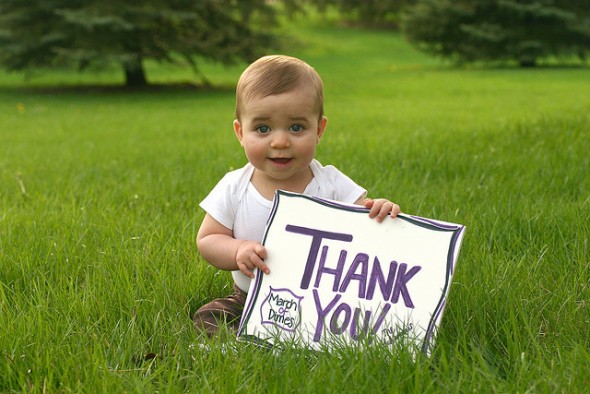
The interview ends, the Zoom window closes—or you finally make it back to your car—and your brain begins a forensic review of every sentence you said.
Did I talk too much? Was that answer strong enough? Why did I tell that story about the broken otoscope?
I get it. I have been a PA for more than 20 years, and I still know the strange mix of relief and second-guessing that follows a high-stakes conversation.
Before you replay the interview 47 times, do one useful thing: send a thoughtful thank-you email.
Not a novel. Not a generic message copied from the internet. And definitely not a five-paragraph tribute to the hiring manager's inspiring leadership.
Just a short, specific note that sounds like you and reminds the interviewer why the conversation went well.
Do you really need to send a thank-you email?
Yes.
A thank-you note will not rescue a disastrous interview or magically create a job opening. But it does show professionalism, attention to detail, and genuine interest. It also gives you one more chance to reinforce a connection while the conversation is still fresh.
The UC Davis Career Center recommends sending a brief thank-you email within 24 hours. Texas Tech's University Career Center advises writing to each person who interviewed you and mentioning something specific from the discussion.
That is the whole game: prompt, personal, and brief.
For a PA job, your note demonstrates the same qualities employers want in the clinic—clear communication, follow-through, and the ability to notice what matters. For a PA school interview, it shows maturity and respect for the time the program invested in meeting you.
When should you send it?
Send your thank-you email the same day or within 24 hours of the interview.
If you interview late in the afternoon, the following morning is perfect. If the interview is on Friday, you can send it Friday afternoon or Saturday morning. There is no prize for waiting until exactly 23 hours and 59 minutes.
What if you forgot and two days have passed?
Send it anyway. A sincere late note is better than the beautifully written message living forever in your drafts folder.
Before the interview ends, ask about the next step and expected hiring timeline. You can say:
What does the rest of the interview process look like, and when do you expect to make a decision?
That answer will save you from spending the next week interpreting every phone notification like it came from the Vatican.
Who should receive a thank-you note?
Ideally, send a separate email to each person who interviewed you.
The messages do not need to be completely different, but each should include one detail from your conversation. If one interviewer discussed the practice's new same-day clinic and another talked about mentoring new graduates, mention the appropriate detail in each note.
If you do not have everyone's email address, write to the recruiter or primary contact and ask them to share your thanks with the group. You can also politely request the other interviewers' contact information.
Do not guess at an email address and hope for the best. That is how your carefully written note ends up thanking a dermatologist in another state.
What should a PA interview thank-you email say?
Use this simple five-part structure:
- Thank them for their time and the opportunity to interview.
- Name the position or PA program so the context is immediately clear.
- Mention one specific part of the conversation that interested you.
- Connect that detail to your experience or goals without repeating your entire résumé.
- Reaffirm your interest and close warmly.
Keep it to roughly 100–175 words. The interviewer should be able to read it between patients, meetings, or bites of a sandwich they have been trying to finish since 11:30 a.m.
What subject line should you use?
Clear beats clever.
Good options include:
- Thank You for the Family Medicine PA Interview
- Thank You — Jordan Bennett, PA-C
- Example University PA Program Interview — Thank You
Avoid vague subject lines such as Following Up, Question, or the ever-mysterious Hello. Your interviewer should not have to open the email to discover why it exists.
For more on professional subject lines, greetings, and attachments, see my guide to PA school and PA job email etiquette.
What does a strong PA job thank-you email look like?
Here is a sample you can adapt:
Subject: Thank You for the Family Medicine PA Interview
Dear Dr. Patel,
Thank you for taking the time to speak with me yesterday about the physician assistant position at Harbor Family Medicine. I especially enjoyed learning about your team's approach to same-day access and the way new clinicians are paired with an experienced PA during onboarding.
Our conversation strengthened my interest in the role. My urgent care experience, comfort managing a broad range of acute complaints, and love of patient education would allow me to contribute while continuing to grow in longitudinal family medicine.
Thank you again for the opportunity. I would be excited to join your team and am happy to provide any additional information as you move through the hiring process.
Warmly,
Jordan Bennett, PA-C
555-555-0142
Notice what is not in the message: a complete autobiography, a list of every procedure Jordan has performed, or a paragraph explaining that Jordan is a passionate, dynamic, results-oriented thought leader.
The résumé already handles the details. The thank-you note simply connects the interview to the value you can bring.
If your résumé or cover letter still needs work, the PA Life Résumé, Cover Letter & Follow-Up Studio can help you build a PA-specific application package without fighting margins, templates, or a blinking cursor at midnight.
What about a PA school interview thank-you email?
The same structure works, but your focus changes. Instead of selling clinical productivity or specialty experience, connect the conversation to the program's mission, teaching model, community, or something meaningful you learned from a student or faculty member.
Subject: Thank You for the Example University PA Interview
Dear Professor Williams,
Thank you for speaking with me during yesterday's interview at the Example University PA Program. I appreciated learning how students work with community clinics throughout the didactic year, especially your description of the student-led hypertension outreach project.
That commitment to service is one of the reasons I am so interested in Example University. My experience as a medical assistant in a community health center showed me how much trust and continuity matter, and I would be excited to continue that work as a PA student.
Thank you again for your time and consideration. It was a pleasure meeting you and learning more about the program.
Warmly,
Maya Chen
Be enthusiastic, but stay grounded. You are thanking a real person for a real conversation—not writing a love letter to a building you visited for four hours.
When should you follow up after the thank-you email?
First, follow the timeline the interviewer gave you.
If they said a decision would be made by Friday, do not email Wednesday morning asking whether there is any news. Wait until one or two business days after the stated date.
If they gave you no timeline, a polite check-in after about seven to ten business days is reasonable. Large health systems and universities can move slowly. Credentialing questions, schedule changes, vacations, and committee meetings can turn a quick decision into a small geological era.
One concise follow-up is professional. An email every three days is not persistence; it is inbox cardio.
Sample PA job interview follow-up email
Subject: Follow-Up: Family Medicine PA Interview
Dear Dr. Patel,
I hope you are doing well. I wanted to follow up regarding the physician assistant position at Harbor Family Medicine. When we spoke on August 12, you mentioned that the team hoped to complete interviews by the end of the month.
I remain very interested in the role and especially excited about the opportunity to contribute to your same-day access program. Please let me know if I can provide any additional information as you complete the process.
Thank you again for your time and consideration.
Warmly,
Jordan Bennett, PA-C
If there is still no response, you may send one final brief message a week or two later. After that, let it rest and keep applying. Silence is frustrating, but repeatedly knocking on a locked inbox rarely opens the door.
What should you avoid?
Most thank-you email mistakes come from trying too hard or moving too fast.
- Do not send the same note to everyone. At minimum, personalize one sentence for each interviewer.
- Do not write an essay. The thank-you note is a final handshake, not a second personal statement.
- Do not correct every interview answer. Clarify one important point if necessary, but do not submit a postgame analysis.
- Do not sound impatient. Hiring delays are common and usually have nothing to do with you.
- Do not send gifts. No flowers, coffee cards, baked goods, or clever promotional items. A professional email is enough.
- Do not forget the attachment they requested. If the interviewer asked for references, a writing sample, or an updated résumé, send it promptly and name the file clearly.
- Do not misspell the person's name. This is a short email. Every typo receives a larger percentage of the spotlight.
Boston University's career center recommends including one or two specific things that impressed or interested you. That small detail is usually what separates a genuine note from a template wearing a necktie.
Can AI help you write the email?
Yes—as an editor, not an eyewitness.
You can use AI to tighten the message, check grammar, or help you organize the five-part structure. But you need to supply the facts: who you met, what you discussed, and why the opportunity matters to you.
Do not let a tool invent details, exaggerate your experience, or turn your voice into corporate oatmeal. If the final email contains phrases you would never say out loud, simplify it.
The PA Life Application Studio is designed specifically for PA résumés, cover letters, thank-you notes, and recommendation materials. It guides the structure while keeping your actual experience—and your voice—at the center.
What should you check before pressing Send?
Take 30 seconds and confirm:
- The interviewer's name and title are correct.
- The organization or PA program name is correct.
- You named the correct position.
- You included one real detail from the interview.
- Your message clearly expresses interest without sounding desperate.
- Any requested attachment is included and professionally named.
- Your phone number and signature are accurate.
- You read the message once on your phone, where missing words have an uncanny ability to reveal themselves.
Then send it and get back to your life.
Build the rest of your PA application package
A strong thank-you note works best when the résumé and cover letter that came before it tell the same clear story.
With the PA Life Résumé, Cover Letter & Follow-Up Studio, you can:
- Build a résumé for a new graduate or practicing PA.
- Upload an existing résumé and reorganize it in a PA-specific format.
- Create a targeted cover letter.
- Draft a personalized interview thank-you or follow-up message.
- Preview and print a clean, professional application.
Your thank-you email does not need to be brilliant. It needs to be prompt, personal, accurate, and sincere.
That is good advice for email—and, come to think of it, for much of medicine.
Thanks for reading. I’m rooting for you.
Stephen Pasquini, PA-C
View all posts in this series
- My PA School Interview: The Journey of a Lifetime
- The Top 46 Physician Assistant Applicant Interview Questions
- Use this Interview Hack to Get The Physician Assistant Job of Your Dreams!
- PA School and PA Job Email Etiquette: Thank-You & Follow-Up Tips
- PA Interview Thank-You Email and Follow-Up: Samples & Timing
- Your Main Goal on Your Path to PA Shouldn’t be Immediate Success or Money, But to Learn as Much as Possible
- A Look Inside Two PA School Interviews
- 5 Things I’ve Learned Going Into My Fourth Physician Assistant Application Cycle
- How to Create a Winning Physician Assistant Résumé (Step by Step)
- 300+ PA School Interview Questions You Should Be Ready to Answer
- PA School Mock Interviews: Prepare with a LIVE, Recorded Video Interview
- The 10 Best Websites for Physician Assistant Job Search in 2026
- Mock Physician Assistant School Interview With Taylor Hill Pre-PA
- Mock PA School Interview With Pre-PA Lily Boyle
- The Interview That Got This Pre-PA Into 5 PA Schools
- 101 PA School Applicants Answer: What’s Your Greatest Strength?
- Mastering Your PA School Interview: Tone Matters
- The Worst PA School Interview Question Ever!
- How to Write the Perfect Physician Assistant Cover Letter
- Why Choose PA Over NP? Here’s the Perfect Answer
- Don’t Make This Critical PA School Interview Mistake!
- 5 Best Ways to Give a Memorable PA School Interview
- 3 Things to Do the Night Before Your PA School Interview
- How to Prepare for Your PA School Interview Day Essay
- The 4 Most Common Reasons PAs Quit Their Jobs
- How to Squash PA School Interview Day Stress (4 Simple Steps)
- Mind Mapping: A Tool for Personal Statements, Supplemental Essays, and Interviews
- Here’s What a REAL PA School Interview Looks Like
- My PA School Interview Preparation Strategy
- How to Bring Your Best on PA School Interview Day
- How to Cope with PA School Application Rejection
- ChatGPT Answers the Top 46 PA School Applicant Interview Questions
- Why Our Program? How to Answer This Common Supplemental Essay and Interview Question
- What is a PA? How to Nail This Not-So-Easy Interview Question
- How to Answer Behavioral Questions in Your PA School Interview
- Multiple Mini Interview (MMI) Strategies for PA School: A Comprehensive Guide
- 10 Best Cities for Physician Assistants in 2026 (Salary vs. Cost)
- Physician Assistant Salary 2026: Four Surprising Truths Revealed
- Here are 10 Reasons why PAs remain one of the top-ranked careers in America in 2026 (and beyond)
- PA School Interview Practice With Maya: Your AI Mock Interview Coach
- PA School Interview Ethical Questions: 5 Scenarios and How to Answer
You may also like -
 American Cheese: The Origin of the U.S. Physician Assistant
This is part one of a nine-part series by documentary filmmaker Adam Halbur on the physician assistant model around the world.
What do American Cheese and PAs Have in Common?
U.S. Patent 2759308, for the first American […]
American Cheese: The Origin of the U.S. Physician Assistant
This is part one of a nine-part series by documentary filmmaker Adam Halbur on the physician assistant model around the world.
What do American Cheese and PAs Have in Common?
U.S. Patent 2759308, for the first American […]- PA School and PA Job Email Etiquette: Thank-You & Follow-Up TipsNot sure what to write to a PA program or employer? Here’s how to choose a subject line, say thank you, follow up, and avoid the mistakes that make people hit Delete.
- Physician Assistant vs. Nurse Practitioner vs. Medical Doctor
The biggest difference between a PA and an NP is the training pathway. Physician assistants complete broad graduate medical education. Nurse practitioners are registered nurses who complete graduate nursing education in a specific […]


CASPA Personal Statement Help
 We offer comprehensive, start-to-finish personal statement assistance or help to perfect a draft you already have. We have services to fit every budget.
 Schedule a Live Recorded PA School Video Interview
We offer 60-minute mock PA school interviews with post-interview feedback and advice. Includes a recorded video of your interview that you can watch, download, or share with family and friends. There is no better way to prepare!
Schedule an InterviewPre-PA Consulting and Advising
 Our pre-PA coaching service consists of a 1-hour phone consultation focused on addressing your specific questions or concerns about becoming a PA and applying to PA school.


Hi Stephen,
Thank you for the interview hints and advice. I got a question. Do you have a sample of how to decline a job offer? I had one months ago, I did all the follow up, then I had another job offer, which is the one I’m taking now. I want to tel the first offer that I don’t want theirs. Should I mention the reason, or just say that I am looking other opportunities?
I appreciate your input.