
Are you ready to get started? Choose your package, and we will begin today!
Single Edit One-on-one Service Supplemental Essays
Your success is our passion. (See just some of our 100's of testimonials and comments below). We are ready to help. Our current PA school essay editing service status (26th October 2026): Accepting New Submissions

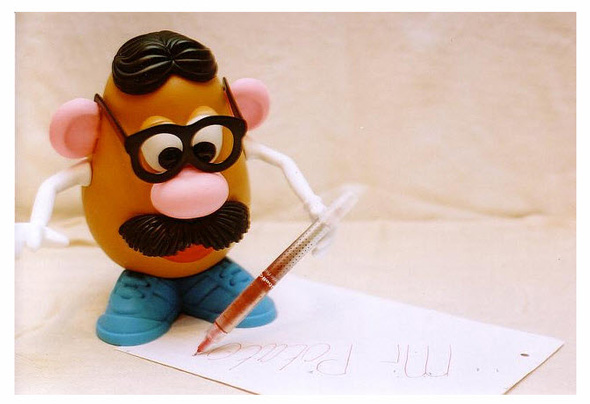
(Photo: Me circa 1987, just thinking about my future PA School Essay)
- Are you struggling to write your physician assistant personal statement?
- Are you out of ideas, or just need a second opinion?
- Do you want an essay that expresses who you truly are and grabs the reader's attention in the required 5,000-character limit?
We are here to help perfect your PA school essay
I have written countless times on this blog about the importance of your personal statement in the PA school application process. Beyond the well-established metrics (GPA, HCE/PCE hours, requisite coursework, etc.), the personal statement is the most crucial aspect of your application.
This is your time to express yourself, show your creativity, skills, and background, and make a memorable impression in seconds. This will be your only chance, so you must get it right the first time.
For some time, I had been dreaming about starting a physician assistant personal statement collaborative.
A place where PA school applicants like yourself can post their PA school essays and receive honest, constructive feedback followed by an acceptance letter to the PA school of your choice!
I have been reviewing a ton of essays recently, so many in fact that I can no longer do this on my own.
To solve this problem, I have assembled a team of professional writers, editors, and PA school admissions specialists who worked to revise and perfect my PA school application essay.
 Beth Eakman has taught college writing and worked as a professional writer and editor since the late 1990s. Her projects have involved a wide range of disciplines and media, from editing scientific research and technical reports to scriptwriting for television. Her writing has appeared in academic, professional, and popular publications. Beth lives with her family just outside Austin, Texas. She enjoys the unique opportunity that The PA Life offers to combine her training as a writer and editor with her experience teaching in order to support PAs and aspiring PAs in achieving their professional goals.
 Carly Hallman is a professional writer and editor with a B.A. in English Writing and Rhetoric (summa cum laude) from St. Edward's University in Austin, Texas. She has worked as a curriculum developer, English teacher, and study abroad coordinator in Beijing, China, where she moved in 2011. In college, she was a Gilman Scholar and worked as a staff editor for her university's academic journal. Her first novel, Year of the Goose, was published in 2015, and her first memoir is forthcoming from Little A Books. Her essays and creative writing have appeared in The L.A. Review of Books, The Guardian, LitHub, and Identity Theory, among other publications.
Read more client testimonials or purchase a revision
We Work as a Team
Our team of professional editors is wonderful at cutting out the "fluff" that makes an essay lose focus and sets people over the 5,000-character limit. Their advice is always spot-on.
Sue, Sarah, and Carly are amazingly creative writers who will take your "ordinary" and turn it into entirely extraordinary.
I mean it when I say this service is one-of-a-kind! We have spent countless hours interviewing PA School admissions directors and faculty from across the country to find out exactly what it is they are looking for in your personal statement.
We even wrote a book about it.
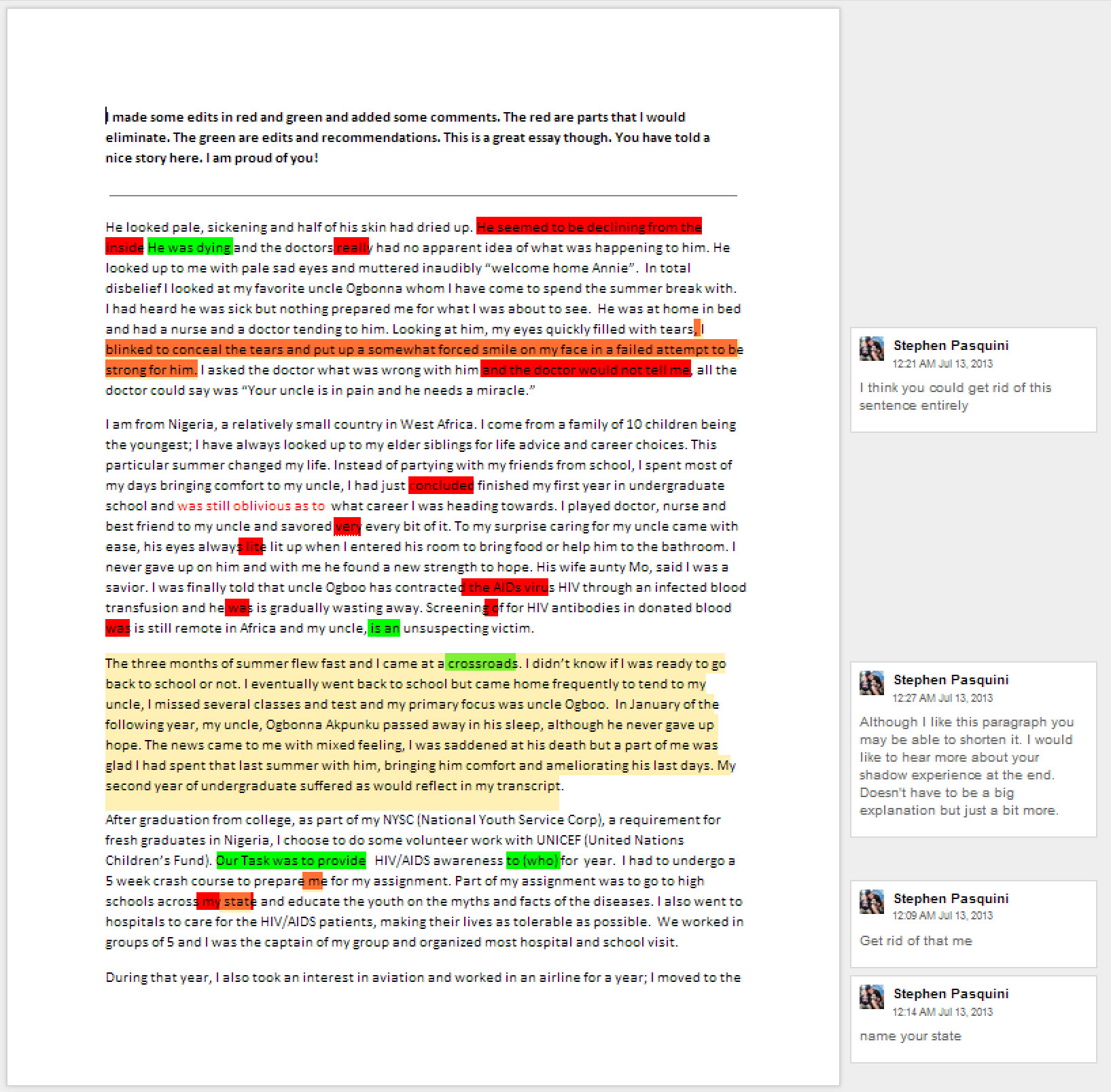 To collaborate, we use Google Drive. Google Drive is free, has an intuitive interface with integrated live comments in the sidebar, the ability to have a real-time chat, to collaborate effortlessly, and to compare, revise, or restore revisions on the fly. Google Drive also has an excellent mobile app that will allow you to make edits on the go!
Our team has worked with hundreds of PA school applicants within the Google Drive environment, and we have had enormous success.
The Physician Assistant Essay and Personal Statement Collaborative
I have set up two options that I hope will offer everyone a chance to participate:
- One-of-a-kind, confidential, paid personal statement review service
- A collaborative, free one (in the comments section)
Private, One-On-One Personal Statement Review Service
If you are interested in the paid service, you may choose your plan below.
The Personal Statement Review Service is:
- Behind closed doors within a private, secure network using Google Drive.
- It is completely interactive, meaning we will be able to provide real-time comments and corrections using the Google Drive interface.
- Telephone consultations are included with all edits above the single edit level. It’s often hard to communicate exactly what you want hundreds of miles away; for this reason, we offer the option to edit right along with us over the telephone while sharing in real-time over Google Drive. This is an option available to all our paid clients who purchase above the single edit level.
- We provide both revision and editing of all essays. What’s the difference? See below
- We will provide feedback, advice, and help with brainstorming and topic creation if you would like.
- We will help with a “final touch-up” before the big day, just in case your essay needs a few minor changes.
Why Choose Our Service?
- It’s not our opinion that matters. We have gone the extra step and personally interviewed PA school administrators from across the US to find out exactly what they think makes a personal statement exceptional.
- We are a team of PAs and professional writers, having worked over ten years with PA school applicants like yourself, providing countless hours of one-on-one editing and revision.
- Our clients receive interviews, and many go on to receive acceptance into their PA School of choice.
Because we always give 100%, we will open the essay collaborative for a limited number of applicants each month and then close this depending on the amount of editing that needs to be done and the time that is available.
Our goal is not quantity but quality. We want only serious applicants who are serious about getting into PA school.
Writing is not a tool like a piece of software but more like how a photograph can capture your mood. It’s more like art. The process of developing a unique, memorable personal statement is time-intensive, and it takes hours to compose, edit, finalize, and personalize an essay.
As Antoinette Bosco once said:
And this is why I am charging for this service. We love helping people find stories that define their lives, and we love helping individuals who have the passion to achieve their dreams. It’s hard to describe the feeling I get when an applicant writes back to tell me they were accepted into PA school.
There is no price tag I can place on this; it’s the feeling we get when we help another human being. It’s just like providing health care. But this takes time.
Interested? Choose your plan below.
Read more client testimonials.
Free Personal Statement Review
Post your essay in the comments section for a free critique
We want to make this opportunity available to everyone who would like help with their essay, and that is why we are offering free, limited feedback on the blog.
You post your essay in the comments section, and you will get our critique. It is that easy. We will try to give feedback to every single person who posts their COMPLETE essay here in the comments section of this blog post.
Also, by posting your comment, we reserve the right to use your essay.
We will provide feedback on essays that are complete and fit the CASPA requirements (View CASPA requirements here). We will not provide feedback on partial essays or review opening or closing statements. Your essay will be on a public platform, which has both its benefits and some obvious drawbacks. The feedback is limited, but we will try to help in any way we can.
Note: Comment Rules: Remember what Fonzie was like? Cool. That’s how we’re gonna be — cool. Critical is fine, but if you’re rude, I will delete your stuff. Otherwise, have fun, and thanks for adding to the conversation! And this should go without saying: if you feel the need to plagiarize someone else’s content, you do not deserve to go to PA school.
* Also, depending on the time of year, it may take me several weeks to reply!
We love working with PA school applicants, but don't just take our word for it!
How to submit your essay for the paid service
If you are serious and would like to have real, focused, and personalized help writing your personal statement, please choose your level of service and submit your payment below.
After you have submitted your payment, you will be redirected to the submissions page, where you can send us your essay as well as any special instructions. We will contact you immediately upon receipt of your payment and essay so we may begin work right away.
Pricing is as follows:
Choose your plan, then click "Buy Now" to submit your essay, and we will get started right away!
Every purchase includes a FREE digital copy of our new 100-page eBook, How to Write Your Physician Assistant Personal Statement, Our 101 PA School Admission Essays e-book, the expert panel audiobook, and companion workbook. This is a $65 value included for free with your purchase.
All credit card payments are processed via PayPal over a secure HTTPS server. Once your payment is processed, you will be immediately redirected back to the essay submission page. There, you will submit your essay along with some biographical info and all suggestions or comments you choose to provide. You will receive immediate confirmation that your essay has been securely transmitted as well as your personal copy of "How to Write Your Physician Assistant Personal Statement." Contact [email protected] if you have any questions, comments, or problems - I am available 24/7.
The hourly service includes your original edit and one-on-one time over Google Drive. It is simple to add more time if necessary, but you may be surprised at what a difference just a single edit can make. We find our four-hour service to be the most effective in terms of time for follow-up and full collaboration. We are open to reduced-rate add-ons to suit your individual needs.
Writing and Revision
All writing benefits from rewriting when done well.
When you are in the process of writing a draft of an essay, you should be thinking first about revision, not editing.
What’s the difference?
Revision refers to the substantial changing of text. For example, it may include re-organizing ideas and paragraphs, providing additional examples or information, and rewriting a conclusion for clarity.
Editing, on the other hand, refers to correcting mistakes in spelling, grammar, and punctuation.
We perform both revision and editing on all submissions.
How to submit your PA school essay for the FREE editing service
Follow the rules above and get to work below in the comments section. I look forward to reading all your essay submissions.
– Stephen Pasquini PA-C
View all posts in this series
- How to Write the Perfect Physician Assistant School Application Essay
- The Physician Assistant Essay and Personal Statement Collaborative
- Do You Recognize These 7 Common Mistakes in Your Personal Statement?
- 7 Essays in 7 Days: PA Personal Statement Workshop: Essay 1, “A PA Changed My Life”
- PA Personal Statement Workshop: Essay 2, “I Want to Move Towards the Forefront of Patient Care”
- PA Personal Statement Workshop: Essay 3, “She Smiled, Said “Gracias!” and Gave me a Big Hug”
- PA Personal Statement Workshop: Essay 4, “I Have Gained so Much Experience by Working With Patients”
- PA Personal Statement Workshop: Essay 5, “Then Reach, my Son, and Lift Your People up With You”
- PA Personal Statement Workshop: Essay 6, “That First Day in Surgery was the First Day of the Rest of my Life”
- PA Personal Statement Workshop: Essay 7, “I Want to Take People From Dying to Living, I Want to Get Them Down From the Cliff.”
- Physician Assistant Personal Statement Workshop: “To say I was an accident-prone child is an understatement”
- 9 Simple Steps to Avoid Silly Spelling and Grammar Goofs in Your PA School Personel Statement
- 5 Tips to Get you Started on Your Personal Essay (and why you should do it now)
- How to Write Your Physician Assistant Personal Statement The Book!
- How to Write “Physician Assistant” The Definitive PA Grammar Guide
- 101 PA School Admissions Essays: The Book!
- 5 Things I’ve Learned Going Into My Fourth Physician Assistant Application Cycle
- 7 Tips for Addressing Shortcomings in Your PA School Personal Statement
- The #1 Mistake PRE-PAs Make on Their Personal Statement
- The Ultimate PA School Personal Statement Starter Kit
- The Ultimate Guide to CASPA Character and Space Limits
- 10 Questions Every PA School Personal Statement Must Answer
- 5 PA School Essays That Got These Pre-PAs Accepted Into PA School
- 7 Questions to Ask Yourself While Writing Your PA School Personal Statement
- 101 PA School Applicants Answer: What’s Your Greatest Strength?
- 12 Secrets to Writing an Irresistible PA School Personal Statement
- 7 Rules You Must Follow While Writing Your PA School Essay
- You Have 625 Words and 2.5 Minutes to Get Into PA School: Use Them Wisely
- What’s Your #1 Personal Statement Struggle?
- 31 (NEW) CASPA PA School Personal Statement Examples
- How to Prepare for Your PA School Interview Day Essay
- Should You Write Physician Associate or Physician Assistant on Your PA School Essay?
- Meet the World’s Sexiest PA School Applicants
- PA School Reapplicants: How to Rewrite Your PA School Essay for Guaranteed Success
- How to Write a Personal Statement Intro that Readers Want to Read
- PA School Reapplicant Personal Statement Checklist
- How to Deal with Bad News in Your Personal Statement
- Inside Out: How to use Pixar’s Rules of Storytelling to Improve your PA Personal Statement
- Ratatouille: A Pixar Recipe for PA School Personal Statement Success
- Personal Statement Panel Review (Replay)
- Mind Mapping: A Tool for Personal Statements, Supplemental Essays, and Interviews
- Start at the End: Advice for your PA School Personal Statement
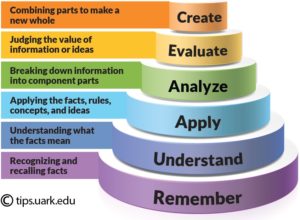
- Elevate Your Personal Statement: Using Bloom’s Taxonomy for Impactful Writing
- How to Write a Captivating Hook for Your PA School Personal Statement
- 3 Surprising Truths About the New CASPA Life Experiences Essay (And Why You Can’t Ignore It)
- 3 PA School Personal Statement Mistakes Our Editor Sees Again and Again
You may also like
 Elevate Your Personal Statement: Using Bloom’s Taxonomy for Impactful WritingThe most common advice writers often give pre-PAs is to "show, don't tell" in your essays. (Though we like to encourage showing …
 Who Gets Into PA School in 2026? Here’s What You Need to KnowLeslie Mean is a 23-year-old single white female who presents to the PA school admissions committee on her second attempt to get …
 Start at the End: Advice for your PA School Personal StatementNot sure what to include in your personal statement? Start at the End! The conclusion should summarize your entire essay. Consider the …


CASPA Personal Statement Help
 We offer comprehensive, start-to-finish personal statement assistance or help to perfect a draft you already have. We have services to fit every budget.
 Schedule a Live Recorded PA School Video Interview
We offer 60-minute mock PA school interviews with post-interview feedback and advice. Includes a recorded video of your interview that you can watch, download, or share with family and friends. There is no better way to prepare!
Schedule an InterviewPre-PA Consulting and Advising
 Our pre-PA coaching service consists of a 1-hour phone consultation focused on addressing your specific questions or concerns about becoming a PA and applying to PA school.


I was sitting in the examination room of the cardiology office with tears slowly streaming down. My father could read the sign of disappointment on my face as the cardiologist briefly explains my EKG results with what seemed as indifference to my situation. At the age of 15 a cardiologist diagnosed me with a heart condition called as Lown–Ganong–Levine syndrome. However, The cardiologist was not completely certain as to the causation of my irregular heartbeat and referred me to a specialized cardiologist. Being an athletic girl who played soccer at an extremely competitive level I was perplexed as to why I was unexpectedly experiencing these alarming symptoms due to an irregular and very rapid heartbeat. Multiple procedures and four cardiologists later I was forced to retire from competitive soccer and left without answers. The most frustrating part of this entire process is what seemed as the lack of compassion and empathy from these doctors. I was left heartbroken with responses like “Just stop playing soccer if that’s when your heart bothers you” and “maybe you should find a new hobby”. This feeling of disappointment from the insensitive doctors made me realize I want to be a person who provides admirable healthcare to patients in a caring way. Through my experiences and also investing time job shadowing a physician assistant (PA) and doctor have further solidified my desire to become a PA. A doctor and PA are both knowledgeable, but a PA is able to spend more quality time with the patient as opposed to a doctor who is on a strict schedule because their time is very valuable. This additional time allows the PA to interact with patient and gain the patient’s trust.
When I was 19 years old I taught myself the foundation to medicine by becoming a certified and registered pharmacy technician. Over the past 6 years I have worked in various pharmacy settings ranging from retail to hospital positions. By excelling at my job and taking the extra steps to absorb as much knowledge as possible, I can interpret sigs on prescriptions, know which medications are used for specific therapies, understand how medications should be taken for optimum results, and fully grasp the process insurance companies use to cover medications. As a PA I will be able to exercise this information by providing accurate and speedy care. Knowing that a patient must first try Omeprazole before prescribing Nexium in order for the insurance company to cover Nexium allows the patient to quickly treat their GERD without wasting valuable time. Currently, I work for a company that provides medications, durable medical equipment, and skilled nursing and rehabilitative care to medically fragile infants and children. We care for children that are genetically born with a defect, which impairs their ability to ingest or digest food. Others are born without congenital defects, but experience a traumatic event, such as a near drowning experience or tragic car accident, which leaves them with debilitated. I may not directly interact with these children on a daily basis, but seeing their faces light up when I do justifies all the care, precision, and hard work I put into my job. This gratification motivates me to further my career in the healthcare field and become a PA so that I am able to provide more direct patient care and see these smiling faces on a daily basis.
Not only has my work experience proved that I’m ready to dedicate myself toward becoming a PA, but my schoolwork has as well. When I first started college I can honestly say I wasn’t mentally ready due to a lack of focus. I placed more emphasis on trivial things, like hanging out with my friends instead of studying. It was uncharacteristic of me to be failing classes, as I was the girl who graduated high school 23rd in a class of 900 students because of my 4.1 GPA. I lost sight of my goals in the beginning of college and soon realized my priorities. After my realization, I spent dramatically less time with my friends and more time with my books. Managing my time and taking the proper amount of time to prepare for my tests improved my grades.
Although I adore being a pharmacy technician, it hasn’t fulfilled my need for patient care. I want to participate more directly than I currently can, I want to be much more hands on. With that being said, I would like to step out of the background and move towards the forefront of patient care. I want to be the person with the proper skill sets and medical knowledge so that I can help others live a life of the highest quality possible. As a PA there’s a choice of many career paths ranging from assisting in surgery to working in a pediatric office. Therefore, becoming a PA opens countless doors and opportunities for intellectual, personal, and professional growth, while simultaneously serving the needs of others. Becoming a PA is exactly the path for me.
Hi Justine,
If there’s anything positive to say about your diagnosis at age 15 is the tremendous insight it gave you about the medical profession. You’re smart to open your essay that way. The other things you write about are good, too. It’s important to explain why your grades weren’t great, and to talk about your adult experiences. This is a very good start to your statement.
I say good start because there are some issue. Some are grammatical, such as using past tense and present tense in the same few sentences and placing quotation marks inside of punctuation. Other examples — writing the singular word doctor and then referring to the doctor as “their,” and saying “foundation to” instead of “foundation of.” Although these are fairly minor errors and very common, when I interviewed Admissions Directors and faculty, all said grammar errors could be fatal to the application.
There are two ways to really make your essay shine. One is structure and the second is content.
Structurally, you’d move the section about your shadowing experiences from the first paragraph to a new third paragraph. You’ll have to change some of the way you’ve written your essay to make it work, but that’s part of the process.
As to content, you’d shorten your first paragraph (I’ll show you below) and use the extra space to write about your shadowing experiences. You’ll do this for two reasons. One, every person from admissions I spoke with said, “Keep your personal story short. A few sentences is enough. Secondly, you want to show your readers that you know what it takes to do the job, and then tie your skills to some of those requirements. I’m not talking about making a list of PA job duties, but rather to describe a case or an overview of what you learned by shadowing, and how some of your personal skills (not clinical as you’ve already done that when describing your pharmacy work) fit in with the profession. Take out the “therefore” in your conclusion. It takes away from the strength of your sentence.
Here’s the edited first paragraph, which is now two paragraphs. Notice that the first section is in present tense. It makes it real and compelling despite the lapse in time:
I’m sitting in the examination room of the cardiology office with tears slowly streaming. My father could read the sign of disappointment on my face as the cardiologist briefly explains my EKG results with what seems as indifference to my situation. At the age of 15 I am diagnosed with a heart condition called as Lown–Ganong–Levine syndrome.
Multiple procedures and four cardiologists later, I was forced to retire from competitive soccer and left without answers. The most frustrating part of this entire process was the lack of compassion and empathy from doctors who said, “Just stop playing soccer if that’s when your heart bothers you” and “Maybe you should find a new hobby.” This insensitivity made me realize I want to be a person who provides admirable healthcare to patients in a caring way.
Look at your essay and see where you have extra words. There are many of them. Cut ruthlessly to make your essay as concise as possible and focused on the essentials.
Best of luck.
Sue Edmondson
http://www.thepalife.com
I woke up with a tube down my throat, unable to speak, overwhelmed by voices all repeatedly saying my name. Over all of them I heard my mom, “Lindsay, squeeze my hand if you can hear me”, so I did, but that’s where the memory ends. That’s where a week in the ICU and road to recovery began. I would come to learn that I had suffered a heat stroke while running a half marathon on a scorching July morning and my organs began to shut down. Although it was one of the more difficult times in my life, it was also one of the most important, as it helped solidify my desire to become a Physician Assistant and to change lives like one doctor changed mine.
Long before my accident, I had the opportunity to shadow an Orthopedic Trauma Surgeon. Over the years, I’ve gone into the operating room with him dozens of time, compiling hundreds of hours, but I will never forget the very first surgery I saw. It was a middle-aged man undergoing an ORIF of his fractured humerus. For the surgeons, it was a run-of-the-mill surgery, just another Monday. But for me, it was the first day of the rest of my life. A wide-eyed 18-year old surrounded by blue sterile fields, drills and screws, I knew where I wanted to direct my life. That was when I decided that a career in the medical field was the only option for me. During numerous visits to the OR, I watched the attending surgeon, the residents, the PA and the nurses. The way they worked together reminded me of my high school track team when we ran a relay race, they passed the tools between members, each doing some of the work to achieve a common goal. At this point, I was not entirely sure what a PA did. The more I observed, the more I began to notice that the PA is a crucial part to the relay team; an extension of the team of doctors. The doctors pass the PA the baton and they shoulder some of the work so that as doctors they can focus on their specialties. It allows the entire relay team to reach their goals and creates the safest, most effective approach to patient care. Much like being a part of the 4x800m relay team, I could see myself fitting in to the medical relay team as the PA, the middle leg, the extension between the doctors and the finish line of helping the patient.
Following my heat stroke was a weeklong stint in the ICU at Columbia St. Mary’s Hospital. During this time I was scared, sad, confused, defeated. My organs had begun to fail and were slowly recovering, which left me exhausted. I could barely stand, let alone walk, and had more lines in me than I could count. One doctor helped me through it all. Dr. Stepke, a gastroenterologist, was at my bedside every day, as my liver had the worst injury. Not only did he provide me with extraordinary medical care, but with the mental and emotional support that I needed. I was told I would be on bed rest for six weeks and limited physical activity for six weeks after that. For a runner, this was awful. The compassion and empathy that Dr. Stepke had for me soars above any other health care worker I’ve ever come across. I was 19, in the hospital, scared, and he made me feel like everything was going to be okay, like he truly cared for me and that he understood how I was feeling. I followed up with Dr. Stepke weekly for six weeks and he never wavered in his support during my recovery. There is something so invaluable about learning first hand the effects that your potential career can have on someone. My relationship with Dr. Stepke was another reassurance that I was meant to be a PA. Since then, every step of the way on my journey towards becoming a PA, I have always strived to make every patient feel how he made me feel: supported, cared for, and understood.
In more than two years working as a CNA, there is one patient that stands out. Her name was Laura, a 37-year-old admitted with a GI bleed. Laura was an alcoholic with dozens of medical problems stemming from her drinking and I would quickly come to realize that she was nearing the end of her short life. Suddenly her care became so much more than the medicine. I cared for her mentally and emotionally, as Dr. Stepke had done for me, while she slowly accepted what was going to happen, while she and the Child Life Specialist told her two young sons, while she was no longer able to walk on her own. This was the hardest time in her life. She was defeated, depressed, dying. After two weeks of working with Laura almost every day, she was discharged. Laura died two days later in the comfort of her home surrounded by family. In my time with her, I did my best to provide her with the empathy and compassion that I had once felt from Dr. Stepke. In my time as a CNA, I’ve learned communication, working as a cohesive team, patience and improvisation, but working with Laura taught me so much more. Through her, I learned about the importance of holistic medicine, in taking care of the mind, body and soul. This can best be achieved by working together as healthcare professionals, passing the baton and ultimately crossing the finish line as a team.
First, I observed and saw I wanted to be a Physician Assistant. Then, I was the patient and felt that I wanted to be a Physician Assistant. Once I felt the impact an incredible doctor can have on a person, I adopted those practices into my own role as a CNA. And once the two came together, working as a team to care for someone in such a vulnerable state, like I had once been, I saw the rest of my life unfold as a Physician Assistant.
Hi Lindsay,
This is an excellent start to your personal statement. Your descriptions are vivid — I can picture you perfectly in the ICU, and that’s exactly what you want your readers to do.
In the third paragraph you lose your focus. The goal is to let Admissions Directors and faculty why you want to be a PA. When I read this, I saw no connection between your interactions with Dr. Stepke and wanting to be a PA other than he showed unwavering support. Why did your relationship with the doctor make you want to be a PA? You never say and you need to. Why not be a doctor instead? Compassion and support is a small part of a PA’s job. You could omit most of that paragraph and just use the following:
“Following my heat stroke was a weeklong stint in the ICU at Columbia St. Mary’s Hospital. One doctor helped me through it all. Dr. Stepke, a gastroenterologist, was at my bedside every day, as my liver had the worst injury. Not only did he provide me with extraordinary medical care, but with the mental and emotional support that I needed. Since then, every step of the way on my journey towards becoming a PA, I have always strived to make every patient feel how he made me feel: supported, cared for, and understood.”
In your paragraph about Laura (which overall was excellent) omit he references to Dr. Stepke. You don’t need them. This sentence would then read: “Suddenly her care became so much more than the medicine. I cared for her mentally and emotionally.” Leave this sentence out completely: “In my time with her, I did my best to provide her with the empathy and compassion that I had once felt from Dr. Stepke.” It’s redundant for one.
Use the extra space to reinforce i why you’ve chosen to pursue the PA profession as opposed to any other. Then you’ll be able to make your conclusion stronger. It’s weak as it stands now. Saying that you “felt” you wanted to be a PA isn’t compelling.
I hope this helps.
Best of luck.
Sue Edmondson
http://www.thepalife.com
The patient was a 8 year old boy, dizzy, scared, and angry. His hearing aids weren’t working for him and the world was a cacophony of distorted sounds that made him unwilling to spend time communicating with his family, teachers, and friends. But on this day his physician assistant kneeled down to his eye level, and communicated with him slowly, by writing his thoughts on paper and by mouthing his words so the patient could understand, to ask what was wrong. The physician assistant made the patient feel safe through his clinical empathy and bedside manner. His treatment helped the patient get better and feel happier.
The patient was me. The physician assistant was Danny Kamlet. Danny had no way to understand the chilled isolation I felt as a hearing impaired youth; when I desperately wanted to hear the joke everyone laughed at, the teacher’s explanation for the math problem on the board, or to flirt with the cute girl. Teachers had said I was a poor student when the reality was that I couldn’t read their lips and understand them as they faced the blackboard and lectured. Many of my hearing-disabled peers, unfortunately, didn’t graduate high school or college but I persevered due to the compassion, communication, and resourcefulness of my mother and health care providers like Danny.
My mother supported my deaf brother and me by herself; if one of our hearing aids broke, she took out mortgages on her house so that we could get another one. She read with us every night to help us learn what we didn’t in school, instilling in me an appreciation for hard work and education so I could thrive. I learned to compensate by studying with other students, and communicating with my teachers so that I can excel in my courses.
Danny and other health care providers helped change my life for the better through empathetic communication in addition to their medical knowledge. A few years ago, after I finished my sophomore year of college, my doctor and audiologist helped me receive financial support to get cochlear implants that have greatly improved my hearing and quality of life. After college, my physician assistant Michael Johnson used his inquisition in a general checkup to find that I was losing eyebrow hair and was consistently fatigued. He surmised that I might have hypothyroidism and low vitamin D blood levels and subsequent tests confirmed this to be true. His prescription of Levothyroxin and my supplementation of vitamin D have helped to improve my energy, mental acuity, and metabolism.
Because of my amazing health care providers, I’ve grown so much as a person and student in recent years. With my improved hearing, I’ve taken up new hobbies that I previously would have avoided, such as blues dancing. In the 47 credits I’ve completed after receiving treatment for hypothyroidism and upgrading my cochlear processors, I’ve excelled with a GPA of 3.76. I owe so much of my improvement to the care of my physician assistants.
In the model of compassionate giving set by my health care providers, I’ve tried to live my life doing what I can to help those that are less privileged. I’ve helped other deaf people get disability benefits so they can afford critical equipment upgrades. I spent time in college baking bread for the abused women of Safe Harbor through a group called Baked Benevolence. I asked my friends to give my twenty-first birthday gifts to my run-a-thon effort at my college, and raised over 200 dollars for abused children of Knox County. I will never completely understand the gamut of emotions that abused children and women have gone through but I empathize with them having uncertain health and understand how to communicate and help them. By contributing to their lives, I found fulfillment as a member of a healthy community; treating individuals of all backgrounds with respect and grace.
This is why I want to be a physician assistant! I want to communicate and empathize to help the scared and confused patient feel safe and informed. I want to give comprehensive examinations that get to the root of each symptom and communicate how to afford and administer treatment. I want to help underserved populations receive the full extent of health benefits possible. As someone who overcame a disability through excellent health care, I dream of helping other underserved populations receive the best health care possible.
Hi Gabe,
The opening two paragraphs of your essay are excellent. They grabbed my attention immediately, and made me want to keep reading. That’s your goal!
You could eliminate a few words to make it flow better. For example, here’s a revised sentence.
“His hearing aids weren’t working for him and the world was a cacophony of distorted sounds that made him unwilling to communicate with his family, teachers, and friends. But on this day his physician assistant kneeled to eye level, and communicated slowly, by writing his thoughts and mouthing his words so the patient could understand, to ask what was wrong. The physician assistant made the patient feel safe through his empathy and bedside manner. His treatment helped the patient get better and feel happier.”
I’m guessing you won’t miss any of the deleted words.
You don’t need the third paragraph at all.
It’s lucky that you have such a wonderful mom, but the information about her doesn’t help the admissions folks know you better. Omit it and use the space to elaborate on your qualities and skills.
The problem continues in the fourth paragraph.
It’s good to explain that health issues impacted your grades (Admissions Directors want to know why they weren’t good), but the details aren’t necessary.
Take this revised sentence for example: “After College, my physician assistant Michael Johnson used his intuition and skills to discover I suffered from hypothyroidism. His diagnosis and treatment have helped to improve my energy, mental acuity, and metabolism.” It says everything the reader needs to know.
While it’s great that you do amazing volunteer work, you’ll need to explain how those experiences contribute to the skill set you’ll need as a PA.
Delete many of the details and focus on things akin to your statement: “I will never completely understand the gamut of emotions that abused children and women have gone through but I empathize with them having uncertain health and understand how to communicate and help them. By contributing to their lives, I found fulfillment as a member of a healthy community; treating individuals of all backgrounds with respect and grace, treating individuals of all backgrounds with respect and grace.”
Your ability to empathize and communicate with those less fortunate is well established.
What else have you learned?
Has the volunteer work increased your leadership or decision-making skills? Your ability to work as part of a team? Have you needed to remain calm when shelter clients are upset?
I’m assuming you don’t have job or shadowing experience in the medical field because it’s not in your essay, so you’ll need to beef up skills you’ve acquired in other aspects of your life.
What you also need to do is explain more specifically why you want to be a PA.
There are a million things you could do to help people in the way you mention in your last paragraph — many in the medical profession. Why not be a nurse or a doctor?
Your job is to convince the admissions folks that being a PA is the only option that interests you, and to show that you have much to offer their program.
Go back through your essay and scrutinize every sentence. Does it help Admissions Directors and faculty know something new about you? If it doesn’t, out it goes.
By the way, ditch the exclamation point. Never use them in essays. Your words should be the exclamation point.
Best of luck.
Sue Edmondson
http://www.thepalife.com
Sorry, this is for Josh, not Gabe 🙂
Sue
I was sitting on a confining wooden chair in a small hovel surrounded by nursing students conducting a home visit. In front of us was sitting Jane Doe, a 25 year old patient from the clinic where I volunteered in a remote village in Guatemala. She was explaining to us how she had contracted HIV and how difficult it was to be under medical treatment while supporting her two fatherless children. Then I asked her was if the people in her village knew about her disease: “They would curse me, humiliate my family, and kick us out of the neighborhood if they found out that I have AIDS!” she exclaimed in a Spanish with a Mayan accent. She told us that she had almost died two years before when she acquired tuberculosis and her worst fear was that one day she would be too sick to take care of her children and mother. We listened to her, educated her about the importance of adhering to her HIV medications, and prayed together for her well-being. We also helped her children with their homework and gave the family some donations we had collected. The following week, Jane brought her kids to the clinic because they were sick. Because of the low quality public health system in the town, they waited almost four hours to see the doctor and one hour to obtain their prescription. I was helping in the pharmacy and when I gave Jane the medications she smiled, said “Gracias!”, and gave me a big hug.
Growing up in a small town in Mexico, I experienced a similar healthcare system. Every time I was sick, I would have to spend hours at the clinic waiting for the doctor to see me for only a few minutes. The medicine prescribed was always a very painful penicillin injection for a wide range of illnesses, but mostly for common colds. If that was unavailable, then I would get an Ampicillin shot which would be even more painful that I was unable to walk for hours. That was when my idea of becoming a clinician emerged. I knew there were ill people around the world waiting a long time to see a doctor and I could do something about it. After meticulous research on different health care professions during my undergraduate studies, I found physician assistant (PA) to be the career for me. As a PA, I will be able to balance medicine practice and patient care reducing the time patients have to spend in the waiting room. Faster care means less pain and patients are inclined to come to their appointments and build strong bonds with their providers.
From my work and volunteer experiences, I learned that it is imperative to establish deep relationships with patients to gain their trust and provide the proper care. As a PA, I will create these bonds with my patients similarly to what I have observed in all the PAs who I have shadowed in different specialties. Jane is seen at her clinic in Guatemala frequently and I have constant communication with her doctor about Jane’s condition. I have also presented this case to doctors at The Institute of Human Virology (IHV) at University of Maryland, School of Medicine where I work as a clinical research coordinator and they will advise on Jane’s medical intervention if necessary. The IHV is an archetype of institutions dedicated to serve the needs of the medically underserved communities. Our patients also share their stories with me when they come to the clinic for their follow-up visits, and unlike Jane, they have learned to overcome the extant stigma in our country. More importantly, they have the medical and moral support of healthcare providers, partners, friends, families, and the community. Unfortunately, there are many people who are oblivious to having serious medical conditions and need treatment. I want to concentrate on serving these communities by providing diagnosis, treatment, and education.
My current job is very rewarding and I have the pleasure of working directly under the supervision physicians from whom I learn extensively. I interact with patients with various health conditions who often ask me for medical advice but I am unable to assist them any further. When I become a PA, I will have the training and confidence to provide more service to our society as a healthcare provider. I will also enjoy lifelong learning since there will always be new ways medicine can improve life. I strongly believe that my past personal, work, and academic experiences have prepared me for the rigorous PA education your institution offers. I am prepared to dedicate my life to being physician assistant.
—————–
Thank you very much!!
Hi Gabe,
You have an impressive resume and have chronicled it very well. You did an excellent job with just a couple of words — “confining wooden chair in a small hovel” of describing Jane Doe’s living conditions.
Of course, I still have suggestions, including a couple of grammar/writing tips. First, when you include dialogue, preface it with a comma, not a colon. You don’t need to explain that PA is the acronym for physician assistant.
Whenever you have the opportunity to use active verbs, take it. For example, here’s a stronger way to write your opening two sentences:
“I sat on a confining wooden chair in a small hovel surrounded by nursing students conducting a home visit. We listened to Jane Doe, a 25-year old patient from the clinic where I volunteered in a remote village in Guatemala, explain how she had contracted HIV, and how difficult it was to support her two fatherless children while undergoing treatment.”
You could leave out some details about your work with Jane and your childhood experiences to write more about your shadowing experiences. Omit the information about Jane’s children entirely. It’s wonderful that you helped them with their homework, but that information doesn’t add anything here. As to their health care, when you talk about your own experiences as a child, you’ve made the point. It’s like repeating a car chase scene in a movie. You don’t need more than one. In fact, there are many places to cut or shorten sentences because you’ve made your point already. Read your essay carefully and be ruthless about taking out unnecessary words. There are many.
Your sentence starting with “After meticulous research” should be the start of a new paragraph. (I’m not sure if the formatting on the website changed your paragraphs, but they should be shorter rather than longer. Start a new one with “Jane is seen regularly,” too). Then add more detail about why you want to be a PA as opposed to another field. Why not be an MD?
I love the way you tied your current job’s limitations to your goal of becoming a PA. That’s excellent.
You have a great start. All your need is a careful edit and a few additional sentences about your shadowing experiences to help your readers understand why the PA profession is for you.
Best of luck.
Sue Edmondson
http://www.thepalife.com
It’s not every day that I find myself in a children’s hospital, let alone the Offenbach Kinderklinik in Germany; however, on May 2, 2006, I was there to perform with BYU’s Living Legends. The group is made up of Latin, Polynesian and Native American dancers, and I was there to perform a “Native American Grass Dance.” Gathered around, was the media, the attending physician, medical staff, and of course the children. I hoped to help bring smiles and entertainment to the audience and share my culture, but what I didn’t expect was what they would share with me in turn. As I danced to the rhythm of native drums and song, I couldn’t help but notice the children’s reactions. They truly looked at us with the most beautiful smiles. Their laughter was universal, and their applause was genuine. What I hadn’t noticed, were the burns on their bodies, and the scars both physical and mental left behind from a war in Iraq. After our performance, the attending physician explained how inspiring its message of love and unity was for the children. We represented three very different cultures united in a love for life. He further explained that the children were casualties and innocent bystanders in a conflict that did not represent such a thing. I had paid attention to what the media was saying back home in the states about the war, but this was real, and the children were real. Regardless of politics, religion, or any other belief I looked at them and knew they were all part of the human family. As I looked inward, I knew in my heart that I wanted to help others despite their background. It was in this moment I realized I wanted to do all that I can to protect, sustain, and improve the physical and mental well-being of every individual I served.
Upon returning from tour I served a two year proselytizing mission for my church in New Jersey, and was called to do so in Spanish. Though in my eyes, I went to do a service for the Latinos in that state, I left having been served by them. They welcomed me into their homes and shared with me their foods, music, and love of life. It was this love of life that many of them struggled to sustain, especially when it came to their health. During service opportunities every week, like translating, I saw some of their struggles to even obtain basic medical care. Had I not been around them, I would have never understood the complexities of being an immigrant in an inner city, while seeking such care. I did not feel that it should be this way, so when I finished my mission and started school again I switched my degree from music to the sciences. This way, I could pursue a profession in the medical field and help make a change.
I gained a lot of knowledge during my education, and I also learned a lot about life and myself. At one point I was struggling with a genetics class due to illness and surgery. I finally had to ask myself if I was willing to do what was necessary to pass the class. I was! I learned to really study, focus, and sacrifice as I finally passed. That experience has now empowered me in my professional work to continue my education as a life-long learner apart from what’s going on in my life. While in school, the knowledge I sought wasn’t just about the sciences, but I also wanted more life experiences. I have since traveled the world to many other countries with Living Legends, even representing the group as its president. In preparation for our tours we studied the cultures, language, and history so that we might better connect with our audiences. As we continued to do outreaches to hospitals, orphanages, and schools I found myself falling more in love with the people. That love has since carried over to the patients I have served.
While working with the mentally disabled, those in Hospice, and children in Head Start, I have seen the struggles that each at-risk population faces, and how they need medical providers that are willing to be advocates on their behalf. I have also seen the need for committed medical professionals on the reservations I have danced at, and in the inner cities that I have proselytized in. My experiences overall have truly cemented within my heart that I want to be that committed caretaker and advocate. It was through shadowing that I decided that becoming a Physician Assistant (PA) is what best suited me, and would enable me to accomplish these desires. I know that to work as a PA, within a family practice, would be the most fulfilling for me while practicing in any medically underserved and rural community. It is in these areas that I know my love for people and cultures, and passion to be an advocate for certain populations, would be best used. It is my hope, that when I become a PA, that I can lift the people up with me, just as I had sang so many times before in Living Legends. “Go my son, go and climb the ladder…From on the ladder of an education you can see to help your Indian Nation. Then reach, my son, and lift your people up with you.”
Hi Jacob,
You’ve certainly accomplished much already. Your compassion and dedication to helping people is evident, and your future patients will benefit greatly.
The essay, though, focuses too much on your Living Legends and mission work. I’ll show you a couple of places to cut some of that to leave room to write about your health care related work — hospice, those who are mentally disabled and shadowing. That’s what the Admissions Directors and personnel will want to know more about. Put some of the emotion your express in your writing about Living Legends to examples of work with actual patients. It will ground your essay in the reality of life as a health care provider.
You also haven’t said why you want to be a PA as opposed to other professions within medicine. You’ll need to do that, and one of the best ways is to use a PA/patient case as an example. What did the PA do that impressed you? How was the PA different than other health care providers.
Please never use exclamation points. Your written words should make the point.
Take a look at these edited sentences:
“It’s not every day that I find myself in a children’s hospital, let alone the Offenbach Kinderklinik in Germany; however, on May 2, 2006, I was there to perform with BYU’s Living Legends. Gathered around, was the media, the attending physician, medical staff, and of course the children. I hoped to help bring smiles and entertainment to the audience and share my culture, but what I didn’t expect was what they would share with me in turn. As I danced I couldn’t help but notice the children’s beautiful smiles. What I hadn’t noticed, were the burns on their bodies, and the scars both physical and mental left behind from a war in Iraq.”
“Upon returning from tour I served a mission for my church in New Jersey, and was called to do so in Spanish. Though in my eyes, I went to do a service for the Latinos in that state, I left having been served by them. They shared with me their foods, music, and love of life. It was this love of life that many of them struggled to sustain, especially when it came to their health. I saw their struggles to even obtain basic medical care. I learned the complexities of being an immigrant in an inner city seeking such care.”
Those are just two examples. You could and should do the same with every paragraph. This will leave you space to add the important information.
Best of luck.
Sue Edmondson
http://www.thepalife.com
Every Sunday was innocent, youthful bliss at grandma’s house after church. You never imagine the day when that house would no longer be grandma’s house, the place to meet up after church and run around with all of your cousins, the day your big, tight-knit family loses the glue that held everyone together.
My grandmother was the epicenter of our large Irish-catholic family and every holiday, birthday, and celebration was centered at her house. Most of childhood family memories come from being at her house, including the memory of her smoking one cigarette after another. My cousins and I used to hide her cigarettes every time we visited because we wanted her to stop in the most sincere way. Her habits caught up to her and brought with them great illness and eventually lung cancer. We moved her into our home so she could have constant care and comfort of being with her own family. As a senior in high school, I used to do my homework by her bedside just so I could spend time with her. I watched her waste away before my eyes and wished so badly that there was something I could have done differently to save her and at the same time I wanted to still do something to change what was inevitable. One day we as the entire family huddled around her bed, we watched her gasp her last breath. That was the last time our entire family was together, seven years ago.
I had always had a keen interest in science and the human body, but that was the moment I knew I had to do what I could to heal others. It’s so much more than making someone well again, it’s keep families together and allowing the opportunity to create new memories.
Hi Sarah,
It’s a rare essay that requires more, but yours is one. It’s really only begun.
After reading this, Admissions Directors will only know that you have a loving family, an interest in science and the human body, and want to help other people. That’s not enough.
Why are you applying to PA school? Have you shadowed a PA? Worked in any area of healthcare? Done any volunteer work, health related or not? Even if you don’t have experience in healthcare, you need to provide good reasons for a PA school to consider you.
Take a look at the other essays posted here and read the comments. It may help you get an idea of what schools expect to see in an essay.
Best of luck.
Sue Edmondson
http://www.thepalife.com
Around the age of seven my family and I moved to the United States from Iran. Around that time my grandfather, who was already here, had a stroke and was in and out of hospitals and doctor offices. I attended those visits with him and my father and, even though I was young and barely spoke English, I was still able to notice the quality of care that my grandfather was provided by the healthcare professionals. I was very intrigued by how the doctors and nurses took such good care of him and just like any young child, I walked around and I would proudly say that I would become a doctor one day!
I knew at a young age I wanted to work in some kind of health career. Throughout my adolescence I was always attracted to science courses and I would excel in them. I took many health related courses in high school and was privileged to take an Allied Health class where I, along with other students, was able to volunteer in nursing homes and shadow different departments within our local hospital. That was an eye opening experience and it reassured my passion for the health profession. However, it wasn’t until my freshman year of college that I was introduced to the Physician Assistant field. During my undergraduate at the University of North Carolina at Greensboro (UNCG) I majored in Biology where I took a keen interest into the human based biology courses such Human Anatomy, Cellular Biology, and Biochemistry. I am still very intrigued by how the human body works and even though some concepts are difficult to understand, I am always eager to learn more. I attended many seminars during my undergrad at UNCG about the different careers within the health field, and each time the prospect of becoming a Physician Assistant became more and more appealing!
Within the past two years, I was fortunate enough to acquire a job with a company that provides in-home care for people with disabilities. I was placed with a 13 year old with Rhett’s Syndrome. My job allowed me to provide assistance with the clients everyday routines, such as, aiding with toileting, feeding, showering, and walking. I also worked on specific goals to better the clients cognitive and motor skills. I have gained so much experience from working, more than I could have ever imagined. I have learned so much about myself including the amount of patience and commitment I have to help accommodate her life and make activities of daily living easier on her. Since the client is not able to communicate verbally, I have learned how to depend on other factors such as body language, recognition of differences in her mood from day to day, and coming up with alternate ways to communicate. I have learned what it takes to deal with a person who depends on you for everything, similar to how a patient coming in for a visit depends on their PA for the correct diagnosis and the right treatment. I continue to learn more and more each day I work with her.
Another experience that has helped motivate me to become a PA has been the opportunity to shadow an actual Physician Assistant. I was able to observe the PA interact with her patients and perform examinations. I have gained a lot from that experience. I learned how to interact with different types of patients and I noticed that it takes a lot more than being knowledgeable in medicine to be an effective health provider. Apart from the typical roles of a PA, I learned from my shadowing experience that a PA needs to be attentive, amicable, and possess interpersonal skills.
Throughout my career as a student and a caregiver, I have learned that along with my alacrity for medicine, I possess qualities that would enhance my role as a Physician Assistant. Most importantly I am a good listener, a quality that is significant in any health profession. I am compassionate for others, and possess a lot of patience. I am prepared to work hard to be the best Physician Assistant I can be, and I look forward for the opportunity to begin the next chapter of my life.
Thanks!!
Hi Parn,
You have a lot of great experience and good writing skills, things many applicants lack. That’s gives you a definite edge. However, there are ways to tighten your essay and really make it shine.
You don’t need the first paragraph at all. It’s so remote in time and such a common occurrence (yes, even moving to the U.S. from Iran or another country, and especially experiences with ailing grandparents), that it’s not remarkable enough to include.
The second paragraph is good, but it has a lot of extra words (and a couple used improperly) that make it bulky. By the way, never use exclamation points, and the word “passion” is so overused, it doesn’t mean much to Admissions Directors. Take a look at these edited sentences and see if you miss anything:
“I knew at a young age I wanted to work in healthcare. During high school, I excelled in science, and was privileged to take an Allied Health class where students volunteered in nursing homes and shadowed different departments at our local hospital. That was an eye opening experience and reinforced my interest in medicine. As an undergraduate I majored in Biology, where I took a keen interest into the human-based biology courses. While a freshman, I was introduced to the Physician Assistant field. I had attended many seminars about the different careers within healthcare, and each time the prospect of a career as a Physician Assistant became more appealing.”
What I really wanted to know after I read that paragraph is why the prospect of becoming a PA appealed. You didn’t say and you should. Admissions Directors want to know specifically why you’re choosing the PA profession.
Read your other paragraphs carefully, and see where you’ve written more than needed. You’ll find words to eliminate, I’m sure.
You do a good job of writing about your experience with your patient. Maybe in your PA shadowing experience a particular case stands out as an example of exemplary PA work. You could write about that.
In your final paragraph, the word alacrity isn’t the best choice. You want to emphasize ability, not eagerness.
I hope this helps.
Best of luck.
Sue Edmondson
wwwthepalife.com
Hi Lauren,
I really like this essay. It’s unique, honest, revealing, and fun/interesting to read. Of course, I still have a few comments.
My biggest comment is that you say in your opening paragraph that you’ll explain why being a PA is the right profession for you, yet you don’t. Yes, you mention your public health classes, but not really anything else. You could stay a CNA or be an RN. Why couldn’t you be an MD with an interest in public health? One of the most important things about writing anything is to honor the promise you make in your opening paragraph!
Most of my other suggestions are picky. “I have to admit that I got off to a rocky start” could be more concise — “I admit I got off to a rocky start.” You can omit the fourth sentence in that paragraph. Read your essay out loud and see where you stumble on long sentences. There are a few. See if you really need everything or there are redundancies. Every sentence should make a new point. Remember, your readers are seeing thousands of essay. Make it easy for them to love yours.
Overall, excellent work.
Best of luck.
Sue Edmondson
http://www.thepalife.com
Thank you so much, I really appreciate that y’all have this service!
I realized I have one more question to ask! In order to free up more characters in the body of the essay to prove specifically why I want to be a PA, what would you recommend I shorten or delete?
Thanks!
I think if you take a close look at your sentences, you’ll find lots of places to cut. Take a look at the following sentence, and see where I’ve cut the extra words:
Although it seems obvious to me now, that question brought to the forefront that caring for patients is more than applying the science I learned in the classroom and breezing through my clinical hour requirement with no regard for the reason it is a requirement.
When getting advice for writing a personal statement for Physician Assistant school I was told first and foremost not to say that I have “always known” that I wanted to enter the field of medicine. I was told this was cliché and unrealistic and that it is seen by every admissions officer in every PA school in the country every year. Unfortunately for me, it is also true. Borne out of an unrelenting sense of curiosity and a drive to have every “why” and “how” answered I naturally gravitated to a field where there is never a shortage of whys and hows. Fortunately for everyone involved, instead of an essay about my passion for chemistry and human physiology, I hope to share, not necessarily my motivations to enter the medical field, but fundamentally what kind of care provider I want to be and why the role of physician assistant is right for me.
I have to admit that I got off to a rocky start. When I first started work as a nurse aide in a retirement community I expected to hate my job. I thought that I would be able to grin and bear it while I racked up my clinical hours and then be welcomed into PA school with open arms and be able forget what the acronym “BM” stood for. However, I am not above admitting when I am wrong and I have never been happier to be wrong than I was in this instance. I quickly realized that I was doing both my residents and myself an injustice by thinking myself above the task of helping the unstable resident with Parkinson’s disease get her shower or helping the resident with macular degeneration change the batteries in his hearing aids. And when I had my first experience with a resident who had fallen I was brought back to moment at university and a lesson that I should never have forgotten.
During my sophomore year, I joined an organization called Community Emergency Response Team (CERT). In CERT, a small group of students like me were trained to perform search-and-rescue, basic triage, and assistance for other emergency management officials. During one such training session meant to simulate a collapsed building, I found my way through the dark hallways of the “collapsed” building and found myself in front of Hannah, a “patient.” I quickly assessed Hannah’s injuries with a couple of simple questions and decided that she warranted a yellow triage tag. I proudly put the tag on her wrist and was about to move on to the next patient when one of the CERT leaders asked me a question that stopped me in my tracks: “Is that really all you’re going to do for this patient?” I realized then that I while I had executed the science of triage flawlessly, I’d left out the most important part: I had quite literally forgotten to care for the patient. Although it seems so simple and obvious to me now, that question brought to the forefront that caring for patients is more than applying the science I have learned in the classroom and certainly more than breezing through my clinical hour requirement with no regard for the reason it is a requirement in the first place. Knowledge of scientific processes and performing skills from a checklist are only the start in giving my patients the care they want, need, and deserve.
It is surprising that I didn’t remember Hannah when I started my job as a nurse aide because it was my moment with her that led me away from a major in biochemistry, my favorite subject, and toward public health. My public heath classes shaped my personal philosophy that healthcare is a right, not a privilege granted to a few. It was, in fact, my public health studies that drove me to consider a career as a PA instead of as an MD, which I had originally intended, since as a PA, I can fill an important void in our current healthcare system.
I’d like to think that I’ve come a long way since that evening spent with Hannah on the floor of a dark classroom and that I’ve come even further during my time as a CNA. Being a CNA in a retirement community was not my first choice in obtaining my clinical hours. I had imagined myself doing something slightly more glamorous, or at least played o my scientific strengths, like working as a medical assistant in a surgeon’s office. In retrospect, however, being a CNA was exactly the experience I needed. I have found emotional maturity in my interactions with my residents, many of whom I will be in contact with for years to come simply because I enjoy them as people, not just as patients. This is the kind of clinician I plan to be. I want to be a care provider who not only understands the whys and hows, but goes a step further. Hannah, just like my fallen resident, needed empathy. Sometimes my residents need reassurance, sometimes they need a helping hand, and often they need one of medicine’s most proven panaceas: a good laugh.
Thank you!!
“Code trauma bed 8.” “Code trauma bed 8.” Code trauma bed 8.”
The overhead speaker calmly alerted the emergency department (ED) staff towards a patient requiring immediate care. This was my first exposure to injury of any kind, serious or otherwise, and, believe it or not, was also my first day working as a scribe in the emergency room. As the physician and I walked towards bed 8, I remember feeling very anxious and simultaneously excited for the new experience.
After graduating college, I was unable to find work. With student loan payments about to roll in I felt desperate to find a job, any job. I was hired at Payless that summer and at Brighton Collectibles in the fall, both customer service positions.
I had an interest in medicine however, as I graduated college with an impressive accumulation of debt, the idea of pursuing any further education seemed overwhelming. When a friend of mine offered me a position as a scribe in the ED, I took it. At this time, I left my position at Payless and moved forward with one position in customer service at Brighton and working as a scribe in the emergency department.
The patient was young, my age, writhing in pain and screaming for her friends. Friends, who we later learned were all killed in a traffic accident. Standing at the end of her gurney, I watched as, the doctor, PA , nurses, emergency room technicians (EMTs) and a few fire personnel all huddled into the room. It was a well rehearsed orchestra. The entire team working together with one purpose; to utilize their skills in helping the patient.
The doctor was calling out to me, telling me the patient’s story and physical exam findings. “Superficial abrasion to the left lateral calf.” “No seat belt sign.” “Abdomen soft and nontender.”
Listening to her screams I felt so helpless. To experience true fear and to put a face to those emotions in someone, who very well could be yourself, a friend or a relative, is truly an unforgettable experience. I felt an overwhelming desire to help, however I could. As it was my first day as a scribe, what could I do?
Working in the Emergency Department at Inland Valley was an invaluable and eye opening experience. As a scribe, I worked side-by-side with the physician and physician assistant. Together, we go directly to the patients bedside and I document their assessment of the patient; I help to write the chart. Working various shifts in a level 4 trauma center gave me exposure to various medical careers.
In order to increase my exposure to medicine I took a second scribing position in 2013 at Corona Regional Medical Center, a level 2 trauma hospital. The acuity of the patients was much different. In discussion with the medical providers I learned that, as the only hospital in the area, they after see a high volume of patients with a lower acuity.
Between the two site, I was able to see an incredible variety of medical cases. While working as a scribe in two different emergency rooms, I have also been working in a retail/customer service position. Working side-by-side with the PA, we together saw patients. At my site, the scribe goes to the bedside of every patient that the physician assistant sees and documents the encounter in the electronic medical record (EMR). I have learned how to document a medical encounter; the history of present illness (HPI) and how it should differ from the review of systems (ROS). The PAs I met are incredible and so supportive of our goals to enter medicine. We were allowed to watch lumbar punctures, laceration repairs, foreign body removals, cardioversions….everything. As long as you ask, you will be included.
Their encouragement inspired me to go back to school and complete the remainder of my prerequisites. Working in the ED definitely reminds you how fragile life can be. After witnessing that first trauma and with positive words of encouragement, I will also embark on a solo volunteer trip to Guatemala to teach children good hygiene behaviors.
Between working in retail for so many years, I definitely took away two very important lessons. The first, retail is not what I am passionate about. The second being that I have been put in so many positions, talking to so many different people that I have learned how to ask the right questions and how to communicate effectively. This translates well to the ED, when encountering a new patient, what questions do you ask? When the patient answers, are they really answering your question or did they go off topic? How do you reroute the conversation so that they understand what you are asking them? Communication is incredibly important and this skill will be incredibly helpful as a PA.
I aspire to become a Physician Assistant who genuinely cares for their patients. I believe one of the greatest resources PAs can provide is not only compassion but the ability to take the time and educate your patients. With more insured Americans and the influx of patients on every provider, more offices are looking to hire PAs. I will be one of those who is willing to take the time and communicate with my patient about their health; past, present and future.
Hi Courtney,
I can tell you’ve spent a lot of time on your essay. I like the way you’ve tied your life/medical experience together.
A few suggestions:
You only need one “Code trauma bed 8.” In fact, it’s more effective as a stand alone sentence to open your essay. Otherwise, the repetition undermines the urgency.
The second paragraph is out of place, and I’m thinking your third paragraph isn’t helpful. You’ve started with a very vivid story, and then completely switch subjects.
Saying you couldn’t find any job and that a friend offered you a scribe job probably isn’t a good idea. The lack of jobs may be true (as it has been for many college students due to the economy), but you want to stand out in a positive, not negative way. You don’t want readers to wonder if something made you unemployable. You mention that you’ve worked retail while you worked as a scribe. That’s enough. Then your paragraph about working retail taught you important lessons works great.
There are a few grammar type errors. “Between the two site,” should be “Between the two sites,” and the sentence that begins “Between working in retail for so many years,” is awkward. Plus, you don’t want to start two sentence in a short essay with “Between.”
Watch your verbs so you don’t use past and present tense in the same sentence. Don’t use .. . . (which if anything would be three, not four), use an em dash instead —.
Hope this helps.
Best of luck.
Sue Edmondson
http://www.thepalife.com
Hello Sue, I am posting my second draft if that’s okay after taking some of your points into consideration. Please, if you may, provide any additional feedback. Thank you! 🙂
I was first introduced to the Physician Assistant (PA) profession in the waiting room of Banner Cordon Hospital when I was only thirteen. My great-grandmother, Kathryn, was currently being seen after she fell abruptly ill. During my visit there, the physician assistant that was in charge of her care came into the waiting room and introduced herself (I will call her Emily). She looked at us with sorrow in her voice and said, “I’m sorry, but it looks like Kathryn has something we call liver cirrhosis, and it is highly progressed.” She didn’t act rushed as she explained what we were to expect and she emphasized that we were an important part of my great-grandmother’s case. When we relayed our decision to Emily, that we would keep her comfortable at home, she gave us her contact information and told us to call the minute anything were to change. My great-grandmother succumbed to her illness just two days later, Emily met us at the hospital and gave her condolences. After nearly ten years since meeting Emily, I look back and realize that her dedication to her patients and caring demeanor were traits that first drew me to the fulfilling profession of a physician assistant.
As a student at Arizona State University, I took an undergraduate research position in the behavioral sciences department. In this position, I was able to spend time working with overweight students to help develop a plan for obesity prevention through behavioral change. I was first drawn to this position because the study didn’t turn anyone away; as long as a student met the criteria for the study. My students helped me realize what struggles many people go through to become better and made me yearn to continue helping others to strive towards a better life. By providing an additional source of care and knowledge, PAs help to minimize the lack of quality healthcare.
Towards the end of my senior year, I decided to start working as an Emergency Room medical scribe to gain as much exposure to the medical world and to feed the burn of passion I had to learn more about being a physician assistant. Emergency medicine opened my eyes to the diversity of each situation, between each patient’s unique history and the steps taken to treat their symptoms. Through my scribing experiences, I have seen that the PAs I have worked alongside often have the time to get to know patients on the level that is necessary to take all of these factors into consideration even in the emergency room. This is not because PAs are less busy, or have more compassion than their counter-parts. Instead, the role of a PA is seeing the patient as a person, not just a diagnosis and in that they can provide more personalized care.
My motivation to become a PA has only enhanced itself since observing diverse medical professionals. However, the PA profession itself complements my goal to become the kind of healthcare provider who weighs all factors when assisting patients and ensures trust in not just the patient, but their families as well. I have always dreamed of having a career that is fulfilling and significant. My decision to pursue the PA profession is built upon a solid foundation of working alongside different healthcare professionals along with my college work. A career as a PA will allow me to use the strengths of my being to become part of this initiative and work as part of a team to provide exceptional and personalized care.
Thanks again!
Hi Chels,
I’m glad some of my comments were helpful.
The policy is one free review, but you’re always welcome to sign up for an edit with the Essay Collaborative.
Wishing you the best,
Sue
No prblem! Thanks!
HI Faith,
Excellent job on your essay. You’ve made important points about key components of the PA profession — education, compassion, organization, working in stressful situations, communication. Now you need to tie them to your goal of becoming a PA.
The fourth paragraph is the weakest section. There are a dozen ways to educate people as a health professional. You will need to elaborate on why you chose the PA route as opposed to another. Visiting “a couple” of PAs is vague, and telling how one of them explained the effects of cranberry juice on infections isn’t strong. Have you shadowed PAs? What did your research reveal? Do you interact with PAs in your job? Talk about some of those things. What else about being a PA appeals to you? There’s a lot more to the job than educating people.
Your conclusion, too, focuses solely on the importance of education in the health field. It would be helpful to expand on that to include more aspects of the PA profession that are important to you.
You can shorten the essay a bit. Reread it carefully and see where you make the same point more than once. This sentence, for example, merely recaps what you’ve said throughout the essay: “Along with science, I have also learned a completely different culture through school and studying and volunteering in South America.”
Remember, your readers are seeing 1,000-2,000 essays each admissions season. You want to make your essay as concise as possible.
Best of luck.
Sue Edmondson
http://www.thepalife.com
During my semester abroad, my teacher of Peruvian Culture and Society and I went to interview Martha in a small Quechua village in the Andes. In these villages, there were no public resources such as schools or hospitals within walking distance, which in effect, created a lack of education. Many of the older community members, including Martha, spoke neither Spanish nor English but only their native language, Quechua. As we were interviewing her and having tea, she casually took out a condom. We were curious, but waited to see what she was doing with it. She opened the wrapper, unraveled it, and dipped it in her tea as she would a tea bag. Stunned, my teacher had to ask why she was doing this. She explained that these “voluntarios” came to the village and gave them condoms and told them that they protected against diseases. Her statement has remained close to my heart and has been one of the many sources driving my passion of helping those who are uneducated.
This passion stemmed from my upbringing. Growing up with Chippewa Cree roots, I have witnessed the lack of desire to be educated or helped and the importance of traditional beliefs. This lack of knowledge, in turn, led to negligence and malnutrition. With a childhood in a young, single-mother household, I have also seen how easy it is to disregard the importance of health and knowledge. A struggling mother does not always worry about “clean eating” when holding a minimum-wage job.
For many people, this cycle of poverty, addiction, and ignorance seems to be a never-ending ordeal from generation to the next. However, I broke the cycle after I moved out of that environment when I was 15. There is no denying that it was a challenging time, but more importantly, it was a time for growth. I grew immensely through the next few years through the discovery of the power of education. After the growth away from my previous environment, I saw it in a different light and realized the unhealthiness that came along with poverty. I decided that with my love of science and passion for education, I was going to help communities like mine through the field of medicine.
During my first year of college, I was still determined to pursue health care, but I was not quite sure what branch to leap for. I had not even heard of the position of Physician Assistant until my sister explained the career to me. I went to visit a couple of Physician Assistants in my hometown and after seeing how one of them took the time to explain exactly why the acidity in cranberry juice helps prevent infection, I know that this was going to be my profession. Further research on Physician Assistants affirmed my certainty because of the continuing learning while practicing medicine. I knew this would be the best route not only in helping people, but in showing them how powerful they can be with knowledge.
In order to gain some experience in health care, I began working as a Nurse’s Aide at an assisted living home for residents with Alzheimer’s disease and dementia. The work can be very challenging and there have been many times that being punched and kicked almost became too much. But every now and then, while helping a resident into bed or bringing them a snack, they look at me and say, “Thank you for doing everything that you do.” This simple appreciation reminds me that under their terrible disease, they are just people who need a little help and I am thankful that I get to work with a team that provides the quality of help that they deserve. The challenge of this job has been an enormous growing experience and taught me communication skills on a different level along with the importance of teamwork. Most importantly, the residents have taught me empathy, compassion, and solidified my certainty of caring for people who do not always know how to care for themselves.
Throughout college, preparing for a physician assistant has also been a time of growth. With a major of Hispanic Studies, I have had to juggle knowledge on two different sides of the spectrum. The struggle of using both extremes of my brain has taught me to be proactive and organize my time effectively. Along with science, I have also learned a completely different culture through school and studying and volunteering in South America. Although challenging at many times, studying science and Hispanic Studies has made me more well-rounded and has broadened my passion.
Throughout my life, I have realized the importance of education in the health field. Living and experiencing the effects of ignorance has made me determined to help those who are still experiencing them discover aspects of their health that they may not be aware of. I know that I will do this through the Physician Assistant profession whether it be in South America or my own backyard.
Surrounded by the sizzle of cooking meat, ‘Carol’ and I worked together to make the night’s meal. She hosts a dinner for friends every week, and I like to help out beforehand when I have the chance. “Mind if we switch jobs,” I asked, “I can’t seem to slice this cheese evenly, and I would much rather flip those burgers.” While I am certainly not the best cheese-slicer around, this wasn’t my real motivation for asking. My friend was beginning to look tired, and I wanted to give her the break she seemed to need without her having to ask for help. Carol is proud, and she has multiple sclerosis.
Empathy is a hard thing. We feel pain that is not ours, and wonder how and why the world became so cruel. Science, for me, has always provided the answer to those questions. Science helps me to see the larger context within which both joy and suffering are happening, and to distance myself from the pain that often comes with empathy. Science is the answer to the how and the why, and within that answer I thought to find serenity.
Working as a biological field technician, I was initially content collecting samples and observing nature. Rarely seeing another person, I was at first dazzled by how the ‘open space’ and ‘empty air’ were completely filled with so many lives, but it didn’t take long for me to understand that there was something missing. I couldn’t find the meaning in what I was doing. What difference was I making? It began to occur to me that the questions I had been asking were the wrong ones, and that I had therefore gotten the wrong answer. Science could provide distance from pain, but distance from sad and painful things doesn’t make them better. The real question I needed to answer wasn’t how or why the world is cruel, but rather, ‘what can we, and I in particular, do to have a positive impact?’
As is my tradition, I looked for a solution using a combination of research and process of elimination. I love biology, and knew that I wanted to work within that field, but my technician job and time involved in student government had shown me that making connections with people is where I find meaning. This almost certainly means healthcare if you actually want a job, but that is a broad category. It was while working as a residence assistant that I learned that I am happiest when working under a mentor, and that a high level of autonomy is important to me. With that knowledge I had my answer, physician assistant, and I began to work toward my goal. ——ASIDE: I know this needs work…. suggestions?———
Since I go to school in one of the poorest counties in Iowa, I knew that I wasn’t likely to get a part time job in health care, and I wouldn’t want to take a paying job from someone who needed it anyway. Therefore I decided to volunteer instead, and I knew where there was the most need. Very few people are comfortable talking to and being with a hospice patient, but I am glad that I chose to be a hospice volunteer. There are times when the silence seems heavy, but there is also something special about being with a person who is near the end of their life.
Empathy is still hard, and harder still when there is nothing you can do to make things better. What are you supposed to do when you can’t help someone? What do you say to or do for a person who is terminally ill? Carol herself gave me the answer. “All you can say is that you’re sorry, and all you can do is be with them.”
Hi Aly,
Your empathy comes through in spades. Your PA patients will be lucky. But for your essay, I think you need more. Rather than spending so much time in your second two paragraphs pondering, talk about your hospice experiences and any others you may have had (if you shadowed a PA for example) and what you’ve gained from them. Hospice volunteers do so much. I know you have things to write about.
I recommend that you leave this out: “Since I go to school in one of the poorest counties in Iowa, I knew that I wasn’t likely to get a part time job in health care, and I wouldn’t want to take a paying job from someone who needed it anyway.” There’s a better way to lead in to your decision to volunteer.
Your fourth paragraph doesn’t do what you hope it will. It’s quite a leap from RA/bio field technician to PA and we’re missing the connection. How did you learn about the profession? Did you have contact with PAs? How did you start to work toward that goal? You’ll have to explain it.
The biggest issue I see in your essay is that your readers won’t know anything about you except that you have empathy and are a thinking person. Those are great qualities, but you have to be more specific about why being a PA is the right profession for you, and why you’d be a good candidate for PA school. Bring your essay down to earth a bit, and you’ll be in good stead.
I hope this helps.
Best of luck.
Sue Edmondson
http://www.thepalife.com
Thanks so much Sue! This was VERY helpful! Would it be okay for me to re-post once I have overhauled my essay?
Hi Aly,
I’m always happy to answer questions if there’s something unclear about my comments. Of course, you can post your new essay, but the policy is one free review.
If you need additional help, please sign up for the Essay Collaborative.
Wishing you the best,
Sue
I know that my essay is way to long. I appreciate any help in what you think can be cut out or condensed. Please rip it apart and provide feedback. I’m not great with grammar but my brother in-law is a English professor, he’s gonna help me there 🙂 Thank you so much!!
When people ask me, “What kind of medical experience do you have?” I always answer with the same reply, “ I did a chest tube on the side of a mountain in Afghanistan.”
At the terminal end of high school, I was clueless to where I would fit in the world – life at the time was a cacophony of choices. As much as I didn’t know, I knew that I was not mature enough for college. Like my father, grandpa and great grandpa, I enlisted in the US Navy. I’ve always known that I wanted to do health care; so becoming a combat medic (Corpsman) assigned to infantry Marines seemed natural. After 3 years, I was the senior medical provider for India Company and the senior of 10 other enlisted medics. It wasn’t until my deployment to Afghanistan where I realized what I was born to do.
I was quietly resting in my cave after a long patrol when suddenly, an explosion and echoing cracks of machine gun fire broke the silence of the twilight. Grabbing my file, I ran outside and rallied up with my Marines to hunt the insurgents who attack us. Abruptly after moving only a hundred feet from our base, every ounce of light and consciousness left me. I immediately came around in an unfocused haze accented by a deafening high pitch tone. I knew some one had just stepped on an explosive booby-trap.
Exhausted, bent over and on my knees, I griped the warm dirt. I registered the hysteria of a grown man and while still taking fire from the enemy, I stood up and made my way to the Marine. My friend, *******, had both his legs traumatically removed. He was blinded by pain – he was screaming in intense hysterical pain. As I assessed and treated his injuries, the screaming stopped. He was no longer grabbing and clawing at me. ****** let out a few agonal breaths and closed his eyes forever. I saved multiple trauma victims in Afghanistan, but it’s the ones I failed that will stay with me. His death is the catalyst of my motivation, my motivation to be better in every way and to have no regrets because I didn’t accomplish my dreams.
Under these conditions is when you’re the most honest with yourself. I spent a lot of time with physician assistants (PA) in the clinic at my previous duty station. The PAs were always the providers that were in there with the patient. Periodically they consulted with the physicians but on the whole, they were the ones doing the real care. I observed this again with rotations to other hospitals and again during my shadowings, I knew that’s the kind of provider I want to be, the upper echelon of care that still routinely kept hands on the patient every day. Following discussions with physicians, PAs, family and friends, I knew that my time in the service was over. I wanted to become a PA, it became my dream and that is what I was going to do.
When I initially started college I thought I knew I was ready for school, I had been though war – twice. I learned though, higher education is a different type of toil. I definitely found myself stumbling but after my first year, I finally got my feet underneath me. By facing my failures, I improved myself. I found out that if I studied with others, I enjoyed the challenge of the hard classes; we enjoyed the teamwork of pushing each other hard. Nothing felt better than the satisfaction of a high grade after days, weeks and months of no reprieve. Even though I initially did not receive the best marks, I finally figured out what fueled me – the pride of hard work.
After three of my four grandparents were diagnosed with Alzheimer’s Disease, I became an activist. Whether fate or coincidence, Dr. **** invited me to join his research group were they were investigating novel AD treatments. Any spare time I had, I dedicated to being an active participant in the solution of AD. I co-developed with graduate students, an idea that lead to a research grant that changed the direction of the entire research group and led to a publication.
Through my observations and experiences with PAs, it obvious that they’re leaders within their environment. Although I had ample experience as a leader throughout the military, I wanted leadership experience in academia. To that end, I volunteered to be a chemistry supplemental instructor where I lead tutoring sessions of 30 or more students. After being asked to return in subsequent semesters because of my ethics, knowledge and communication skills. I also became a teaching assistant for the anatomy and physiology course where I equally excelled. In both instances, my leadership and communication resulted in higher grades for the students.
I didn’t choose nursing because I know that I have the ability to be that higher echelon of medical care. I’ve proven that I have the capacity to work in collaboration with physicians and to be the conduit of direct contact with patients and to preform interventions. I love the fact that PAs are nicknamed, “ the jack of all trades” because they receive training in all specialties. Simply, the ability to operate right at the level of a physician but maintain a high level of patient contact is why I chose to be PA. I love the idea of empowering doctors to focus on their strengths by shouldering some of their burden. To me, a physician’s assistant serves not only their patients, but also their doctor as well. I want my career to be focused on the patient and the intimate trust between the physician and health care team in order to deliver excellent healthcare to patients. I do not want to focus on insurance, impersonal care and the business of medicine.
Once I complete PA school and begin my life’s career, one thing I am desperate to do is mentor. I finished high school with a 1.2 GPA, rose though the ranks of the Navy, defeated my Afghanistan induced PTSD, immersed myself in undergraduate research and teaching, graduated from college with a BS in biological science and finally, earned the title of a PA. I want to guide others the way I was by so many, I want to show others that if you have the courage to be successful, you can become or do anything. Becoming a PA is not the end for me; it’s the next step in creating the change in the world I want to see – people caring for people.
Dang, you have a lot of experience!
First and foremost – Thank you for your service.
Your essay is pretty rough, and yes, a little long.
I saw a similar comment to this what I am about to say, but I think it applies well to your essay. You have SO much that you could talk about, and that is both good and bad. You need to pick 3 or 4 things you want to communicate to the admissions people, and then exhibit each of them using an anecdote. For example, you will definitely want to show them that you have experience providing medical care in emergency situations – maybe show them this not by saying it outright, but by telling the story about the chest tube. Another example is – do you want them to know why your grades aren’t as high as they typically would be for the program (I realize I don’t know anything about your grades), then explain them by telling them what you were going through at the time (I saw you mentioned PTSD in the end).
I would leave out the part about Alzheimer’s completely. It is a worthy cause and impressive, but most PAs have nothing to do with research. Also, it isn’t clear what you are trying to say about yourself in that story other than that you helped with Alzheimer’s research.
Personal opinion, but I would keep the part about wanting to be a leader and how your past has prepared you for it, but maybe cut it down a to 1 paragraph and maybe have it as your conclusion. Specifically, I don’t think you need to talk about why you don’t want to be a nurse if you explain that you want to be a leader, but you would need to keep the part about not wanting to be a physician but cut it down as well.
If you aren’t sure how much you need to cut it down, the CASPA application has a 5000 CHARACTER limit including white spaces. You can find websites that tell you how many characters are in an essay with a quick browser search for “character counter including spaces”.
I hope that was helpful, and good luck! 🙂
Hi Nic,
You’ve done such amazing things and survived horrendous experiences and challenges. You have much to write about, and that makes it hard to make many specific suggestions in a forum like this.
One of the first things you might want to do is cut back on some of the description of your friend’s dying moments. His death was horrific, and you’ve written about it in a way that made me feel like I was there for every agonizing moment. But less might be more in the context of the essay.
If necessary for space, you could leave out the Alzheimer’s research project information. It’s not as important as the other things you’ve done.
It’s great that you decided to help with the teaching. It shows your leadership skills and ability to communicate, two important traits for PAs. The paragraph has repetition, though, so take a look and see where you’ve made the same point more than once and cut those sentences/phrases.
The paragraph that begins “I didn’t choose nursing . . .” is long. You could make your point in a couple of sentences. Also, I’m not sure it benefits you to say that PAs operate at the level of the doctor. You could leave that out.
Your final paragraph could be revised. Instead of focusing on mentoring people after you’ve become a PA, focus on your accomplishments and how that will help you be a PA. I love the last sentence, though. It’s wonderful.
I won’t make any grammar comments since you have an English professor to do that.
My heartfelt thanks go to you for all you’ve done.
Best of luck.
Sue Edmondson
http://www.thepalife.com
Love this website.
Stephen, Duke, Sue, feel free to help me make this this best I can. I can not thank you enough for any feedback.
During my senior year of high school I had an unexpected visit to the doctor. While preparing for my last season of wrestling, my peroneal tendons began to slide over my lateral malleolus. It was to the point where it became painful enough to seek treatment. I intended to see an orthopedic physician, but instead I was seen by the physician assistant (PA).
As the nurse called my name, a plethora of emotions flooded my mind. I was anxious to ascertain what was wrong, relieved to understand the source of my pain, but the feeling that took over the most was fear. I was worried that I would not be able to compete in a sport that I was not only passionate about, but one that has helped shape who I am today, wrestling. I cannot remember a time when wrestling wasn’t an integral part of my life. It not only taught me leadership, determination, and discipline, it was also an adjunct to the relationship with my father.
As I tried to make sense of all the thoughts in my mind the PA walked in. He could tell by the look on my face that I was upset, and immediately he sat down and asked me to explain what happened, how I was feeling, and what I wanted to do about it. It was evident that he cared about what I wanted, and he was understanding about my feelings towards wrestling. He discussed the treatment options, and together we made the decision that I would treat my ankle conservatively until wrestling season was over. He made me feel at ease, and for the first time I felt important at a doctor’s office. The office was busy and full of patients, but the PA made sure to take the extra time to reassure me that everything was going to be okay. Every time I came in for a follow up appointment I received the exact same care as the initial consult. It exemplified how a PA works autonomously treating patients, and is able to form personal and trusting relationships with each one.
This experience solidified my desire to pursue a profession in medicine. I have always been interested in the sciences. My goals and aspirations led me to Ithaca College where I majored in exercise science with an emphasis in medical sciences. My major allowed me to fulfill my passion for sports and fitness, while also providing essential qualities and attributes required for the medical field. Since I continued to wrestle in college, shadowing a PA during the summer was the most convenient for me. As I was shadowing, I was able to better understand the profession, along with the skills and qualities needed to become a successful PA. While each PA has their own unique experiences, all of them seem to share similar goals in the healthcare profession; providing quality medical care and having the ability to treat and diagnose patients.
After graduating college I began taking an EMT class while volunteering at the community rescue squad. This expanded my health care knowledge and patient care experience, while also allowing me to help out my community. While at the rescue squad, I concurrently worked as a Patient Care Assistant in the emergency department at a hospital. Between both jobs I was exposed to high stress situations that required important decision making. As an EMT, the patients receiving care are in their most vulnerable state physically and emotionally. I’ve learned how to stay calm in chaotic situations, while assuring the patient they could trust and depend on me. Becoming an EMT not only provided me with the ability to treat those needing medical attention, but more importantly how to effectively handle and communicate with patients in a timely manner.
Currently I am working as a Telemetry Technician in a long term acute care unit. After taking an EKG class I now am responsible for determining EKG rhythms and to notify the RN’s of any waveform alterations or abnormalities. Understanding what different waves and segments mean and how they correspond to the heart is so awesome! I love when the Cardiologists come up to talk to me because I try to pick their brains as much as I can with questions.
Both my education and experiences in the healthcare field have helped me develop skills and qualities that are expected of a PA. I have learned how to communicate with patients, help them cope with negative situations, and how to care about each patient individually and in a professional manner. My work experience has also helped me learn organizational skills and time management. I believe my work experience has been a monumental stepping stone on my journey to become a PA.
In becoming a PA, I will become a crucial member of a team of healthcare professionals. Through my experiences I have learned the importance of teamwork, and am fully committed to becoming a PA. In wrestling, when given a challenge I overcame it through devotion and desire. I plan on facing the rigor of the PA curriculum with the same attitude and I will dedicate myself to becoming the best possible Physician Assistant.
Hi Joe,
I’m glad you like the website! That makes all of us happy.
You’ve done a really good job on your essay. Still, I have a few suggestions.
First, shorten the second two paragraphs into one concise paragraph. Yes, your injury was the catalyst for your interest in medicine and your introduction to the PA profession, but Admissions Directors want to hear more about your adult experiences than your youthful, personal experiences.
Then use the extra space to write about experiences you’ve had while working. You’re good at setting the scene. Do it for a situation you experienced as an EMT or while shadowing to illustrate some of the points you make about your skills.
Omit the word “awesome” and the exclamation point. Use a more professional word. Also, I don’t think you need the sentence about picking the Cardiologists brains. It really doesn’t add anything, and seems less polished than the rest of the essay.
Consider separating the final paragraph into two, perhaps starting with “In becoming a PA. . .” That way it seems more like a conclusion to your essay.
Hope this helps and best of luck.
Sue Edmondson
http://www.thepalife.com
Hi Chels,
This is a good first draft. You’re a competent writer and the essay flows naturally.
However (you knew that what coming, I’m sure), it needs work.
The opening paragraph goes into too much detail. When I interviewed Admissions Directors and personnel across the country, every single one said they don’t want to hear much about personal/family experiences with illnesses. That being said, yours is important because of Emily. But you can leave much of it out. For example, “As I sat with my family, I experienced emotions that I never had to feel before, the fear of losing someone. As I sat without her in that waiting room, I never felt more alone. My great-grandmother had been someone that was always present in my life.” There are others, too.
I’m not sure that your optometry experiences add anything to your essay. At least I didn’t see a tie to PA work, developing skills you’d use as a PA, or why it helped you decide to be a PA. You have a lot of other things you can write about from your work as a scribe that are more relevant.
Your work with overweight students is interesting and shows you have compassion, but that, too, could be shorter.
I like what you wrote about why you want to be a PA. Many people forget to do that, and it’s important.
Break up your third paragraph. If you decide to keep in your optometry work, put that in a separate paragraph. Find another place to break up the paragraph. You don’t want your readers to get bogged down with long paragraphs. White space gives them a break.
Best of luck!
Sue Edmondson
http://www.thepalife.com
Thank you so much for your comments. So for my case, it would be best to take out some of the minor details to make it less story like and more essay like? Also would it be better to take put the optometry part all together and maybe elaborate yet shorten the part about my obesity work?
Thanks!
Story telling is good. You just want to tell the right story. You’ll have to decide what works best when you rewrite.
As I mentioned before, the way the essay reads now, the optometry part didn’t seem to add much. But maybe there are things about it that are relevant that you want your readers to know.
Yes, shorten the part about the obesity work.
Sue
This is my first draft. Please provide your insight and tear it apart if needed. thanks so much in advance.
I was first introduced to the physician assistant profession in the waiting room of Banner Cordon Hospital when I was only thirteen. My great-grandmother, Kathryn, was currently being seen after she was found in her home struggling to move due to an immense pain in her abdomen. As I sat with my family, I experienced emotions that I never had to feel before, the fear of losing someone. As I sat without her in that waiting room, I never felt more alone. My great-grandmother had been someone that was always present in my life. The physician assistant that was in charge of her care came into the waiting room. She walked over and introduced herself (I will call her Emily), pulled up a chair, looked at us with a tone of sorrow in her voice and said, “I’m sorry, but it looks like Kathryn has something we call liver cirrhosis, and it is highly progressed.” She explained to us what causes this condition and what we were to expect in the coming days. She didn’t act rushed and she made us feel like an important part of my great-grandmother’s case. Following that day, she was moved into hospice, as she was only given a couple of weeks. After her body began to further succumb to her condition, we decided it would be best to move her to her home so she could be comfortable in her final days. When relaying our decision to Emily, she gave us her personal number and told us to call the minute anything were to change. Two days later, after moving my great-grandmother back home, she stopped breathing. We then called Emily, after calling EMS, and rushed her to the ER. Emily met us at ambulance bay and helped rush her to a bed. An hour of grueling waiting passed by, and Emily came out to tell us that my great-grandmother had passed. Nearly ten years later since her passing, I look back and realize that Emily’s dedication to her patients and caring demeanor are traits that first drew me to the fulfilling profession of a physician assistant.
During my time at Arizona State University, while working towards my BS in biological sciences, I took a clinical research position in the behavioral sciences department. In this position, I was able to spend working with overweight students to help develop a plan for obesity prevention. One of my goals was to use nutrition and exercise with many other factors like sleep, to aide these students in obtaining and living healthier lives. The study was quite successful with many of the students losing more than 20 pounds following the 6 weeks of the study. I was first drawn to this position, because the study didn’t turn anyone away. As long as a patient meets the inclusion criteria for the study, they were allowed to enroll and begin to lead healthier lives. My students helped me realize what struggles many people go through to become better and made me yearn to continue helping others to strive towards a better life. By providing an additional source of care, PAs can help to reduce the amount of people that are unable to get help for their conditions. I strive to become part of this initiative and work as part of a team that provides exceptional and personalized care.
I started working in the medical field during my senior year of college. I began working as an optometrist technician in a small practice. Nevertheless, I have learned quickly and was fascinated with the responsibility of “pre-testing” patients for the optometrist, such as measuring their visual fields and their intraocular pressures. I am currently still apart of this practice and have learned a lot about the medical field, however this was only a stepping stone to my sole passion. Towards the end of my senior year, I decided to start working as an Emergency Room medical scribe to gain as much exposure to the professions of PAs, MDs, Dos, and NPs. As a medical scribe, I gained additional patient care experience and an increased burn of passion to get into the medical field. Emergency medicine opened my eyes to the diversity of each situation, between each patient’s unique history and the steps taking for each and every treatment. Each patient I had the privilege of meeting with had distinct motivations to become better, and through varying levels of support each provider I worked with made it their goal to treat each patient to the highest of standards. Just as illness affects a patient’s life, each patient’s unique life story greatly influences his or her ability to overcome illness, and in the emergency room time also becomes a factor. Through my scribing experiences, I learned that the PAs I have worked alongside often have the time to get to know patients on the level that is necessary to take all of these factors into consideration even in the emergency room. This is not because Pas are less busy, or have more compassion than their counter-parts. Instead, the role of a PA often includes discussing treatment and educating the patient on what the next steps are in their healing process, seeing them as a person, not just a diagnosis. My motivation to become a PA has only enhanced itself by observing medical professionals. However, the PA profession complements my goal to become a healthcare provider who weighs all factors when assisting patients and ensuring that their families are included during all sections of their treatment.
I have always dreamed of having a career that is fulfilling and significant. My decision to pursue the PA profession is built upon a solid foundation of working alongside different healthcare professionals along with my college work. A career as a PA will allow me to use the strengths of my being to further make a difference in people’s lives and strive to give people a better, healthier, longer lasting life.
Thanks again!
“Julie Wert 3North” is the phrase I always remember hearing my mom say as she answered her work phone. At the time, my mom was working as charge nurse at Bayonet Point Hospital on the med surge unit. As a child what I loved about going to the hospital besides the graham crackers and juice boxes was seeing my mom work extremely hard for her patients but also for her staff. Reminiscing on our simple 15 minute hospital visits to see my mom really shows me where my love for medicine culminated from and where I originally began my journey into the medical field.
Since I have always had a love for medicine I began my journey by taking science courses at the community college while in high school. Once I had taken as many science courses that the community college could offer I transferred over to the University of South Florida (USF) to obtain a bachelor’s degree in health sciences. Academically I am a dedicated and hardworking student. I take pride in my work ethic and continuously strive to always improve my range of knowledge. I truly believe that as a student and pre-physician assistant I am forever a lifelong learner which only invigorates me and challenges me to work that much harder every day.
Because I have been shadowing the diverse medical practices from primary care to plastic surgery I have been able to connect information I have learned from one field and apply it to a deeper understanding within another field. For example one patient whom was a 73 year old female was being prepped for surgery in the O.R. She was having her third squamous cell carcinoma removed from her right leg with a skin graft of her right inguinal region by Dr. Roach; the plastic surgeon who I shadow. During the skin graft portion of the surgery I noticed that Dr. Roach had made a small nick in the epidermis of the skin graft before he sutured it onto the cancer free site. Post-operative before Dr.Roach begins his dictation of the surgery I asked him why he made the small hole in the skin graft and why he did not perform any cross hatching on the skin graft which I had seen done before by Sarah Yoho PA-C; the dermatology PA I shadow. He explained the reason a hole was made into the skin graft and when the technique of cross hatching is necessary. This particular example highlights how my knowledge learned through shadowing continues to build upon itself and allows me to see how delicately connected each field of medicine is to one another.
Now that I have talked about my academic integrity as well as passion for shadowing I need to discuss the part of the medical field which rarely gets addressed; stress management. I fully understand the high intensity and dedication PA school demands as I have spent the last two years preparing myself. Being a commuter to college as well as living between my brother’s condo, my sister’s apartment and my house with my mom I have obtained a strong regiment for time management and multitasking. On average my week consist of working morning shifts at Florida hospital of Tampa, shadowing, then heading off to my USF classes. I am able to handle the pressure of PA school because of my strong faith in Christ which grounds me and my family who stands firmly behind me in my journey to become a practicing PA.
All in all becoming a PA to me is more than diagnosing and helping others; becoming a PA is a lifelong path that God has lead me to. Being a PA means you are a part of a new family whose goals are to improve the medical care our patients receive and to make our patients feel like they are part of our family as well. I know my abilities and I know the work I am willing to put forth to have my name read Stephanie Wert PA-C.
HI Stephanie,
Overall, your writing is very good. It’s intelligent and direct, two good qualities.
The story about your mom is cute, but it doesn’t really say much about Stephanie the adult who wants to be a PA. I’d skip it, or make it a two (short) sentence opening.
The word “culminated” in your first paragraph is misused. Be sure to have other people read your essay to make sure you don’t have grammar or word choice mistakes. They’re easy to make, and it’s hard to edit our own work.
Your second paragraph is very long, and requires the reader to concentrate too hard. Remember admissions personnel literally read a 1,000 plus essays. You don’t want them to squinting when reading yours.
While your example shows good understanding and detail, it doesn’t really tell the reader anything about you and your experiences. I’d shorten it a lot, break up the paragraph into several, and expand on your shadowing and Florida Hospital of Tampa (If “hospital” is part of the name it needs to be capitalized) experiences. What is your job at the hospital? Has it taught you any skills that you’ll use as a PA, such as the ability to relate to patients who may be of different backgrounds than yours, or the importance of detail or asking the right questions — Admissions personnel want to know what you have to offer their program.
Please leave out this sentence entirely: “Now that I have talked about my academic integrity as well as passion for shadowing I need to discuss the part of the medical field which rarely gets addressed; stress management.” You spend a lot of words that won’t help the reader know anything about you.
I would check with the schools you’re applying to before mentioning your religious beliefs. They may or may not find that attractive, so it’s best to ask.
You have a lot going for you — a good technical understanding, you’re smart, motivated and dedicated. Now you just have to show it a little better for your readers.
Best of luck!
Sue Edmondson
http://www.thepalife.com
Thank you so much Sue! I truly appreciate every piece of your advice and I will make those changes. This feedback is a great start and I’m beyond grateful for people like you who continue to help others.
Sincerely thanks again!
October 3, 2013. That was the day my dad told me that my grandfather had fallen after suffering a brain aneurysm at his farm in Ellsworth. My grandmother wasn’t home at the time. They had lived on their farm in Ellsworth, KS for over 25 years. It’s a town with a population of about 3000 people, spread across a large area of land and multiple family farms. That being said, by the time the ambulance reached the house from the town’s local hospital, several more vessels in my grandfather’s brain had weakened. When he arrived at ***************, my dad informed me that although they couldn’t do much to fix the aneurysm, a family practice PA was able to stabilize my grandpa before airlifting him to ********** in Wichita. The next day, I had traveled to Wichita myself to find that my grandpa had since suffered multiple strokes and that the bleeding had now occupied nearly fifty percent of his brain. It was at that point that my family had made the decision to take my grandpa off life support. It had hit me like a ton of bricks. I had experienced death before; when I was little, but this was the first time I had truly seen it in person. It was the first time I had witnessed first-hand everything it took to keep a human life alive and well. The pain I was feeling was gut wrenching. After confirming his death, the nurse asked if we wanted to meet the medical staff that was in charge of my grandpa’s care. I was shocked to learn that throughout that course of his stay, 2 different physicians and multiple physician assistants, of many different specialties, were responsible for making decisions regarding his care. It was at this point that I realized the compassion and versatility of the physician assistant profession. I had been interested in the PA program since high school, but it wasn’t until this moment that I knew for certain that a PA is exactly the type of healthcare provider I wanted to be as it would give me the opportunity to serve those in my community that need help, without having to specialize in a particular field.
This passion to serve others has grown over the last several years as I have been given endless opportunities as student at Kansas State University. Perhaps the biggest blessing was obtaining a job as a CNA at the ***********. Despite being my first job in the healthcare system, I have learned and continue to learn knowledge regarding patient care and unique skills that are nearly impossible to obtain anywhere else. This job has allowed me to work with healthcare providers including multiple physician assistants in providing direct patient care, all while being a full-time student. Never did I imagine that I would be able to order an MRI or CT for a patient and then be able to actually understand what the results meant. Never did I imagine that I would be able to take out sutures from a post-operative amputation one minute then apply a cast or splint to a little girl who broke her arm falling off of a swing the next minute.
Not only has this job taught me a wide array of skills that better allow me to serve in the healthcare field, but it has also allowed me to care for a variety of people, from multiple backgrounds. I was only working at the clinic for about a month when I had an experience with a patient that I will never forget. The receptionist came to the back, frustrated, because there was a Spanish-speaking patient that needed help completing a health history form. She asked if there was anything we could do to help, thinking she would have to turn her away because no one knew how to help her or her son. No one was able to offer a solution. That was until I asked if I could see the chart. I had taken Spanish classes throughout high school and college, so I thought I could offer some assistance. I called the woman back to the room, and was able to help her complete the health history form. The woman appeared so thankful. Seeing the smile on her face when she realized that someone actually understood her gave me a sense of confidence. I then proceeded to ask her questions and obtain an intake about what her problem was. By that time, I was able to brief the physician on the problem and even translate the plan of care to the patient and her son. Although this process took a while as I struggled to correctly translate, I could tell the patient was very grateful for my effort. Before leaving she gave me a hug and said, “Gracias por tratarme como todos los otros”. She wanted to thank me for treating her like everybody else.
This moment also confirmed for me that I belonged in a field that allows me to work closely with people. That is why I love the physician assistant job so much. I will be able to use my compassion and knowledge in multiple specialties to serve those like my grandpa, who need the most help.
Hi Morgan,
You have a good start to your essay. The story about your grandfather is compelling, and you have my condolences. However, you spent too much time talking about it. I would delete everything from the second sentence to “A family practice PA was able to stabilize him . . . .
Then I would skip the rest of the events until sadly, he passed away and the nurse asked if you wanted to meet the medical team. Then you can move to the sentence that starts, “I was shocked to learn . . . .
You’ve gotten a lot of good experience, and you’re smart to write about it in your essay. Use the words you spent on your grandfather’s story to write more about those experiences. Also, you mention briefly what you like about the PA profession, but you could definitely expand on that. Not having to specialize isn’t the best of reasons for choosing the PA profession. CNAs, RNs and MDs all work closely with people, too. What’s different about being a PA from your standpoint?
I like the story about the Spanish speaking patient. What she said is wonderful and should be included.
There are a couple of awkward sentences. For example, “This job has allowed me to work with healthcare providers including multiple physician assistants in providing direct patient care, all while being a full-time student.”
Read each word in your essay and see if it’s really necessary. Less if often more!
I hope this helps.
Best of luck
Sue Edmondson
http://www.thepalife.com