
Are you ready to get started? Choose your package, and we will begin today!
Single Edit One-on-one Service Supplemental Essays
Your success is our passion. (See just some of our 100's of testimonials and comments below). We are ready to help. Our current PA school essay editing service status (25th October 2026): Accepting New Submissions

(Photo: Me circa 1987, just thinking about my future PA School Essay)
- Are you struggling to write your physician assistant personal statement?
- Are you out of ideas, or just need a second opinion?
- Do you want an essay that expresses who you truly are and grabs the reader's attention in the required 5,000-character limit?
We are here to help perfect your PA school essay
I have written countless times on this blog about the importance of your personal statement in the PA school application process. Beyond the well-established metrics (GPA, HCE/PCE hours, requisite coursework, etc.), the personal statement is the most crucial aspect of your application.
This is your time to express yourself, show your creativity, skills, and background, and make a memorable impression in seconds. This will be your only chance, so you must get it right the first time.
For some time, I had been dreaming about starting a physician assistant personal statement collaborative.
A place where PA school applicants like yourself can post their PA school essays and receive honest, constructive feedback followed by an acceptance letter to the PA school of your choice!
I have been reviewing a ton of essays recently, so many in fact that I can no longer do this on my own.
To solve this problem, I have assembled a team of professional writers, editors, and PA school admissions specialists who worked to revise and perfect my PA school application essay.
 Beth Eakman has taught college writing and worked as a professional writer and editor since the late 1990s. Her projects have involved a wide range of disciplines and media, from editing scientific research and technical reports to scriptwriting for television. Her writing has appeared in academic, professional, and popular publications. Beth lives with her family just outside Austin, Texas. She enjoys the unique opportunity that The PA Life offers to combine her training as a writer and editor with her experience teaching in order to support PAs and aspiring PAs in achieving their professional goals.
 Carly Hallman is a professional writer and editor with a B.A. in English Writing and Rhetoric (summa cum laude) from St. Edward's University in Austin, Texas. She has worked as a curriculum developer, English teacher, and study abroad coordinator in Beijing, China, where she moved in 2011. In college, she was a Gilman Scholar and worked as a staff editor for her university's academic journal. Her first novel, Year of the Goose, was published in 2015, and her first memoir is forthcoming from Little A Books. Her essays and creative writing have appeared in The L.A. Review of Books, The Guardian, LitHub, and Identity Theory, among other publications.
Read more client testimonials or purchase a revision
We Work as a Team
Our team of professional editors is wonderful at cutting out the "fluff" that makes an essay lose focus and sets people over the 5,000-character limit. Their advice is always spot-on.
Sue, Sarah, and Carly are amazingly creative writers who will take your "ordinary" and turn it into entirely extraordinary.
I mean it when I say this service is one-of-a-kind! We have spent countless hours interviewing PA School admissions directors and faculty from across the country to find out exactly what it is they are looking for in your personal statement.
We even wrote a book about it.
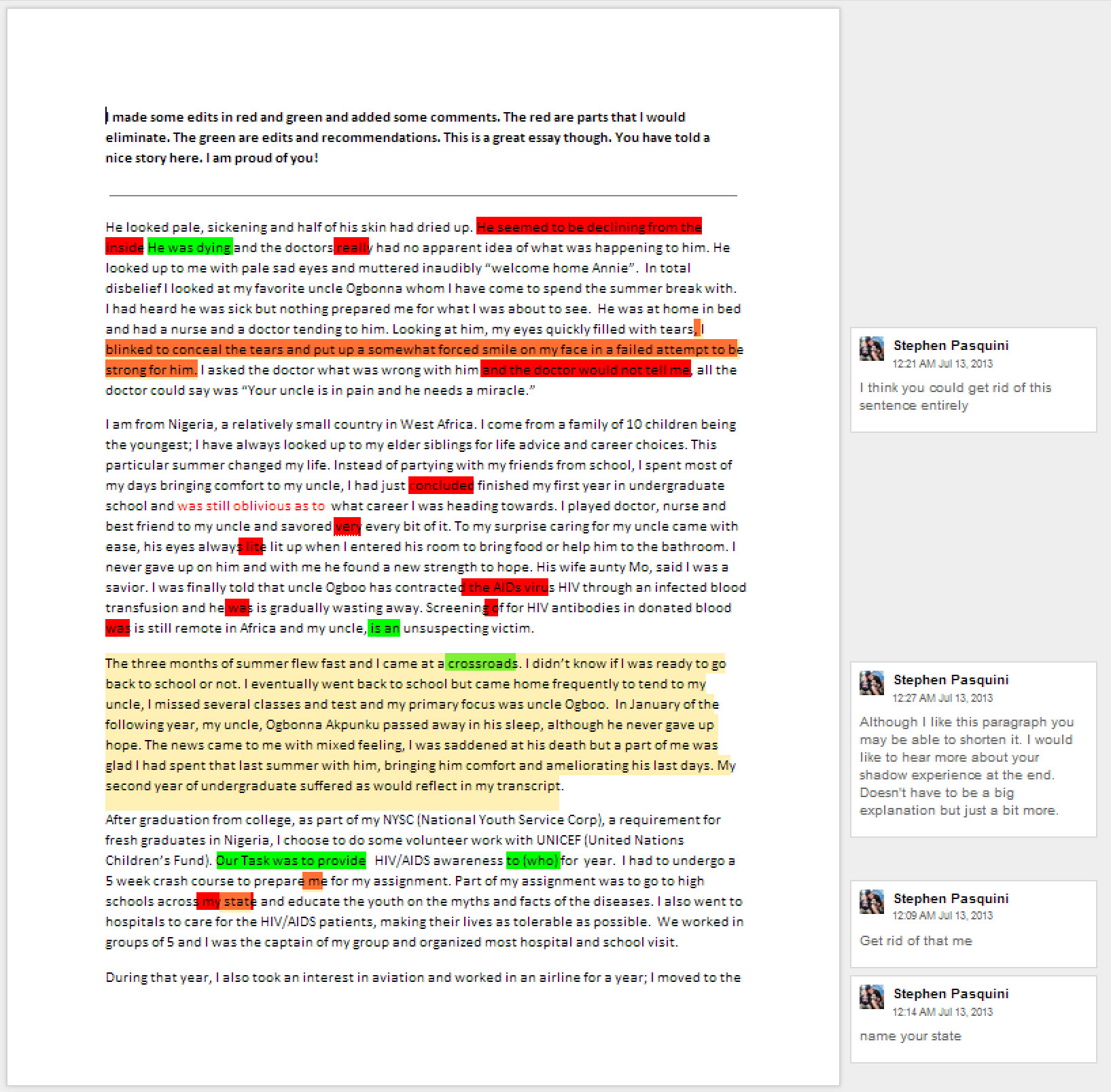 To collaborate, we use Google Drive. Google Drive is free, has an intuitive interface with integrated live comments in the sidebar, the ability to have a real-time chat, to collaborate effortlessly, and to compare, revise, or restore revisions on the fly. Google Drive also has an excellent mobile app that will allow you to make edits on the go!
Our team has worked with hundreds of PA school applicants within the Google Drive environment, and we have had enormous success.
The Physician Assistant Essay and Personal Statement Collaborative
I have set up two options that I hope will offer everyone a chance to participate:
- One-of-a-kind, confidential, paid personal statement review service
- A collaborative, free one (in the comments section)
Private, One-On-One Personal Statement Review Service
If you are interested in the paid service, you may choose your plan below.
The Personal Statement Review Service is:
- Behind closed doors within a private, secure network using Google Drive.
- It is completely interactive, meaning we will be able to provide real-time comments and corrections using the Google Drive interface.
- Telephone consultations are included with all edits above the single edit level. It’s often hard to communicate exactly what you want hundreds of miles away; for this reason, we offer the option to edit right along with us over the telephone while sharing in real-time over Google Drive. This is an option available to all our paid clients who purchase above the single edit level.
- We provide both revision and editing of all essays. What’s the difference? See below
- We will provide feedback, advice, and help with brainstorming and topic creation if you would like.
- We will help with a “final touch-up” before the big day, just in case your essay needs a few minor changes.
Why Choose Our Service?
- It’s not our opinion that matters. We have gone the extra step and personally interviewed PA school administrators from across the US to find out exactly what they think makes a personal statement exceptional.
- We are a team of PAs and professional writers, having worked over ten years with PA school applicants like yourself, providing countless hours of one-on-one editing and revision.
- Our clients receive interviews, and many go on to receive acceptance into their PA School of choice.
Because we always give 100%, we will open the essay collaborative for a limited number of applicants each month and then close this depending on the amount of editing that needs to be done and the time that is available.
Our goal is not quantity but quality. We want only serious applicants who are serious about getting into PA school.
Writing is not a tool like a piece of software but more like how a photograph can capture your mood. It’s more like art. The process of developing a unique, memorable personal statement is time-intensive, and it takes hours to compose, edit, finalize, and personalize an essay.
As Antoinette Bosco once said:
And this is why I am charging for this service. We love helping people find stories that define their lives, and we love helping individuals who have the passion to achieve their dreams. It’s hard to describe the feeling I get when an applicant writes back to tell me they were accepted into PA school.
There is no price tag I can place on this; it’s the feeling we get when we help another human being. It’s just like providing health care. But this takes time.
Interested? Choose your plan below.
Read more client testimonials.
Free Personal Statement Review
Post your essay in the comments section for a free critique
We want to make this opportunity available to everyone who would like help with their essay, and that is why we are offering free, limited feedback on the blog.
You post your essay in the comments section, and you will get our critique. It is that easy. We will try to give feedback to every single person who posts their COMPLETE essay here in the comments section of this blog post.
Also, by posting your comment, we reserve the right to use your essay.
We will provide feedback on essays that are complete and fit the CASPA requirements (View CASPA requirements here). We will not provide feedback on partial essays or review opening or closing statements. Your essay will be on a public platform, which has both its benefits and some obvious drawbacks. The feedback is limited, but we will try to help in any way we can.
Note: Comment Rules: Remember what Fonzie was like? Cool. That’s how we’re gonna be — cool. Critical is fine, but if you’re rude, I will delete your stuff. Otherwise, have fun, and thanks for adding to the conversation! And this should go without saying: if you feel the need to plagiarize someone else’s content, you do not deserve to go to PA school.
* Also, depending on the time of year, it may take me several weeks to reply!
We love working with PA school applicants, but don't just take our word for it!
How to submit your essay for the paid service
If you are serious and would like to have real, focused, and personalized help writing your personal statement, please choose your level of service and submit your payment below.
After you have submitted your payment, you will be redirected to the submissions page, where you can send us your essay as well as any special instructions. We will contact you immediately upon receipt of your payment and essay so we may begin work right away.
Pricing is as follows:
Choose your plan, then click "Buy Now" to submit your essay, and we will get started right away!
Every purchase includes a FREE digital copy of our new 100-page eBook, How to Write Your Physician Assistant Personal Statement, Our 101 PA School Admission Essays e-book, the expert panel audiobook, and companion workbook. This is a $65 value included for free with your purchase.
All credit card payments are processed via PayPal over a secure HTTPS server. Once your payment is processed, you will be immediately redirected back to the essay submission page. There, you will submit your essay along with some biographical info and all suggestions or comments you choose to provide. You will receive immediate confirmation that your essay has been securely transmitted as well as your personal copy of "How to Write Your Physician Assistant Personal Statement." Contact [email protected] if you have any questions, comments, or problems - I am available 24/7.
The hourly service includes your original edit and one-on-one time over Google Drive. It is simple to add more time if necessary, but you may be surprised at what a difference just a single edit can make. We find our four-hour service to be the most effective in terms of time for follow-up and full collaboration. We are open to reduced-rate add-ons to suit your individual needs.
Writing and Revision
All writing benefits from rewriting when done well.
When you are in the process of writing a draft of an essay, you should be thinking first about revision, not editing.
What’s the difference?
Revision refers to the substantial changing of text. For example, it may include re-organizing ideas and paragraphs, providing additional examples or information, and rewriting a conclusion for clarity.
Editing, on the other hand, refers to correcting mistakes in spelling, grammar, and punctuation.
We perform both revision and editing on all submissions.
How to submit your PA school essay for the FREE editing service
Follow the rules above and get to work below in the comments section. I look forward to reading all your essay submissions.
– Stephen Pasquini PA-C
View all posts in this series
- How to Write the Perfect Physician Assistant School Application Essay
- The Physician Assistant Essay and Personal Statement Collaborative
- Do You Recognize These 7 Common Mistakes in Your Personal Statement?
- 7 Essays in 7 Days: PA Personal Statement Workshop: Essay 1, “A PA Changed My Life”
- PA Personal Statement Workshop: Essay 2, “I Want to Move Towards the Forefront of Patient Care”
- PA Personal Statement Workshop: Essay 3, “She Smiled, Said “Gracias!” and Gave me a Big Hug”
- PA Personal Statement Workshop: Essay 4, “I Have Gained so Much Experience by Working With Patients”
- PA Personal Statement Workshop: Essay 5, “Then Reach, my Son, and Lift Your People up With You”
- PA Personal Statement Workshop: Essay 6, “That First Day in Surgery was the First Day of the Rest of my Life”
- PA Personal Statement Workshop: Essay 7, “I Want to Take People From Dying to Living, I Want to Get Them Down From the Cliff.”
- Physician Assistant Personal Statement Workshop: “To say I was an accident-prone child is an understatement”
- 9 Simple Steps to Avoid Silly Spelling and Grammar Goofs in Your PA School Personel Statement
- 5 Tips to Get you Started on Your Personal Essay (and why you should do it now)
- How to Write Your Physician Assistant Personal Statement The Book!
- How to Write “Physician Assistant” The Definitive PA Grammar Guide
- 101 PA School Admissions Essays: The Book!
- 5 Things I’ve Learned Going Into My Fourth Physician Assistant Application Cycle
- 7 Tips for Addressing Shortcomings in Your PA School Personal Statement
- The #1 Mistake PRE-PAs Make on Their Personal Statement
- The Ultimate PA School Personal Statement Starter Kit
- The Ultimate Guide to CASPA Character and Space Limits
- 10 Questions Every PA School Personal Statement Must Answer
- 5 PA School Essays That Got These Pre-PAs Accepted Into PA School
- 7 Questions to Ask Yourself While Writing Your PA School Personal Statement
- 101 PA School Applicants Answer: What’s Your Greatest Strength?
- 12 Secrets to Writing an Irresistible PA School Personal Statement
- 7 Rules You Must Follow While Writing Your PA School Essay
- You Have 625 Words and 2.5 Minutes to Get Into PA School: Use Them Wisely
- What’s Your #1 Personal Statement Struggle?
- 31 (NEW) CASPA PA School Personal Statement Examples
- How to Prepare for Your PA School Interview Day Essay
- Should You Write Physician Associate or Physician Assistant on Your PA School Essay?
- Meet the World’s Sexiest PA School Applicants
- PA School Reapplicants: How to Rewrite Your PA School Essay for Guaranteed Success
- How to Write a Personal Statement Intro that Readers Want to Read
- PA School Reapplicant Personal Statement Checklist
- How to Deal with Bad News in Your Personal Statement
- Inside Out: How to use Pixar’s Rules of Storytelling to Improve your PA Personal Statement
- Ratatouille: A Pixar Recipe for PA School Personal Statement Success
- Personal Statement Panel Review (Replay)
- Mind Mapping: A Tool for Personal Statements, Supplemental Essays, and Interviews
- Start at the End: Advice for your PA School Personal Statement
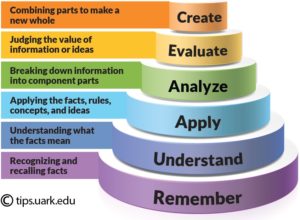
- Elevate Your Personal Statement: Using Bloom’s Taxonomy for Impactful Writing
- How to Write a Captivating Hook for Your PA School Personal Statement
- 3 Surprising Truths About the New CASPA Life Experiences Essay (And Why You Can’t Ignore It)
- 3 PA School Personal Statement Mistakes Our Editor Sees Again and Again
You may also like
 Elevate Your Personal Statement: Using Bloom’s Taxonomy for Impactful WritingThe most common advice writers often give pre-PAs is to "show, don't tell" in your essays. (Though we like to encourage showing …
 Who Gets Into PA School in 2026? Here’s What You Need to KnowLeslie Mean is a 23-year-old single white female who presents to the PA school admissions committee on her second attempt to get …
 Start at the End: Advice for your PA School Personal StatementNot sure what to include in your personal statement? Start at the End! The conclusion should summarize your entire essay. Consider the …


CASPA Personal Statement Help
 We offer comprehensive, start-to-finish personal statement assistance or help to perfect a draft you already have. We have services to fit every budget.
 Schedule a Live Recorded PA School Video Interview

We offer 60-minute mock PA school interviews with post-interview feedback and advice. Includes a recorded video of your interview that you can watch, download, or share with family and friends. There is no better way to prepare!
Schedule an InterviewPre-PA Consulting and Advising
 Our pre-PA coaching service consists of a 1-hour phone consultation focused on addressing your specific questions or concerns about becoming a PA and applying to PA school.


Hello everyone! This is my first draft and it needs a lot of work. It is over limit and I am not sure what to cut out. The last paragraph is also somewhat underwhelming. I would appreciate any input, thank you!
My decision to become a physician assistant cannot be traced to one defining moment. The need to become a PA developed over six years of health care experience. Experience that shaped my idea of healthcare and the role I wanted to play in the field. Growing from a vague inclination of wanting to “help people”, my time as a CNA and a Medical Laboratory Scientist helped me to determine that I needed more than what those two career fields could offer individually. I need the patient interaction and emotional satisfaction of working as a CNA and the intellectual stimulation and challenge of correlating human disease with laboratory results. A career as a PA would allow me to unite the aspects I love about each field .
When I started my first job as a certified nursing assistant at a skilled nursing home I never expected that I would, or could do the job for the next five years. From my very first day forward, the work was emotionally draining, physically exhausting, and intellectually underwhelming. I saw the job as a necessary stepping stone, a rite of passage that would eventually lead to a better career. I thought, “ I need the experience” having no concept at the time of what the word actually meant.
While countless interactions have contributed to my growth as a health care professional, one woman in particular stands out as the greatest influence. Her name was Kathryn. She was younger than most of the other residents at *** and she suffered from multiple sclerosis. Several of the other CNAs had cautioned me that she could be difficult to care for and that she was not shy about her distaste for some, or rather most, of the staff. Not to be dissuaded, I cared for her as best I could, though it was painfully obvious to the both of us how unfamiliar I was with her particular needs. Admittedly, she did not care for me in the beginning and it was disheartening for the both of us how unhappy she was. That being said I found myself more determined to be better for her. With time I became more efficient and was able to get her perfectly comfortable before I would leave her room. It seemed though to only make the slightest difference in her mood. She did however begin to open up to me about herself and the difficult life she had lead. As I would listen to her grievances, I had to stifle the urge to tell her , “its going to be ok” or “it will get better”. I knew her well enough at this point to know that she did not find comfort in empty reassurances. When I did not know what to say, which was most of the time, I would sit and listen. When a reply was necessary, I would let her know that she meant a great deal to me and that I would do what I could for her. Over the years, her disposition improved considerably as we became more comfortable with each other. We both would laugh frequently and could speak frankly with each other, which she certainly appreciated.
Katheryn did not just need another care giver, she had plenty, what she wanted was a friend. She needed someone to confide in that would not criticize her for wanting to express her negativity. In turn I was able to provide better physical care for her by learning what she needed from me emotionally. Through her I was able to apply this skill to my interactions with other residents, each of whom needed something different from me. Not every person wants or needs a friend in their caregiver however, some simply want a competent practitioner, but it is the responsibility of that practitioner to make an honest effort to mold themselves into whatever their patients need them to be. This can only be accomplished given time and active listening, which is why I am dedicated to becoming a physician assistant family practitioner
Upon Katheryn’s passing, after almost five years of working as a CNA, I decided that I needed to pursue new opportunities and challenges. Despite all I had learned as a CNA, and the challenges I had to overcome, I found myself feeling deeply unsatisfied.
Wanting to experience the other side of the healthcare spectrum, I found myself drawn to laboratory medicine. The field not only requires knowledge of several areas, but is constantly changing with improvements in technology, providing endless opportunity for continuing education and new challenges. As a generalist in a hospital laboratory it is my responsibility to provide the practitioner with quality results with which they base their eventual diagnosis. This requires constant correlation of results from one department to the next. Chemistry, hematology, urinalysis, coagulation, microbiology, immunohematology, each provide insight to the overall health of the patient. An anomaly in one area has a ripple effect and will often effect the results of another area. Though exciting and mentally stimulating, I find myself yearning for more. I am never satisfied just providing the laboratory results. I often find myself following patient’s progress, sometimes for weeks, and checking my own personal diagnosis of each patient against the practitioners. I not only want to play a more direct role in diagnosing the patient, but in their care overall. I have found that I desperately miss the patient interaction. After a year of working as a laboratory scientist, experiencing the field’s benefits and short-comings, I have decided that I will never be satisfied with a career in which I have such an indirect relationship with the patient. After careful consideration, I have found that to be truly fulfilled in my career is to join what I enjoy most about being a lab tech with what I loved about being a CNA. As a physician assistant in a family practice I would be able to foster long, quality relationships with patients while having the intellectual satisfaction of diagnosing and treating their ailments. Under the responsible supervision of a physician, I am determined to practice in the field that unites the best of each of my previous experiences.
Hi Coprepa,
You essay is over the 5000 CASPA character and space count by a little over 900. That’s not as bad as some I’ve seen. Despite its length, it’s missing a key component — why you want to be a PA specifically, as opposed to any other healthcare professional. You could have long, quality relationships with patients and intellectual stimulation as a doctor or NP. You’ve got to include the PA specific information in your essay. If you’ve shadowed or worked with PAs use real life examples from those experiences to make your points. When you add that additional information you’ll be able to form a stronger conclusion.
I worry that you describe your CNA work as follows: “From my very first day forward, the work was emotionally draining, physically exhausting, and intellectually underwhelming.” Not only is it very negative but it seems inconsistent with your message in the rest of the essay, which is that you gained a lot from your five years as a CNA and even “loved” it. People don’t know you — they first learn about you from your essay. So, cutting the negativity is a good place to start editing. The rest of that paragraph could be substantially cut, too.
The last paragraph should not be your conclusion. After what is now the last paragraph, you’ll add a paragraph with the detailed, specific information about why you want to be a PA. Then you’ll write a brief final paragraph for the conclusion.
Here’s how I’d edit the the last paragraph:
“Wanting to experience the other side of the healthcare spectrum, I found myself drawn to laboratory medicine. As a generalist in a hospital laboratory it is my responsibility to provide the practitioners with quality results with which they base their eventual diagnosis. Though exciting and mentally stimulating, I find myself yearning to play a more direct role in patient care. I often find myself following a patient’s progress and checking my diagnosis against the practitioner’s. After careful consideration, I know a truly fulfilling career will be one that joins what I enjoy most about being a lab tech with what I loved about being a CNA.”
Now you have your lead-in to why you want to be a PA.
I hope this helps.
Best of luck.
Sue Edmondson
http://www.thepalife.com
The process of preparing for Physician’s Assistant programs is grueling. It takes time, commitment, and an incredible amount of preparation. I am grateful for the improvement periods I have been given, and I will be a better Physician’s Assistant because of it. It is hard to recieve a rejection, and even more difficult to recieve it twice. However, it was the push I needed to change my situation. It was the push I needed to strive for more, because responsibilty for patients is a neccesary attribute to have, and it can’t be taught.
Working in clinical trials is not something I previously considered. When you have a degree in biology and have barely certified yourself in phlebotomy, the options are limited for where you can be most helpful to patients. Once I was told more about clinicial trials and how instrumental they were to the medical community, I was overjoyed to recieve an offer to work in such a place.
The clinic that hired me taught me about having a lifetime career in medicine. The private clinic/clinical trials office was started by the late Dr. Steven Hsi. His entire family worked in medicine and his legacy has remained through his clinic ever since his passing. Meeting patients who remark on his great skill as a doctor intrigued me, and his wife Beth, now CEO, passed along a book to me which he published near the end of his life. Reading about his struggles as a practitioner turned patient left me with a deep desire to be more for my patients. It introduced me on how to be fully involved in their care, as all Physician’s Assitants should. It would prepare me for the important task of treating patients who needed more than the standard treatment in their disease.
Clinical trial patients are a unique group of people. Many have chronic conditions for which there is no ideal therapy. Some of my patients suffer through a migraine or more per week, along with that the debilitating effects of nausea, photophobia, and dizziness that knocks them off their feet. Most of my patients still find a way to care for their kids, work full time jobs, or be caretakers for other family members. They are never forced to take a medication and the stipend is only a small fee that they see at most, once or twice a month. Sometimes they have side effects that haven’t been heard of before. But they still participate. They know that they are being trailblazers for other patients like themselves. They know how important clinical trials are in creating new treatments for diseases like their own. They are in all honesty, real life heroes, and helping them experience relief is what makes every single day joyful for me.
When talking to my coworkers, we often have the same conversation. We are healthcare providers, excited to advance our educations so that we can do more in our field. Clinical Trials would be nothing without the patients, and I want to do be able to do more for them. Working one on one with a Physician’s Assistant in caring for our patients has provided such a clarity for the completion of my goals. In doing so I will be able to provide primary care for those just discovering a painful condition, or I can help them manage an already debilitating one. I don’t yet know which path I will follow, but as long as I can provide a meaningful environment where my patients feel safe and cared for, then I will have the most fulfilling career a person could ask for.
HI Christina,
I’m assuming that you know quite a bit about the PA profession since you work with them in the clinical trials and you’re reapplying. You must be determined to be a PA. Good for you, following your dream.
But you’ll have a hard time convincing anyone in Admissions that you’ve prepared to apply to a PA program when you get the title of the profession wrong. It’s “physician assistant,” not “Physician’s Assistant,” and the words aren’t capitalized unless they’re part of a formal name. When I interviewed Admissions Directors and faculty from across the country, every single one said if you don’t get the name right, it’s a red flag that you know little or nothing about the profession. If those mistakes are in the essay you submitted twice, that may have taken you out of the running in the first sentence. Spelling is another issue. Be sure to use a spell check and have someone carefully proofread your essay. It’s easy to make those kind of mistakes — “receive” is the correct spelling of the word.
Your essay is compelling in some ways. It shows you truly care about patients. What it’s missing are specific reasons why you’re choosing to become a PA. What are the things about being a PA that appeal to you? You could provide great care for patients in any number of ways — as a doctor or RN to name two. So there must be things that are special about the PA’s role that have intrigued you. Put them in your essay.
What skills and experience have you acquired since you last applied? I assume the clinical trials are new to you this past year. Is there any other experience you’ve learned from? Have you learned anything else from the trials?
The essay is at 3400 characters and spaces right now. I’ll show you ways to cut by editing a paragraph. You’re under the 5000 limit, but you want to make sure you keep the essay as concise as possible without leaving out important things.
Here’s an edited paragraph:
“Clinical trial patients are a unique group of people. Many have chronic conditions for which there is no ideal therapy. Some suffer through weekly migraines, along with the debilitating effects of nausea, photophobia, and dizziness that knocks them off their feet. Most still find a way to care for their kids, work full time jobs, or be caretakers for other family members. Their stipend is only a small fee and sometimes they have side effects that haven’t been heard of before. But they still participate. They know how important clinical trials are in creating new treatments for diseases like their own. They are real heroes, and helping them experience relief is what makes every single day joyful for me.”
Just in that paragraph, I eliminated over 200 characters and spaces. You can do the same with careful editing of your essay.
Normally, I wouldn’t recommend a professional edit (for obvious reasons), but since this is your third time applying, you make want to consider it to make sure everything is correct and you’ve included all the important information.
I hope this helps.
Best of luck.
Sue Edmondson
http://www.thepalife.com
“Why?” was a question that would annoy my parents ever since I learned to talk. “Pick up a book…Look it up in the encyclopedia…” they would say as the years would go on and the more annoying I would become. Ever since I was able to read and write, science was my favorite subject in school. Yes, I was that kid who won the science fair; first place 1st thru 8th grade. Yes, I was the kid who was fascinated by such small things in the world. I pretended to play doctor all the time, writing my parents prescriptions for made up diseases. Being a doctor, was without a doubt, the only thing I could ever see myself doing. People always tried to deter me from the field by showing me other careers like Physical Therapists, Occupational Therapists or Nursing, but I never second-guessed myself. Soon enough, a small life event only solidified my decision even more.
Throughout a teenager’s life, one might see the doctor several times a year for basic reasons. Unfortunately, visiting the doctor became a regular routine for me. Starting very young, my mom and doctor discovered I had an irregular heartbeat. Closely monitored, I wasn’t allowed to participate in many activities that would excite my heart to make it beat faster. Years later, I was diagnosed with Epstein-Barr. Although it was a mild case, there were many restrictions on my outside activities. Soon after being diagnosed with Epstein-Barr, I was subjected to a leukemia scare because of an irregularity in my blood. As it turns out, it was only a mistake.
Seeing many types of doctors throughout the past years has made me realize where I can apply my passion for science. I also love children and enjoy working with them. Volunteering with a local organization to help special needs children and teaching younger children how to swim, I was able to observe different situations that parents and children have to deal with. From the common cold to a genetic disorder, seeing what children have to go through makes me want to reach out and help. The problem with my heart made me aware of how others struggle with disabilities. Fortunately I grew out of my heart condition, but there are many others who struggle each day. I learned of several occasions where other young teenagers have suddenly died because of undiscovered heart issues. No one deserves to lose his or her child at such a young age because of a condition, which could have been prevented or fixed.
Repeatedly going for blood tests and seeing doctors, I started to weed through ideas and look at things in a new perspective. I would actually listen to what my doctors explained and not have my parents talk for me. I wanted to know what was going on with my body and how I could learn what to do to take great care of it. During my leukemia scare, sitting in the waiting room with children going through the cancer ordeal, was one of the most heartbreaking experiences I have ever had. I came to realize I should be grateful I have not been as sick as some of these innocent children were. I knew from here on out there was something I could do to make a difference in the world.
Upon entering my undergraduate career at the University of Delaware, I volunteered over winter and summer breaks with the Physical Therapy and Occupational Therapy departments at a local nursing home. Working with the elderly is very similar to working with children as some may need your undivided attention while others have very specific needs. There were many times where I was able to get one on one time with some of the patients. I learned about all of the exercises including the meanings behind them and how they were helping patients over time. With old age, depression and stubbornness is more likely to be prevalent. One man I was fortunate enough to be with from the beginning to the end of his rehabilitation, became the most inspiring person I have ever met. When he first started out at the nursing home, he was against a plethora of exercises. He recently lost his wife and then at home, fell down and broke his hip. When he would come downstairs to the rehabilitation facility, he would not want to get out of his wheelchair or be seated near an exercise bike. Time passed as it was hard to fight someone when they would only be bettering themselves. I tried to talk to him more and more every day he would come down to the center. This would comfort him to the sense it was a familiar face in which he grew accustomed to. Eventually he opened up about his wife and life with and without her. It was heartbreaking and I knew there was something that I had to do. After some time, he would be distracted by our daily conversations and wouldn’t even realize he was doing some of the exercises. This made him laugh because he finally saw it wasn’t as bad as it seemed. A family member brought him a picture of his wife one day as per my suggestion and he started to take it down to the rehabilitation center daily. This became his motivation to do better and make himself well again. It was as if his wife never left him and was by his side the whole time.
Another summer I volunteered at a Pediatric Physical Therapists office. I was also there from the beginning with a seven-week-old baby boy who was born with Torticollis. The PT described to me what to do and regularly let me assist with the boy. Soon enough, the boy was following with his eyes, moving his neck on his own and no longer flopping his head to one side. It was so rewarding to see the difference such minute exercises can do and it was truly inspiring and something I could see myself do again and again.
From the pediatrician to my cardiologist and then an oncologist I figured out that my interests in science and health have pointed me to a great direction. Although most of my experience has been in Physical Therapy I see myself being the head of a basic pediatric practice. I want to do more than exercise science and want to be on the forefront of pathological findings. I do know that I would be strong enough to be a pediatrician where I can not only help and cure my patients but also educate them to such a degree that the only doctor they would ever have to see again would be me. Being amongst the people who do make a difference in the lives of others cannot compare to anything I will learn in a school environment.
HI Stephanie,
If I’m not mistaken, this essay is an application to medical school, not PA school. You want to be a pediatrician. So, you’ve posted on the wrong website!
Sue Edmondson
http://www.thepalife
Hi Reshma,
You have an excellent foundation for your essay. The opening story about Carlos is heartbreaking and real. You’re a very good writer, and the essay flows well.
I don’t know if your essay got posted in the format you intended, but you need a new paragraph starting with “I come from a traditional Guyanese background. . . ” Then you need another new paragraph when you go back to Carlos.
You come close to telling why you want to be a PA, but don’t quite get there. You need a little bit more to let Admissions Directors and faculty know why you’re choosing the PA profession over all the other professions you came in contact with when you shadowed.
There are lots of places to cut. For example, you could rewrite this paragraph as follows:
I come from a traditional Guyanese background with a large close-knit, extended family which has been my support system for as long as I can remember. The month before I began my freshman year in college, my sister ran away from home. The aftermath left my family torn apart, my entire support system ripped to shreds and I suffered both academic and social distress.
The same is possible with other paragraphs, too, to leave yourself some space to add a little more information.
Overall, it’s well done. With some careful editing and the addition of a little more information, this will be a great essay.
I hope this helps.
Best of luck.
Sue Edmondson
http://www.thepalife.com
“Your soul is a gift from heaven.” Taking my hands in his, a man spoke this phrase in broken English. He showered me with gratitude I did not deserve. I was medically volunteering in India when his 6 year-old underwent an emergency laparotomy. I closely watched the surgeon find and remove a ruptured appendix. The father mistook me for a doctor when I exited the OR. I corrected him but still held his calloused hands as he cried tears of joy and revered the surgical team. His family lived in great poverty and could not afford the surgery. The hospital performed it anyway. The surgeons prioritized the child’s life above all, despite their monetary loss. At that moment, I wanted nothing more than to be one of those surgeons, contributing to humanity. This feeling solidified my passion for healthcare.
This story presents an extreme illustration, but I am fortunate to claim that my passion for healthcare is solidified every day I walk into the hospital for work. In the women’s health and pediatric/postpartum units, I am honing clinical skills that will be an asset in PA school and also strengthening my passion for the medical field. My work experiences required me to cultivate a sharp memory, focus for detail, time management, efficiency and a strong work ethic.
Work and education prepared me for PA school and fan my fiery passion for healthcare. My passion stems from the root of healthcare itself: the patient. While interacting with patients, I clearly see ways in which the industry can improve. With the title PAC after my name and through direct patient contact, I can effect change. This is one reason that I gravitate toward the PA profession.
I will address substantial contributors to our nation’s healthcare woes. Many are overlooked, such as health illiteracy. A staggering number of citizens have poor health literacy, which hinders their reading medical forms, learning about their health, and feeling like active members in their own care. I will confront this by providing documents with plain, non-medical language and actively listening to patients. I will thus build a stronger foundation of education and encourage other professionals to do the same. Comprehensive health education will be our goal.
I will focus my plans in rural and underserved areas as these are the most affected populations. Primary care PAs will be the optimal provider route. I cared for a woman in the Himalayas who walked miles in great pain to reach the only health clinic by sunrise. The lengths she went to for healthcare, a basic human right, showed me it is vital that we make care accessible to every individual. PAs greatly lessen the shortage of medical providers. We can meet healthcare need by increasing the amount of providers and focusing on primary care in underserved areas.
I strive to advance the medical industry because every individual is affected by healthcare on a regular basis. While shadowing a neurosurgeon PA, she taught employees about their roles during an emergency code. She said, “When we code a patient, we code their family and friends. We care for more than just one patient.” This phrase applies to all healthcare scenarios, whether that is a full recovery from surgery, a hospice patient passing, or a new cancer diagnosis. The care we provide and the results of that affect far more than one patient. By educating and providing quality care to the entire nation, PAs and providers will improve society and how it relates to the world of medicine.
Aside from my widespread aspirations to improve healthcare, I am drawn to the PA profession for its name, specifically for the word “assistant.” I realized, through classmates and coworkers, that I am motivated to perform at my utmost capacity when I can rely on a supportive, skillful team. The PA role guarantees a daily dose of collective deliberation, massive teamwork, and efficiency through active communication and collaboration. Furthermore, a team will provide an outlet and a source of quality feedback for the plans I discussed earlier.
These reasons apply to all direct providers, but, for me, they resonate soundly with the PA profession. I hold high esteem for physicians and nurse practitioners as their goals mirror a PA’s and often, the three work together. However, when I examined the prerequisites and curricula of medical schools, I found they are more heavily weighted in physics and math. I desire a program firmly rooted in patient-centered studies with an emphasis on compassion and empathy. NPs are trained on a nursing model, not a medical model. They often work for years as a nurse, then enter NP school for a new career with more autonomy and responsibility. I choose not to pursue this path. These comparisons illustrate my affinity for the PA profession. The values and goals of the profession parallel my future ambitions and health care philosophies. I have always asserted that I am extremely compatible with the physician assistant profession, but I can now insist that the profession, itself, is extremely compatible with me.
Thank you so much for any and all help!
Hi Erin,
Before I forget, a technical point — the credentials for a PA are PA-C, not PAC.
Now to the heart of your essay. I’m sure future patients will appreciate your desire to help change the woes of the healthcare system, but you’re not even in PA school and already declaring, “I will address substantial contributors to our nation’s healthcare woes” and “I strive to advance the medical industry because every individual is affected by healthcare on a regular basis,” and “aside from my widespread aspirations to improve healthcare . . .”
This is not the place to proffer generalizations about the system and what you plan to do about fixing it.
The problem is the essay is so replete with generalizations and proclamations that we’re left knowing little about you and specifically why you want to be a PA. There are only a couple of places where you touch on it — the last paragraph is one (where by the way, I’d eliminate the reference to math and physics — there’s plenty of that required of PAs). The way it reads now, it’s as if you’re applying to a Masters in Public Health program. Take these sentences for example: “I will confront this by providing documents with plain, non-medical language and actively listening to patients. I will thus build a stronger foundation of education and encourage other professionals to do the same. Comprehensive health education will be our goal.” I could quote extensively from your essay to support this point.
Normally, I’d edit a paragraph to demonstrate ways to cut. But I don’t think it would of much use here. You really need to scrap much of this and start over. As a prospective student, you’re starting on the bottom, so address those things such as patient education, providing healthcare to rural areas from a personal level, not global.
I hope you keep your “fiery passion,” but not in this essay. (Ditch the words “fiery passion,” too — they’re so overused that they’re meaningless).
Best of luck.
Sue Edmondson
http://www.thepalife.com
Hello, I’m re-applying this year. Not sure if I should completely start over from scratch or if I should edit this one adding a few more current experiences.
“I feel like being a blonde today!” proclaimed my aunt as she prepared for her morning chemotherapy. Every session was another opportunity to not only reinvent herself, but also radiate cheerfulness to others enduring the same treatment. “Stop by Hot Cakes, please. I want to surprise everyone today.” Whether it were fresh, moist cupcakes or personally knit beanies, she always conceived a way to spread contagious glee to others suffering. Despite her ailing health, she never lost her optimistic demeanor I grew to admire. She sees her cup as half full, and translates it into an opportunity to replenish the cups of others; a quality I have emulated throughout my pursuit to complete my ultimate goal: to provide superior healthcare to the less fortunate and underserved while fostering intimate and holistic relationships.
In 2009, my aunt was diagnosed with stage four-breast cancer. Shortly after tests and referrals we were introduced to a Physician Assistant. My aunt’s PA was the epitome of what I believe to be of a medical professional: eloquent, compassionate, patient and genuine. Through sincerity and amiability, she not only subsided our unsettling fears, but also prepared us for what was to come. Our lingering apprehensions soon dissipated and for the first time my family and I felt peace of mind. I truly valued and admired her bedside manner; she treated my aunt like family. She spoke directly to her despite me being her translator. Her empathy and genuine propensity to form a supportive relationship left a distinguishing impression and ultimately incited my interest in a career as a Physician Assistant.
God has provided several arenas of “good works” for us and He desires that we walk in them, fulfilling our purpose and calling. One arena in particular that has unequivocally impacted me is the community clinic I’ve been gratefully working with for the past three years. As a medical assistant, my duties vary, but the most fulfilling are my daily conversations with each patient. Without these invaluable interactions, I would have not been able to realize that to truly treat a patient’s physical ailment, a healthcare professional must nurture both their emotional and spiritual needs. My time with patients is spent conversing, sharing the gospel, and learning about their individual personalities and backgrounds. Despite their afflictions, I witnessed that genuine interest, prayer and conversation are what patients yearn for; even a simple chat regarding how they perfected their meringue recipe can go a long way.
My experiences at the clinic have afforded me a great deal of hands-on patient interaction and exposure to a wide range of illnesses, diagnoses, and treatments in the field of internal medicine. Specifically, I am learning about primary care, which is my intended field because of its comprehensive nature. Conversing with patients, building relationships, taking vitals, assisting in various procedures, charting and collaborating with doctors and fellow medical assistants have only given me a small fraction of what I will be doing as a PA. These are elements that inspire and motivate me to continue pursuing a career as a PA and allow me to give back to the community in which I grew up.
Missionary work with Project Pueblo developed my passion for serving and solidified my growing aspirations to help those less fortunate on a global scale. Coming from an immigrant family, I viewed missionary work as an opportunity to give back and pay forward the blessings my family and I have received. Through Project Pueblo, I had the opportunity to witness medicine and compassionate care to the underserved Indian reservations in the Southwest. Though their possessions are meager, their appreciation for selfless acts is abundant. Even in an impoverished environment, hope can be attained through small acts of kindness. The Navajo Nation has not only opened my eyes to the suffering here in the United States, but also left lifelong impressions in my heart. Having the opportunity to serve an underprivileged and marginalized culture has humbled and enriched my perspective on the differing needs of different cultures, which will undoubtedly help me become a better serving Physician Assistant.
My blessings have allowed me opportunities to lead a fulfilled life, but to truly fulfill my life is to fulfill the lives of others. My experiences have helped me to mature and grow into a better serving individual. I am fully adept and have complete confidence that I will not only overcome the rigors your program will bring, but also see that I leave no single cup half empty. Similarly to my aunt, I see my cup as half full and I aim to share it with the world, and do my best to make sure every cup is boundlessly overflowing, globally and locally. Thank you for your time and consideration.
Hi Vi,
First, physician assistant is never capitalized unless it’s part of a formal name.
I really like your aunt! What an amazing woman and great role model. I like the way your essay opens. But we don’t need all of the information in the first and second paragraphs. The same applies to your paragraph about missionary work. This sentence, for example, is redundant and general: “Even in an impoverished environment, hope can be attained through small acts of kindness.” I always recommend that people leave out generalizations — this essay is supposed to be about you, the reasons you want to be a PA and what you bring to the table.
There are a number of other generalizations in your essay. They include the first sentence in your third paragraph about God providing arenas of “good works.” Although I see that your faith is deeply important to you, many people feel uncomfortable with talk about. Unless the PA school you’re applying to is one which envisions its graduates sharing the gospel with patients, I would omit the religious references from your essay.
Go through your essay and carefully cut anything that is general or redundant. That will give you room to write about what’s missing here, specifically what has changed since you last applied. Every Admissions Director or faculty member I interviewed said that was critical. Tell what you’ve learned, how it changed you and better prepared you for the profession.
Here’s how I’d edit the second paragraph:
“My aunt’s PA was the epitome of what I believe to be of a medical professional: eloquent, compassionate, patient and genuine. She not only subsided our unsettling fears, but also prepared us for what was to come. I truly valued and admired her bedside manner — she spoke directly to my aunt despite me being her translator. Her empathy left a distinguishing impression, and she ultimately incited my interest in a career as a physician assistant.”
Do the same with all your paragraphs, including the first.
I hope this helps.
Best of luck.
Sue Edmondson
http://www.thepalife.com
A second. A minute. An hour. I knew in medical emergencies, time was precious.
Two years ago, my brother suffered a single gunshot wound in his leg. He experienced a large amount of blood loss and underwent below the knee amputation. Timing was definitely a factor in his story, because it was nearly two hours before he arrived at the hospital that would ultimately provide his care. In fact, he had surpassed “the golden hour” we often hear about in healthcare. Fortunately, the healthcare providers were able to save his life. Living in a medically underserved area, sometimes you encounter circumstances where adequate resources are not readily available, regardless of the crunch for time.
I grew up as the youngest of six children in a small rural town in Southern Virginia. This area was the prime example of life with limited resources and access to healthcare. In fact, there were no local emergency care facilities and the closest hospitals were over thirty miles away. Due to provider and resource shortage, most patients with life threatening injuries were transported to the next major city (over 100 miles away). Since time is so precious in healthcare, this created a problem with quality of care people received.
Emergency medical services are also a crucial part of medical care. These services were provided by high school volunteers and near retirement adults. There was no push for further education beyond basic EMTs. When paramedics retired, this created a shortage on individuals qualified to perform advanced life support. Similarly, the limit on ambulances played a major role in the distance the staff had to travel during an emergency. In fact, the night my brother required medical assistance, it was over twenty minutes before an ambulance arrived. There were only two family practice physicians that cared for the entire community. In a town where healthcare was needed the most, there was not a push for medical careers beyond nursing. In my family alone, there were four generations of nursing assistants. Preventative and routine care was also not promoted. Many patients that surmounted to illness were almost always diagnosed during the end stages of their disease. Although we were not the poorest city in the state, we were and still remain today, the medically underserved.
My motivation for becoming a physician assistant (PA) is rooted in the desire to improve the quality and access of healthcare in underprivileged areas. It is this quality, I feel we still lack today, in Chase City. There are not many healthcare providers that venture back to underserved areas where they are needed. Therefore, access to hospitals, and emergency medical services are limited. As a PA, I want to provide more of these resource centers to help improve the quality of healthcare received. Over the last two years, I had encountered a multitude of PAs who have given me valuable insight in this profession. Recently, I had the pleasure of shadowing an emergency medicine physician assistant. This was a very valuable experience because I was able to see how PAs worked interdependently within a team of other healthcare professionals. In addition, I was able to see how they worked autonomously to diagnose and treat within their scope of medicine. During shadowing, I witnessed this PA serve as a leader. She was very effective in multitasking and prioritizing work for the team. In addition, she was a competent communicator and used her resources well. I observed her provide care to a couple that could not speak English. She used her care partner to interpret the conversation. The most rewarding aspect of this experience was the amount of time she was able to spend with her patients. It was enough that patients felt more comfortable and secure with their level of care, but not too much where the wait time for other patients were extended. These visits were different from anything I had seen, in fact, they were efficient and personable.
Preparation for physician assistant school has been an amazing journey. I have acquired a large amount of knowledge about the medical field. My brother’s unfortunate incident inspired me to want change in the healthcare field. However, it was the growing and energetic medical career of a PA that helped me choose my pathway. Providers in the profession, have the ability to accomplish this change. They have the knowledge and skills needed to become leaders in the process. I truly believe that PAs help maintain the integrity and quality of healthcare. As an effective PA, I will continue this trend and work to improve the health of patients throughout our community. If given the opportunity, I plan to use my degree to improve healthcare by providing adequate resources to the underserved. In addition, I will serve as an advocate for my patients by promoting preventive and routine care. Finally, serving as a physician assistant in underserved areas would be both refreshing and liberating to me.
Hi Sopheia,
You’ve spent a lot of time on this essay and it shows. Still, it needs editing.
Almost entire fourth paragraph could be deleted. Add these sentences to the third paragraph: “Preventative and routine care was also not promoted. Many patients that surmounted to illness were almost always diagnosed during the end stages of their disease.” Then you’ve got everything you need. You’ve already made your point about the lack of healthcare in rural communities and the paragraph ends up being redundant.
Start a new paragraph with “Over the last two years . . .”
Great job on the conclusion!
Best of luck.
Sue Edmondson
http://www.thepalife.com
Thank you so much. I really appreciate your comments. This has really helped me out because I was unsure about my paper. Your time put into reading my paper is also greatly appreciated.
Hi Sopheia,
I caught an error I meant to correct before replying. The word surmounted should be “succumbed.”
Sue
I heard my mom crying again. I wanted so badly to help her. My mom has a history of health problems that she has dealt with her entire life, but this was different. I was eleven when this began, and I was terrified. My mom was a fairly active person, but now she could barely walk down our driveway without passing out, and the doctors could not figure out why. I was always an inquisitive child; I wanted to know what was happening, why it was happening, and how to solve it. This uncertainty about my mom’s health was frustrating. There were no answers to my questions, and it ignited a flame in me; it sparked my interest in medicine. It took doctors over five years to diagnose my mom with neurocardiogenic hypotension with syncope. Because her primary care doctor did not have the time to give my mom’s case the attention it needed, he sent her to specialists. As a result, she went to several specialists and the medical expenses kept piling up. She was continuously misdiagnosed and put on medications that only made her condition worse; it was a scary time for our family. It was ultimately this situation that lead me to realize that working in medicine is what I am meant to do.
I have always been a hard-working and determined individual. My parents did not go to college and did not have steady jobs, but I knew I wanted to earn a college degree and build a satisfying career and life for myself. I grew up in a small town and was one of the top students in my class, but I was ready for a challenge. Although it was difficult moving away from home at fifteen, I applied, and was accepted to, an elite public boarding high school called the Louisiana School for Math, Science, and the Arts (LSMSA). LSMSA is similar to college, so the academics were taxing. Most nights I had to stay up late doing homework; it was stressful and challenging, but I loved it. I adapted to and excelled at LSMSA. Through this experience, I learned that I have a lot of perseverance and diligence. I worked hard to earn a 3.94 GPA to insure I would receive enough scholarships to pay my own way through college.
Following my graduation from LSMSA, I chose to attend Northwestern State University (NSU) for my undergraduate studies. NSU has a great biology program, which I knew would prepare me for my future studies in medicine. After researching many careers and talking to professionals, I decided that becoming a physician assistant is what I want to do for several reasons: having the ability to diagnose patients, to spend more time with patients, and to change between specialties. I believe the PA profession is vital in today’s medical world, and that it allows for more efficiency in healthcare. I now realize there was a missing link in my mom’s healthcare. A PA could have spent more time with my mom evaluating her condition and then conferred with the supervising physician about her condition, thus leading to a swifter diagnosis and treatment.
After deciding to pursue a career as a PA, I tried to gain healthcare experience; however, this has been a difficult task. There were no affordable and timely healthcare certification courses available, so I decided to shadow PAs. For a while, there was only one practicing PA in the Natchitoches area who traveled outside of the city limits to work at school based health centers in rural parts of the parish. Because of my class schedule, it was hard to find a suitable time to shadow her. Juggling school, work, extracurricular activities, and shadowing was tiring, but the effort was worth it. Being able to interact with patients and listen to their stories was incredible. A few months later, I was introduced to another PA who had recently started working in the Natchitoches ER; shadowing her was exciting. Although it was hectic and I could tell she was stressed, all I wanted was to be in her shoes. My experiences shadowing PAs has made me realize that I am beyond ready for the challenge of PA school and working as a PA.
Recently, I had another valuable medical experience: I went on a medical mission trip to Belize. We helped 2000 school children by performing fluoride varnishes, giving them toothbrushes and toothpaste, and teaching them how to properly brush their teeth and wash their hands. While walking into one school, I heard a child yell, “We are glad to see you here.” This brought tears to my eyes; I will never forget it. My experience in Belize is one that I will forever cherish, and has assured me that I will have a fulfilling life if I can spend it helping people.
My mom’s health problems initially sparked my interest in medicine, but my interest has continued to grow. It is important to me that I reach my goal of becoming a PA. I want to make a difference in healthcare and help improve the quality of life for my patients. I am highly motivated and ready to start this journey, and I believe that attending your PA program will help me reach my full potential.
Hi Amber,
Congratulations on overcoming the odds to obtain an education and pursue a professional career. Your determination is impressive.
Overall, your essay is fairly well-done. I do have suggestions (of course). Instead of making general statements such as shadowing the ER PA was exciting and how you’d like to be in her shoes even though she was stressed, you might write specifically what you learned about yourself from those experiences. Perhaps you learned that you find working in a fast-paced environment energizing rather than stressful, and you’re able to remain calm in tense situations. You could do the same thing in other places where you’ve made similar general statements. Make those apply to you to explain why the profession appeals or the traits you have that will make you a good PA.
The first paragraph could be shortened. Remember, the people who read this are literally reading over a thousand essays, and you don’t want to lose them in unnecessary details. I’d edit it as follows:
“I heard my mom crying again. I wanted so badly to help her but I was only eleven. My mom has a history of health problems that she has dealt with her entire life, but this was different. Now she could barely walk down our driveway without passing out, and the doctors could not figure out why. She was continuously misdiagnosed and put on medications that only made her condition worse; it was a scary time for our family. It took doctors over five years to diagnose my mom with neurocardiogenic hypotension with syncope. It was ultimately this situation that lead me to realize that working in medicine is what I am meant to do.”
Best of luck.
Sue Edmondson
http://www.thepalife.com
Thank you so much! I really appreciate you taking the time to give me some feedback 🙂
Hello, this is my draft…thank you for the assistance
I am passionate about becoming a Physician Assistant. I have always been fascinated by the medical field and as a child, I desired to become a doctor as I played with my fisher price doctor kit and performed heart transplants on my dolls. The influence of the medical profession came from my mother who has been working as a nurse for over thirty years. My mother came home from work one day and said, “I know the perfect profession for you” and she informed me about becoming a PA.
When I was a sophomore in high school, I began to research the requirements for entering a PA program; I became discouraged, and began to feel as if I was inadequate to become a PA. My freshmen year in college, I began pursuing becoming a Radiologic Technologist. During specials week in the Medical Radiography program, students were required to choose any modality of your choice to observe for five days and instead of wanting to choose a modality, I wanted to observe a PA. To confirm my interest in attending a PA program, I spoke with a young lady in the dorm about her experience within her PA program and my interest became a goal.
After completing the Medical Radiography program, I knew that my desire to become a PA was strong. I began creating a plan and researching what I needed to do to achieve this goal. I quickly became inspired and I changed my frame of thinking and realized that I could do anything I put my mind to. I knew the journey to becoming a PA was not going to be easy to achieve.
In prior years, I took off a couple years from college to help take care of my nephew. I slowly got discouraged and felt as time elapsed my goal of becoming a PA was slipping away. I finally returned to school to achieve my goal and I have been motivated ever since. I eagerly began to work on the prerequisites towards becoming a PA, enrolled in a Medical assisting program, and pursued my Bachelor’s degree simultaneously. At times, I would get frustrated, but I realized it takes time and gaining the recommended experience needed is vital.
During my clinical training, as a back office MA there was a PA on site. This gave me a chance to see firsthand the routine duties and challenges a PA faces. The PA at the site was knowledgeable and always took time to share information with me. Currently, I work in an office with three PAs. I am assigned to one PA and I realize each day that I too can be a Physician Assistant with the right training and guidance. Each profession in the medical field works together for a common cause which is taking care of the patient. I have a strong passion and desire to go beyond working as a medical assistant.
While attending a church event, former Anaheim Angels General Manager Tony Reagins spoke to the congregation and when it came time for question and answers, I asked if anyone ever told him that he would not make it and he said, “Yes”. In spite of all of the struggles on this journey, I have kept pushing through it all and have never given up even though people have said that I would never make it this far. I can do anything in life and I am more than a conqueror. As previously stated my goal is to become a Physician Assistant with a Master’s degree. I am determined to do whatever it takes to reach my goal and someday I will become a Physician Assistant.
Hi NiKista,
First, never capitalize physician assistant unless it’s part of a formal name.
You’re very fortunate to work with PAs. That gives you plenty of great information about the profession to draw from for this essay. Write specifically what appeals to you about being a PA and why you’d make a good one. You’ll have plenty of space to do it with careful editing.
All you paragraphs could be cut in places, but here’s what I’d do with the first two. By the way, the reason I’d cut so much is that Admissions Directors and faculty I’ve interviewed all say they don’t want to hear about people playing with stethoscopes when they were kids. (If you were going to use it, make sure you’ve cited Fisher-Price correctly — you didn’t capitalize the name for one). Also, you’ll see I’ve changed some words. They’re just illustrative of different ways to say things. In a paid edit, they’d be in blue and I’d remind you to find words that work for you. Okay, here are the edits:
My interest in the medical profession comes from my mother, a nurse for over thirty years. She came home from work one day and said, “I know the perfect profession for you — physician assistant.” At the time, I didn’t realize how right she was.
During college, I began pursuing becoming a Radiologic Technologist. Part of our training included picking a modality of our choice to observe for five days. I found that instead of wanting to choose a modality, I wanted to observe a PA. My interest became a goal.”
I hope this helps.
Best of luck.
Sue Edmondson
http://www.thepalife.com
Life is not about how much you receive, but about how much you give back. Helping others gives our life purpose and makes the world around us a better place. My Physician Assistant (PA) said, “The most important lesson about becoming a PA is that patients always comes first and the license comes second.” This philosophy will embody the type of PA I want to become. My desire as a PA is to give high quality health care to the underprivileged population.
When I arrived at Texas Tech, I thought I wanted to become a Physical Therapist. My reasoning for wanting to become a Physical Therapist is for my love of sports and exercise. Even though I loved learning about Physical Therapy, I wanted to do more. My desire to become a PA came from studying abroad in Spain. After two months in Spain, I became very ill and contracted the flu. I needed to see a doctor and receive medication. I was very nervous entering the doctor’s office because I had heard bad stories about socialized medicine. However, when I entered the doctor’s office he alleviated all of my fears. He was very polite, and we had the opportunity to speak broken Spanish and English to each other. Despite our language barrier, I could sense his compassion. The doctor’s kindness inspired me to become a PA and to treat every patient with the same compassion that the doctor showed me.
When I came back to America, I wanted to prescribe medicine and see a variety of patients, something PT can’t offer. I started doing research and discovered the PA profession in the counselor office. After I graduated from Texas Tech University, I shadowed PA Nancy Lounds. Nancy runs a free clinic for uninsured students in the Clear Lake ISD and Dickinson area. At this clinic I observed Nancy making diagnoses and prescribing medicine. During my shadowing hours I was able to check patient’s vitals, talk to UTMB PA students, answer phone calls, speak Spanish with patients, and helped Nancy with paperwork. Watching Nancy work with the uninsured population was an eye opening experience. I learned that high quality health care in this country is a huge problem for the uninsured population. The rising cost of health care every year makes it almost impossible for the underprivileged to afford any type of health care.
The route I would like to go as a PA would be helping the uninsured population in primary care. Being a primary care PA would be the perfect occupation for me because I like to be challenged intellectually and I love to teach. Being a PA is not all about making diagnoses and prescribing treatments; it is also educating patients about their problem. In order to have a good patient to PA relationship, teaching needs to be involved. I want to create an atmosphere where the patient can ask me questions without being intimidated. My love for teaching stems from tutoring high school kids at Bay Area Learning Center. I enjoy teaching because I never stop learning and I enjoy being challenged intellectually. I believe that the PA profession will give me the opportunity to continue teaching and learning for a lifetime.
The medical field is constantly growing, and I would like to grow along with this field so that I can learn on a daily basis. I want to be a PA because I want patients to learn from me, and I also want to learn from my patients in a collaborative effort. Being a PA will be a rewarding occupation for me because I have the opportunity to experience something different on a daily basis. The PA profession fits my personality because my personality is always growing and never static. The lessons that I have learned from Nancy, study abroad, tutoring and Texas Tech make me well equipped to be successful in the PA program. I believe that my hard work, a desire to learn, and self-confidence are the tools that will make me the best Physician Assistant that I can be.
Hi Mason,
Two things before I forget — physician assistant isn’t capitalized unless it’s part of a formal name, and you have grammar errors, most notably omitting an “s” (counselor should be counselor’s; problem should be problems). So be sure you do a grammar/spell check and have someone else read it for errors before submitting. When I interviewed Admissions Directors and faculty from across the country, each said one grammar error may be okay, but even one is a red flag.
You start off with a couple of general statements, which I call “throat clearing,” that is, you’re getting ready to say the important things. You can leave the first sentence, but omit the second. Also, leave out the second to last sentence of that first paragraph. It’s redundant.
Your conclusory paragraph is the weakest of the essay. This is how I’d edit it with a caveat — words I change are just illustrative of different ways to say things. In a paid edit, they’d be in blue and I’d remind you to find words that work for you:
“The medical field is constantly growing, and I would like to grow along with it. I want to share my knowledge with my patients, and learn from what I can from them. The lessons that I have learned from Nancy, study abroad, tutoring and Texas Tech make me well equipped to be successful in the PA program. I believe that my hard work, desire to learn, and experience are the tools that will make me the best physician assistant that I can be.”
Your other paragraphs could use more editing so have friends or co-workers take a look for content when they review it for grammar issues.
Best of luck.
Sue Edmondson
http://www.thepalife.com
Any help would be great…thanks!
“I can’t feel my arms…” were the first word’s I heard my teammate scream after colliding heads with an opposing player. There were 10 minutes left in the championship game. One of our best players went head to head with another, and the next thing we knew was she was on the ground screaming. I immediately kneeled down and began to comfort her. I instinctually grabbed her neck to stabilize, and patiently waited for the crowding of coaches and parents. 911 was called and for the next what seemed like an eternity, waited for the ambulance to come. These 45 minutes were spent keeping Jackie calm as possible, yet also keeping myself cool as I was still holding her neck. The ambulance came, paramedics took over my role, and strapped her up into their van. One of them patted me on the back and told me I’d make a great doctor some day, and it was in that moment that I knew I belonged in the healthcare field.
Choosing what exactly I wanted to do with my life within the medical field did not come as easy as I hoped. I knew I loved sports, and I loved medicine, so I put the two together, and thought that going into athletic training was the perfect idea. I went through two years of an athletic training program, gaining more experience than I could have ever imagined. Working with Division I athletes and being a huge part of their successes was a wonderful feeling. Being able to capture the trust of athletes my own age was one of the most rewarding feelings in the world. I found I was driven by the constant feedback and follow up I was able to attain from each of my athletes. Day by day I was able to track where they progressed or lacked, making each athlete an ever-changing puzzle for me to solve. It was a hands-on experience unlike any other I had encountered so far, but I knew I had more to discover. Working one on one with the athletes and coaches, and other athletic trainers was great, but what I enjoyed the most was working with the team doctors. They were the ones who ultimately got to take over the care of the injured athletes, and that was something I yearned to be apart of.
While the thought of medical school became a topic of interest, I felt like the job description was not entirely what I had in mind. I was introduced to a physician assistant, and suddenly it felt like everything clicked. Everything she had to say about the field, her job description, the pros and even the cons all sounded like exactly what I wanted to do. Shadowing her and seeing how a PA functioned within a hospital setting gave me the reassurance I needed. Having the ability to be more responsible for a patient’s overall care and health became my biggest motivation. Kristin worked in what she called “fracture clinic.” She evaluated patients injuries, sent them for x-rays or scans, diagnosed them, and even decided when to send them into surgery or not. While of course she worked under the care of a physician, Kristin was as in charge as she wanted to be. She had the option to treat the patient as she wanted, calling in for second opinions as needed, and every once and a while checking in with the doctor in charge. The gratitude she received by working with the patients and their families was really something that solidified that becoming a PA was the right decision for me.
I began working as a medical assistant for a pain management doctor. While I was a certified medical assistant, my knowledge and experience I had gained through the athletic training program would give me the basis of information needed to at least start in the position. My enthusiasm and willingness to learn new things, coupled with my positive attitude and aptitude to proactively take initiative paved the way for my successes as a medical assistant. Being one of two people that worked in the office, extreme multitasking became second nature and the ability to work in a fast paced, high pressure environment became a normality. Working in a small private office allowed us, even as medical assistants, to have the majority of the patient interaction. We were given the freedom to initially assess the patients, perform examinations, determine what we believed would be the correct treatment, and then follow up with the patients afterwards.This experience further convinced me that I was making the right choice.
I hope to continue my journey by becoming a physician assistant. I have come to appreciate the immense amount of time, patience, and critical thinking that goes into not only the years of schooling ahead but also my future in this profession. I look forward to my growth as a clinician and an active member in a field that is constantly expanding and advancing. When it comes to making the largest life decision thus far, it is the complexity and challenges presented within each and every patient that reassures me that I am making the right choice and investment for my future.
Somehow the essay got posted twice. See the comments above.
Any advice you have for me would be greatly appreciated…thanks!!
“I can’t feel my arms…” were the first word’s I heard my teammate scream after colliding heads with an opposing player. There were 10 minutes left in the championship game. One of our best players went head to head with another, and the next thing we knew was she was on the ground screaming. I immediately kneeled down and began to comfort her. I instinctually grabbed her neck to stabilize, and patiently waited for the crowding of coaches and parents. 911 was called and for the next what seemed like an eternity, waited for the ambulance to come. These 45 minutes were spent keeping Jackie calm as possible, yet also keeping myself cool as I was still holding her neck. The ambulance came, paramedics took over my role, and strapped her up into their van. One of them patted me on the back and told me I’d make a great doctor some day, and it was in that moment that I knew I belonged in the healthcare field.
Choosing what exactly I wanted to do with my life within the medical field did not come as easy as I hoped. I knew I loved sports, and I loved medicine, so I put the two together, and thought that going into athletic training was the perfect idea. I went through two years of an athletic training program, gaining more experience than I could have ever imagined. Working with Division I athletes and being a huge part of their successes was a wonderful feeling. Being able to capture the trust of athletes my own age was one of the most rewarding feelings in the world. I found I was driven by the constant feedback and follow up I was able to attain from each of my athletes. Day by day I was able to track where they progressed or lacked, making each athlete an ever-changing puzzle for me to solve. It was a hands-on experience unlike any other I had encountered so far, but I knew I had more to discover. Working one on one with the athletes and coaches, and other athletic trainers was great, but what I enjoyed the most was working with the team doctors. They were the ones who ultimately got to take over the care of the injured athletes, and that was something I yearned to be apart of.
While the thought of medical school became a topic of interest, I felt like the job description was not entirely what I had in mind. I was introduced to a physician assistant, and suddenly it felt like everything clicked. Everything she had to say about the field, her job description, the pros and even the cons all sounded like exactly what I wanted to do. Shadowing her and seeing how a PA functioned within a hospital setting gave me the reassurance I needed. Having the ability to be more responsible for a patient’s overall care and health became my biggest motivation. Kristin worked in what she called “fracture clinic.” She evaluated patients injuries, sent them for x-rays or scans, diagnosed them, and even decided when to send them into surgery or not. While of course she worked under the care of a physician, Kristin was as in charge as she wanted to be. She had the option to treat the patient as she wanted, calling in for second opinions as needed, and every once and a while checking in with the doctor in charge. The gratitude she received by working with the patients and their families was really something that solidified that becoming a PA was the right decision for me.
I began working as a medical assistant for a pain management doctor. While I was a certified medical assistant, my knowledge and experience I had gained through the athletic training program would give me the basis of information needed to at least start in the position. My enthusiasm and willingness to learn new things, coupled with my positive attitude and aptitude to proactively take initiative paved the way for my successes as a medical assistant. Being one of two people that worked in the office, extreme multitasking became second nature and the ability to work in a fast paced, high pressure environment became a normality. Working in a small private office allowed us, even as medical assistants, to have the majority of the patient interaction. We were given the freedom to initially assess the patients, perform examinations, determine what we believed would be the correct treatment, and then follow up with the patients afterwards.This experience further convinced me that I was making the right choice.
I hope to continue my journey by becoming a physician assistant. I have come to appreciate the immense amount of time, patience, and critical thinking that goes into not only the years of schooling ahead but also my future in this profession. I look forward to my growth as a clinician and an active member in a field that is constantly expanding and advancing. When it comes to making the largest life decision thus far, it is the complexity and challenges presented within each and every patient that reassures me that I am making the right choice and investment for my future.
Hi Whitney,
Your essay starts off with a compelling example. (There are places to cut of course, so take a close look at what’s really essential to tell the story). You lose focus in the second paragraph, though. I’d delete most of it as follows:
“Choosing what exactly I wanted to do with my life within the medical field did not come as easy as I hoped. I loved sports, and I loved medicine, so I put the two together, and thought that going into athletic training was the perfect idea. It was a hands-on experience unlike any other I had encountered so far, but I knew I had more to discover. Working one on one with the athletes and coaches, and other athletic trainers was great, but what I enjoyed the most was working with the team doctors. They were the ones who ultimately treated the injured athletes, and that was something I yearned to be part of.”
(By the way, “yearned to be apart of,” is grammatically incorrect. It should be “yearned to be a part of.”
In your third paragraph, gratitude from patients (I assume that’s what you mean), is not a great reason to be a PA. Certainly, you learned something more significant from the experience that solidified your opinion.
I’d also leave out the last sentence of your conclusion. Schools care less about making a good investment for you than making a good investment for them.
I hope this helps.
Sue Edmondson
http://www.thepalife.com
My caring and compassionate nature combined with my passion for science led to my interest in medicine. What intrigues me the most about the medical field is the concept of continuous learning and development. With an ever-changing healthcare system and evolutionary research, I am fascinated by the idea of continually learning throughout my entire career. After expressing a strong interest in healthcare, my academic advisor introduced me to the Physician Assistant profession. In my initial research, I was attracted to many aspects of the PA career such as having a certain level of autonomy while still working as a part of a team. Continued research and shadowing experiences solidified my dream to become a PA.
Throughout my first year and a half of college, I was working full time in order to help make my tuition payments. My busy schedule combined with a lack of proper study skills led to insufficient grades for the first three semesters of my college career. I was not satisfied with my performance. After the first semester of sophomore year, I decided to decrease to part time hours and commit more time to schoolwork. I was determined to improve my study habits. I reached out to my professors, utilized their office hours multiple times per week, joined study groups and set designated study times throughout the week. As a result, my school performance drastically improved and I was awarded a spot on the dean’s list four out of my next five semesters. I was happy with my improved grades, but more importantly I was ecstatic about what I was learning. Working through these challenges taught me the importance of commitment, organization and prioritization.
During my junior year of college, I began working as the lead PCA for two children with special needs. This experience was difficult, but extremely rewarding. I was able to overcome many challenges including learning how to communicate with a non-verbal child and how to redirect violent behaviors in a safe manner. These tasks required patience, perseverance and the ability to endure ambiguity. I observed the benefits of effective communication, not only with my clients, but also with their family and other PCAs. I believe clear communication played a major role in my client’s many significant behavioral and intellectual improvements. In addition to effective communication, working as a PCA also taught me the importance of building trusting and therapeutic relationships with those you are caring for.
For the last year I have worked as the Chief Medical Scribe at two different locations in St. Paul, MN: United Family Medicine and Guild Incorporated. As the Chief Scribe, I am responsible for the training, on boarding and management of all scribes at my locations. One of my favorite things about being a manager is being able to learn from and collaborate with my team. I am a strong advocate for teamwork. I believe that one person can have a good idea, but a team can have excellent ideas. While I do not have a great deal of leadership experience, being a Chief Scribe has allowed me to grow significantly in my leadership skills.
United Family Medicine (UFM) is a community clinic located in one of the most diverse neighborhoods of St. Paul, MN. UFM has a long history of providing unprecedented primary care to those who are uninsured, underinsured and underserved. Although UFM is primarily a family medicine clinic, they also offer many services that would usually require a referral to an outside facility such as dentistry and podiatry. I have been lucky enough to work as part of a team with two of the clinic’s veteran and founding physicians, both of which care for complex patients from various backgrounds. Having documented and been present for nearly 3,000 patient encounters, I have acquired a tremendous amount of medical knowledge. Although I strongly value this knowledge, the most important thing that I have learned from my experience at UFM is something I could not have learned from a book. I have learned how to deliver compassionate and genuine healthcare to patients from diverse backgrounds. I believe that understanding and being sensitive to each patient’s diversity is critical for providing quality and compassionate medical care.
I am drawn to the PA profession specifically because it will allow me the flexibility to provide care in essentially any specialty as well as allow me the opportunity to work as part of a collaborative healthcare team. Over the past 5 years, I have matured as a person, student, leader and employee. My experiences working in the healthcare field, shadowing and volunteering have not only prepared me for the challenges of becoming a PA but they have also greatly influenced my passion for providing medical care. As a PA, my goal is to contribute to the community and the PA profession by providing compassionate, patient-centered, evidence-based care and engaging in continuous learning and development.
Hi Joe,
Before I forget to mention it, physician assistant is not capitalized unless it’s part of a name and numbers one through nine are spelled out.
You’ve done a very good job of outlining your varied and valuable experiences and explaining why you’re interested in being a PA. Of course, there’s editing to do — I’d shorten the second paragraph — you’ve explained why you did poorly and what you did to rectify the problem. You don’t need to belabor it. This is what I’d recommend:
“Throughout my first year and a half of college, I was working full time in order to help make my tuition payments. My busy schedule combined with a lack of proper study skills led to insufficient grades for the first three semesters of my college career. After the first semester of sophomore year, I decided to decrease to part time hours and commit more time to schoolwork. I reached out to my professors, joined study groups and set designated study times throughout the week. As a result, I was awarded a spot on the dean’s list four out of my next five semesters. Working through these challenges taught me the importance of commitment, organization and prioritization.”
You can do the same with the other paragraphs by looking closely at the essay. Use another word besides “passion” in the last paragraph. It’s so overused that it’s meaningless.
Best of luck.
Sue Edmondson
http://www.thepalife.com
“To say I was an accident prone child is an understatement. I frequented doctors’ offices and emergency rooms for a variety of injuries and ailments. I remember staying home sick from elementary school, curling up on the sofa to watch marathons of “Medical Mysteries” and “Trauma: Life in the ER”. My squeamish parents were somewhat disgusted by my gruesome choice of entertainment and were puzzled by my infatuation with medicine. Even so, my interest and enthusiasm for medical care persisted.
In 2006, after I was involved in a serious golf cart accident, I knew for certain that I would pursue a career in healthcare. I suffered extensive injuries after being ejected from the vehicle, run over, and dragged along the pavement. I remember the rushed atmosphere and commotion of the emergency room as I lay there feeling shocked by the gravity of the situation. Then, Michelle walked in, a smiling brunette clad in a crisp white coat. I assumed she was a physician as she explained the imaging procedures and tests I would soon undergo. She addressed me not as a naïve thirteen-year-old but simply as a concerned patient. She answered all my questions and stayed engaged in our conversation even as she performed an intra-articular injection to determine if my knee joint had been compromised. I was in awe at the combination of her technical proficiency and calm disposition. Not until years later, after attending a physician assistant symposium in college, did I realize Michelle was a physician assistant.
After my accident, my passion for medicine persisted. In high school, I enrolled in Honors Anatomy and Physiology and was fascinated by the field trips to watch an open-heart surgery and visit a cadaver lab. My teachers noted my enthusiasm for the subject and nominated me to attend a medical leadership conference at Georgetown University. When selecting a college major, I chose Nutritional Sciences because of the strong focus on biological science; it also provided a unique perspective on clinical work and emphasized the critical thinking skills necessary in practice. I worked assiduously because I knew exemplary academics were necessary when applying to graduate programs. However, despite struggling with a personal crisis during my sophomore year, I was determined not to let one semester mar the academic record I had worked so hard to achieve. I made significant changes in my life and learned how to maximize my academic potential while managing stress in a healthy way. This experience was a critical point of self-exploration, and I am confident it was an important step in preparing me for the rigors of PA school.
Once I was comfortable managing the challenges of a science-heavy course load, I began to focus on gaining more experience working in healthcare. Although my interest to learn the intricacies of medicine was undeniable, I was still unsure about which career would be the best fit for me. I spoke with doctors, nurses, and PAs to determine the differences between these types of practitioners. While trying to make a decision, I repeatedly thought of Michelle, my earliest inspiration. I saw clearly that compared to other healthcare professionals, PAs have a unique opportunity to build a rapport with their patients by getting to know them on a personal level, which is what I value most.
However, it was not until I became a certified nursing assistant at an assisted living facility that I truly understood how much I valued being a part of someone’s healing process. Initially, I saw the job as an opportunity to work collaboratively with other healthcare professionals, but I realized quickly the magnitude of this experience was much greater than I anticipated. It is remarkable to watch the aging process unfold and see the devastating progression of diseases. It is my responsibility to not only provide care to the residents, but also to be vigilant about changes in their condition, to be compassionate about the struggles they endure in light of their impending mortality, and to listen to them when nobody else will. These moments make me realize what an honor it is to be a healthcare provider.
Although my academic journey has always been aimed towards a career in medicine, my unique life experiences are what inspired me to become a physician assistant. The PA profession encompasses my passion for scientific knowledge and my desire to build relationships with patients. Pursuing such a fulfilling and exciting career leaves me with a profound sense of purpose and the definitive notion I will be a successful physician assistant.”
Hi Katie,
I like the image of you as a kid watching medical shows on TV, but for purposes of this essay, you’re taking up valuable space that could be used to talk about your healthcare experiences in more detail. When I interviewed Admissions Directors and faculty from across the country, every person said they weren’t interested in hearing childhood experiences. I’d delete the entire first paragraph of your essay.
Your second paragraph is good (skip the brunette in your description of Michelle — it’s a wasted word).
The third paragraph needs editing — it reads well, but it has extra verbiage that has little significance. Remember, the people reading your essay are literally reading more than a thousand so save words where you can. And the word passion is so overused, it’s meaningless. I rarely recommend using it. This is what I’d do in an edit:
“My interest in medicine persisted. When selecting a college major, I chose Nutritional Sciences because of the strong focus on biological science; it also provided a unique perspective on clinical work and emphasized the critical thinking skills necessary in practice. Despite struggling with a personal crisis during my sophomore year, I was determined not to let one semester mar the academic record I had worked so hard to achieve. I made significant changes and learned how to manage stress in a healthy way. This experience was a critical point of self-exploration, and I am confident it was an important step in preparing me for the rigors of PA school.”
Use the extra space to elaborate a bit more on why you’re choosing to be a PA as opposed to any other health care professional.
Best of luck.
Sue Edmondson
And the heart monitor rang, “beep beep beeep!” Time stood still as the squiggly lines flattened on the black, gaping screen. I was speechless, motionless, as the scene of my first patient death as a medical scribe settled. This frozen moment ended with a final thought – I want to save lives!
My passion for medicine began with, ironically, medical adversity. Years of unremitting abdominal pain, coupled with hospitalizations left me saying to myself, “enough is enough.” First the ruptured appendix which led to the traumatizing septic shock, surgical interventions, and Crohn’s subsequently. It was difficult to find a silver lining, however when I looked harder I found something even more precious. My toy stethoscope and syringe had always been my favorite toys as a child, but the ambition to provide medical care had not dawned on me until my own life encountered a patient’s needs and sole dependency on health care providers. The empathy and compassion provided to me alongside the treatment stood out to me and defined my love for health care. Ever since, a sense of gratitude washed over me and pulled me to my passion of rescuing other patients who, like me, are imprisoned by disease and pain.
Volunteering at the emergency department exposed me to the world of medicine, more importantly, it helped me realize my dream career during my freshman year — physician assistant. Their profound knowledge and level of confidence as they practiced medicine independently captured my interest towards this profession.
Further disclosure of this occupation through shadowing experiences gave me a solid exposure and understanding of the duties entailed as PA. Working alongside physician assistants and physicians gave me good synopsis of the two professions. The attendings I worked with spent most of their time supervising overall flow and management of ED patients, which is imperative, but my primary interest lies within the concept of personally being able to treat patients, often obtained through maximal patient contact. I noticed PAs were able to provide intricate quality care by spending an extended one on one time with patients.
Aside from fully manifesting my dream, through patient contact experience, medical scribing
helped me build close relationships with talented physicians, who as my mentors, challenged me to take a step further. In light of this together with my self determined and highly motivated nature, I decided to pursue medicine. Going back to school to complete the additional med school pre-requirements served as a blessing in disguise. Balancing time between school and my demanding occupation, although challenging, showed my ability to multitask in a resilient manner. More so, my upward GPA trend reflected my determination and maturity as a student, thus preparing me for the rigorous coursework PA schools offer.
At the back of my mind, time had always been a crucial factor for me, to secure a stable career. Being the only family member present in the vicinity, I felt obligated to take up the responsibility to support my parents as they are approaching their 70 mark. This time crunch led me back to my first love – Physician Assistant.
More so, the sincere compassion and empathy each PA displayed as they offered undivided time and attention towards their patients reminded me of my personal experience. This stood out to me the most and reopened my eyes that PA is the most promising career for me. Although my heart lies in emergency/critical care medicine but the ability to switch between specialities is definitely a plus.
Witnessing the tragedy and triumph of the ED escalated my interest and fascination for medicine. The determination of the physicians as they attended to critically ill patients touched my heart the most. A case I will always remember was an unresponsive autistic patient that was rushed in after a fall. His blood oxygen saturation level drastically fell to the low 60s, requiring an emergent intubation. The procedure anomalously took thirty minutes due to the abnormal development of internal organs in the patient, as noted by my doctor. My heart raced silently while my fingers became clammy with distress. Finally the trauma PA miraculously placed a chest tube and the patient was declared stable, giving me a sigh of relief. Picturing myself in that situation, affirmed my aspiration – I want to be like that!
In addition to amplification of my love and respect for this field, the knowledge I received has helped me cultivate essential skills communally present among these providers. For an instance like: getting a head start on the transfer protocol for a patient suffering from acute 3rd and 4th degree burn injuries, while the doctor was busy stabilizing the patient, or analyzing and selecting the most reliable imaging study and view for a correct diagnosis.
Critical thinking and communication skills were a few of the skills I was able to refine, initially acquired while serving as community service chair of my greek organization. This role helped me encounter eye opening experiences that unveiled the reality of pain and suffering people undergo. The most memorable moment was retrieving a smile from a blind patient for simply feeding her a thanksgiving meal.
Just like the force of magnets, similarly, healthcare has tremendously impacted my life to the point that I cannot imagine myself doing anything else apart from this.
Like detours, life takes unexpected turns but will surely bring us to our final destination. Learning to embrace this journey was a challenge, but now I have never been more persuaded to pursue this career path have chosen, my first love, Physician Assistant.
Dear Ms. Edmondson,
My name is Rooplekha Tekwani. I just posted my personal statement above. I am having some issues with exceeding the character limit. I really need help in making this more concise and taking out the unnecessary information out. A review of the content, flow and other things would also be very helpful. Any feedback would be really really appreciated. Thank you for you help and taking your time out to do this.
Thanks,
Rooplekha Tekwani
Hi Rooplekha,
I suspected when reading your essay that it was significantly over the word count just by looking at it. The kind of editing it could really use is more than I can do in this setting. But you can cut down by remembering your job in this essay is to convince Admissions Directors and faculty that you understand what the profession entails, why it’s the right one for you and why you’re right for the profession. It’s hard to edit our own work — I know that from personal experience. So if you can’t afford a professional edit, have people in the medical field, preferably PAs review it.
Here’s how I would edit your second paragraph: My passion for medicine began with medical adversity. Years of unremitting abdominal pain, coupled with hospitalizations left me saying to myself, “enough is enough.” It was difficult to find a silver lining, however when I looked harder I found something even more precious. The empathy, compassion and treatment provided me led me to pursue a career in health care.
You can see how this keeps your paragraph concise and focused. This is the kind of careful cutting you’ll need to do. Skip the big words and keep it simple.
By the way, physician assistant is not capitalized unless it’s in the name.
I hope this helps.
Sue Edmondson
http://www.thepalife.com
“Permanence, perseverance and persistence in spite of all obstacles, discouragements and impossibilities: It is this; that in all things distinguishes the strong soul from the weak.”
Thomas Carlyle
My leadership, ambition, and commitment demonstrate qualifications for your Physicians Assistant program. In my past and previous work history, I have demonstrated exceptional work ethics. Always willing to go the extra mile, learn any new aspects of the organization, and to help out when necessary. I have taken on responsibilities that exceeded my job requirements, while understanding the importance such experiences and knowledge would provide me for long term success. At one particular point in my life, I decided to leave the comfort of a stable job to try my hand in the real estate market. Initially things went well until the market took a turn for the worse. Two years later I found myself out of a job. Denied unemployment and desperate for an avenue to support my four year old daughter, meanwhile searching hopelessly for a job. I subsequently created my own business, selling used goods at my local swap-meet. When my personal merchandise was depleted, I extended my resources to the public and my social network of family and friends. This ambition and creativity sustained us financially until I was able to find steady employment. Throughout my adult life, I have consistently encountered adversities to the point of despair. However, my tenacious nature has allowed me to fulfill three most important accomplishments to date. My first accomplishment was completing a BSM (Bachelor of Science in Management) degree while continuing to work full time. Growing up in an underprivileged community, resources were limited and schools overpopulated. The occasion was rare when the notion of college was mentioned or made seemingly attainable. Being an average student, I went unrecognized, naïve to the limited resources and lacking the encouragement to prevail. Regardless of my environment I made the decision to change my fate and pursue something that was made obsolete my whole childhood. I was born into a family of five and I am the first to attend college. A second highlight in my life is one involving employment endeavors. I had less than three years of work experience when I was offered a job at The Spine Institute. I started as a file clerk, but through my excellent performance record and ambitious attitude, I successfully advanced to positions of increased responsibilities within a two year period. At the age of twenty-one, I was offered an administrative position to assist a prestigious spine surgeon which I held for six years. It was then; that I was first introduced to PAs; and made the decision to pursue higher education and a new business venture. Finally, an accomplishment that was five years in the making and still in progress, is juggling the demands of full-time employment, school, and single motherhood. I do owe a great deal of my success and ability to my strong circle of extended family and friends who have lent a hand when needed most, however with all the mental stresses; I always have every ounce of my being dedicated to a more further, higher and stronger pursuit. It is my hope that my achievements will pave the way for future generations including my daughter. My career goal in becoming a physician’s assistant was sparked when I was given the opportunity to help interrupt for our Spanish speaking patients. As I mentioned working in the Spine Center for six years, I noticed a pattern of our Latin patient’s coming in with similar complaints, only after having visited a “Sobador” (These are unlicensed folk manual therapists; coming from the same socioeconomic background as many of their clients. These clients made up primarily of low-income families due to convenience of cost). I found myself constantly educating these patients via the doctor’s advice on how such unsafe methods might have antagonized their existing diagnosis. Once a clear understanding was reached, patients were very grateful of said education and felt the need to share their own experience with family and friends. I felt personal satisfaction; having been a part of this educational bridge to the community. Realizing at that point, how vital a “team effort” can provide optimal patient care. Obtaining a Physician’s Assistant license would serve as an important educational tool when planning the establishment of low-cost clinics I hope to make available throughout under-served communities. My motivation to attend this program is to obtain a degree that will begin my path for a successful career. At this point in my life, higher education will establish the confidence and spark my desire to achieve empowerment as a woman, mother, and service leader. This goes beyond a degree for me. Given this opportunity, I aspire to be the voice and reinforcement to those individuals with the culturally-reinforced mentality that have allowed a subliminal wall of minority oppression to hold them back. Those like myself, at one point in life, who have been convinced that your socioeconomic status is inherited. Inherited based on the idea that once conceived into poverty, adversities come in abundance and will consume you; inevitably subjecting yourself to the “9-5” solution to survive. After being in the medical field for over 15 years, I am well aware of the diverse nature in preventive medicine, and have obtained the necessary skills and compassion to adapt and meet the needs required of a PA to successfully assist the growing demand for a “Team”. In the past two years I have dedicated my time to volunteer assignments ranging from community health outreach, a COACH for kids program raising health awareness to inner-city youth, and hospital ER assistance as applicable. I may not be a valedictorian, have an ideal GPA, or hold high test scores; instead I bring commitment and an undying motivational drive in which inspires me to sacrifice modest desires; to bring all my efforts into a rigorous science program.
Hi Tenika,
You’ve had an amazing journey. But your essay doesn’t do it justice because it doesn’t maintain its focus. Nor does it demonstrate that you have a good understanding of the PA profession (for one, you call it Physician’s Assistant and Physicians Assistant instead of physician assistant, which is a red flag to Admissions Directors), or do a good job of explaining why this profession is the one for you.
The main reason you give for wanting to be a PA is that it will help you when planning the establishment of low-cost clinics. I imagine a degree in Public Health or business would be much more helpful in that endeavor. Then you write, “My motivation to attend this program is to obtain a degree that will begin my path for a successful career.” What career are you talking about if not that of a PA? At this stage, when you’re applying to PA school, you’re trying to convince the Admissions Directors and faculty that this is the profession for you.
You’ll need to rewrite your essay. Read the ones posted here and the comments we’ve made to get an idea of where your focus needs to be.
Have people you work with in the medical profession, hopefully PAs read your essay after you revise it to see if you’re on the right track.
Best of luck.
Sue Edmondson
http://www.thepalife.com
Any advice you have to offer would be great. Thank you for your help.
Kneeling in the pit house located in the Grand Staircase-Escalante National Monument, grasping my trowel in one hand and using the brush in my other, I meticulously swept aside the dirt covering a charred human mandible, radius, and several cranial bones. Being an archaeologist was the most exciting career I could imagine because I love people and learning about their cultures. Both during and after my schooling to become an archaeologist I worked for several different programs to treat troubled kids and most recently with the mentally ill at the Utah State Hospital. It was during these work experiences that I came to realize that digging up the earthly remains of past peoples and cultures is fascinating, but archaeology is missing one key component. The people I work with are long dead and very likely couldn’t care less what was done with the material remains of their existence, while the people of my own society and time are very much alive and in need of a lot of help.
Most nights during my shift on the Boys Youth Dorm at the Utah State Hospital, Darius asks me for a hug before bed and asks if I’ll sit and talk with him for a couple of minutes. Unfortunately Darius has experienced a lot of awful things in his short 15 years; all have been inflicted upon him by those who should love him and protect him the most, his parents. One night Darius was having a particularly rough day. The other kids tease him and he can be frustrating for the staff to work with as he can be defiant and self-harms. As I sat next to him he bemoaned his fate, he was taken from his parents and placed in foster care and currently was being shuffled from one program to another before finally being placed in the mental hospital. He feels like there must be something wrong with him and that he is a terrible person because nobody wants him and his family doesn’t come to visit him. I explained to Darius that being put into a facility like the hospital doesn’t mean you are a bad person or that you’ve done something wrong, but rather he just needed a little help in getting life figured out and that we were there to help him. With tears streaming down his face he said to me, “You’re just saying that because you’re paid to, nobody here really cares about what happens to me.” As I hugged him from the side and squeezed his shoulder I said, “Darius, they don’t pay me enough to be here simply for the money. I care very much what happens to you and want to see you get out of here and go on to live a wonderful life. So you need to stop harming yourself, follow staff directions, and work to succeed in your program so that you can get out of here as soon as possible.” With a smile he said, “Really you mean it?” “Yes, Darius, I’m here for you and I promise that life does get better. So cheer up, and don’t hesitate to come to me when you need something,” I gently replied.
I’ve had the chance to play this role for many kids having worked with at-risk adolescents at a wilderness program in Idaho and two residential programs in Utah, as well as for the past 8 years at the Utah State Hospital. Working with psychiatrists, psychologist, social workers, nurses, and other psychiatric technicians like myself has shown me that I excel in an environment where I’m given autonomy in how I work with the patients, but we all have different strengths and qualities that we wield as a team to achieve the greatest amount of success in helping a patient. This is why I desire to continue my education and become a physician assistant. As I hang up my whip and leather jacket, I am grateful for the valuable tools my bachelor’s degree in archaeology has given me. I have a strong work ethic, excel at looking at obscure clues to build the bigger picture, am sensitive to people of different cultures and races, and value the importance of looking at the past to understand the future.
Each new day working in health care brings not only new opportunities to serve, but also new ways to have my life shaped and molded as I work with new people who touch my life as much as I touch theirs. I am given such joy when a kid finds a little relief from a hug because they are feeling down or asks if I’m going to be working a double shift again tomorrow so that we can do another cooking group. Countless hours working with troubled kids and those of all ages suffering from illnesses of the mind has taught me that 1,000 years from now the only material remains that may exist of me for some archaeologist to dig up are the foundation of my house or the shards of my ceramic ware. However, helping people allows me to leave a legacy that will never fade. Like a stone dropped into the water of a tranquil lake, being a physician assistant will give me priceless opportunities to send ripples of change cascading down the history of a person’s life and into the next generations of their children
Hi Tara,
Since you paid for an edit, I won’t be doing anything here. I hope it helped.
Sue Edmondson
http://www.thepalife.com
This is my second try at applying. I wrote this essay from my deep desire to work in the healthcare field, motivated by wanting to help others live full healthy lives, as well as having experiences such as seeing my friend die needlessly. I am older, and have not had a traditional life. I hope I have conveyed how my past has a theme that makes healthcare a natural extension of my values. Thank you for all of your wonderful help with my and others essays.
My interest in healthcare was sparked in my twenties when I saw death for the first time. My friend Dan had AIDS. It was a grim prognosis back in the early 90’s. I told him I would always be there for him, so when he became quite sick, I quit my job and went to Florida. One evening it was clear that it was Dans’ time and so I went into his room with the family. We held his hands and told him we loved him as he left his body. It was a very peaceful and special experience that I have never forgotten, and it was nothing like what Dan feared. It was this event that made me realize how important healthcare providers can be by their ability to encourage trust and the influence they have in their professional role to help people make better choices.
When I was looking for a new career I knew it had to be personally meaningful and I had to know I was making a contribution to others in a very practical, direct way. I always remembered how significant it felt to be with Dan during his illness and how much I wished I could have helped him prevent it. In 2011, I decided to go back to school and study for a career in healthcare. I quickly narrowed it down to physician assistant (PA). I began taking the necessary prerequisite courses and became a CNA and went to work with a home healthcare agency. It has been incredibly gratifying to be with people who require complex care and know I can make a difference in some way. This experience has also solidified my desire to be in the healthcare field and I know the role and purpose of physician assistant resonates with who I am and what I value. This profession involves many things I aspire to in a career; the opportunity to practice medicine that is challenging and fulfilling, working as part of a team, and helping people lead healthy, productive lives.
As a CNA I have had the opportunity to influence both the health and quality of life of my clients. I have also been fortunate to work with a diverse population with intensely varied needs, behaviors and backgrounds. In the beginning it was challenging to see people who were very physically and mentally impaired due to age or illness but I quickly adapted and became more comfortable just making life a little better for them by anticipating needs, and being a positive presence. Being a PA goes far beyond a listening ear and a caring heart; it requires medical knowledge and training so we can educate patients about their health, and provide treatment. The role of physician assistant relies heavily on patient education and empowerment and I would cherish the opportunity to play such an important role in a patient’s life.
There is one client who really stands out in the two years I have been a CNA. I will call him Sam. He is a 71 year-old man with diabetes and some dementia due to a frontal lobe injury. Sam is one of the most positive people I know. No matter what is going on with Sam he will invariably say, “I feel good and I’m getting better every day.” His blood sugar ranged from 60 to 350. He has a nurse and a nurse practitioner who visit him in the home and between them, myself and another CNA, Sam’s daughter, a physical therapist and Sam’s physician, it really took a team effort stabilize his blood sugar and get him on the right track. When I am with Sam, I do what I can as a CNA, monitoring his blood sugar and medications, cooking healthy food for him, encouraging him to drink water and getting him walking outside of the house. I am proud to be part of a team that allows Sam to live a healthier happier life, and yet I wish I could do more. I want to be someone with the medical knowledge that can help Sam and others like him live a life of the highest possible quality for whatever situation they are in.
Not only has my CNA work experience shown me that I am ready to dedicate myself to a career as a PA, but my recent schoolwork has too. When I first attended college I was 17, and interested in a vast amount of subjects, and yet not sure what I wanted to do with my life; my grades and classes show that clearly. I have since learned to focus, and dedicate myself to those things important to me over long periods of time. I became a musician and a singer and to-date I have 8 CD’s of original work and one CD waiting for vocals. Through a career in music, I have learned many valuable skills that will transfer into being a physician assistant; besides the ability to focus, and always grow and learn as a lifestyle, I have had to work cooperatively with a team of people, otherwise known as ‘the band’. I am steeped in the concept of teamwork from being a musician, as well as 12 years as a competitive gymnast. In spending significant time thinking about my career desires, I chose physician assistant and applied myself to the prerequisite courses diligently. I have proved to myself that when my priorities are clear I am able to focus, manage my time, and take the proper approach to my studies.
A recent Medlife volunteer trip to Peru gave me an increased perspective for the incredible need that exists for healthcare and renewed my commitment to work with the vulnerable and under served, both in the States and abroad. Like many others, I have seen pictures of third world health conditions but being there was a whole different experience. During my week in Peru, we built a staircase for an impoverished community and treated 2000 people with a mobile clinic. The need was overwhelming and yet, although it was just a drop in the bucket, I felt it to be one of the most important experiences in my life. I left Peru thinking that if I could make a difference for people in this way for the rest of my life I would know my life had a good purpose. I know becoming a PA will open countless doors of opportunity for intellectual and professional growth and, at the same time, allow me to live a life of service to others which is my highest priority.
Although my background is varied, ranging from being a gymnast in college, to a musician, to a yoga teacher and then CNA, the theme throughout has always been health- both physical and emotional. I have always been a lifelong learner and an advocate of physical exercise, healthy eating and good lifestyle choices. I will never stop being a positive influence for others to make better choices, one small step at a time. As a physician assistant, I hope to be able to bring all my experiences from the past and medical training in my future, to be one person who makes a positive and real difference for each patient I encounter.
Hi Yvonne,
I’m glad you decided to use the paid service. I didn’t know it was your second time applying and I think important to have a thorough edit in that situation. I hope it helps make a difference.
Sue
Helplessness and frustration. Those are the two main feelings I’ve experienced as an EMT. These are the feelings I have felt when I knew there was something more that could have been done for my patient, but was restricted by my scope of practice and knowledge, thus disabling me from providing that higher level of care that my patient would have benefited from. In my time as an EMT, I have had many different patients ranging from end of life care, where I literally could not do anything for them in my time with them, to patients being discharged from hospitals completely healed. They all mattered to me; they all helped shaped me into becoming better person and EMT. However only a handful of them have had such an impact that I remember every detail of the call and how I could have done more for them if only I knew how.
I had transported Patient X several times before this day, the last time being just two days prior. That last time I noted that her urine in her Foley catheter bag was a darker color than it usual was. I pointed it out to her and told her to keep drinking her water just as she’d been doing and left. I came back two days later to transport her to one of her last radiation appointments. I checked her Foley catheter bag again, this time the urine was cloudy and the air around her had that distinct smell that I had smelled before with patients’ with a urinary tract infection. I looked at my partner and could tell he was thinking the same thing. We continued on with our transport and noticed her vitals were slightly elevated than normal which contributed to our suspicions of a UTI. We sat through her appointment and listened to her husband complain how their social worker wasn’t helping them out in getting a nurse to help them out at home with his wife’s care and how he had to be there with the caregiver they currently had for her to do anything regarding his wife’s care. We realized then that we would have to speak up and advocate for this family for them to get the help they needed. We asked our dispatcher, who also happened to be a nurse, what our options were regarding the UTI that we were sure our patient had. We were told since she wasn’t in any immediate danger from the infection, meaning the infection wasn’t serious enough, we had to leave it up to them if they wanted to go to the ER or not. They decided to go back home to hear what their social worker had to say. After arriving back home and positioning her back in bed, I decided to delay us and wait until the social worker arrived. She came and when I told her the family’s concerns for a nurse and medication pick-ups, I could tell she heard it before and didn’t feel it necessary to hear it again. Then I told her my suspicions of Patient X having a UTI, made my findings and reasoning clear as to why I thought she should go to the ER. Again, I was brushed off and told that she’d look into it. After all, to her, I was “just an EMT”.
To me, even if I was wrong about the UTI, I felt it necessary this patient should have still been given the opportunity to be checked out. I felt that if the infection really was a UTI and it became worse without treatment, all the progress she had made with her cancer, had the possibility to be undone in her weakened state. As I walked out of Patient X’s house she and her husband looked at me with a small smile, almost like they was showing their gratitude to me for what I had tried to do for them. As little as I thought it had done, it made a huge difference to them personally having someone try and stand up for what Patient X needed. As I walked to the ambulance with my partner, he could tell how upset I was with the situation. He turned to me and said, “We’re in the business of taking people to be fixed by other people. We’re not the ones that do the fixing.” I don’t know if that statement was to make me feel better for doing as much as I could for Patient X and being brushed off for it, but that was the exact moment that I had realized that I needed to be on the other side. I needed to gain the skills and knowledge to be the one ‘doing the fixing’. That was the exact moment I knew I needed to become a Physician’s Assistant.
I have always wanted to make a difference in people’s lives and I’ve tried to through my various experiences as a volunteer and EMT, but that was the moment I knew that I really wanted to be the person they trust enough to come to and allow me find the cause of their health issues and help them get better. That was the moment I knew, if I had the higher scope of practice and increased knowledge, I would do my absolute best to ensure patients received the best possible treatment.
Hi Sajaha,
You have an unusual approach in your essay, and it caught my attention. One thing that really caught my attention is that you got the name of the profession wrong. It’s not “Physician’s Assistant,” it’s ‘physician assistant. Every Admissions Director I interviewed said that was a big red flag — it made them wonder if the person knew anything about the profession.
There are some things I’d cut so it’s not quite as negative sounding, like “where I literally could not do anything for them in my time with them.” Read your essay carefully and look for those negative statements that might be misconstrued.
One problem for me is that I’m not sure how being a PA would have changed anything for Patient X. I understand that she’s the patient who made you decide you needed be on the fixin’ side. It’s not the best example, though.
You’ll need to write why you decided to become a PA as opposed to any other healthcare provider. Why not be a doctor? You can cut quite a bit of what you wrote about Patient X. Here’s an example of a few edited sentences:
We were told since she wasn’t in any immediate danger from the infection we had to leave it up to them if they wanted to go to the ER. They decided to go back home to hear what their social worker had to say. After arriving back home and positioning her in bed, I decided to wait until the social worker arrived. She came and when I told her about the family’s concerns and my suspicions about the UTI, I was brushed off and told that she’d look into it.
I hope this helps.
Best of luck.
Sue Edmondson
http://www.thepalife.com
At the age of ten, I knew very little about cancer until my dad woke one morning with severe chest pain. After many tests and several days in the hospital, a biopsy of a lymph node confirmed it to be Stage II Hodgkin’s Lymphoma. At the time I didn’t realize exactly what this meant, but from what my mom, an oncology nurse, had told me – it wasn’t good. During the following months I watched my mom care for my dad through the pain, nausea, and fatigue that come with chemotherapy and radiation. I even remember her telling me and my sister not to touch the Neulasta syringes in the fridge because “They’re worth a lot more than the fridge.” As I watched my mom care for my dad, I was fascinated by how she could start IVs, give shots, and generally make people feel better. I especially loved when she took me with her to work and I could watch her treat patients in an outpatient clinic. However, as I grew older my curiosity about medicine increased, and I wanted to know more about how medicine worked and how the body responds to it.
During this time, I went to Mexico on a week-long mission trip. One afternoon after an event, a man with broken English invited a few of us to his home in order to pray for a sick family member. Inside his house of scrap metal and plywood we found a young, thin woman in obvious pain who we discovered was dying of bone cancer. We prayed and spoke with the family awhile, but as we left I couldn’t help but compare the family with my own. This woman dying of cancer could have been my dad if we had not had access to medical care. Although brief, this encounter sparked my desire to not only pursue a career in medicine, but to care for the underserved as well.
Soon after the trip, I learned of the physician assistant profession through a family member. Its rigorous academics, opportunity to switch between specialties, and emphasis on serving the underserved were especially appealing to me – not to mention the ability to practice medicine with two and a half years of graduate study. My expectations were reaffirmed when I shadowed a physician assistant working in oncology. Not only was she extremely knowledgeable about her specialty, she was also very compassionate and put her patients at ease, all while maintaining a professional demeanor. Before shadowing I had considered both nursing and medical school, but as I watched her my decision to become a physician assistant was confirmed: it satisfied my desire to be challenged intellectually, to serve others, and to be able to do both within the next few years.
As a student looking forward to becoming a physician assistant, I have enjoyed learning the science behind medicine, especially when I can make connections with my clinical experience. For example, while studying hemoglobin in my biochemistry class, I transported and cared for a girl with sickle cell anemia and had a more thorough understanding of the EMT protocol because of this. I also regularly utilize my Spanish classes, especially Spanish for Healthcare, in order to help me communicate with the Hispanic patients and families that I encounter in EMS.
Since my dad’s recovery from Hodgkin’s, I have learned much more about Hodgkin’s lymphoma other than it’s “bad” and requires expensive shots. Learning about Reed-Sternberg cells, how cancer is staged, and how to conduct a physical exam in Spanish have strengthened my anticipation for what lies ahead – particularly for working with Hispanic or rural communities as a physician assistant in either primary care or oncology. With my past experiences and future goals in mind, I hope to continue my journey in medicine and maybe even restore life to someone else’s dad someday.
Hi Hannah,
I was very glad to read your dad recovered from Hodgkin’s. That was the first thing I looked for in the essay. In fact, I skipped the rest of it until I found it. I’m afraid Admissions folks who read your essay might do that, too.
You have a lot of good information in the essay, but it’s disjointed. It didn’t read well when you start with a very serious incident — your dad has cancer, and then switches to how you loved to go with your mom to the work. Then it moves to this: “However, as I grew older my curiosity about medicine increased, and I wanted to know more about how medicine worked and how the body responds to it. During this time, I went to Mexico on a week-long mission trip.”
The entire first part of the essay is missing transitions, to take the reader from one thought and scene to the next. That being said, the second half of your essay is more cohesive and you did a very good job of explaining why you chose to be a PA over any other profession. I like your conclusion, too — it relates back to your opening.
Rewrite the first part and you’ll be in good shape.
Best of luck.
Sue Edmondson
http://www.thepalife.com
Thank you, Sue!