
Are you ready to get started? Choose your package, and we will begin today!
Single Edit One-on-one Service Supplemental Essays
Your success is our passion. (See just some of our 100's of testimonials and comments below). We are ready to help. Our current PA school essay editing service status (26th October 2026): Accepting New Submissions

(Photo: Me circa 1987, just thinking about my future PA School Essay)
- Are you struggling to write your physician assistant personal statement?
- Are you out of ideas, or just need a second opinion?
- Do you want an essay that expresses who you truly are and grabs the reader's attention in the required 5,000-character limit?
We are here to help perfect your PA school essay
I have written countless times on this blog about the importance of your personal statement in the PA school application process. Beyond the well-established metrics (GPA, HCE/PCE hours, requisite coursework, etc.), the personal statement is the most crucial aspect of your application.
This is your time to express yourself, show your creativity, skills, and background, and make a memorable impression in seconds. This will be your only chance, so you must get it right the first time.
For some time, I had been dreaming about starting a physician assistant personal statement collaborative.
A place where PA school applicants like yourself can post their PA school essays and receive honest, constructive feedback followed by an acceptance letter to the PA school of your choice!
I have been reviewing a ton of essays recently, so many in fact that I can no longer do this on my own.
To solve this problem, I have assembled a team of professional writers, editors, and PA school admissions specialists who worked to revise and perfect my PA school application essay.
 Beth Eakman has taught college writing and worked as a professional writer and editor since the late 1990s. Her projects have involved a wide range of disciplines and media, from editing scientific research and technical reports to scriptwriting for television. Her writing has appeared in academic, professional, and popular publications. Beth lives with her family just outside Austin, Texas. She enjoys the unique opportunity that The PA Life offers to combine her training as a writer and editor with her experience teaching in order to support PAs and aspiring PAs in achieving their professional goals.
 Carly Hallman is a professional writer and editor with a B.A. in English Writing and Rhetoric (summa cum laude) from St. Edward's University in Austin, Texas. She has worked as a curriculum developer, English teacher, and study abroad coordinator in Beijing, China, where she moved in 2011. In college, she was a Gilman Scholar and worked as a staff editor for her university's academic journal. Her first novel, Year of the Goose, was published in 2015, and her first memoir is forthcoming from Little A Books. Her essays and creative writing have appeared in The L.A. Review of Books, The Guardian, LitHub, and Identity Theory, among other publications.
Read more client testimonials or purchase a revision
We Work as a Team
Our team of professional editors is wonderful at cutting out the "fluff" that makes an essay lose focus and sets people over the 5,000-character limit. Their advice is always spot-on.
Sue, Sarah, and Carly are amazingly creative writers who will take your "ordinary" and turn it into entirely extraordinary.
I mean it when I say this service is one-of-a-kind! We have spent countless hours interviewing PA School admissions directors and faculty from across the country to find out exactly what it is they are looking for in your personal statement.
We even wrote a book about it.
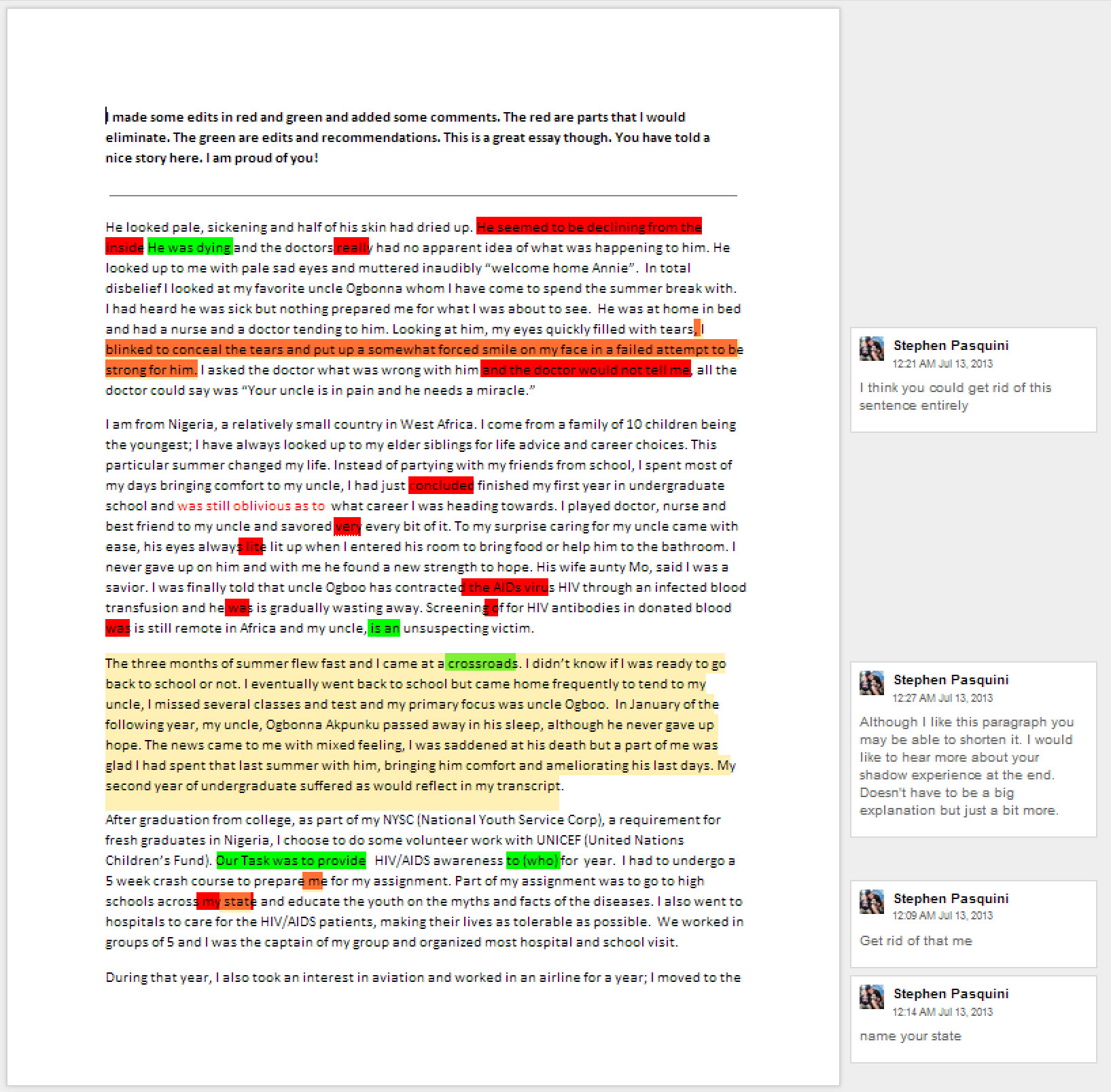 To collaborate, we use Google Drive. Google Drive is free, has an intuitive interface with integrated live comments in the sidebar, the ability to have a real-time chat, to collaborate effortlessly, and to compare, revise, or restore revisions on the fly. Google Drive also has an excellent mobile app that will allow you to make edits on the go!
Our team has worked with hundreds of PA school applicants within the Google Drive environment, and we have had enormous success.
The Physician Assistant Essay and Personal Statement Collaborative
I have set up two options that I hope will offer everyone a chance to participate:
- One-of-a-kind, confidential, paid personal statement review service
- A collaborative, free one (in the comments section)
Private, One-On-One Personal Statement Review Service
If you are interested in the paid service, you may choose your plan below.
The Personal Statement Review Service is:
- Behind closed doors within a private, secure network using Google Drive.
- It is completely interactive, meaning we will be able to provide real-time comments and corrections using the Google Drive interface.
- Telephone consultations are included with all edits above the single edit level. It’s often hard to communicate exactly what you want hundreds of miles away; for this reason, we offer the option to edit right along with us over the telephone while sharing in real-time over Google Drive. This is an option available to all our paid clients who purchase above the single edit level.
- We provide both revision and editing of all essays. What’s the difference? See below
- We will provide feedback, advice, and help with brainstorming and topic creation if you would like.
- We will help with a “final touch-up” before the big day, just in case your essay needs a few minor changes.
Why Choose Our Service?
- It’s not our opinion that matters. We have gone the extra step and personally interviewed PA school administrators from across the US to find out exactly what they think makes a personal statement exceptional.
- We are a team of PAs and professional writers, having worked over ten years with PA school applicants like yourself, providing countless hours of one-on-one editing and revision.
- Our clients receive interviews, and many go on to receive acceptance into their PA School of choice.
Because we always give 100%, we will open the essay collaborative for a limited number of applicants each month and then close this depending on the amount of editing that needs to be done and the time that is available.
Our goal is not quantity but quality. We want only serious applicants who are serious about getting into PA school.
Writing is not a tool like a piece of software but more like how a photograph can capture your mood. It’s more like art. The process of developing a unique, memorable personal statement is time-intensive, and it takes hours to compose, edit, finalize, and personalize an essay.
As Antoinette Bosco once said:
And this is why I am charging for this service. We love helping people find stories that define their lives, and we love helping individuals who have the passion to achieve their dreams. It’s hard to describe the feeling I get when an applicant writes back to tell me they were accepted into PA school.
There is no price tag I can place on this; it’s the feeling we get when we help another human being. It’s just like providing health care. But this takes time.
Interested? Choose your plan below.
Read more client testimonials.
Free Personal Statement Review
Post your essay in the comments section for a free critique
We want to make this opportunity available to everyone who would like help with their essay, and that is why we are offering free, limited feedback on the blog.
You post your essay in the comments section, and you will get our critique. It is that easy. We will try to give feedback to every single person who posts their COMPLETE essay here in the comments section of this blog post.
Also, by posting your comment, we reserve the right to use your essay.
We will provide feedback on essays that are complete and fit the CASPA requirements (View CASPA requirements here). We will not provide feedback on partial essays or review opening or closing statements. Your essay will be on a public platform, which has both its benefits and some obvious drawbacks. The feedback is limited, but we will try to help in any way we can.
Note: Comment Rules: Remember what Fonzie was like? Cool. That’s how we’re gonna be — cool. Critical is fine, but if you’re rude, I will delete your stuff. Otherwise, have fun, and thanks for adding to the conversation! And this should go without saying: if you feel the need to plagiarize someone else’s content, you do not deserve to go to PA school.
* Also, depending on the time of year, it may take me several weeks to reply!
We love working with PA school applicants, but don't just take our word for it!
How to submit your essay for the paid service
If you are serious and would like to have real, focused, and personalized help writing your personal statement, please choose your level of service and submit your payment below.
After you have submitted your payment, you will be redirected to the submissions page, where you can send us your essay as well as any special instructions. We will contact you immediately upon receipt of your payment and essay so we may begin work right away.
Pricing is as follows:
Choose your plan, then click "Buy Now" to submit your essay, and we will get started right away!
Every purchase includes a FREE digital copy of our new 100-page eBook, How to Write Your Physician Assistant Personal Statement, Our 101 PA School Admission Essays e-book, the expert panel audiobook, and companion workbook. This is a $65 value included for free with your purchase.
All credit card payments are processed via PayPal over a secure HTTPS server. Once your payment is processed, you will be immediately redirected back to the essay submission page. There, you will submit your essay along with some biographical info and all suggestions or comments you choose to provide. You will receive immediate confirmation that your essay has been securely transmitted as well as your personal copy of "How to Write Your Physician Assistant Personal Statement." Contact [email protected] if you have any questions, comments, or problems - I am available 24/7.
The hourly service includes your original edit and one-on-one time over Google Drive. It is simple to add more time if necessary, but you may be surprised at what a difference just a single edit can make. We find our four-hour service to be the most effective in terms of time for follow-up and full collaboration. We are open to reduced-rate add-ons to suit your individual needs.
Writing and Revision
All writing benefits from rewriting when done well.
When you are in the process of writing a draft of an essay, you should be thinking first about revision, not editing.
What’s the difference?
Revision refers to the substantial changing of text. For example, it may include re-organizing ideas and paragraphs, providing additional examples or information, and rewriting a conclusion for clarity.
Editing, on the other hand, refers to correcting mistakes in spelling, grammar, and punctuation.
We perform both revision and editing on all submissions.
How to submit your PA school essay for the FREE editing service
Follow the rules above and get to work below in the comments section. I look forward to reading all your essay submissions.
– Stephen Pasquini PA-C
View all posts in this series
- How to Write the Perfect Physician Assistant School Application Essay
- The Physician Assistant Essay and Personal Statement Collaborative
- Do You Recognize These 7 Common Mistakes in Your Personal Statement?
- 7 Essays in 7 Days: PA Personal Statement Workshop: Essay 1, “A PA Changed My Life”
- PA Personal Statement Workshop: Essay 2, “I Want to Move Towards the Forefront of Patient Care”
- PA Personal Statement Workshop: Essay 3, “She Smiled, Said “Gracias!” and Gave me a Big Hug”
- PA Personal Statement Workshop: Essay 4, “I Have Gained so Much Experience by Working With Patients”
- PA Personal Statement Workshop: Essay 5, “Then Reach, my Son, and Lift Your People up With You”
- PA Personal Statement Workshop: Essay 6, “That First Day in Surgery was the First Day of the Rest of my Life”
- PA Personal Statement Workshop: Essay 7, “I Want to Take People From Dying to Living, I Want to Get Them Down From the Cliff.”
- Physician Assistant Personal Statement Workshop: “To say I was an accident-prone child is an understatement”
- 9 Simple Steps to Avoid Silly Spelling and Grammar Goofs in Your PA School Personel Statement
- 5 Tips to Get you Started on Your Personal Essay (and why you should do it now)
- How to Write Your Physician Assistant Personal Statement The Book!
- How to Write “Physician Assistant” The Definitive PA Grammar Guide
- 101 PA School Admissions Essays: The Book!
- 5 Things I’ve Learned Going Into My Fourth Physician Assistant Application Cycle
- 7 Tips for Addressing Shortcomings in Your PA School Personal Statement
- The #1 Mistake PRE-PAs Make on Their Personal Statement
- The Ultimate PA School Personal Statement Starter Kit
- The Ultimate Guide to CASPA Character and Space Limits
- 10 Questions Every PA School Personal Statement Must Answer
- 5 PA School Essays That Got These Pre-PAs Accepted Into PA School
- 7 Questions to Ask Yourself While Writing Your PA School Personal Statement
- 101 PA School Applicants Answer: What’s Your Greatest Strength?
- 12 Secrets to Writing an Irresistible PA School Personal Statement
- 7 Rules You Must Follow While Writing Your PA School Essay
- You Have 625 Words and 2.5 Minutes to Get Into PA School: Use Them Wisely
- What’s Your #1 Personal Statement Struggle?
- 31 (NEW) CASPA PA School Personal Statement Examples
- How to Prepare for Your PA School Interview Day Essay
- Should You Write Physician Associate or Physician Assistant on Your PA School Essay?
- Meet the World’s Sexiest PA School Applicants
- PA School Reapplicants: How to Rewrite Your PA School Essay for Guaranteed Success
- How to Write a Personal Statement Intro that Readers Want to Read
- PA School Reapplicant Personal Statement Checklist
- How to Deal with Bad News in Your Personal Statement
- Inside Out: How to use Pixar’s Rules of Storytelling to Improve your PA Personal Statement
- Ratatouille: A Pixar Recipe for PA School Personal Statement Success
- Personal Statement Panel Review (Replay)
- Mind Mapping: A Tool for Personal Statements, Supplemental Essays, and Interviews
- Start at the End: Advice for your PA School Personal Statement
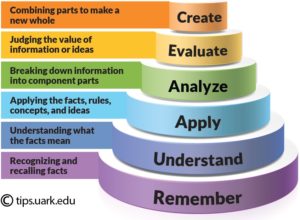
- Elevate Your Personal Statement: Using Bloom’s Taxonomy for Impactful Writing
- How to Write a Captivating Hook for Your PA School Personal Statement
- 3 Surprising Truths About the New CASPA Life Experiences Essay (And Why You Can’t Ignore It)
- 3 PA School Personal Statement Mistakes Our Editor Sees Again and Again
You may also like
 Elevate Your Personal Statement: Using Bloom’s Taxonomy for Impactful WritingThe most common advice writers often give pre-PAs is to "show, don't tell" in your essays. (Though we like to encourage showing …
 Who Gets Into PA School in 2026? Here’s What You Need to KnowLeslie Mean is a 23-year-old single white female who presents to the PA school admissions committee on her second attempt to get …
 Start at the End: Advice for your PA School Personal StatementNot sure what to include in your personal statement? Start at the End! The conclusion should summarize your entire essay. Consider the …


CASPA Personal Statement Help
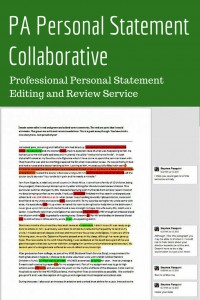 We offer comprehensive, start-to-finish personal statement assistance or help to perfect a draft you already have. We have services to fit every budget.
 Schedule a Live Recorded PA School Video Interview
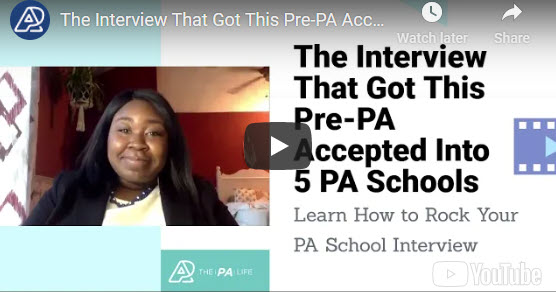
We offer 60-minute mock PA school interviews with post-interview feedback and advice. Includes a recorded video of your interview that you can watch, download, or share with family and friends. There is no better way to prepare!
Schedule an InterviewPre-PA Consulting and Advising
 Our pre-PA coaching service consists of a 1-hour phone consultation focused on addressing your specific questions or concerns about becoming a PA and applying to PA school.


I stepped down from the bus and right before me stood an old building with broken windows and paint peeling from the walls. “I thought we were going to a clinic,” I said in my head confusingly and sure enough, our guide led us into the tattered building. I walked through the door and saw a physician running around seeing patient with no one else to aid him. “Is there anyone else helping him?” I asked my classmate. She shrugged and she too had a puzzled look on her face. After quite some time the physician walked up to our class. I could see that his eyes yearned for sleep but he had a genuine smile on his face. He took us on a short tour of the small facility, which was the only healthcare facility for many, many miles, and he was one of the few physicians that worked there. The rooms looked as the outside did and the equipment looked out of date. During the tour, he mentioned that he had been on duty for almost 48 hours straight. I could not believe that he had been working consistently for that long and was still standing. It amazed me to see the effort and dedication he was showing to his patients and to our class. It made me realize that I wanted to help others as he was – I wanted to make an impact on someone’s life and I plan to do so by becoming a physician assistant.
The previously described scenario occurred during a summer study abroad course in Costa Rica. That was the moment I realized why I want to pursue the medical field. After that time, I obtained jobs as a medical assistant and medical scribe at multiple maternal fetal medicine offices such as the ***** and *****. During the years as a medical assistant and scribe I have been able to become acquainted with the healthcare field as well as improve my skills as a healthcare employee.
As a medical scribe I have been able to observe multiple highly trained and specialized physicians and assess their thought processes and perspectives. For example, at ***** we see high risk obstetric patients during their pregnancy. My routine is to review the patient’s chart ahead of time and assess what may need to be done that day, such as glucose gestational screens or vaccines. When the patient arrives I obtain their vitals and obtain how the patient is doing. I then relay patient’s problem list and information to the physician. Together, we assess the patient and I am informed of what additional things may need to be required such as an EKG or a referral to a specialist. During this time, I am able to learn what questions to ask the patient to better diagnose them, what information that the patient relays is relevant, and what needs to occur after the pertinent information is received. Because I currently work with four physicians I am able to get a grasp of different perspectives and approaches on patient care. In addition to seeing patients with the physicians, I also scribe the appointment reports. By scribing the reports I have been able to improve my writing skills through learning the SOAP (Subjective, Objective, Assessment, and Plan) format.
Furthermore, by working in a medical setting I have learned that I enjoy working in a team setting but can also work alone. As a medical assistant there are many tasks to be done in one day and with team work as well as individual work I am able to accomplish these tasks. While working in a team I have learned that communication is key to making the work day flow smoothly. I work one-on-one with the doctors as well as work with other medical assistants, sonographers, the administrative staff, and other OB/GYN offices.
Being a medical assistant has also brought out the compassionate personality in me. I enjoy my job and working with patients. As I see the patient throughout the pregnancy, I get to learn their background and observe the diversity between each patient. I come from a big, loving family and working as a medical assistant I treat the patient how I would like someone to treat my family member.
I enjoy working in the maternal fetal medicine specialty because it has taught me to think and act quickly in urgent situations. It also encourages me because I am not working with one life but multiply lives. However, I am only familiar with this specialty and I would like to broaden my knowledge. There are many things that I have still yet to encounter and I believe that during the physician assistant academia I will be able to get acquainted with other aspects and I will enjoy the mobility that physician assistants have.
Hi Jessica,
The opening of your essay is engaging, although it has some awkward phrasing and a few grammar errors (be scrupulous about those — the last thing you want to do it send in an essay with basic grammar mistakes). And you do a good job of detailing the skills you’ve developed and some of your qualities.
You’re missing important information, though. There’s nothing in this essay that tells Admissions folks why you’re specifically choosing the PA profession as opposed to any other profession apart from wanting to broaden your knowledge and you enjoy mobility. That’s not enough and because the essay is lacking that information, you can’t write a strong conclusion, yet.
Have you worked with PAs? Shadowed any? If so, write about those experiences to show you understand the role of a PA and why it’s right for you. You don’t need to write so many details about the exact role you play as an assistant and scribe. Your instincts are good as far as using the work you do to outline your skills, but you can still eliminate much of the detail to leave room for the things you need to write about.
To buy you space and rid the first paragraph of awkwardness and grammar issues, here’s how I’d edit it, with my standard caveat — some words are mine and are just to illustrate my point. You’d use your own words:
I stepped down from the bus and stood in front of an old building with broken windows and paint peeling from the walls. I had thought we were going to a clinic and wondered why our guide was leading us into the tattered building. As we walked through the door, I saw a physician running from one patient to another. No one aided him. As soon as he could, he stopped to give us a tour. During a tour of the run-down facility, he mentioned that he had been on duty for almost 48 hours straight. It amazed me to see the effort and dedication he was showing to his patients and to our class. It made me realize that I wanted to help others as he was and I plan to do so by becoming a physician assistant.
Scrutinize each word and cut those those are general and don’t help Admissions folks get to know you. Before submitting, have someone proof it carefully for grammar errors and awkwardness. I always have my husband edit my articles, even after more than 15 years of professional writing. It’s hard to catch our own mistakes.
I hope all this helps and wish you good luck.
Sue Edmondson
http://www.thepalife.com
Hi, thank you for this service. I know that my essay is too long but I am struggling with what to cut and rework. Thank you!
It started with a little boy and a hamster. During high school I worked at a local pet store. It was a typical after school/weekend job but one that allowed me to interact with animals. I was known at the store to have a gift of helping people decide what pet really best suited their wants and not just “what was cute.” One day a little boy came in convinced he wanted a hamster. I talked with him and his mom for over an hour about pro and cons of small rodent ownership and discerned that in fact a guinea pig was a better pet for the kind of interaction he wanted. The boy was so excited about his new “piggy” and was happily choosing accessories when his mom took me aside. She thanked me profusely, amazed at the level of commitment I’d given to helping this family choose a pet. She happened to work at Cincinnati Children’s Hospital and gave me her card. She worked somewhere in the bowels of administration but she wanted me to contact the research department.
The follow up earned me a job working in children’s medicine research. It was a relatively simple job but a profoundly emotional one. One of my studies was testing treatment protocols for cancerous tumors. These tumors were removed from patients in the hospital, the cells injected into the mice and allowed to propagate. The hairless mice grew monstrous purple, ulcerating tumors and quickly over took most of their bodies. Many eventually struggled to move, emburdened by the weight and size of the tumors. Daily I cared for these sad creatures. I strived to make what time they had comfortable. I learned to push my discomfort and emotion aside for the needs of these hopeless tenants. Working in animal research is heartbreaking. Every day was a new step forward or two steps back, a giant leap forward only to be greeted by a giant wall of negative results. Every day that I saw those mice, I thought of the sick children mere yards from my lab, ill from the same tumors in my mice. I thought of their parents, and their siblings, their future’s, their dreams. Every day it made me want to work that much harder, and every day I grieved the failures.
During my time at Children’s hospital I was in school earning my bachelor’s degree in Clinical Laboratory Science. Science has always been a home for me. My father is a food scientist and he recruited my help at the ripe age of three. He would bring me to his lab and I would help him weigh out various compounds and seal sample bags. It was this first experiences with the lab that always made it feel a safe and friendly place to work. In high school I tutored chemistry and biology and lead an after-school science club. From here the leap to clinical laboratory science was a simple one. I was drawn to the puzzles. As a medical laboratory scientist my job is to determine which microbe is making you sick, or which antibody you’ve made after your blood transfusion or what blood chemistry is abnormal so doctors can treat you effectively. Nothing is more rewarding than finding that malarial parasite in a red blood cell under the microscope when you have a patient with cyclic fevers and a travel history.
During college I worked for a veterinarian. After my time at Children’s I wanted some more patient exposure. I started out as just an assistant, handling pets for procedures and exams but even this basic job taught me the art of the patient interview. Getting an H&P isn’t always as clear cut as one would think, especially in veterinary medicine. But during my time at the vet’s office, I learned how to steer the conversation with pointed questions to get the medical information that I knew the doctor would want based on the presenting complaint. Soon after starting, I was promoted to a surgical assistant where I learned to draw blood, place catheters, intubate, monitor the patients under and after anesthesia, clean and prep the operating suite, surgical site prep and would provide traction or anything else the doctors needed. Along with the obvious learning of medical procedures, this was a job that particularly taught me how to function in a medical community. Each doctor had their own likes and dislikes. One liked the surgical area shaved wide while another’s didn’t, suture preferences, instrument preferences, the list goes on. I had to remember each preference along with my other duties to make each day successful. I have a great ability to remember facts and procedures and this enabled me to foster an acute attention to detail. Because of this I was awarded the more complex cases to assist with. I was picked to assist with surgeries on birds of prey that would come in from the Raptor rescue. I was also picked to assist with the river otters from the Newport Aquarium. I also became a specialist in the exotic pets and was charged with education of new owners to the specific needs of their new pets. I loved this part of my job the most. Being an advocate for the animal made me feel good. I knew that after they left an information session with me that they would really know how to best care for that animal.
Once I graduated with my Bachelors of Clinical Laboratory Science, it was back to human medicine and back to the lab. I love being a Medical Lab Scientist but I always left that something was lacking. My favorite days were when the medical student would come down and I could teach them something under the microscope, or when I doctor would call down and ask to consult about additional testing that could prove insightful. I wanted more. I could give more.
I heard about my current job through a school acquaintance and jumped on it immediately. I work in the lab for free-standing Emergency room. While my primary duties are those in that lab, I also have been able to gain patient interactions. My veterinary experience as well as my professional laboratory experience has made me comfortable drawing blood, assisting with wound cleaning/suturing, splinting, and even assisting with codes. Obviously I am a minor player, but this has really opened me up to know that I can be more. My desire to become a Physician’s assistant became clear while working in the emergency room. I work in my community. I usually run to work, that is how close I am to home. I want to help these people. I am both fascinated by their ailments and driven to help them get better. With the advent of the heroin/opiate epidemic that is particularly devastating in my community, I have seen many young and old alike die from overdose. I want to be that first step on their way to recovery. I want to heal my community. Being a mother of three young kids has taught me to not be judgmental of where people are in their life right now. Working in emergency medicine has only solidified that philosophy. The most well behaved kid will still have tantrums, the kindest person might steal for drugs. I have learned to view the patient and their circumstances separately. Who they are right now in my emergency room at 3am is not who they might be tomorrow or who they were yesterday. But they need care now and that’s what I want to be for them.
While I haven’t always been the little girl who dreamed of being a doctor when she grew up, I have always loved helping people and the science of medicine. I believe my professional experiences have set me up to be very successful as a physician’s assistant. I have learned compassion and loss from working animal research. I have developed patient skills from working in both animal surgery and human emergency medicine. And I feel strongly that my diagnostic skills learned from my eight years as a Medical Laboratory Scientist have paved the way for me to finally be more. I can also help you find the perfect hamster.
Hi Amanda,
Well, I have to say, I loved your last line — it made me laugh, so thank you for that.
Unfortunately, the essay has a number of problems, not the least of which is calling the profession “physician’s assistant.” The correct name is “physician assistant.” When I interviewed Admissions Directors and faculty from across the country about these essays, they all said getting the name of the profession wrong was a huge red flag that the applicant is unfamiliar with the profession.
When I read your essay, that’s what I wondered, and here’s why — there’s nothing to tell me or Admissions folks why you want to be a PA as opposed to any other healthcare provider. There’s also nothing that shows you understand the role of a PA. Have you shadowed PAs? Had one as a provider? If so, write about those experiences. Even if you haven’t had contact with PAs, you’ll need to detail why you’re interested in the profession. The one positive is you’ve outlined many of the skills and qualities you have that would make you a great PA (good job there), so that’s not an issue. But the other things are.
To really help you, I’d need to do much more editing than I do for free here. Much of your essay must be cut to give you the space to include the missing pieces. Just to give you an example of what you need to do, here’s how I’d cut in the few sentences:
It started with a little boy and a hamster. During high school I worked at a local pet store. It One day a little boy came in convinced he wanted a hamster. I talked with him and his mom for over an hour about pro and cons of small rodent ownership and discerned that a guinea pig was a better pet for the kind of interaction he wanted. His mom thanked me profusely, amazed at the level of commitment I’d given to helping this family choose a pet. She happened to work at Cincinnati Children’s Hospital and gave me her card.
I hope this gives you an idea of what you need to do.
Best of luck.
Sue Edmondson
http://www.thepalife.com
Everyday is a blessing to be grasped wholeheartedly. It is our duty to fill that day with a confident and hopeful reason. As a young girl, I have always wanted to be somewhere in the medical field but my heart was not set on a specific occupation. Throughout high school, everyone told me that whatever I decide then was not going to be set in stone. After taking many career quizzes and teachers’ advices, I decided that it was too early for me to know what I wanted to do. I thought freshmen year of college will bring along all the maturity and thoughts needed to decide such a big decision. Therefore, I set aside all the career options that were ahead of me and decided to step into college not knowing where the future will take me. At that point, my journey towards becoming a physician assistant started.
During the course of my freshmen year, I did not have a heavy work load. Everything seemed smooth to the peek. Keeping up with my classes along with having a perfect social life was easy to maintain despite the fact that it affected my health because I used to not get enough sleep. Once freshmen year ended, everything shifted around. I decided to take summer classes at Tennessee Technological University which was two hours away from home. As I was used to during the normal semesters of my freshmen year, I drove back home to Nashville every two days to go to church, see my family, do community service, and socialize with my friends. I wish I knew that summer classes are much more compressed than the normal semester and that the classes I signed up for were not as easy as I thought. After failing my first college course, unexpectedly, I still did not learn my lesson.
As my junior year approached, the first semester went exactly like my summer. Nothing changed except that I dedicated more time to community service when I drove back to Nashville. Slowly, I lost control over all my grades and my GPA dropped much lower than I ever expected. At that point, I was not sure what happened. All I could think of was the question: Why is this happening to me? What am I missing? I realized that I did serve more during this semester but I lost track of my priorities. I lost track of who I was as a person and what my goals were. I decided that pursuing my career will make me a much more successful individual that can serve the community with a lot more than what I was doing. I took it upon myself that in the very few semester hours left until graduation, I will change things and put forth effort and dedication.
To start this compacted journey right, I made a list of the ways that would help me better myself as an individual and through which I would be capable of helping my community in a more successful manner later. I decided that being a Physician Assistant was the career for me after a long searching process.Being an autonomous scholar, and additionally a people oriented person; I feel that I am appropriate, not only for a vocation in the restorative field, however for a lifetime profession as a Physician Assistant. Aside from the fact that it is a medical field career, being a physician assistant will enable me to purse a job that lets me offer all what God gave me for the service of others in all aspects of knowledge and care. To reach that goal, I wrote a list of the classes that I didn’t do well in and re took every single one of them. I also became a certified Nurse Assistant the summer of my junior year to gain the knowledge and experience of the patient care field. I volunteered throughout the year at every free clinic that I knew about. I was focused only on studying and my CNA volunteering. Finally, I also joined the medical chemistry club at my university and showed up to every meeting that they held. I did all that I could so that the time I wasted in vain can be restored through hard work and effort. I ended up graduating college a year early and maintained a job in the healthcare field.
The goal of becoming a physician assistant has changed my life and contributed to who I am as a person right now. The change came from within me. The path I have set for myself is the only way that I will be successful and will be able to serve the underserved with the knowledge that physician assistant school will give me. The journey may not have started right when I was young, but it later shaped every step I took towards becoming a physician assistant.
Hi Merna,
I won’t try to sugarcoat this, your essay needs a lot of work.
I would avoid opening with a “platitude” instead try to find a different tactic, the entire opening paragraph needs to be rebuilt and re-worded. It fails to grab the readers attention and I found myself skimming from the start. You will want to focus on this part first, I would recommend you change direction completely.
This sentence is one example in particular: “I thought freshmen year of college will bring along all the maturity and thoughts needed to decide such a big decision.” Avoid word repetition, there is a word tense discrepancy as well.
“As my junior year approached, the first semester went exactly like my summer. Nothing changed except that I dedicated more time to community service when I drove back to Nashville”
– What type of community service were you doing? This is what the admissions committee needs to know.
When we interviewed admissions directors they all said they like to hear how you got from point A to point Z, here is a quote from the pre-release version of our book:
“The essay needs to be about the applicant. When three-quarters of an essay describes a PA’s job, we don’t learn anything about the applicant,” Landel says. “Instead fo-cus on what you’ve done that has led you to seek out the PA profession. Key in on the experiences that brought you to the fork in the road and tell us why you took the path to PA.”
“Applicants need to tell a real story about how they got to the point of applying, based upon numerous events that led to this career choice. Come up with a list of personality traits needed in healthcare work — empathy, a desire to help others,” Perrino says. “Tie events in your life to developing the attributes and traits that will make you a good PA. One sentence is often enough. For example, ‘I was an athlete and learned to work with a team.’ We like to hear about the individualized journey. You need to show me who you are and what you have to contribute. It can be as simple as developing the list of your traits into sentences.”
I think the key statement here is “One sentence is often enough.” You have described your story in detail but have gotten lost in the details and spoken in too many platitudes without giving us strong concrete examples.
“Being an autonomous scholar, and additionally a people oriented person; I feel that I am appropriate, not only for a vocation in the restorative field, however for a lifetime profession as a Physician Assistant.”
I am sorry if I am coming across sounding harsh, this is not my goal, but I can tell you have a lot of passion, drive and experience and I am not sure this essay does you justice.
– Stephen
Still working on the closer, I’m terrible at writing personal statements
One of my most vivid memories as an EMT was only after working for a few weeks. It happened while giving a report to a trauma team in MGH’s ER. The details of the call escape me, but what I do remember is just how nervous I was trying to relate the patient’s problems to 10 people staring at me. As I was struggling to pronounce medications and drawing a blank, a very calm and collected doctor proceeded to ask me questions and guide me through giving my report. What would have been one of the most embarrassing moments of my life was prevented by a young doctor. When I thanked him afterwards, “Thanks Doctor,” he told me he wasn’t a doctor, but a Physician Assistant (remove capitalization of “physician assistant” in this case) (PA) student. It wasn’t at that time that I realized I wanted to become a PA, but that moment stuck in my mind as the kind of person I wanted to be during an emergency. I wanted to be a practitioner that is calm and someone who people come to for support and guidance.
It wasn’t until I stopped working as an EMT and went back to school that I realized I wanted to work in medicine for the rest of my life. The saying, “Distance makes the heart grow fonder” accurately describes what occurred while I was attending UMass Lowell. The decision was made to make a career of medicine (consider “I made the decision to pursue a career in medicine), but I wasn’t sure in what field I would. (You should consider reworking the entire last sentence) At the time I was studying neglected tropical diseases in a Parasitology course when it dawned on me. I wanted to work in the areas of the world that don’t receive the vaccines or treatments we do here in the U.S. I wanted to work in an area where I could make the biggest impact in someone’s life. I want to volunteer/work on the Mercy Ship. I felt that to work on the Mercy Ship and make a difference I needed to be a higher level of care than just an EMT. From researching online I realized working as a PA is greatly rewarding both at work and in life. The variety of specialties, the freedom outside of work, and to be honest, the pay, all speak to me of a quality of life we all dream of. Recalling the calmness and guidance received from that PA student years ago are what really drove home being a PA.
Being a PA would allow me to work alongside doctors treating and helping patients with a wide variety of ailments. It would allow me to travel to places where medical treatment isn’t normally available. Traveling to these places allow practitioners to treat diseases that are all but wiped out here in the United States. Working as a PA gives us the ability to help people, but also allots for a quality of life at home away from work that most people dream of.
Hi Steve,
I added a couple very quick recommendations in bold within the body of your essay in the original comment.
I like your opening, it is not overly dramatic and is a good personal account of what drove you to become a PA. This is a very good start.
It is in the body of the paragraph where you wonder a bit, so this is what is going to need the most work. There are some basic grammar and punctuation errors that need attention. A simple correction (which I highlighted in bold above) is the need to remove the capitalization of “physician assistant”. This is a common mistake I made for years (and still do) but in this instance it would be lower case.
I always wanted to do Mercy Ships as well, believe it or not, it is also one reason I pursued a career in medicine, guess what? I believe that Mercy Ship still doesn’t accept PAs. Neither does Doctors Without Borders. I haven’t checked in a couple years, but you may want to call Mercy Ship and confirm that this is even a possibility. Not that it is a huge deal, because there are many other possibilities, but you just want to show that you have done your research and have a clear path. The good news is they accept EMTs 🙂 Here is a list of “qualified” medical practitioners: http://volunteer.mercyships.org/volunteer/volunteer-faqs/
Make sure to avoid platitudes such as: Being a PA would allow me to work alongside doctors treating and helping patients with a wide variety of ailments. It would allow me to travel to places where medical treatment isn’t normally available”. Use examples instead, they highlight what you have done which prove you understand the statements you made above. Take a look at this post for some more examples: https://www.thepalife.com/mistakes
I believe you are onto a great start here!
– Stephen
As a seventeen year old, bright-eyed, bushy-tailed high school graduate I was ready to take on college and begin my career. A mere two months in, I was less than thrilled with my Nutrition major, which would, according to my disgruntled professors, effectively stick me behind a desk for the rest of my life and possibly never save a life. I lost interest and searched for something else. In my second year, I joined the military. I wanted to save lives and saw becoming a combat medic as my chance. At the end of training, I was still devoid of any real experience. I was introduced to the emergency medical services, and I eagerly jumped right into paramedic school. I immediately felt at home. Early in my career, my decision was affirmed because of the call that changed it all.
I quickly sat up as the tones went off inside the truck. It was 0642 and my partner and I received a ‘Respiratory Distress’ call just 18 minutes before clocking out. The sirens blared through my foggy morning haze and as I logged in the chart information I realized this was my patient.
We arrived at a house on a steep hill; I cautiously walked in the dimly lit house, stepping over several children to get to my patient. She was young, mid-forties and sitting on a cooler, a fan in her face and grasping her chest. “I. Can’t. Breathe.” I placed the monitor on the floor, careful not to disturb the roaches, and listened to her lung sounds. “Ma’am, take a deep breath.” Crackles. Fluid everywhere. Bubbles in a milkshake. I picked up the monitor without even turning it on, turned to fire personnel, “Can you carry her out?” Her family members followed close behind and urged me to help their “baby.” They stood on the porch, waited and watched my every move. Once on the stretcher, I managed to get a blood pressure as they rolled her down the hill. “198/112, get her in the truck I’ll get the C-PAP set up.” I scrambled to get in the ambulance and rummage through the jump bag to get the right mask. I handed my partner the nitroglycerin, he sprayed while I prepared to seal the mask on her face. There’s a face these patients make, one when they don’t understand if they should trust you. I tried to calm her down, “Sweetie, it’s going to uncomfortable but it’s going to help.” She nodded. My partner held the mask while I secured it. “Get a line set up for me.” Tony opened the bag while I wiped the sweat from her arms. The electrodes barely stuck. He handed me the saline lock and I tied the constricting band. “Is it easier to breathe?” She nodded no, “Tony turn the peep up please. And I’m good to go.” He climbed out the back and no firefighters were in sight, they had all left for end of shift. Finally we were on the road, speeding through lights and past morning traffic. As I got flash from my IV I looked up and she had lost consciousness.
Time slowed down. My hands fumbled to secure her IV and I snatched the mask off, she was no longer breathing. I lowered the stretcher, felt for a pulse and began bagging her, but her pulse was already weak. I felt again and there was nothing. She coded. I began compressions but I was alone. Keep pushing. Who was going to bag her? Push faster. Algorithms raced through my mind, I yelled to my partner to call in the code, I couldn’t even reach the radio, the C-PAP was still whistling on the floor. The drugs were out of reach. I extended my hand under the stretcher and opened the non-rebreather and plugged the tubing to the portable. Pulse? Nothing, keep pushing. I held the mask on her face and pushed with my left hand. We were backing up into the bay. We’re here. Sweat dripped from my forehead and elbows and Tony swung the back doors open. I stepped on the stretcher while co-workers wheeled her in and I continued pushing. The PA took over before the doctor made it to the room. Her mothers’ face flashed in my mind. “Help my baby.” I gave report as they pushed epinephrine. I worked with closely with this PA and he saw me tired, glistening and out of breath. “She’s got a pulse.” I snapped back. I watched them intubate her and stabilize her in ways I wasn’t able to in the truck. Later that morning she was fighting her intubation tube.
That was the first patient I ever brought back. It was not my most technical call, I did not intubate or administer drugs, and she was certainly not the most difficult IV attempt but that was a pivotal day for me. Despite my military training and my experience as a paramedic, that was the day I discovered my passion. Since then, I have had smoother, more complex calls and I have thrived. The autonomy afforded to me coupled with my scope of practice allow me to treat my patients according to my differential diagnoses; an aspect that once frightened me, now draws me in. I sincerely love my job, but I want to be able to do more for my patients. It took years but I have found my path and it does not end here. I am ready for the next challenge. I am prepared to become a Physician Assistant.
Hi Michelle,
I really like your opening, you very quickly and concisely present yourself in a manner that gives you credibility and focusses on your experiences. Very well done! The story needs to be shortened and in this case I think I would limit it to one paragraph. Make your point and then move on. Elaborate on other experiences, I know you have a lot to showcase so don’t leave this out. If you can do this and wrap it up in the conclusion you will have the workings of a very well written essay!
– Stephen
“When I realized that I wanted a career in healthcare, I knew it would be a challenging journey. I developed a jealousy for my peers who would express that they could remember the exact moment they were inspired to become a healthcare professional courtesy of some major life experience, because my inspiration did not come that plainly. It was not until halfway through my undergraduate career that I was able to clarify my decision to become a physician assistant (PA), but it is a decision that will satisfy my most innate desires to be a professional who cares for others, practices critical thinking, is part of a team, and is able to maintain a full family life.
Growing up in a rural elementary school, I thought that I wanted to be a teacher when I grew up. Why would I not want to be a teacher? I excelled academically at an early age, and my teachers gave me dutiful recognition. I was excited to hear my name called to walk to the front of the gym full of parents and students to receive paper certificates. My teachers were my friends, encouragers, and exalters. I knew that I wanted to make people feel the way they made me feel– cared for, loved, and admired.
My aspiration to become an educator lasted into my high school years. However, when I began taking core science courses, I found that my mind did not just thrive, it thirsted for the systematic, challenging puzzles that explain the natural phenomenon required for life on Earth. My senior year of high school, I took an advanced chemistry course and enjoyed it so much that I left for college in pursuit of a career in pharmacy.
After a few semesters of college chemistry lab work, I decided that working behind the counter in a pharmacy or a research laboratory would not satisfy my need for human connection and I longed for biological application of the concepts I studied in chemistry. I became a pre-med student of biology and fell more in love with every additional instance of understanding how dependent all the basic concepts of science are and how all the courses I had taken finally melded together to create the larger scheme of the human body, its systems, and humans’ role in sustaining the Earth.
Around the same time my interest in the physical sciences was realized, my father’s battle with chronic back pain also peaked. Before I was even alive, he had collapsed two lumbar discs training with the Air Force, but was able to continue his service and also became a patrol officer in Charlotte, NC. By the time I finished high school, however, he had experienced several re-injuries and surgeries and had to find a job that would depend less on his body and more on his brain. Our family found ourselves in Kansas, where my father began a government job and I began my undergraduate career. Here, my father was able to control his increasing pain through a regimen prescribed by a pain management specialist. Part of that regimen was regular exercise, which he did by running. I took on his running routine as well as a way to manage the stress of college and work. In this way, our relationship was strengthened in a way it was not able to as I was growing up and he was pursuing his own undergraduate degree, working to support our family, and serving deployments overseas. We even ran our first road race together on Independence Day 2011.
When my father’s government job was removed from the budget 2 years later, my family was once again faced with relocation across several states, this time to Maryland. As a 19 year old with no roots in Kansas, I moved with my family. Through the process of moving, I learned several lessons about adapting the 5-year plan I had envisioned when I graduated high school. I endured a year of online community college courses while I acquired in-state residency, worked in food service, and jumped through the hoops required to transfer colleges. I learned lessons in flexibility and perseverance. I also soon learned about the differences in state health care systems. As it turned out, the regulation of pain management drugs, which my father was accustomed to being prescribed, were much more tightly regulated in Maryland. It took months for his new pain management physician to trust him and his magnitude of pain, and even then he could not be prescribed the amount of pain medication it takes to lower his pain to a level which is enjoyable to live in or even function. My father was no longer able to bear running and began living around his medication schedule– his quality of life dropped significantly. I know that there has to be a better solution to the management of pain like what my father and others experience everyday, and I want to be a part of that it. I can do this through the study of medicine, both preventative and therapeutic. I pains me every time I stop to think about the amount of pain my father lives in and how it controls his life, and this is the fuel I use to push myself when learning challenging concepts and struggling to study.
At the same time my father’s condition was deteriorating, I started working as a medical scribe in the emergency department (ED) at Baltimore Washington Medical Center (BWMC). This job forced me to expand my knowledge of medical terminology before I could start in the ED and afforded me the opportunity of learning even more terminology as I was exposed to a range of medical encounters in the ED. This job also gave me a solid understanding of the human resource system of care in hospitals and is where I was able to clarify my desire to become a PA instead of pursuing medical school. Through discussion with the doctors and PAs that I scribed for, I learned about the adaptability of the PA profession which will help me to fulfill the national demand for primary care, but will also allow me to specialize in pain management or another specialty that may inspire me. When speaking with the female PAs and physicians, I also learned that as a PA it is more plausible to build an enjoyable, family-centered life and have a dedicated career in medicine where I can help others live healthier, more fulfilling lives with their own families.
My work as an EMT since graduating college has bolstered my desire to be a PA. I have had the opportunity to treat and transport a variety of patients which brings me great joy. The suspense that builds as I approach each call excites me as I get to apply the basic medical knowledge I have to help a person in need of not only medical attention, but also emotional reassurance.
I believe that being a PA will allow all my characteristics of compassion and adaptability to excel and will fulfill my desire for critical thinking. The PA profession will also bestow me the luxury of thriving with a professional life and a family life, both which will benefit from my passion to care for others, making the part of their life which I will be privileged to be a part of the best that it can possibly be.”
Hi Grace,
Your essay starts off strong, but you begin to lose steam when you start talking about your father. I’m very sorry to hear about his struggles, and a brief mention is fine because it’s one of the motivations you have There’s far too much detail there, and it needs to be cut. Not only because it bogs down your essay — you’re at 6900 plus characters and spaces — almost 2000 over the CASPA limit. Those paragraphs need a lot of editing. In fact, I’d eliminate the entire entire fifth paragraph (you’ll weave in the information in first line in the next paragraph).
Here’s how I’d edit the next paragraph (with a caveat — some of the words are mine, which are just to illustrate my points. You’d use your own words):
When I was 19, my father’s government job relocated to Maryland. As a 19-year old with no roots in Kansas where we were living, I moved with my family. Through the process of moving, I learned several lessons about adapting the five-year plan I had envisioned when I graduated high school. I endured a year of online community college courses while I acquired in-state residency, worked in food service, and jumped through the hoops required to transfer colleges. From these experiences, I learned lessons in flexibility and perseverance.
I also soon learned about the differences in state health care systems. It was highlighted when my father dealt with managing his chronic back pain. It took months for his new pain management physician to trust him, and his quality of life suffered. I know there has to be a better solution to the management of pain like what my father and others experience everyday, and I want to be a part of that it. I can do this through the study of medicine and as a PA, both with prevention and by therapeutic means. This is the fuel I use to push myself when learning challenging concepts and struggling to study.
Do the same with your the rest of your essay and you’ll be in good shape.
I hope this helps and wish you the best.
Sue Edmondson
http://www.thepalife.com
I just want to say thank you so much for your forum, I would be completely lost writing this thing without the feedback! The school to which I am applying first does not use CASPA and requires a max essay of 250 words. Terrible I know! I’m trying to convey an experience that really affected me while still trying to show why I want to be a PA. Mind you, this is my first draft and I’m not sure I did all I set out to do, I just need a little direction!! Thanks in advance for the time 🙂 PS- this is exactly 250 words
I had always viewed death as abysmal and impending; believing it was disrespectful to continue living as though they had never existed.
I watched in awe as a woman was wheeled into the trauma bay, she had been found unresponsive and eight months pregnant. Able to watch from behind the glass, I was amazed at the calm and fluidity in the room as they assessed the woman while attempting to revive her. The team worked tirelessly to no avail; it was evident the woman was not coming back. They now had to deliver the unborn child before it too was lost. With the pediatric trauma team not yet arrived, they had to act. Without hesitation, the physician assistant (PA) began to perform an emergency C-section. I later learned that the PA had spent six years prior working in Obstetrics. The pediatric team flew in soon thereafter and, with precision, was able to take over. The baby was delivered, revived, and rushed to the Neonatal Intensive Care Unit.
When my cousin, whom was like my sister, died I began to follow my creed and stopped living myself. Through my grief, my grades plummeted, twice. I witnessed and felt the passion, compassion, and determination that day. More than that, I learned an important lesson about death. The team showed me what a support network during struggle could do. That wonderful woman taught me that giving up cannot be an option. My shortcomings became my motivation; experiences my perception; and pain my appreciation.
Hi Amanda,
A tough job indeed, but you manage to cover quite a bit of territory. It’s a bit disjointed and awkward, and you have some grammar errors. Here’s what I suggest (keep in mind that I used a couple of my own words — you’ll use words your words:
I watched in awe as a woman was wheeled into the trauma bay, she had been found unresponsive and eight months pregnant. Able to watch from behind the glass, I was amazed at the calm and fluidity in the room as the team assessed the woman while attempting to revive her. They worked tirelessly to no avail; it was evident the woman was not coming back. Now had to deliver the unborn child before it too was lost. Without hesitation, the physician assistant began an emergency C-section. I later learned that he had spent six years prior working in Obstetrics. The pediatric team flew in soon thereafter and with took over. The baby was delivered, revived, and rushed to the Neonatal Intensive Care Unit.
I had always viewed death as abysmal and impending; believing it was disrespectful to continue living as though the dead never existed. When my cousin, who was like my sister, died, I began to follow my creed and stopped living myself. Grieving, my grades plummeted, twice. That day in the trauma bay, I witnessed and felt the passion, compassion, and determination. More than that, I learned an important lesson about death. The team showed me what a support network during struggle could do, that giving up cannot be an option. My shortcomings became my motivation; my experience brought changed perception and appreciation for life and a desire to (here add something that fits for you that’s PA/healthcare related. You’ll have the words to do it).
Best of luck.
Sue Edmondson
http://www.thepalife.com
Please explain why you are interested in being a Physician Assistant.
Sometimes one goes through life without expecting to make a difference in another person’s life. My inspiration of becoming a physician assistant dates back to one summer when my aunt and baby cousin decided to visit my family from Florida. At that time, I was about 16 years of age living in *. A couple days after resting, my cousin who was a year and three-months old, began to feel sick and started coughing. Since this was no surprise to my aunt, we continued enjoying our time together. Around three o’clock AM two days later, my aunt was waking my cousin up to administer the cough medicine. At this point, she was taken by surprise of the baby’s temperature. After checking his temperature, she found it to be 104.5 F. She had no idea what to do at that point so she rushed to the room where my mother and I slept and started banging on the door. Since I am a light sleeper, I heard my aunt yelling for help and suddenly jumped out of bed. As I opened the door, I saw tears sliding down her cheeks and she was crying asking me to get help. I asked what happened as we both ran to my cousins’ room and she said his temperature was very high and was not sure if he would make it. She also mentioned that clinics and hospitals would take too long since all doctors’offices were closed at the moment. I remember feeling anxious as the pressure around me was building up. By the time my mother woke up, I rushed myself to the bathroom yelling to bring my cousin in there. Thinking that cold water would be our only solution, I filled up the tub quickly while undressing my baby cousin. After that, I soaked his entire body into the cold water as he cried and shivered into my hands. I had no choice except leaving him submerged in the water for a couple minutes. As I felt his body temperature reaching equilibrium, I softly picked him up and placed him into a dry towel. I noticed I had an audience and that my baby cousin was no longer crying. My aunt at this point was redressing him with a smile on her face while thanking me. By that time, everyone began to relax and went back to bed. The next morning we visited the doctor and told him about the incident. He responded by saying, “There could not have been any other solution. You saved the child’s life.” When I heard this news, I felt accomplished and overwhelmed for saving my baby cousin’s life. My aunt was filled with so much joy after hearing this that she started tearing. After a fulfilling experience of saving my cousin life, I feel I have become very driven and passionate about serving others in a medical perspective. I was able to turn a mortifying event such as this one into an inspiration and realized that it was a calling to bes in the healthcare. Indirectly developing patient care experience as a teenager impacted my mental outlook on medicine and my personal interest in that field.
I had gone through high school knowing that I wanted to dedicate my life to medicine. My GPA of 3.65 was very consistent all throughout my four years of high school, which had given me hope for achieving my goal to work in the health care. I was unfamiliar with what careers choices I had, but I knew I wanted to take part of caring for ill patients. Coming from a first generation family to complete high school and be interested in college was highly unusual. Both my parents did not have the opportunity to attend college, leaving them with only a high school diploma. This did not stop me from being determined to persevere and shape my future. However, there was the burden of dealing with the unfamiliarity of planning for college and the many career degrees. Also being the oldest child, I found it more challenging to understand and research about the college process and requirements compared to my average peers who come from a family of doctors and engineers. I had to make an extra effort to understand how to become an acceptable college student. With the help of my high school counselors and college advisors, I was able to expand my options towards my future career and become more familiar with the college procedures. I am proud to be a part of a country that gives you hope to become someone, and create something out of oneself regardless of circumstances or family history.
Meanwhile, as soon as I received the opportunity to step foot in a hospital as an information desk volunteer at *, I took that chance. Even though I had not yet expanded my experiences in the medical field, this helped me gain clarification towards my overall vision. Surprisingly, I became comfortable in that environment. While greeting and guiding individuals for five hours a day may sounds bland and tedious, it was about the interactions and trust formed between the visitors and I. From that day on, I began to learn about myself and how I relish helping individuals who are too sick to care for themselves. I then protracted my ability to spend time with children who didn’t have someone to look after and became a child life volunteer. This was by far the most heart felting position due to experiencing such neglect for infants and young children. The hardest part was seeing these children who came from broken homes ache in pain knowing that their family is not around to care. These children and infants either have parents who were busy at work or were simply neglecting them. I had the opportunity to spend time playing games, watching cartoons and retracting their attention from being sick by giving them my full undivided attention.
At the age of eighteen, I was grateful enough to begin working as an employee in the transport department. Even though it was a beginning position, I really enjoyed the connection I was creating with each patient as we were in route. It was not about transporting patients, but rather making each patient feel at ease while on their way to discovering a potential disease or disorder that they do not want to hear. I felt it was my job to take their mind off of how saddening the results could be by building a comfortable relationship, as it is integral to the process of healing. It had never occurred to me that I do make a difference in each patient’s life by doing my job. A simple action of transporting a patient has a powerful healing effect temporarily transforming ill patients into a vibrant healthy state. Patients always come in hospitals not aware what will take place or what results they will encounter. Many of the times, it is the same patients who are constantly being admitted to the hospital. As a result, I had made it a goal of mine to individually make a difference in as many lives as possible by being a positive advocate. Even though, not every patient comes in with a positive state of mind, staying fervent and exposing compassion towards them is one way patients feel cared for.
Upon entering college, I had placed myself on the pre-medical track without being familiar with the career choices available to me. However, I had in mind that patient centered care was my main interest. As I continued my education at *, I quickly learned about potential career options. Drawing near the end of my junior year of college, I encountered a Physician Assistant at a medical office that my mother had been visiting. I had the chance to speak with a current employed PA about their role and became more familiar. The idea of collaborating with a physician as partners to provide excellent patient care inadvertently sparked my interest to discover more about this career. Even though the undergrad degree for becoming a physician slightly differs from a physician assistant, I was fortunate enough to complete my undergrad degree using the same classes. Once I had graduated, I accepted a position in the same hospital as a medical imaging assistant in MRI. This position was different than transporting because it is more personal attention towards each patient. I am more involved with patients and their purpose for being in the hospital. The main focus of my position is to physically and mentally prepare the patient and make them as comfortable as possible to be scanned for an MRI. This includes many factors from reviewing patient history to reason for visit. After being involved in this position, I noticed I am learning more and more about the steps health care workers must proceed with to provide the best care for patients. Through this position, I realized that patients’ needs must come first. Many patients struggle with receiving an MRI test and require some type of sedation such as Ativan, Valium, Propofol or even anesthesia due to claustrophobia. I also have seen and assisted with many procedures and protocols such as anesthesia cases, lumbar punctures and prepare each patient for their scan by verbally and physically screening them. The interactions I encountered will be a beneficial tool as a future physician assistant due to the high amount of profound insight I gained.
After spending many years working for * and considering all my options, I solidified my decision to becoming a Physician Assistant in the Emergency room. Since the emergency room is overwhelming and a fasted paced setting, any health care provider can be capable of handling it with the right type of attitude and compassion. Meanwhile, during my shadowing experience with* who is a PA in the emergency room at *, I observed him from his initial encounters with each patient to the diagnosis of their condition. Light procedures were also performed during my shadowing experience such as varies stitching, and rectal exams. * allowed me to reach out to him as he showed me his daily routine of obtaining medical history of the patient, performing physical examination, and discussing reason for visit with the patient as he analyzes the condition. He then orders varies necessary laboratory analysis and tests to help bring the PA and the supervising physician to a conclusion in forming a differential diagnosis. As a medical provider, I believe it is necessary to also educate the patient about their services and how they relate to their diagnosis. PA * became a paradigm to me, as I was impressed with his combination of the compassionate towards his patients, medical knowledge expertise and participation in educating each patient about their condition. As a result of my participation with *, I became fascinated with that position. Everything about the setting, I enjoyed dearly and felt capable of working and making a difference in. The emergency room is very different than the rest of the hospital due to the multiple different cases taking place at once. This calls for potential chaos but I enjoy being able to treat critical patients who come in with a variety of illnesses.
Therefore, the combination of my own personal family experience, working in a hospital for multiple years and shadowing a physician assistant have served to corroborate and enhance my interest to becoming an emergency room Physician Assistant. While I know that the PA program has become very competitive over the last couple years, I am ready to prove to myself that I am capable of conquering that challenge. I am confident I have the ability and perseverance to be successful as I achieve my goal and nothing can detain me from it. I have always been the type of person who overcomes any obstacle I come across to achieve success. I know I will be an outstanding PA as I always have been a continuing learner with compassion and ambition towards the growth of medicine. My ambition is to use my medical understanding and knowledge skills to eventually serve a less fortune population abroad. It has always been a dream of mine to travel to third world countries such as Africa or South America and provide free medical treatment where it is truly needed. Lacking not only food, shelter and clothing but most importantly the medical attention, these struggling groups do not deserve to live this way while Americans are taking advantage of the healthcare system. Therefore, when referring to a health care provider, they should encompass much more than being intelligent; rather exposing a genuine drive towards another persons’ life and being able to courageously face the uncertainty of medicine. Altering our focus of patient care does not only depend on the culture and social factors but providers must also alter their emotional and psychological approach towards point of care. As a result, I want to make the change throughout the healthcare system by displaying a provider who is devoted and compassionate about the health concerns of others.
* indicates a person’s name or a name of a place used.
Hi Miriam,
Normally, I would offer editing suggestions to show how things could be done better, but your essay is at 12,573 characters and spaces, so far over the CASPA 5000 limit that essentially it all needs to be rewritten. You could start by making the first paragraph just a few sentences long. When I interviewed Admissions Directors and faculty from across the country, all said they care less about the details of personal experiences (especially those that occurred at a young age) and more about adult experiences, healthcare related if possible.
Here’s the edited first paragraph:
My inspiration for becoming a physician assistant dates back to the summer I was 16, and my aunt and baby cousin were visiting. Three days after their arrival, at 3 AM, my aunt woke us. The baby had a temperature of 104.5 F and she had no idea what to do. Thinking that cold water was the solution, I soaked him in a tub until he cooled. When a doctor examined him later, he said, “You saved the child’s life.” At that point, I decided that healthcare was my calling.”
You’ll have to make some big decisions for the rest of your essay!
I hope this helps.
Sue Edmondson
http://www.thepalife.com
“Is there any reason you need to stay in the hospital?”
“I’m hurting.”
“That is not a reason. I’m discharging you this morning. I will see you in one week.”
By the time I replied with “What?” the surgeon was gone.
It had only been a little over 34 hours since he had first opened up my abdomen to reverse a nissen fundoplication and then performed a Roux-en-Y gastric bypass surgery on me. I had yet to see the incision due to the dressings and abdominal binder, but I knew it was nine inches long and contained a lot of staples. I also knew that moving of any kind was extremely painful and the narcotics only eased the pain slightly. And yet the surgeon had me get up every three hours to walk the nursing unit no matter the time of day. So when he wanted to discharge me from the hospital so soon post-surgery, and without my pain managed adequately, I was shocked.
The shock I had at that moment was due to the surgeon’s abruptness and lack of bedside manner. I was used to his straightforwardness during the quick 5-minute pre-operative appointments. He was a busy doctor. I understood that. But when people are in such a vulnerable state as they are post-surgery, their medical providers need to have compassion and empathy for them. Otherwise, what is the point of working in health care? Money isn’t everything: Helping people is.
As a child, I was taught to treat others as I would like to be treated. No matter how or when it’s learned, caring for the human condition is the basic requirement for any health care worker. If I hurt, I would hope my provider has enough compassion to alleviate it. If I fail, I would hope my provider has enough empathy and patience to listen and understand how I feel.
Although I’m not allowed to do much in my current role as a rehab aide, the patient care I do provide shows my compassion for others. Refilling a cup of water for a thirsty patient, covering a cold patient with warmed blankets, or taking the time to sit and listen to a lonely patient — it’s those little things that show I care. Occasionally, there are times when I help a patient relax during a stressful test or procedure by focusing on their pursed-lip breathing (“smell the flowers, blow out the candles”). Those days tend to be my favorite at the hospital, knowing that my assistance mattered.
Besides showing compassion to the patients at the hospital, I am also empathic and patient. I understand how difficult life can seem when ailing physically and/or emotionally because I’ve been there, too. I’ve also watched friends and family struggle with diagnoses like diabetes or heart disease. Some have worked hard to manage or overcome their illnesses while others have given up slowly and died. I tend to understand and get along with the most disagreeable patients, especially the grumpy old men as they remind me of my grandfathers. In the past, I have had family members, nurses, or the patients themselves compliment me on my patience.
Although working as a rehab aide these past 10 years has been both rewarding and tough, it isn’t where I want to stay professionally. I want to do more in the health care industry and be challenged on a daily basis. My original plan was to finish my masters of science degree then become a clinical exercise physiologist. As I was finishing my thesis, the economy tanked and I had to change my plan because finding work in that profession became more difficult. I understood and accepted that I had to return to school in order to fulfill this new goal. I had just finished being a graduate student and knew that I could do it again. It was at that time I had to choose my new path.
I needed to choose a career that would use my past education as well as complement my character and personality. The master’s degree I previously earned had given me a foundation. It would be a shame to start from scratch and not build upon that foundation into a different career in health care. I also needed to find a career that wasn’t so specific and would allow me to see patients of a more general nature. I want to be part of a team and have the option to ask questions if needed. I also want a career where I am able to spend more time with my patients educating and answering their health questions. Doctors are incredibly busy and at times unapproachable. I want my patients to feel at ease talking to me and not feel rushed. Becoming a nurse practitioner is not an option because I do not have a background in nursing. After spending time researching my options, I decided that becoming a physician assistant would best fit my career goals as well as complement my personality.
This is my new plan. Once I finish school, I will pass the PANCE on the first try. As a physician assistant, I will use my compassion, empathy and patience to build positive relationships and allow my patients to feel comfortable discussing their health issues with me. I have been a graduate student before and succeeded. I will do it again.
Hi Kimberly,
Yikes, what a horrible experience with the surgeon. It’s a good opening, but you could eliminate these sentences: “I had yet to see the incision due to the dressings and abdominal binder, but I knew it was nine inches long and contained a lot of staples. I also knew that moving of any kind was extremely painful and the narcotics only eased the pain slightly. And yet the surgeon had me get up every three hours to walk the nursing unit no matter the time of day.” You don’t need them.
The biggest problem is the writing about how you decided to become a PA. It’s all framed in the negative — the economy tanked so you couldn’t pursue your first choice, you can’t be a nurse practitioner because you don’t have a background in nursing, “it would be a shame to start from scratch and not build upon that foundation into a different career in health care.”
It sounds as if pursuing a career as a PA is last resort, not a first choice, which is definitely not going to convince Admissions folks this is really what you want to do. Concluding the essay with “This is my new plan. Once I finish school, I will pass the PANCE on the first try” is not strong, interesting or persuasive.
You’ll need to rewrite your essay from a positive point of view.
I hope this helps and wish you the best of luck.
Sue Edmondson
http://www.thepalife.com
Open-heart surgery, cardiovascular disease, laryngeal cancer, stroke, prostate cancer, Crohn’s disease, invasive ductal carcinoma, and liver failure are just a few of the many words that plagued my college career. For some, college is generally considered the happiest years of one’s life, but for myself, college immensely proved to be a test of my fortitude as I watched many of my loved ones weaken and die through the course of just four years. Despite having to face these circumstances, each incident further empowered me to complete college and pursue my passion of becoming a health care professional.
Prior to attending college, I always knew that I wanted to be a primary healthcare provider. Growing up on the west side of *****, I frequently visited health care facilities within my neighborhood, and from an early age I was attracted to the allure of working in health care; I had the pleasure of seeing doctors that truly seemed invested in my family’s health and well-being, and I also had the not-so-pleasure of dealing with doctors that were cold and abrupt- both of which helped further sculpt my adolescent dream of becoming a doctor into my real world passion. Having experienced both good and bad healthcare professionals has greatly inspired me to be a healthcare provider that is truly engaged with patients and works to best improve patients’ quality of life; I know what it feels like to be in state of vulnerability when myself or a loved one is dealing with health complications, and I fully understand how invaluable it is to have a healthcare provider that is both knowledgeable and good at what they do while also being empathetic and connecting on a human level to their patients’ and families’ current situation.
It wasn’t until my senior year of high school that I realized I wanted to become a physician assistant as opposed to a doctor. During my senior year of high school I was fortunate enough to shadow a cardiologist and the physician assistant, Ricky, that worked with him at *********. I alternated shadowing both the physician and PA in both a private office and hospital setting for three months, and it was during this time that I realized becoming a physician assistant was the path for me. Although the physician was great at what he did, it was the compassion and work ethic of the physician assistant that truly drew me to the profession. Each time I shadowed Ricky, I would find myself dreading the time that her workday ended. From the moment she stepped into the office, she not only exuded a special level of professionalism, but she was also approachable and kind; with a smile, she would greet each patient on an individual basis and during her time spent in their appointment, she would always take extra time to explain any new procedures or medications she was about to administer and made sure the patient’s felt comfortable with their visit before leaving. Also, many of her patients were African-American and she took the initiative to learn more about their culture and ways to improve their overall health by using wholesome alternatives to incorporate in many traditional meals. It was shadowing with her that not only taught me how hard-working physician assistants are as they go above and beyond to improve the lives of their patients, but it also showed me a way to use my knowledge to help improve the lives of others holistically as opposed to strictly medically. Shadowing with Ricky showed me how I could not only use my skill as a physician assistant to recuperate people’s health medically, but how I could also connect to other African-Americans like myself and help guide them with leading overall healthy lifestyles through healthy eating, proper exercise, and other preventative medicine.
During my undergrad I volunteered at the ******** in *******. This was a free monthly clinic that provided screenings for vision and hearing, as well as blood pressure checks for refugees and immigrants within the greater St. Louis area. I was originally involved in collecting patient demographic information and any previous medical history, but I wanted to become more involved so over the summer I completed classes to become a certified nursing assistant and was then allowed to check blood pressure and glucose levels at the clinic. I was also heavily involved in patient education, and I helped develop a small education course. During this course, I taught the patients about the importance of preventative medicine including regular check-ups and the importance of vitamins. I also helped acclimate them to western medicine by teaching them how to fill prescriptions and how to read and take prescription medicines; I found this to be most rewarding because it was at first remarkable to see how many patients had never known how to handle prescriptions. Many of them had several prescriptions from previous doctor’s appointments crumpled in their wallets for antibiotics and other medications that they had never taken to be filled because they simply didn’t know how to do so. It warmed my heart to see some of the patients at the next monthly clinic shaking their prescription bottles, eager to show me that they had successfully filled their prescriptions and were taking the medicines they needed correctly. It’s experiences like these at the clinic that further pushed me to become a physician assistant. Seeing how many of these patients had been in the United States for less than three months and for many, this was their first experience with receiving health care services, I was heartbroken at the fact that whoever had given them these prescriptions didn’t take the time to explain how they worked. Not only is that dangerous and potentially life threatening, but it is also uncompassionate, and I vowed to never be that type of healthcare provider. It fueled me to further pursue my passion of becoming a physician assistant so that the chances of this happening to someone else would be less- as I greatly value the importance of health education because I have seen first-hand what a difference it can make it someone’s life. It is experiences like these that shape my patient and caring nature for patients.
After graduation, I began working at ************** on the medical oncology floor as a patient care technician II. Working here has not only taught me how to perform standard ECG tests and bladder scans, but it has also helped me become completely comfortable interacting with patients. Working as a patient care technician, I am often the first-responder to patients and the main person helping them with basic routine needs from getting dressed and ready for breakfast to checking their vitals and doing hourly rounds; I’ve come to really appreciate this job because it allows me to get an in-depth look at patient conditions in a hospital setting. I connect with the patients on my floor on a personal level and strive to ensure they are as comfortable as possible while dealing with uncomfortable circumstances. One of the nurses I work with described being a patient at a hospital as “being a customer in a store that doesn’t want to be there, but still needs your services,” and that really stuck with me because it’s true. Most people are not in a hospital by choice, so for even the most difficult of patients, I keep this in mind and always provide care that makes their stay at the hospital as best as possible. Working at ********* has also given me great insight into how physicians, physician assistants, nurses, technicians, social workers, and many others involved on the healthcare team work together to provide exceptional care. Although I have seen slight shortcomings of miscommunication within the team, over the course of working here I have learned the many ways these healthcare professionals work to overcome and prevent these shortcomings. I have also seen the level of respect each individual holds for their colleagues’ position, and it makes me excited to work as a physician assistant on a great team like the one at *********.
Each of my experiences align with my passion of becoming a physician assistant. From being exposed to a variety of healthcare services at an early age to currently working as a healthcare professional, I definitely feel as though being a physician assistant is my calling. I can literally mark each point in my life with a healthcare experience, and whether good or bad, each step has prepared me to be an exceptionally well-rounded physician assistant. My desire to not only provide quality medical care to those that need it most but to also continue educating patients on preventative medicine and health lifestyles while connecting on a personal level has been the culmination of all my past experiences that even through the darkest of times, during college when it seemed myself and family could not get a break, I knew becoming a physician assistant was what I was supposed to do.
—
Thanks so much for providing the feedback, I greatly appreciate it!
Also, I forgot to say that the asterisk marks are just for confidentiality purposes — I was unsure if it’s acceptable to name any institutions I’ve worked for so just to be on the safe side I omitted them! Thanks (:
Hi JoJo,
Sure you can say where you worked. Just don’t identify a patient — that’s where the confidentiality comes in, unless the hospital has a different policy. If you don’t know, ask the institution.
Your essay is comprehensive, too much so. You’re at about 8900 characters and spaces (both count for the CASPA 5000 limit), so you need to cut a lot — 3900! You could start with eliminating your first paragraph, that is unless your grades are inadequate as a result. Then you’ll need to leave it some, but not all of it. You don’t have to name all the illnesses for example.
Following is a suggested edit for one of your paragraphs. (I’ve changed a few words just to illustrate my point. You’d write it with words that work for you. I also moved a phrases or sentences around):
“During my undergrad years, I volunteered at a free monthly clinic that provided screenings for vision and hearing, as well as blood pressure checks for refugees and immigrants within the greater St. Louis area. I originally collected patient demographic information and previous medical history, but I wanted to become more involved so I became a certified nursing assistant. That allowed me to check blood pressure and glucose levels. I also helped develop a small education course where I taught the patients, among them many recent immigrants, about the importance of preventative medicine. Part of the course involved teaching them how to fill and take prescriptions; many had several prescriptions from previous doctor’s appointments crumpled in their wallets simply because they didn’t know how to fill them. I was heartbroken by the fact that whoever had given them these prescriptions didn’t take the time to explain how they worked. I vowed to never be that healthcare provider. It’s experiences like these that further pushed me to become a physician assistant.”
That gets you down under 7600 without losing the message. You’ll have to do (a lot) more of the same.
I hope this helps.
Best of luck.
Sue Edmondson
wwwthepalife.com
Quick question. If I am looking to purchase the 1 hour new customer private edit service and your site mentions that you have a monthly cap of CASPA essay slots, how do we know if you have or have not already hit your cap for say July 2015 before we pay? Thank you 🙂
Also, once we do pay, is it possible to schedule your edit service appointment during that same week or does one usually need to wait a week or two for the appointment? Thank you again for your response! 🙂
Hi Sarah,
We schedule the service on the same week, unless of course you purchased the service over the weekend. We currently reserve weekends for our priority clients.
– Stephen
Hi Sarah, when we meet our monthly cap we simply remove the purchase button as an option from the site and will change the notification at the top of this post. We are still currently accepting essays in July. Also, we would never accept a client’s payment without the ability to complete the project in an exceptional and timely manner. If for any reason something happened (such as a natural disaster or family emergency) and we could no longer complete your request as promised in the timeframe necessary we would refund your payment 100% no questions asked.
– Stephen
Gosh, I have read so many “how to” for writing the PA personal statement. Some contradict the other. When it boils down to it, I relied heavily on the “3 things that must be in the PA essay”. I had the dramatic intro and thought it read nicely, but it seems it was too much drama. But, please see the below and I appreciate the comments and your time.
Breast cancer is the most commonly diagnosed cancer among African American and Hispanic women. Cultural beliefs and behaviors may contribute to lower screening rates. Patient-provider race concordance may increase cancer screening behaviors. A 2014 report of the National Commission on Certification of Physician Assistants (NCCPA) reported that in 2013 there were approximately 95,583 certified physician assistants (PAs) in the U.S. The NCCPA reported that 2,999 PAs were black and 63,035 were female. In a recent study, Ross et al. (2010) found that of 75,000 PAs in the U.S. only 2.4% were oncologist (30% response rate). As someone who is familiar with the nuances of black culture and health seeking behaviors, I am uniquely qualified to practice as a PA oncologist. However, I am lacking the foundations of PA medical knowledge required to eliminate cancer health disparities among a growing minority and female U.S. population.
My mother’s legacy is public service. As a teenager, I taught vacation bible school, visited seniors in nursing homes, and served hot meals to homeless adults. My interests have been laser focused on preventing health disparities and improving cancer outcomes through nutrition and exercise. I have had numerous health promotion experiences that will help me to become an ethical, compassionate, and professional PA.
For example, as a safety officer for a construction corporation, I provided emergency first aid and risk assessment for truck drivers, laborers, and mechanics. One morning Gabe the shop’s foreman shouted my name over the loudspeaker, which resonated in the air of the outsized concrete yard. The tense tone of his voice spurred me into action as I leaped out of my chair and ran out of my trailer. A former marathon runner, I cleared the four steps in a heartbeat and exploded across the great yard like a gunshot.
I immediately stopped at the large opening of the mechanic’s shop. Good Lord, so much blood. The congealing blood led me up the stairs to Gabe’s office as my brain ticked off – contain the scene, make sure everyone is safe, call 911, and be prepared for anything. His eyes glazed my guy was alert but unresponsiveness with slick blood oozing from a large gash in his forehead. There were at least six people in the office, but no one moved to help. I managed the flow of blood and then held my guys hand as the ambulance drove to the hospital. I later recounted this event to my CPR class of male whalers while teaching at a vocational college located in an Iñupiat Eskimo village in northern Alaska. The whalers could relate given their own stories of whaling injuries while harpooning on the Bering Sea.
As a teenager, I was a transporter at an urban hospital. While at the Chicago Department of Public Health, I managed women’s health projects, designed a smoke-free program, and coordinated the HIV/AIDS prevention program. I organized and implemented a faith-based men’s health fair aimed at increasing prostate cancer awareness among black men. This seminal event involved two faith communities, black doctors, and health workers to provide prostate cancer pre-screening and counseling.
Although cancer intervention research is incredibly satisfying I wanted to go deeper in my knowledge of oncology and patient care. When my position at Boston University was downsized I saw it as an opportunity to prepare for PA studies. PA school was always a goal, but now I had an incentive to move forward. In 2015, lacking a job, it was necessary to borrow from my retirement savings to enroll in science prerequisites, certify as a phlebotomist to gain health care experience, improve my GPA, and volunteer with Volunteers in Medical Missions on a service tour to Honduras (https://youtu.be/msG7-pvvYzY). My role was to organize, triage, and record patient complaints. By week’s end I had processed 1,407 patients and shadowed six PAs.
Although I achieved A’s in Physics I and II, my undergraduate GPA is lackluster. In the past, I did not have the study skills that I do now and have worked hard to cultivate strong study skills such as participating in study groups and improving memorization and as a result I attain A’s in microbiology and regression analysis and B’s in anatomy and physiology.
Phone conversations with two PA oncologists helped me to gain a richer understanding of the scope of work of a PA oncologist, which is intellectually stimulating and patient intensive. To learn more about practice issues that impact PA oncologist, such as insurance reimbursement for nurse practitioners but not for PAs, I joined the Association of Physician Assistants in Oncology. These experiences helped to solidify my desire to become a PA oncologist. As a future PA (PA-C), my goal is to integrate competencies in population health, cancer prevention, and risk assessment with medical oncology.
Thank you for your consideration.
4899
Hi,
Before I forget, we have a free preview of our book on this page website that talks about the very things you need to include and not in the essay.
You’ve had quite a bit of experience and a life filled with service to others. That’s fabulous and your writing is personal, which is great. While saying “Good Lord, so much blood,” is unconventional, I loved it! It’s great, too, that you addressed the issue of your GPA. However, your essay lacks organization and cohesiveness — there are no transitions between paragraphs, so the reader is left to figure out what’s going on. That’s not what you want in an essay.
The first paragraph isn’t helpful at all. Remember, this essay is to educate the Admissions folks about you, not about health issues in general. I’d eliminate it completely and start with the second paragraph, which is quite good (except leave out the word “promotion” from the last sentence.”
Don’t start two paragraphs with the same word (although in your case), and I rarely suggest using “for example” as a transition. Find something that is a little more interesting, such as “More than one of those experiences occurred when I was a safety inspector . . .”
I rarely recommend that people use our services for obvious reasons, but you could really benefit from professional editing. If you decide to do it yourself, have someone review it to ensure that one paragraph leads to the next.
I hope this helps and wish you the best of luck.
Sue Edmondson
wwwthepalife.com
It was less than a month until summer, the morning air was crisp on my skin and I could feel the goose bumps crawling up and down my dehydrated skin. Every breath was a struggle as I fought to satisfy my asthmatic lungs; my body was weak from overexertion and I could barely remember the last time I ate a meal that did not consist of only vegetables. Looking in the mirror was a nightmare, but exerting myself felt like my nightmare coming to life. I was caught between a radically distorted self-image and a condition limiting the very exercise that could help me. I had entered high school weighing in at 110 pounds on my 5’2” frame and finished 9th grade weighing in at 145 pounds. I had always felt like the outcast during physical education, when I had to sit out while others ran the track. The summer after finishing 9th grade I decided to make a change, I was determined to lose weight and overcome my asthma in the process. Countless nights spent building my tolerance on the treadmill along with denying myself the foods I loved had rewarded me with a loss of 45 pounds and a boost of confidence by the start of my sophomore year. This confidence was short lived however, a couple of months later I had begun to permit myself to eat more of the things I craved and running less, until one day I saw the nightmare in the mirror again. Instead of realizing that my weight was in a normal healthy range, all I could see was the number on the scale reflected in my image. I turned to extreme food restriction and increased exercise to remedy this; I did not know what I was doing was wrong until I began to feel the toll these choices had on my body. I had lost all energy, was constantly tired, and fainting spells became a regular occurrence. My doctor had warned me about the dangers of athletic anorexia, but I did not heed this warning until I felt what was happening to my body. Determined to make a change once more, I researched the power of nutrition and proper exercise and picked up my first set of weights, setting out on a path to a healthy, fit lifestyle. Since then I have had a desire to share my passion for health with those around me and clarify the very misconceptions that led me to believe extreme measures were key to a healthy life.
Living a lifestyle dedicated to health and fitness has taught me how the results you strive for do not get handed to you and are not easily earned, you work hard everyday and in return you receive only according to the work you put in. In the same way becoming a PA takes determination and hard work, a mentality that the pathway towards this career will not be easy but completely rewarding when you reach the end. Initially I considered a career in nutrition and exercise in order to educate and help others reach their goals, however a career as a PA is appealing to me because of the diagnostic aspects of medicine and also because of the flexibility to work in several different disciplines of medicine. Serving on a variety of mission trips has opened my eyes to see the tremendous need in under-resourced communities, and as a PA I would be able to make a difference to people who for the most part can only afford to self-care and treat.
Throughout these mission trips I’ve observed how every individual plays a different role but overall each role contributes to the end goal of the whole team. From our group some of us would sit down and listen to a person’s story, other providers would treat the patient and provide medication, and many other volunteers served to babysit children and help teach hygiene to the community served. However, at the end of the day each person’s role contributed to the overall team effort that helped enrich the village and make an impact to improve quality of life. For this reason, the more time I dedicated to involvement in my church community and the act of serving others, the more my desire grew to make a difference wherever and whenever possible.
My first encounter with a PA was during a routine doctor’s visit for one of the geriatric residents living at my mother’s assisted living facility. This PA demonstrated what it meant to communicate and empathize to a scared and confused patient in order to gain their trust and make them feel safe. The relationship between the PA and the patient reflected the patient’s trust in me as a caregiver to accommodate their life, because in the same way the patient also depended on the PA for their medical judgment and treatment. It was fascinating to see the amount of time the PA spent getting to know their patient before treating them. Following this encounter I proceeded to get involved in healthcare as an EMT and then ER scribe in order to observe more PAs in action.
After scribing for PAs in the emergency room for over a year, I’ve observed the emphasis they place on preventative medicine. In contrast to the doctors, PAs spend more time getting to know their patient’s history and then counseling them on preventative measures needed to maintain health. It is the PAs who tend to see specific patients that return to the ED for multiple visits, and with the same patience and understanding they explain complex medical information in a simplified way. Shadowing a PA in an underserved clinic and comparing it to the pace of the ER, I’ve had the opportunity to experience different paces of medicine, but most importantly to see an important constant in each setting-that the PA is an extra set of hands for the doctor and tougher they strive for one common goal. There is a harmony between the attending doctor and PA, and as a PA I look forward to having a constant mentor that will push me to be my best, much like a trainer does at the gym. Having a fit lifestyle is made up of many components that all come together to form a common goal; it takes diet, exercise, motivation, and hard work. Each component serves as individual puzzle pieces, and optimal results are achieved when a person utilizes each role to form the whole puzzle. This reflects the teamwork utilized in a hospital and how each provider has a role to play that all comes together for the patient’s best interest.
My personal experiences helping myself have strengthened my self-discipline and also sparked a desire to help others as well. It takes a lot more than being knowledgeable to be an effective health care provider. I believe that I’ve developed valuable qualities that would enhance my role as a PA such as having compassion for others, knowing how to listen to patients, and connecting with the patient on their level in order to promote understanding. My determination to improve my own health and live a life of fitness will reflect into all aspects of my career as a PA and as I seek to improve the health of my patients.
This is my first time applying to PA school, I appreciate you taking the time to give me feedback. I want to know how to structure my essay and if what I am talking about in it is relevant. Thank you!
Hi Elizabeth,
First, congratulations on overcoming your challenges. That’s huge, and shows you have determination and perseverance. That will serve you well in so many ways.
Your essay is very well done — the opening is gripping and the essay covers all the ground you need and the writing is good. (Be to use plural and singular words correctly. You, like many people, refer to a singular patient and then use “their.” Use plural patients or pick a gender). However, as a result of your thoroughness, it’s 1667 characters and spaces over the 5000 limit. CASPA counts both characters and spaces, not words. So, much has to be cut.
I’d start with the first paragraph. When I interviewed Admissions Directors and faculty across the country about these essays, all said to limit the personal experiences and focus on your adult experiences — healthcare related when possible. The second paragraph can use some editing, too. Skip the generalizations. They don’t add to the picture.
Here’s my suggested edit of the first paragraph:
“It was less than a month until summer, the morning air was crisp on my skin and I could feel the goose bumps crawling up and down my dehydrated skin. Every breath was a struggle as I fought to satisfy my asthmatic lungs; my body was weak from overexertion and I could barely remember the last time I ate a meal that did not consist of only vegetables. I was caught between a radically distorted self-image and a condition limiting the very exercise that could help me. I had entered high school weighing 110 pounds on my 5’2” frame and finished 9th grade at 145 pounds. I turned to extreme food restriction and increased exercise to remedy this. My doctor had warned me about the dangers of athletic anorexia, but I did not heed this warning until I felt what was happening to my body. Determined to make a change, I researched the power of nutrition and proper exercise, setting out on a path to a healthy, fit lifestyle. Since then I have had a desire to share my passion for health with those around me.”
That gets you down to 5518, much closer to the limit. Carefully scrutinize each sentence and see what really needs to stay.
Best of luck.
Sue Edmondson
http://www.thepalife.com
Hi Elizabeth,
Your essay is very well done — the opening is compelling and the essay covers all the ground you need. However, as a result it’s 1667 over the CASPA character and space count. CASPA includes both, not just your words.
So much cutting needs to be done. I’d start with the first and second paragraphs. When I interviewed Admissions Directors and faculty from across the country, all said they care less about the details of personal experiences (especially those that occurred at a young age) and more about adult experiences, healthcare related if possible.
Before I forget, be consistent with your use of plural versus singular. You (and many, many others) use the singular patient and then refer to him or her as “their.” I suggest sticking with plural throughout when you can. It just makes it easier. Also, many of your sentences begin with “I.” You’ll want to vary those. One Admissions Director said she circles how many times someone starts a sentence that way.
Here’s how I’d edit the first paragraph. You’ll be down to about 5466 words just by cutting there.
“It was less than a month until summer, the morning air was crisp on my skin and I could feel the goose bumps crawling up and down my dehydrated skin. Every breath was a struggle as I fought to satisfy my asthmatic lungs; my body was weak from overexertion and I could barely remember the last time I ate a meal that consisted only vegetables. I had entered high school weighing 110 pounds on my 5’2” frame and finished 9th grade at 145 pounds and turned to extreme food restriction and increased exercise to remedy this. My doctor had warned me about the dangers of athletic anorexia, but I did not heed this warning until I felt what was happening to my body. I researched the power of nutrition and proper exercise, setting out on a path to a healthy, fit lifestyle. Since then I have had a desire to share my passion for health with those around me and clarify the very misconceptions that led me to believe extreme measures were key to a healthy life.”
Just with those cuts, you’re down to 5466. You can do the same with your other paragraphs. You’ll convey the same message in a less wordy way.
I hope this helps and wish you the best of luck.
Sue Edmondson
wwwthepalife.com
As you can see, I did a bit more editing to get you down even more!
I carefully watched her lips, concentrating and trying to decipher each word she struggled to form with the tragic imprecision of her lips. I sat at the foot of her bed and she in her wheelchair, we were in the process of our nightly ritual which had only formed three days earlier, but had became an intricate, unwritten tradition in such a short time. “She likes her wheelchair in close proximity to the toilet, be careful not to squeeze her too tightly when lifting her or the metal rod in her back will shift, and her biggest pet peeve is acting like you understood what she said; she doesn’t mind repeating herself-she just wants to be understood.” I would replay her sister’s instructions in my head for the first few days until it became second nature. Diagnosed with Cerebral Palsy as a child and wheelchair bound since her first year in college, her life seemed like a series of tragic events on paper, as did the lives of many of the other girl’s in my cabin. However, their spirits were anything but contained by their physical condition. Their aspirations in life were so similar to mine and all I wanted to do was touch their lives in some way. However, they were the ones who touched mine.
Camp Summit is a camp for children and adults with varying physical and mental disabilities. Spending my spring breaks at this hidden campsite became my own tradition. It was an occasion to meet old and new faces, and help the campers have experiences they were very often denied. Camp Summit quickly introduced me to relationships that are unveiled only through health care. A week of ceaseless, unabating care was a reflection of the endearment every Physician Assistant I had encountered implemented.
At the age of twelve, a routine yearly check up brought my first interaction with a PA, and sporadic encounters throughout the years were able to give me a glimpse into the novel career.
Soon I became more and more enticed by the Physician Assistant I met years ago. Their ability to seam together the roles of a leader and dependent practitioner spoke for the versatility of the career, as did their prominence in the array of disciplines in medicine. A PA’s ability to change specialties through their career, which distinguishes them from other mid-level practioners and physicians, struck a chord with the life long learner within me. Volunteering at Camp Summit and at a family medicine clinic, draw me into developing life long relationships with patients, but a part of me also wants to explore emergency medicine. Without ceasing learning or curiosity, this career is able to promote exploration within medicine that’s unseen in others. Often misunderstood for physicians, it exhibits their knowledge in diagnostics and analytical medicine, which interested me since the beginning. Asking “why” and “how” have become second nature to me and the basis of my learning while shadowing and volunteering, but those questions also tug at my desire to act and implement the knowledge I’ve gained. Being able to observe PAs in multiple disciplines and taking on roles such as Lead Advanced Practice Provider revealed their vast knowledge in medicine gained through school, clinicals, and hands on experience acquired even before PA school. Above all else, I was able to see the humility and compassion that is necessary to keep someone going after long hours and to serve every individual with the utmost care and respect.
My time at Texas A&M University has allowed me to gain knowledge in the life sciences and later on implement those concepts to understand more complicated workings of diseases and pathogens that infect the body. As a Biomedical Science major, I was disciplined to incorporate science and treatments through classes such as public health, virology and microbiology. My experiences in the medical field have unmasked the importance of the mending of science and compassion which are essential to health care. Each encounter, event, and struggle has led me to the have a deeper understanding of my purpose to serve others through medicine, but as I hope to touch the lives of others, I’m sure once again my life will be touched immeasurably.
Hi Stephanie,
First, physician assistant isn’t capitalized unless it’s part of a formal name.
I like how you open your essay. It’s an attention grabber. I’d leave out the word tragic from the first sentence. You use it later in the essay, and it’s distracting in the first sentence. In fact, “struggled to form with the imprecision of her lips,” even without the tragic is awkward. I stopped to think what that meant. That part should be reworded.
In fact, there’s awkwardness throughout. I see that frequently because people are trying to impress, which is completely understandable because that’s the point of these essays. But it results in melodrama and sentences that often don’t make sense like this sentence: “A week of ceaseless, unabating care was a reflection of the endearment every Physician Assistant I had encountered implemented.” Not only is it melodramatic, but I’m sorry to say, I’m not sure what you mean by it. Even toned down it will be out of place in that paragraph. Try to just be yourself. That will work so much better.
The essay loses focus when you move past talking about Camp Summit — your third and fourth paragraphs wander. I would combine the two and edit them. Leave out the word “novel” when referring the PA profession. It’s not a novelty these days. To say “their ability to seam together the roles of a leader and dependent practitioner spoke for the versatility of the career” is also confusing. I believe you mean that they operate under the supervision of a doctor, but how does this speak to versatility?
This is how I’d edit them, mostly with your words and by moving sentences around so the essay flows better:
At the age of twelve, a routine yearly check up brought my first interaction with a PA, and encounters throughout the years gave me a glimpse into the career. Being able to observe PAs in multiple disciplines and taking on roles such as Lead Advanced Practice Provider revealed their vast knowledge in medicine gained through school, clinicals, and hands on experience. I became more and more enticed by their ability to seamlessly take the roles of a leader while still operating under the supervision of a physician. A PA’s ability to change specialties, which distinguishes them from other mid-level practioners and physicians, struck a chord with the life long learner within me. Asking “why” and “how” have become second nature to me, and the basis of my learning while shadowing and volunteering, but those questions also tug at my desire to act and implement the knowledge I’ve gained.”
The bones of your essay are good. Now it just needs careful editing to make it shine.
Best of luck.
Sue Edmondson
http://www.thepalife.com
As a child, I would frequently go sailing with my father. We would
cast the lines, pull in the fenders and guide the boat out of the bay.
Working together, we would adjust the sails to allow the wind to guide
us. I grasped the knowledge that the breeze moved the boat, but did
not understand the full mechanisms as to how it worked. As our sailing
trips increased, I gained more skills, and my knowledge vastly
improved. One day I woke to realize those peaceful moments had passed;
the sails had lost the wind and slowly began to slack.
“I am initiating a massive transfusion in the Emergency Department on
female, Jane Doe, age unknown”, the physician tells me over the
phone. My shift in the Blood Bank just started. I glance at the clock
noting the time. My team has less than ten minutes to complete the
first round of blood products needed for the patient. I reach for the
“massive transfusion” paperwork to begin filling out, while
simultaneously designating the technicians to fulfill duties I assign:
thaw plasma and cryoprecipitate, get a cooler together for blood
products. I quickly get to work setting up six uncrossmatched red cell
products. The patient’s age is unknown indicating the need for
O-negative red cells. Eight minutes later, the Emergency Department
technician is at the Blood Bank window waiting for any finished products.
I issue the products, place the necessary units in the cooler and pass
them off to the technician. The technician scurries away. I have
completed my piece in regards to the patient, the sails are now flying
half mast. The medical professionals in the ED will make
the wind blow and sails full. That is exactly who I want to be!
I want to be part of a team, working as a physician assistant, making medical decisions,
and providing direct patient care. I want the boat to move forward, sails fully extended.
Continuing my education in a Physician Assistant program will allow me to accomplish
this. My current job as a laboratory technologist has been satisfying,
knowing I provide information that could help a provider with a
diagnosis and ultimately help a patient. However, the real challenge I face working in a laboratory is being closed off from the patient world. I yearn for direct involvement of a
patient, placing a name to a face, the impact that I could make on
a patient or even more empowering; the impact the patients will make with me.
Working as a PA will allow me to engage in direct patient care and provide a compassionate service. At the same time I will have the ability to focus on the diagnostic side of medicine.
I have a passion for medicine and just like sailing as a child, I
enjoy the challenge, working as a team, and succeeding in my goals.
A career as a physician assistant, will give me the capability to
raise the sails full force. This route allows constant wind that keeps the sails full and the boat in forward motion. It is with this motion I find peace!
So, I am reading through other essays and replies and I now know not to capitalize physician assistant. Oops!
Hi Chris, it took me over 10 years to realize that so don’t feel bad 🙂
– Stephen
Hi Chris,
This is a unique essay to be sure. It will certainly capture the attention of your readers.
It has a couple of problems, though, starting with the last sentence of your first paragraph. That sentence undermines the whole metaphor. I’m not a sailor, so excuse the clumsiness, but the last sentence should refer to the peace you have when the sails are full and moving you through the water. Otherwise, the rest of your essay doesn’t work.
I’d skip a couple of things — saying that the impact patients will have on you will be more empowering than that you have on them for one. It turns the focus you, which is not the point you want to make in the context of your example. Skip the exclamation points. The words make the point, not the punctuation. I’m glad you read other essays and realized that physician assistant isn’t capitalized.
The last paragraph is a little too cutesy. The first sentence is good, now redo the last two without the sailing references.
Other than that, the only thing I would recommend is weaving in why you chose the PA profession as opposed to any other. Really, many healthcare professions offer the same things you’ve listed as why you want to be a PA. A carefully worded sentence or two will cover it.
Best of luck.
Sue Edmondson
http://www.thepalife.com
Everyone has dreams: what they want to become as adults, how many children they want to have, what areas of the world they’d like to visit, or where they want to live. Some have clear visions of what they want for their futures, others live life as it happens and figure things out along the way. I used to be part of the former group until it actually became time to follow the dreams I thought I had for myself. I knew I wanted to have a career in the medical field, but as I progressed through my undergraduate degree I became unsure of the extent that I wanted to be involved.
My discovery of the world of physician assistants began in an unlikely way after some soul searching and major life and family changes. My undergraduate career was focused on becoming a speech-language pathologist, however toward the end of my degree I realized that something was missing. The thought of becoming an SLP didn’t excite me anymore as it once had. I am a busy-body and the thought of seeing a few clients a day and then following up with hours of paperwork was not something I could imagine myself doing happily. I felt like my career would be lacking something and I wouldn’t be as passionate about it as I knew I could be. I took some time off from school after graduation to figure out what I wanted to do, did some traveling and explored some different opportunities. I was introduced to a PA and he extended the offer to let me follow him around for a few shifts to see if it was something I could see myself doing.
As I began to research what it actually means to be a PA I fell in love with the profession. The ability to be part of a decision making team, diagnosing patient’s ailments, offering treatment options, AND the ability to switch specialties if I need a change in my life. What could be better? Although I grew up with a nurse for a mother, it was never something I saw myself doing. Nurses are amazing, selfless individuals that are necessary to the healthcare field, but I desire something different. I am interested in the diagnostic portion of things-the how and the why and the how can we fix it. Becoming a physician was something else I never really desired to do. I enjoy the fact that PAs are able to switch specialties without adding several more years of schooling and the prospect of being able to work in more than one setting at a time and still having time left to live life.
The fact that I had no idea what I wanted out of a career when I graduated college led me to become an EMT-B, it was in the medical field and I lived for the adrenaline rush that came along with it. I used my skills and background to land a job in a non-profit trauma center as an emergency department technician. I see first-hand every single day how PAs can change lives for the better. I work alongside several amazing, talented physician assistants who have taught me many invaluable lessons pertaining to patient care, medical procedures and diagnostics. One of the most important things I’ve learned is that patients most often just need someone to listen to them. Whether it be to distract them from a current health crisis or to give them a break from taking care of a sick family member, the easiest thing you can do for someone is to just take a moment and listen.
The hospital I work in is located in an underserved area where follow-up care isn’t typically a priority for most of the patients that come through our ED and patients become sicker and sicker every time I see them. I want to be able to contribute to breaking this cycle by using the knowledge I will gain in PA school to provide more education to patients and by empowering them to take control of their own health.
Hi Amber,
You had a big realization late in your college career about your goals. I can relate — I had the same experience during my last quarter. It was definitely a challenging time!
Even though that’s how your essay opens, I would recommend eliminating your first paragraph. It doesn’t really add anything that’s not covered better by your second paragraph. The generalizations aren’t helpful and most readers skip right over them. So start with the second — it’s far more compelling. That being said, it needs work.
First you’ve referred to major life and family changes without ever giving a hint of what they might be in the essay. If you don’t want to talk about those, and that’s certainly up to you, don’t mention those things in the essay. It’s like a smoking gun in a crime novel — it’s a clue that needs to be developed before the story ends. Saying you’re a busy body isn’t a compelling or even a desirable reason to lead you to a career choice of a PA. Maybe saying it would be helpful if you were going to be an advice columnist! It’s out of place in an essay that is designed to convince Admissions folks you’re a unique and qualified candidate for their program so it needs to stay focused. Also, using the word, “some” is vague. You always want to be as specific as possible. Finally, PAs do tons of paperwork, so that’s not a great reason to want to become one either.
With those things in mind, I’d edit your second paragraph as follows with this caveat — please understand that I am adding words to illustrate a point, not to tell you what to write. You’ll write words that apply to your circumstances and work for you.
“My discovery of the world of physician assistants began in an unlikely way after serious soul searching toward the end of my undergraduate career. I had focused on becoming a speech-language pathologist, but realized the thought of becoming an SLP didn’t excite me as it once had. I felt like my career would be lacking depth and challenge, and I wouldn’t be as passionate about it as I knew I should be. As a result, I took time after graduation to figure out what I wanted to do. During this break I traveled and explored different opportunities. It was while I was exploring opportunities that I met a PA. He offered to let me shadow him to see if it was something I could see myself doing.”
The rest of your paragraphs could use the same careful editing. Here’s one of the problems — you talk about falling in love with the PA profession, but that’s before the paragraph where you write about becoming an EMT-B. So, you need to reorganize the essay or change some of your wording. The chronology is confusing as is.
I hope this helps.
Best of luck.
Sue Edmondson
http://www.thepalife.com
This is my first draft and any feedback would help greatly. Thanks for any comments to further the cause
I wish I could say there’s a hero in this essay, even a traumatic moment of life and death where realization of true destiny lay. Unfortunately in this essay there’s only my story. My story is born from the sea of humanity, and the aches and pain of daily living. My experience is not counted in hours but in years. My skills honed in the stream of humanity that has flowed through my fingers like water and soft wax. Every day, for 15 years I have worked on people. The pain evident in their faces, in their bodies. They’ve come to me after car accidents, sports injuries, bicycle incidents and a myriad other activities people do in this life.
In the work of a Chiropractic clinic the car accidents victims flow through like the river of traffic outside the office. I work in a darkened, small 8 x 10 room, illuminated by soft light and 1 small candle. My hands are my only tools. Two fingers broken on the left, and one broken on the right. The right finger is a great Trigger Point finger for QL work. When life gives you lemons…
Hours and hours these hands have spent easing whiplash injuries and other injuries ranging from peoples neck to their feet. At first the touch is painful, almost agonizing. You have to gain their trust. Teach them your touch is to heal, not to hurt. I had a patient ask me one time “Why do you only work on the spots that hurt?” I’ve had others tell me the best part of my massage is when I stop. Yet they come back.
Often when a patient first comes into a Chiropractic clinic they’re filled with trepidation, afraid of the Chiropractor, clueless about massage. Besides calming the muscles you must calm the patient. The car accident victims often begin treatment with frequent visits. You get to know them, their hopes, and dreams, their family, who they’re mad at, you see them and you earn their trust. Often, they become your friend, but after a while you know someone is on the mend. They forget their appointments and slowly evaporate from your life, the memory of you dissipating like a water walkers footprints on a still pond. To be forgotten is one of the things I look forward to most in my professional life.
Did you know you can hear a person’s story by palpating their skin, their muscles? Consistently in therapy I have touched someone’s body and elicited a response like “I remember being thrown from a jet ski when I was 10 and injured that area.” My hands are full of people’s painful stories and I have brought healing to many of them.
My entire career has been spent touching the surface of the human body, but I needed to delve more. A few years back I decided to take an Anatomy Physiology class to further my knowledge and complete CE requirements for the massage profession. It was life changing to say the least. The anatomy class for massage school was one thing, but the class for college was another. The professor for my class was amazing and we got along well. He asked me why I would take such an in depth class for a general continuing education class which could be satisfied by a weekend class. I told him “I need to know more.” Over the course of the year we talked and he said I would do well as a PA. It would provide me the hands on health care I desire and stimulate my thirst for more in depth knowledge. Realizing he was right I began the process of completing the PA requirements and have never looked back. Since then I have had to become a CNA, the hands on experience of massage not quite the hands on some schools wanted, and started my own volunteer organization called Vital Signs Now.org. I’ve excelled in school earning honors while working full time and being a dad. It’s been a long river float to this point but my oars stay steady and true, and both are still in the water.
Hi Charl,
This is a heartfelt and sincere essay. It’s also too long by around 1444 spaces and characters (both count for CASPA). So, there’s a lot of cutting to be done. Luckily, there’s also quite a bit to cut from the beginning. It’s a bit overdone. I love the part about becoming a CNA because the hands on experience you have isn’t what schools wanted. Although I definitely recommend restating the sentence in a more positive way: “Since then I have become a CNA, the hands on experience of massage not quite the hands on experience some schools wanted. I’ve also started my own volunteer organization called Vital Signs Now.org, a website designed to . . .
I hate to say it, but the sea of humanity line is too dramatic, and it should be cut, which meets you need a new closing sentence, too. (By the way, spell out numbers one through nine — “1 candle,” should be “one candle.”
This is how I’d edit the first two paragraphs:
I wish I could say there’s a hero in this essay, even a traumatic moment that revealed a destiny. Unfortunately in this essay there’s only my story, born of the aches and pain of daily living. Every day, for 15 years I have worked on people whose pain is evident in their faces. They’ve come to me after car accidents, sports injuries, bicycle incidents and or even a simple fall. In the Chiropractic clinic my hands are my only tools.
I’d eliminate the third paragraph entirely. There’s quite a bit to delete in the other paragraphs as well — you’ve got some redundancies and overwriting. What you’ll want to do with the extra space is tell how your experiences as a CNA have broadened your perspective and knowledge, better preparing you for a career as a PA. I’m sure it has even if you didn’t want to do the work, it’s added a new dimension to your experiences.
I hope this helps and wish you the best of luck.
Sue Edmondson
http://www.thepalife.com
Out of the fifty employees that I worked with, they chose me. It was a hot and humid Monday in mid-July, just like any other regular day at Luther Crest. At about high noon, a 15-year-old camper was rushed to the emergency room after being smacked across the head with a paddle while paddle boarding with the other campers on the Waterama program. The Community Director, named Maddie, an Assistant Community Director, named Rose, and the bleeding camper drove the twenty-five miles into town in the rental 2014 Chevrolet Cruze. The camper was getting his stitches when Rose lifted up her shirt to show the doctor something peculiar; “Hey, are these chicken pox?” Without hesitation, or even a second glance, the doctor replied, “Yes, yes those are.”
With stitches stitched and a newly diagnosed case of the chicken pox, the three of them headed twenty-five miles back to Luther Crest. The camper, enthused to be back at camp with his beloved camp friends and counselor, jolted out of the vehicle after it was parked. The Maddie and Rose’s next task? Find me. That summer, I was a counselor as well as a day camp director. This particular week, I was a counselor on an on-site day camp, which meant that once the campers left site for the day around five o’clock, I was doing miscellaneous tasks like dishes, planning, and work projects.
“Rae Rae! We need to talk with you!” I turned around to see that Rose and Maddie had returned back from the emergency room a few hours after the incident with the paddle. I figured they wanted to talk with me about the gruesome, yet awesome, experience they had in the emergency room. But no, despite my curiosity and desire to hear about the bloody tale, I was informed that Rose had chicken pox and therefore could not be around the 150 young campers. After being told that I was the only one on-site that week that could handle what they were about to entrust me with, I was switched off of my on-site day camp and on to full-fledged leadership within seconds.
In fulfilling the leadership role at camp, my new duties were to attend staff meetings at 7:30 AM, lead Morning Movers and Alpha in the mornings, put together worships, pack Bible Study materials, facilitate All Camp Games, and lastly, fulfill the role of the nurse – in the absence of chicken-poxed-Rose and two other Assistant Community Directors. With all of these new tasks thrown at me, I was ready to take on the week ahead of me.
As it was my second summer at camp, I knew the ropes and what my general role was as an Assistant Community Director. I led activities and planned worships, among many other things, with ease. It wasn’t until Wednesday afternoon that I ran into my first semi-, not even, catastrophe. A counselor had come to find me while I was preparing for that evening’s events to inform me that a camper named Isaiah, whose name has been changed for confidentiality, had stubbed his toe on a rock while down at the beach. I thought to myself, No big deal, I’ll give the camper some ice and a Band-Aid. I headed over to the healthcare center to find a little boy sitting in a chair who was holding back tears, but clearly in pain. I talked with him about what had happened as I gathered the first aid kit and as I approached his injury, I saw that it was much worse than what I had anticipated. Now, this was not an emergency-room-worthy injury, but it was an injury that involved more blood and detachments than a camp nurse was used to. Isaiah’s big toe’s toenail was hanging on by a thread as his toe bled. I knew he was in pain, and I continued asking him what his favorite part about the week had been so far, what his favorite meal had been, and other questions that distracted him from the fact that his toenail would be falling off sometime this week, if not later that night.
I stopped the bleeding, cleaned up the injury, and finally put a Band-Aid on him. He agreed to visit with me throughout the day so that I could change his bandaging. Throughout my first-aiding, I felt that I created a bond with this camper. I was smiling to myself as I started to log his name and injury when I felt two little arms wrap around my waist. I looked down to see Isaiah’s little self and huge smile smiling up at me and saying, “thank you.” He quickly limped out of the healthcare center so as to soak up as much free time that he had left before I could even double check if he was alright.
This moment in my life was a pivotal moment for me. This moment is when I realized that I had a passion for helping people; more specifically, children.
The idea was simply a quick blurt in a list of post-grad options that my boss was spewing off to me. I had just finished talking with her about my worries and concerns for my life after graduation, as I had been struggling to find motivation to seek a career in my field. I was about to graduate from Concordia College with a degree in Dietetics, but the experience I had with dietetics was not the most positive and it did not involve enough human interaction; which did not flow well with my personality. I was dreading a life behind a computer screen writing menus and filing patient assessments on a computer. I asked my boss to go back a few options in her impromptu list of post-grad options for me. There was something that caught my attention more than any of the other possibilities she mentioned. That “something” was applying to graduate school to become a Physician Assistant. I thought about my passion for human service, and furthermore, I thought about all of the campers I have helped throughout my summers at Luther Crest; from homesickness to Isaiah’s stubbed toe. The very idea of having a career based on making sure that every child is healthy made me smile from ear to ear. It was then that I decided that I wanted to pursue the opportunity presented before me: becoming the world’s best Physician Assistant and helping all the children that come before me.
I have always been a people-person, and am often described as someone who is personable and able to work with a wide variety of people. With the indubitable career satisfaction for myself, as well as the need for PAs, and the changes in healthcare, I believe that becoming a Physician Assistant will benefit me as well as the patients that I will come in contact with. For me, there could be nothing more rewarding than committing my life to the cause of bettering a child’s.
It was a hot and humid Monday in mid-July, just like any other day at Luther Crest Camp, and the waterfront was busy Around noon, one of our campers was rushed to the emergency room after being smacked across the head with a paddle while paddle boarding. The Director, Maddie, an Assistant Director, Rose, and the bleeding camper drove twenty-five miles into town a Chevy rental car. The camper was getting his stitches when Rose lifted up her shirt to show the doctor something peculiar. “Hey, are these chicken pox?” she asked. Without so much as a second glance the doctor replied, “Yes, yes those are.” With stitches stitched and a newly diagnosed case of the chicken pox, Maddie, Rose, and the camper back to Luther Crest. The camper, excited to be back at camp jolted out of the vehicle the moment it was parked. Maddie and Rose set out to find me. That summer, I was acting as a counselor as well as a Day Camp Director My role as Day Camp Director added various tasks to my schedule to support camp operations. As they returned from their hospital visit, I was using some precious free time to do some dishes and a little planning.
When they approached and I heard “Rae Rae! We need to talk with you!” I readied myself for a retelling of their gruesome experience in the emergency room. Instead, of course, I was informed that Rose’s chicken pox meant therefore she could not work with our 150 young campers. Suddenly, I was in charge.
Suddenly, I had a slew of new duties. They included daily staff meetings at 7:30 AM, leading all morning activities, putting together worships, facilitating All Camp Games, and fatefully fulfilling the role of nurse. Suddenly, instead of a beloved counselor – tasked with engaging campers and supporting camp leadership – I was camp leadership. It was my second summer at Camp, so I knew the ropes and the general duties of my new. I led activities and planned worships, among other things, with ease. It wasn’t until a Wednesday afternoon that I ran into my first hiccup… I was preparing for that evening’s activities when a counselor rushed up to me and informed me that a camper named Isaiah, whose name has been changed for confidentiality, had stubbed his toe on a rock while playing at our beach. “No big deal!” I thought to myself, “I’ll give the camper some ice and a Band-Aid and that will be that.” I headed over to the healthcare center to see the boy sitting in a chair holding back his tears, but clearly in pain. As I came closer, I saw that it was much worse than what I had anticipated. Isaiah’s big toe’s toenail was hanging on by a thread as his toe bled profusely. HERE I knew he was in pain, and I continued asking him what his favorite part about the week had been so far, what his favorite meal had been, and other questions that distracted him from the fact that his toenail would be falling off sometime this week, if not later that night.
I stopped the bleeding, cleaned up the injury, and finally put a Band-Aid on him. He agreed to visit with me throughout the day so that I could change his bandaging. I was smiling to myself as I started to log his information in the logbook when I felt two little arms wrap around my waist. I looked down to see Isaiah’s huge smile and he said, “thank you.” He quickly limped out of the healthcare center, eager to get back to his fellow campers. I didn’t even have a chance to ask if he felt alright.
The moment with Isaiah tucked itself away in my mind and my heart – as source of pride and energy that I knew I would draw on later.
As I approached graduation from Concordia College, I sought advice from a mentor. She knew I was a people-person, someone who is able to work with a wide variety of people, and she knew that I had a background in health one of her suggestions was to explore becoming a Physician Assistant. With the indubitable career satisfaction for myself, as well as the need for PAs, and the changes in healthcare, I believe that becoming a Physician Assistant will benefit me as well as the patients that I will come in contact with. For me, there could be nothing more rewarding than committing my life to the cause of bettering a child’s.
Halfway through a 24 hour shift on a emergency response unit my radio screeches with a tone-out from the county dispatch, “Medic two we need you en route to a city bus parked on 6327 Stewart road for an unconscious woman with agonal respirations inside.” Suspecting this might be a full code, I begin to mentally run through my actions and responsibilities as an EMT. I also confer with Jay, a paramedic and new partner, to see what his preferred approach is. Arriving to the scene we find the fire department already on scene and removing the patient from the bus. After quickly securing the patient in our unit I assess the patient and find no pulse or sign of respiration. Communicating this to my partner we immediately begin code protocol. While Jay works on intraosseous access, a firefighter and myself begin CPR, intubation preparation, and shock-pad placement. Jay intubates, and the patient begins to regurgitate stomach contents. Fearing aspiration, I quickly and concisely guide the inexperienced firefighter through proper suctioning of the intubated airway while I maintain chest compressions. Two shocks and five cycles of CPR later our teamwork pays off, the patient regains spontaneous circulation.
This particular call happened last fall, one year into my job as an EMT. Experience with three previous codes, and every emergency call in between, has taught me that each paramedic can bring something unique to the table; a new technique or personal approach to improve patient care that I too can add to my toolbox. Keeping this in mind, Jay and I discussed the call after it’s completion. While we were pleased with the result and each other’s performance, we still discussed contingent scenarios and what each other’s responsibilities would be. Inviting this open discussion and constructive criticism from Jay and each partner before and since has been invaluable in my progression as an EMT.
While working as an EMT I have certainly improved my ability to assess and provide treatment to patients; but it is a knack of self-possession that I feel is among my strong suits. It proves beneficial to my performance and those I am working with as well. In working the mentioned code, had I attempted to guide the firefighter through setting up and suctioning the intubated patient with a frantic and unnerving inflection, his response might have been different or prolonged. Just as an EMT, emergency room PAs are faced with time critical situations wherein maintaining self-possession can be vital.
Although being an EMT and working alongside paramedics like Jay has been immensely fulfilling, I have maintained a desire for a more diverse and involved role in health care. A role involving the traits I enjoy as an EMT — patient care, collaboration, and leadership — with the responsibility and challenge of diagnosing and definitively treating patients. During my education and while working as an EMT, I have learned that an emergency medicine PA defines this role. While shadowing an orthopedic surgeon and dermatologist it became clear I wanted more patient interaction but still remain a practitioner. And from my education in biology I learned that the evidence-based approach of the medical school model suits my qualities and desires much better than the nursing school model.
Shadowing a PA confirmed my pursuit of becoming one. Lisa, a PA at a local walk-in clinic, showed me what it means to be a PA, and that it’s qualities are in tune with what I seek. I observed many situations showcasing this. One of which involved Jose, a young man complaining of straining his back while working on a construction site. After physically assessing Jose and noting his signs and symptoms, Lisa ordered an X-ray. Standing behind her as she interpreted the X-ray she told me told me she feels confident about her diagnosis but wants a second opinion. She then asked the supervising physician to take a look. After discussing their individual interpretations of the X-ray, and Lisa informing the physician of her physical assessment findings, they both came to the conclusion that Jose had Spondylolysis. Lisa and the supervising physician collaborated often like this, whether her patient or his. These interactions highlight interpersonal communication skills necessary between not only the PA and patient, but PA and other providers. Thriving in, and enjoying a similar collaborative effort between EMTs and paramedics, I look to continue working in a team oriented environment as a PA.
Over the past two years my experiences working as an EMT, alongside paramedics like Jay and other healthcare providers, has culminated to this point. Wherein my qualities as a health care provider and what I aspire to do are completely in sync with the PA profession. With an academic track record that speaks on behalf of my dedication and discipline to school, I believe without doubt I am ready for the rigors of PA school. I hope I will be given the chance to show you the qualities I possess to make a good PA, just as I was able to show Jay the qualities of a good EMT.
Hi Jackson,
I can tell you’ve spent a lot of time on this essay. It’s quite polished. Still, it can use some editing — for one, you’re 77 characters and spaces (both count) over the CASPA limit. It would be terrible to be disqualified on a technicality.
Leave out the last phrase of your last sentence of the conclusion. It sounds as if you were teaching Jay, and that’s not how the essay reads. It’s unnecessary, anyway — ending with “I hope I will be given the chance to show you the qualities I possess to make a good PA,” is enough.
You could eliminate other words throughout, but the fourth paragraph needs the most editing. (By the way, make sure your tenses match. You used both past and present. On occasion that can work, but not in these paragraphs). This is what I’d do:
Although being an EMT has been immensely fulfilling, I desire a more diverse and involved role in health care; a role involving work I enjoy as an EMT — patient care, collaboration, and leadership — with the responsibility and challenge of diagnosing and definitively treating patients. During my education and while working as an EMT, I have learned that an emergency medicine PA defines this role. From my education in biology I learned that the evidence-based approach of the medical school model suits my qualities and desires much better than the nursing school model.
Shadowing Lisa, a PA at a local walk-in clinic, showed me what it means to be a PA and that the profession is in tune with what I seek. I observed many situations showcasing this. One involved Jose, a young man complaining of straining his back while working on a construction site. After physically assessing Jose and noting his signs and symptoms, Lisa ordered an X-ray. As she interpreted the X-ray, she told me told me she felt confident about her diagnosis but wanted a second opinion. She then asked the supervising physician to take a look. After discussing their individual interpretations of the X-ray, and Lisa informing the physician of her physical assessment findings, both came to the conclusion that Jose had Spondylolysis. Lisa and the supervising physician collaborated often like this, whether her patient or his. These interactions highlight interpersonal communication skills necessary between not only the PA and patient, but PA and other providers. Thriving in a similar collaborative effort between EMTs and paramedics, I look forward to continue working in a team oriented environment as a PA. (Here I would add another sentence or two about other things that appeal to you about being a PA that you learned from shadowing — Lisa diagnosed, treated and I’m sure spent time educating the patient about his condition. There are other things, I’m sure. Be careful about your word count, though).
I hope this helps.
Best of luck.
Sue Edmondson
http://www.thepalife.com
My life began in Caracas, Venezuela at the Metropolitana Hospital and it almost ended there. From the day I was born, most of my time was spent within the cold walls of a hospital room. It took multiple tests to figure out what was wrong with me; why I would not eat; why I was always sick. Intravenous fluids were the only things keeping me alive. This is something that followed me for the rest of my life. Every time my grandmother visits, she says in Spanish, “I would place you in the bathtub with flour in hopes to distract you while I attempted to sneak a spoonful of food in your mouth. I did everything for you to be able to survive and I am so grateful you are alive, you will never understand that feeling.” I hug her, “Thanks to you grandma, I am fine now.” When I was two, my parents took me to Boston Children’s Hospital and discovered my severe lactose, sugar and gluten intolerance. After undergoing long treatments, I finally began to enjoy a normal childhood.
While my health continued to improve, my grandmother’s medical issues worsened. My grandmother suffered from life-threatening melanomas on her face, leaving her disfigured from multiple surgeries. She rarely goes outside and never joins us on vacations because the sun is her worst enemy. Finding my passion for medicine early in life and completing my Bachelor of Biology, I was lucky enough to intern with the Dermatology Research and Practice Scholars at Dermatology Associates of Tallahassee. I was taught to use Photodynamic Therapy to rid patients of precancerous lesions. I called my grandmother immediately and told her about the procedure. Her visit could not come soon enough. I had the privilege of performing the procedure on her. Her eyes lit up as she watched me in scrubs, applying the medicine on her face gently, and holding her hand during the procedure. A tear came down her face as she thanked me. In that moment, I realized how much I am able to impact a person’s life.
My grandmother was not the only patient that made an enormous impact on my life. As a Patient Care Assistant at Tallahassee Memorial, I assist patients with daily activities, ones that are no longer as effortless as they once were. I still remember shedding tears as one of my stroke patients, expressed in disjointed speech how sad it is that she could not talk with ease due to her deficit. “I loved to talk,” she cried. As I held her hand, I tried to fight back the tears and reassure her that she would be okay. Almost every patient I cared for left an imprint in my heart. Instilling in me the values of care and compassion and how important these are to the wellbeing of patients. They have motivated me to study harder, to serve more compassionately, and to care relentlessly.
Patients were not the only people to impact my life. Several physician assistants helped me realize I could care for people as a career. During my frequent visits to the dermatologist, it was Michelle L. Baechle, PA-C, whom I spent my visits with. It was through her that I first heard of the profession. Not only did Mrs. Baechle treat my acne but she was there for me when I experienced a sudden loss of hair. The doctor diagnosed it as alopecia areata, but she gave me the support I needed when the painful needles were inserted into my scalp. Tristan Hasbargen, a dermatology PA I observed, allowed me to witness patients’ joy as their skin cancers were removed in just a few minutes. As Tristan removed the skin cancer and placed sutures, I was impressed by the vast amount of responsibility and independence a PA could have. It was heart-warming to observe the relationships that are formed and how much his patients truly appreciated him.
Passion and perseverance eventually allowed me to accept my position as a Clinical Assistant Student at Dermatology Associates for Angela Franz, PA-C. Entrusted by all of the doctors she supervises the Cosmetic Center, providing photodynamic therapy for precancerous lesions, lasers for various skin conditions such as rosacea, Botox and many other treatments that allow patients to regain their confidence. It brings me joy to see these patients’ conditions and self-image improve simultaneously. Seeing these conditions firsthand, I find passion in spreading awareness on skin care and skin cancer prevention.
All of these experiences, all of the patients I had the pleasure to care for and all of the physician assistants I worked closely with, shaped me into who I am today. These combined reaffirmed my passion for helping others and my love for knowledge. These experiences left me with supreme confidence and immense joy in the path I chose as an aspiring physician assistant. A career that will allow me autonomy, the flexibility and the knowledge to care for patients. I am confident that one day I will be the one changing the lives of others as mine once was.
Hi Melanie,
You’ve had a lot of personal experience due to your own illnesses and your grandmother’s. However, you should write less about those and more about your experiences working with PAs and why the profession appeals to you based upon those work-related contacts. All Admissions Directors and faculty I interviewed said the same thing — they care less about childhood and personal/family experiences than a person’s adult healthcare experiences.
The other reason not to write so much about your illnesses is that you don’t want to appear focused on yourself and the essay tends to read that way. You could make the same points using the experiences you’ve had working with PAs instead of as a patient of one. Leave out entirely your experiences with PA Baechle.
I’d edit your first paragraph as follows:
“My life began in Caracas, Venezuela at the Metropolitana Hospital and it almost ended there. It took multiple tests to figure out why I would not eat; why I was always sick. After discovering my severe lactose, sugar and gluten intolerance and undergoing long treatments, I finally began to enjoy a normal childhood. My experiences were the start of my enduring interest in medicine.
After completing my Bachelor of Biology, I was lucky enough to intern with the Dermatology Research and Practice Scholars at Dermatology Associates of Tallahassee. I was taught to use Photodynamic Therapy to rid patients of precancerous lesions. Immediately, I called my grandmother, who suffered from life-threatening melanomas on her face, and told her about the procedure. When she came for the treatment, I was the one who performed it. Her eyes lit up when I gently applied the medicine to her face. During the procedure, I held her hand. A tear came down her face as she thanked me. In that moment, I realized how much I am able to impact a person’s life.”
The edits save over 900 characters and spaces. Use those and other words you cut when you rewrite (be merciless with the delete button) to tell about your work with PAs.
Best of luck.
Sue Edmondson
http://www.thepalife.com