
Are you ready to get started? Choose your package, and we will begin today!
Single Edit One-on-one Service Supplemental Essays
Your success is our passion. (See just some of our 100's of testimonials and comments below). We are ready to help. Our current PA school essay editing service status (26th October 2026): Accepting New Submissions

(Photo: Me circa 1987, just thinking about my future PA School Essay)
- Are you struggling to write your physician assistant personal statement?
- Are you out of ideas, or just need a second opinion?
- Do you want an essay that expresses who you truly are and grabs the reader's attention in the required 5,000-character limit?
We are here to help perfect your PA school essay
I have written countless times on this blog about the importance of your personal statement in the PA school application process. Beyond the well-established metrics (GPA, HCE/PCE hours, requisite coursework, etc.), the personal statement is the most crucial aspect of your application.
This is your time to express yourself, show your creativity, skills, and background, and make a memorable impression in seconds. This will be your only chance, so you must get it right the first time.
For some time, I had been dreaming about starting a physician assistant personal statement collaborative.
A place where PA school applicants like yourself can post their PA school essays and receive honest, constructive feedback followed by an acceptance letter to the PA school of your choice!
I have been reviewing a ton of essays recently, so many in fact that I can no longer do this on my own.
To solve this problem, I have assembled a team of professional writers, editors, and PA school admissions specialists who worked to revise and perfect my PA school application essay.
 Beth Eakman has taught college writing and worked as a professional writer and editor since the late 1990s. Her projects have involved a wide range of disciplines and media, from editing scientific research and technical reports to scriptwriting for television. Her writing has appeared in academic, professional, and popular publications. Beth lives with her family just outside Austin, Texas. She enjoys the unique opportunity that The PA Life offers to combine her training as a writer and editor with her experience teaching in order to support PAs and aspiring PAs in achieving their professional goals.
 Carly Hallman is a professional writer and editor with a B.A. in English Writing and Rhetoric (summa cum laude) from St. Edward's University in Austin, Texas. She has worked as a curriculum developer, English teacher, and study abroad coordinator in Beijing, China, where she moved in 2011. In college, she was a Gilman Scholar and worked as a staff editor for her university's academic journal. Her first novel, Year of the Goose, was published in 2015, and her first memoir is forthcoming from Little A Books. Her essays and creative writing have appeared in The L.A. Review of Books, The Guardian, LitHub, and Identity Theory, among other publications.
Read more client testimonials or purchase a revision
We Work as a Team
Our team of professional editors is wonderful at cutting out the "fluff" that makes an essay lose focus and sets people over the 5,000-character limit. Their advice is always spot-on.
Sue, Sarah, and Carly are amazingly creative writers who will take your "ordinary" and turn it into entirely extraordinary.
I mean it when I say this service is one-of-a-kind! We have spent countless hours interviewing PA School admissions directors and faculty from across the country to find out exactly what it is they are looking for in your personal statement.
We even wrote a book about it.
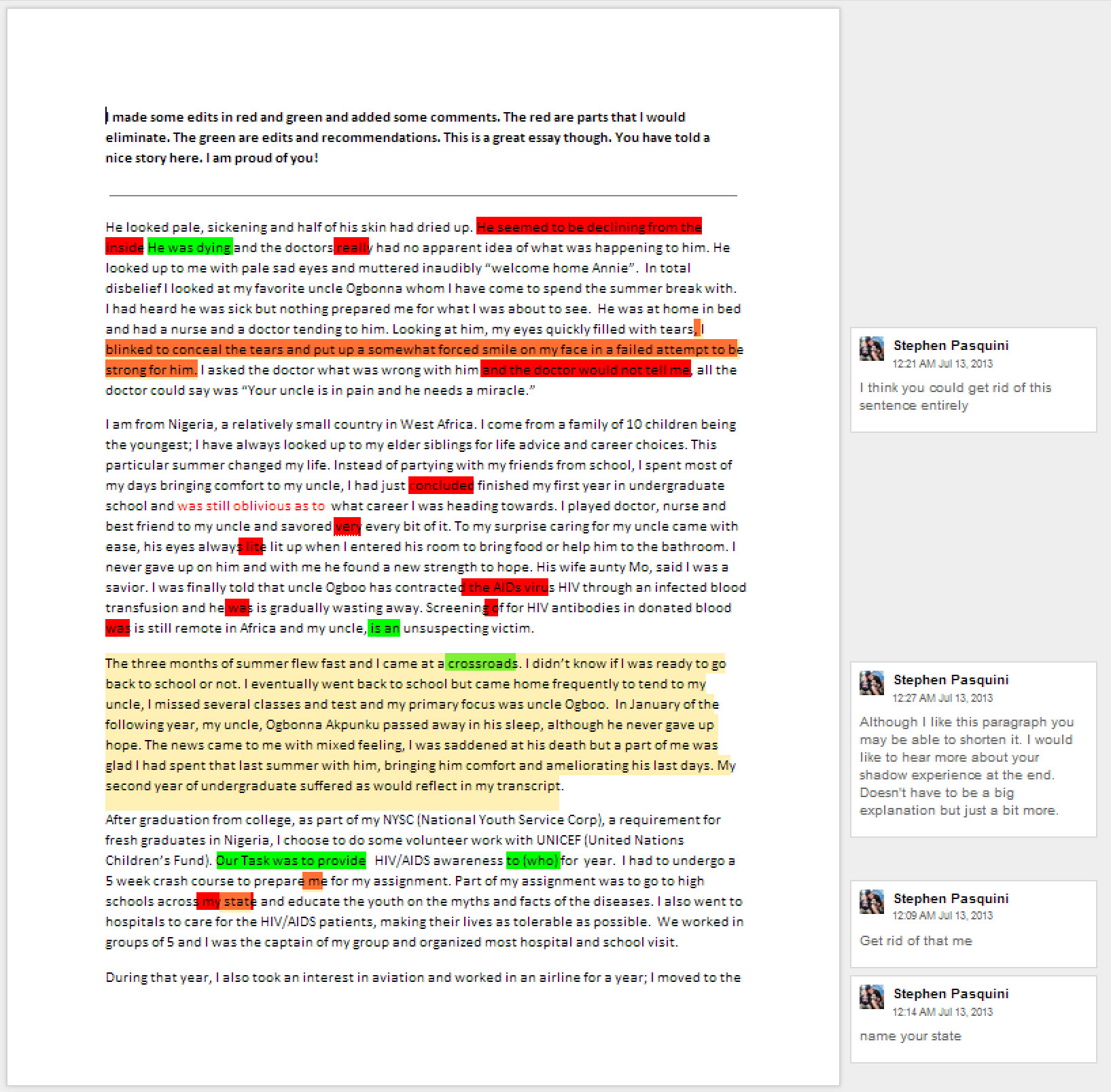 To collaborate, we use Google Drive. Google Drive is free, has an intuitive interface with integrated live comments in the sidebar, the ability to have a real-time chat, to collaborate effortlessly, and to compare, revise, or restore revisions on the fly. Google Drive also has an excellent mobile app that will allow you to make edits on the go!
Our team has worked with hundreds of PA school applicants within the Google Drive environment, and we have had enormous success.
The Physician Assistant Essay and Personal Statement Collaborative
I have set up two options that I hope will offer everyone a chance to participate:
- One-of-a-kind, confidential, paid personal statement review service
- A collaborative, free one (in the comments section)
Private, One-On-One Personal Statement Review Service
If you are interested in the paid service, you may choose your plan below.
The Personal Statement Review Service is:
- Behind closed doors within a private, secure network using Google Drive.
- It is completely interactive, meaning we will be able to provide real-time comments and corrections using the Google Drive interface.
- Telephone consultations are included with all edits above the single edit level. It’s often hard to communicate exactly what you want hundreds of miles away; for this reason, we offer the option to edit right along with us over the telephone while sharing in real-time over Google Drive. This is an option available to all our paid clients who purchase above the single edit level.
- We provide both revision and editing of all essays. What’s the difference? See below
- We will provide feedback, advice, and help with brainstorming and topic creation if you would like.
- We will help with a “final touch-up” before the big day, just in case your essay needs a few minor changes.
Why Choose Our Service?
- It’s not our opinion that matters. We have gone the extra step and personally interviewed PA school administrators from across the US to find out exactly what they think makes a personal statement exceptional.
- We are a team of PAs and professional writers, having worked over ten years with PA school applicants like yourself, providing countless hours of one-on-one editing and revision.
- Our clients receive interviews, and many go on to receive acceptance into their PA School of choice.
Because we always give 100%, we will open the essay collaborative for a limited number of applicants each month and then close this depending on the amount of editing that needs to be done and the time that is available.
Our goal is not quantity but quality. We want only serious applicants who are serious about getting into PA school.
Writing is not a tool like a piece of software but more like how a photograph can capture your mood. It’s more like art. The process of developing a unique, memorable personal statement is time-intensive, and it takes hours to compose, edit, finalize, and personalize an essay.
As Antoinette Bosco once said:
And this is why I am charging for this service. We love helping people find stories that define their lives, and we love helping individuals who have the passion to achieve their dreams. It’s hard to describe the feeling I get when an applicant writes back to tell me they were accepted into PA school.
There is no price tag I can place on this; it’s the feeling we get when we help another human being. It’s just like providing health care. But this takes time.
Interested? Choose your plan below.
Read more client testimonials.
Free Personal Statement Review
Post your essay in the comments section for a free critique
We want to make this opportunity available to everyone who would like help with their essay, and that is why we are offering free, limited feedback on the blog.
You post your essay in the comments section, and you will get our critique. It is that easy. We will try to give feedback to every single person who posts their COMPLETE essay here in the comments section of this blog post.
Also, by posting your comment, we reserve the right to use your essay.
We will provide feedback on essays that are complete and fit the CASPA requirements (View CASPA requirements here). We will not provide feedback on partial essays or review opening or closing statements. Your essay will be on a public platform, which has both its benefits and some obvious drawbacks. The feedback is limited, but we will try to help in any way we can.
Note: Comment Rules: Remember what Fonzie was like? Cool. That’s how we’re gonna be — cool. Critical is fine, but if you’re rude, I will delete your stuff. Otherwise, have fun, and thanks for adding to the conversation! And this should go without saying: if you feel the need to plagiarize someone else’s content, you do not deserve to go to PA school.
* Also, depending on the time of year, it may take me several weeks to reply!
We love working with PA school applicants, but don't just take our word for it!
How to submit your essay for the paid service
If you are serious and would like to have real, focused, and personalized help writing your personal statement, please choose your level of service and submit your payment below.
After you have submitted your payment, you will be redirected to the submissions page, where you can send us your essay as well as any special instructions. We will contact you immediately upon receipt of your payment and essay so we may begin work right away.
Pricing is as follows:
Choose your plan, then click "Buy Now" to submit your essay, and we will get started right away!
Every purchase includes a FREE digital copy of our new 100-page eBook, How to Write Your Physician Assistant Personal Statement, Our 101 PA School Admission Essays e-book, the expert panel audiobook, and companion workbook. This is a $65 value included for free with your purchase.
All credit card payments are processed via PayPal over a secure HTTPS server. Once your payment is processed, you will be immediately redirected back to the essay submission page. There, you will submit your essay along with some biographical info and all suggestions or comments you choose to provide. You will receive immediate confirmation that your essay has been securely transmitted as well as your personal copy of "How to Write Your Physician Assistant Personal Statement." Contact [email protected] if you have any questions, comments, or problems - I am available 24/7.
The hourly service includes your original edit and one-on-one time over Google Drive. It is simple to add more time if necessary, but you may be surprised at what a difference just a single edit can make. We find our four-hour service to be the most effective in terms of time for follow-up and full collaboration. We are open to reduced-rate add-ons to suit your individual needs.
Writing and Revision
All writing benefits from rewriting when done well.
When you are in the process of writing a draft of an essay, you should be thinking first about revision, not editing.
What’s the difference?
Revision refers to the substantial changing of text. For example, it may include re-organizing ideas and paragraphs, providing additional examples or information, and rewriting a conclusion for clarity.
Editing, on the other hand, refers to correcting mistakes in spelling, grammar, and punctuation.
We perform both revision and editing on all submissions.
How to submit your PA school essay for the FREE editing service
Follow the rules above and get to work below in the comments section. I look forward to reading all your essay submissions.
– Stephen Pasquini PA-C
View all posts in this series
- How to Write the Perfect Physician Assistant School Application Essay
- The Physician Assistant Essay and Personal Statement Collaborative
- Do You Recognize These 7 Common Mistakes in Your Personal Statement?
- 7 Essays in 7 Days: PA Personal Statement Workshop: Essay 1, “A PA Changed My Life”
- PA Personal Statement Workshop: Essay 2, “I Want to Move Towards the Forefront of Patient Care”
- PA Personal Statement Workshop: Essay 3, “She Smiled, Said “Gracias!” and Gave me a Big Hug”
- PA Personal Statement Workshop: Essay 4, “I Have Gained so Much Experience by Working With Patients”
- PA Personal Statement Workshop: Essay 5, “Then Reach, my Son, and Lift Your People up With You”
- PA Personal Statement Workshop: Essay 6, “That First Day in Surgery was the First Day of the Rest of my Life”
- PA Personal Statement Workshop: Essay 7, “I Want to Take People From Dying to Living, I Want to Get Them Down From the Cliff.”
- Physician Assistant Personal Statement Workshop: “To say I was an accident-prone child is an understatement”
- 9 Simple Steps to Avoid Silly Spelling and Grammar Goofs in Your PA School Personel Statement
- 5 Tips to Get you Started on Your Personal Essay (and why you should do it now)
- How to Write Your Physician Assistant Personal Statement The Book!
- How to Write “Physician Assistant” The Definitive PA Grammar Guide
- 101 PA School Admissions Essays: The Book!
- 5 Things I’ve Learned Going Into My Fourth Physician Assistant Application Cycle
- 7 Tips for Addressing Shortcomings in Your PA School Personal Statement
- The #1 Mistake PRE-PAs Make on Their Personal Statement
- The Ultimate PA School Personal Statement Starter Kit
- The Ultimate Guide to CASPA Character and Space Limits
- 10 Questions Every PA School Personal Statement Must Answer
- 5 PA School Essays That Got These Pre-PAs Accepted Into PA School
- 7 Questions to Ask Yourself While Writing Your PA School Personal Statement
- 101 PA School Applicants Answer: What’s Your Greatest Strength?
- 12 Secrets to Writing an Irresistible PA School Personal Statement
- 7 Rules You Must Follow While Writing Your PA School Essay
- You Have 625 Words and 2.5 Minutes to Get Into PA School: Use Them Wisely
- What’s Your #1 Personal Statement Struggle?
- 31 (NEW) CASPA PA School Personal Statement Examples
- How to Prepare for Your PA School Interview Day Essay
- Should You Write Physician Associate or Physician Assistant on Your PA School Essay?
- Meet the World’s Sexiest PA School Applicants
- PA School Reapplicants: How to Rewrite Your PA School Essay for Guaranteed Success
- How to Write a Personal Statement Intro that Readers Want to Read
- PA School Reapplicant Personal Statement Checklist
- How to Deal with Bad News in Your Personal Statement
- Inside Out: How to use Pixar’s Rules of Storytelling to Improve your PA Personal Statement
- Ratatouille: A Pixar Recipe for PA School Personal Statement Success
- Personal Statement Panel Review (Replay)
- Mind Mapping: A Tool for Personal Statements, Supplemental Essays, and Interviews
- Start at the End: Advice for your PA School Personal Statement
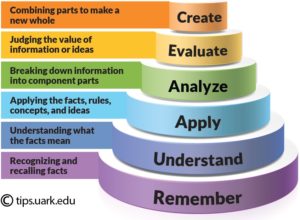
- Elevate Your Personal Statement: Using Bloom’s Taxonomy for Impactful Writing
- How to Write a Captivating Hook for Your PA School Personal Statement
- 3 Surprising Truths About the New CASPA Life Experiences Essay (And Why You Can’t Ignore It)
- 3 PA School Personal Statement Mistakes Our Editor Sees Again and Again
You may also like
 Elevate Your Personal Statement: Using Bloom’s Taxonomy for Impactful WritingThe most common advice writers often give pre-PAs is to "show, don't tell" in your essays. (Though we like to encourage showing …
 Who Gets Into PA School in 2026? Here’s What You Need to KnowLeslie Mean is a 23-year-old single white female who presents to the PA school admissions committee on her second attempt to get …
 Start at the End: Advice for your PA School Personal StatementNot sure what to include in your personal statement? Start at the End! The conclusion should summarize your entire essay. Consider the …


CASPA Personal Statement Help
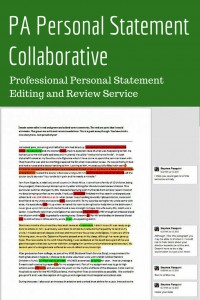 We offer comprehensive, start-to-finish personal statement assistance or help to perfect a draft you already have. We have services to fit every budget.
 Schedule a Live Recorded PA School Video Interview
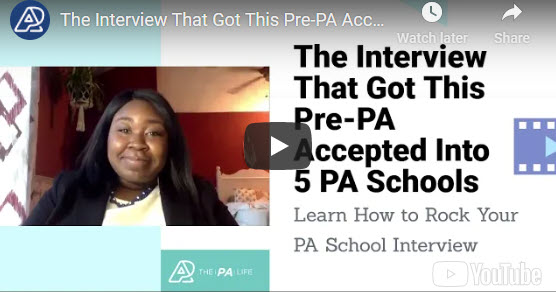
We offer 60-minute mock PA school interviews with post-interview feedback and advice. Includes a recorded video of your interview that you can watch, download, or share with family and friends. There is no better way to prepare!
Schedule an InterviewPre-PA Consulting and Advising
 Our pre-PA coaching service consists of a 1-hour phone consultation focused on addressing your specific questions or concerns about becoming a PA and applying to PA school.


I would really appreciate if someone could tell me if I’m hitting any of the right points in my essay!
The door flew open and slammed against the adjacent wall. The room was dark and all I could make out were figures and the noise of chatter and children crying. As my eyes adjusted to the sharp contrast in darkness from the blaring sun outside, I made my way to the counter. “Sign in,” said a voice and I looked down to see a chewed up pin and a pile of ripped up pieces of paper, on which I wrote my name and date of birth. The voice came out again “have a seat; we’ll call you when we’re ready.” I turned to see a room, no bigger than a two bedroom apartment, full of young women and children of various ages. I took a seat and waited for my turn to be seen at my local health department.
As an adolescent without health insurance, I have seen first-hand the demand for providers that can offer available healthcare. My experiences at the local health department made me dread going, never knowing if I would see the same provider again. Like many others in my situation, I just stopped going. After these experiences, I knew I wanted to be the stability for the underprivileged and financially burdened.
I began my role in healthcare as a pharmacy technician. It was this job that solidified my interests in the science of medicine. It was also this exposure which showed me that primary care providers play a huge role in the health system. However, it was not until I began working in registration for the Emergency Department of my local hospital that I could see just how important this role is; patients sitting for hours to be seen for a fever and headache because they do not have any other option for healthcare.
These observations pushed me to continue in medicine. After moving home to pursue this career, I climbed my way from a unit secretary to a patient care technician where I had my first hands-on experiences with patients. I remember a particular incident where while I was assisting a patient to the bathroom, she began sweating and complaining of blurred vision. I immediately called for someone to come in so I could check her blood sugar levels; it was 37 mg/Dl. With the nurse by my side, we got Ms. Kay safely to the bed and began treating her with intravenous glucose. I was so excited and proud of myself for recognizing the symptoms and being able to react without hesitation. It is moments like this one that I recognize my desires are not only to treat patients, but also diagnose illnesses.
After working closely with many health providers for nearly ten years, none stood out to me like Mike, a physician assistant on the cardiothoracic surgery unit. I have seen him take the extra time to go over every medication a patient had not only to ensure there was no drug interactions but to explain and write down the uses of each for when they returned home. When this patient needs a refill, instead of asking for “the little blue pill,” they will confidently ask for their blood pressure medication. Understanding these problems and taking the time to address them through patient education and support can greatly improve the quality of life for those in our communities. PAs help to carry out this idea of preventive medicine over episodic care as a team.
A team-based care system is very important to me. I learned the value of a solid support network while struggling after the death of my cousin. The pain of losing my best friend, and the personal disappointment I felt after failing two semesters, made it difficult for me to continue on my career path confidently. However, with the backing and trust of my peers, much like a PA in their practice, I was able to push forward and overcome these trials. I was taught stress-management and determination through these hardships and they will aid me as I endeavor this challenging and evolving career as a PA.
With my professional training in the medical field, I have a good understanding and appreciate everyone’s roles in healthcare. We come from several backgrounds and experiences that allow us to integrate together and ultimately provide better patient care. I am confident in my ability to translate my skills into my studies as well as future practice and become a successful PA. I am also confident in my ability to relate and help close the gap in available healthcare as a primary care provider.
Thank you in advance!
Hi,
You’ve done a good job covering many of the important points of an essay. The way you handled your failing grades was deft. (I was very sorry to learn the circumstances — the loss of your cousin).
The concluding and opening, though, needs some tweaking. The conclusion could be much stronger. You don’t want to have an “also” in there. It’s a weak word. The opening needs more work, there’s a typo for one and it’s too dramatic. It’s not believable that it would be so dark inside that your eyes would need to adjust and you couldn’t see the person at the desk. It sounds as if you’re in an underground cave.
Here’s what I’d suggest you do with that first paragraph with this caveat — I’ve added some words to illustrate my point — you’ll write it in your own words:
“Inside the small, dimly lit, crowded room, there was noisy chatter and the sound of crying children. I made my way to the counter. “Sign in,” the woman said, and I looked down to see a chewed on pen and a pile of ripped pieces of paper. On one, I wrote my name and date of birth. “Sit,” she said. “We’ll call you when we’re ready.” I took a seat and waited for my turn to be seen at my local health department.”
I hope this helps, and wish you the best of luck.
Sue Edmondson
“My chest hurts.” Anyone in the medical field knows this is a statement that cannot simply be brushed off. Mary was a patient we brought to and from dialysis three times a week. At the young age of 88, her mind was starting to go and her history of CVA rendered her hemiplegic, reliant on us for transport. Mary would stare through us and continue conversations with her late husband, insist she was being rained on while in the ambulance, and manipulate us into doing things we would never consider for another patient, i.e. adjust pillows an absurd amount of times, and hold her limp arm in the air for the entirety of the 40 minute transport, leaving you down a full PCR. But, it was Mary, and Mary held a special place in our hearts just out of sheer desire to please her in the slightest- never successfully, might I add. Mary complained about everything, but nothing at the same time. So, that Thursday afternoon when she nonchalantly stated she had chest pain, it raised some red flags. With a trainee on board, the three man crew opted to run the patient to the ER three miles up the road, emergent, rather than waiting for ALS. I ran the call, naturally, it was Mary, and she was my patient. Vitals stable, patient denies breathing difficulty and any other symptoms. During the two minute transport I called in the report over the wail of the sirens, “history of CVA and… CVA. Mary look at me. Increased facial drooping; stoke alert, pulling in now.” Mary always had facial drooping, slurring, and left sided weakness, but it was worse. I’ve taken her every week for six months, but this time I was sitting on her right side. We took her straight to CT, and I have not since seen her. Mary was my patient, and everyone knew it.
We hear “life is too short” all the time, but how many people have been on scene after a heartbroken mother rolled over on her four-month-old, and you work that child like its your own, knowing she’s been down too long. As a healthcare provider, you have those patients that make it all worth it; That remind you why you keep going back for the MVAs, amputations, overdoses, three year old with fishhook in his eye, 2 year old down a flight of stairs, Alzheimer’s patient who doesn’t understand why they’re being strapped to the stretcher, 302 who pulls a gun, pancreatic cancer patient who vomits blood on you while you’re at the bottom of the stairchair and there’s not a thing you can do about it until you get down two more flights of stairs. My ambulance is my office. EMS has given me more experience, hope and disappointment than I could have ever asked for as an undergraduate. It has done nothing short of fuel my desire for advancement in the medical field.
“The contest is a lion fight. So chin up, put your shoulders back, walk proud, strut a little. Don’t lick your wounds. Celebrate them. The scars you bear are the sign of a competitor. You’re in a lion’s fight. Just because you didn’t win, doesn’t mean you don’t know how to roar.” The countless hours of procrastination watching the medical inaccuracies of Grey’s Anatomy, the breathtaking visuals in House MD, and the thrill of ER, have, if nothing else, given me hope. Hope that someone will see past my mediocre GPA and undergraduate transcript, and afford me the second chance I know I deserve. I proved my capability and motivation in high school and my last two years of college when I refocused my goals and plan. I am ready, prepared, and willing to do whatever it takes to reach my aspiration of providing the highest quality care of which I am capable. If you are not ready at this moment to put faith in me, I will do whatever it takes to get to that point, whether it be retaking classes, or investing another $40,000 in my education to excel in a post-baccalaureate program. After years of dabbling in medical occupations, I have finally found the one I want, and my desire to live and learn has never been stronger.
Hi Dani,
You had me completely engaged until your last paragraph. I had a couple of editing quibbles, but nothing huge.
For me the connection between the inaccuracies of TV shows and the hope that people will overlook your mediocre grades didn’t work at all. Nor do I think you should say,”If you are not ready at this moment to put faith in me, I will do whatever it takes to get to that point, whether it be retaking classes, or investing another $40,000 in my education to excel in a post-baccalaureate program.” If you think you need to retake classes to be accepted into a program, just start doing it, and put that in your essay. Otherwise, leave all that out. For one, an Admissions person is not going to contact you and say, “By the way, Dani, if you want to be a PA, you’ll need to do . . .” Frankly, it’s all odd sounding. If your grades meet the minimum requirements then you can say that although your grades aren’t the best, but you believe your experiences outweighs your less than exemplary GPA.
Instead, talk about why you want to be a PA instead of continuing to do what you do. You never even mention the profession! You write that you never saw Mary again. What a perfect place to talk about how that would be different if you were her PA. You can cut some of the first and second paragraph to make additional room if needed.
Here’s what I’d do with your conclusion (with a caveat — I’ve added some words to illustrate the points you can make. You’d use your own words):
“I hope that Admissions will see past my mediocre GPA and afford me the chance I know I deserve. I have proven my capability and motivation during my last two years of college when I refocused my goals, and through my professional experiences. I am ready to do what it takes to reach my aspiration of providing the highest quality care of which I am capable. After years of dabbling in medical occupations, I have finally found the one I want.”
I hope this helps.
Best of luck.
Sue Edmondson
I’ve learned a lot of important lessons while shadowing in the emergency room this summer: always clean up your own sharps, communicate openly and often with other ER staff members to effectively work as a team, never talk about how “quiet” a day is, and that a warm blanket and a smile go a long way in patient care. Most importantly, I learned how much I love coming in to the hospital each day, excited to interact with a wide variety of patients and be a positive impact, no matter how small, in their healthcare experience. Shadowing a physician assistant in a level II trauma center granted me opportunities to further develop my own personal philosophy about patient care, as well as furthered my desire to pursue a career as a physician assistant in this field. My biggest inspiration comes not from shadowing in the emergency room but from something much closer to home.
It was the summer before my final year at Miami when I got the text from my dad. He had been sick for a few weeks and finally went to the local hospital for routine blood work. Doctor’s visits used to be rare for him, as he is an emergency room physician and seemed to never get sick. When the results came in, they immediately admitted him to the Main Campus of the Cleveland Clinic. He said he was fine and told me not to worry, all while making a joke about getting a room with the Indians game on, so I believed him. The next morning his tests were back – he had acute lymphoblastic leukemia. His first thirty days of routine high-volume chemotherapy were cut short when he gained an infection and spiraled into total organ failure. He was in the ICU for roughly two months, during which time he drifted in and out of comas and had, as he phrased it, “a visit from every specialist in the hospital except gynecology.” When he finally regained consciousness after two weeks of dialysis, he was so weak he could not sit up unassisted. Unfortunately, he had to finish out his chemotherapy regimen, so he went back to the leukemia ward for another few weeks. Two months in an inpatient rehabilitation facility and he was finally allowed to come home Christmas Eve.
It was the best present a girl could ask for, but not without its challenges. He was still very weak and wheelchair bound. He had to take handfuls of pills several times a day, and needed his blood sugar checked before each meal due to steroids. The house had to be regularly scrubbed from top to bottom due to his low neutrophil count. When I was younger and my mother suffered two strokes, my father had been the one that had kept our family together. Now, my mother and I took care of him and our upside down world still felt like a nightmare. I learned to do fingersticks and insulin injections gently, so as not to bruise his paper-thin skin. I taught him how to flush his PICC line when it became clogged (a trick I learned from my own experience with IV antibiotics to treat osteomyelitis a year prior). When he started walking, I learned to block his knees with my hands so he wouldn’t fall too far forward; he lost most of his proprioception and muscular control from peripheral neuropathy due to chemotherapy.
I had a tough choice to make – return to school and continue pursuing my degree, or stay home and help my mother continue to take care of him, as my sister had accepted a job right before the holidays and was moving to Memphis. I stayed in Cleveland for as long as I could, but eventually went back to school the day before spring semester started. I continued to come home as many weekends as I could. Our schedule wasn’t the only thing that changed – because my father was unable to work, our lifestyle changed considerably due to the financial strain from hospital bills. We now considered ease of access everywhere we travelled to make sure it was safe for my father’s wheelchair. One night, my mother confided in me that she had never spent so much time with my father in the entirety of their marriage. Cancer is not only a physical fight but a myriad of battles that accompany the diagnosis. Standing strong with my family through all of these hurdles has helped me to develop a comprehensive and unique perspective on the challenges that health issues bring to the patients and their families.
Through all of it, my dad was strong. He spent most of his free time his first summer home at the public swimming pool and progressed to walking with just a cane. Now he even walks short distances completely unassisted. He has since returned to work in the emergency room, and continues to greet patients with a smile, grateful to be alive and healthy enough to practice medicine. When I see my father, I see my own drive to pursue a career as a physician assistant so that I may make a difference in a patient’s life. I want to apply the same compassion and understanding towards patients while delivering the best medical treatment possible, so that everyone may have a success story as happy as ours.
I have since reworked my essay and would prefer that the second copy be considered if possible. I am about 150 characters over the limit and I am not sure what to cut or where. I also am working on conveying the message of why I want to be a PA and what I can offer that is unique. Any help is greatly appreciated!
I’ve learned a lot of important lessons while shadowing a physician assistant in the emergency room this summer: always clean up your own sharps, communicate with other ER staff members to effectively work as a team, never talk about how “quiet” a day is, and that a warm blanket and a smile go a long way in patient care. Most importantly, I learned how much I love coming in to the hospital each day, excited to interact with a wide variety of patients and have a positive impact, no matter how small, in their healthcare experience. Shadowing in a level II trauma center granted me opportunities to develop my own personal philosophy about patient care, as well as furthered my desire to pursue a career as a PA in this field. My biggest inspiration to become a PA, however, started well before I ever shadowed in a hospital but from something much closer to home.
It was the summer before my final year at Miami when I got the text from my dad. He had been sick for a few weeks and finally went to the hospital for routine blood work. Doctor’s visits used to be rare for him, as he is an ER physician and seemed to never get sick. When the results came in, they immediately admitted him to Cleveland Clinic Main Campus. He told me he was fine and not to worry, all while joking about getting a room with the Indians game on, so I believed him. The next morning his tests were back – he had acute lymphoblastic leukemia. His first thirty days of routine high-volume chemotherapy were cut short when he acquired an infection and spiraled into total organ failure. He was in the ICU for roughly two months, during which time he drifted in and out of comas and had, as he phrased it, “a visit from every specialist except gynecology.” When he finally regained consciousness after two weeks of dialysis, he was so weak he could not sit up unassisted so he spent two more months at an inpatient rehabilitation facility before he was finally allowed to come home on Christmas Eve.
It was the best present a girl could ask for, but not without its challenges. He was still very weak and wheelchair-bound. He had to take handfuls of pills several times a day, and needed his blood sugar checked before each meal due to the steroids. The house had to be regularly scrubbed from top to bottom due to his low neutrophil count. When I was younger and my mother suffered two strokes, my father had been the one that had kept our family together. Our upside down world felt like a nightmare. I learned to do fingersticks and insulin injections gently, so as not to bruise his paper-thin skin. I taught him how to flush his PICC line when it became clogged (a trick I learned from my own experience with IV antibiotics to treat osteomyelitis a year prior). When he started walking, I learned to block his knees with my hands so he wouldn’t fall too far forward after he lost most of his proprioception and motor control from peripheral neuropathy.
I had a tough choice to make: return to school and continue pursuing my degree, or stay home and help my mother. I stayed in Cleveland for as long as I could, but eventually went back to school the day before spring semester started. I continued to come home as often as I could. Our schedule wasn’t the only thing that changed – because my father was unable to work, our lifestyle changed considerably due to the financial strain from hospital bills. We now considered ease of access everywhere we travelled to make sure it was safe for his wheelchair. One night, my mother confided that she had never spent so much time with my father in the entirety of their marriage. Cancer is not only a physical fight but a myriad of battles that accompany the diagnosis. Standing strong with my family through all of these hurdles has helped me to develop a comprehensive and unique perspective on the challenges that health issues bring to patients and their families.
My father has since returned to work in the ER, and continues to greet patients with a smile, grateful to be alive and healthy enough to practice medicine. Even before my father got sick, I was in love with medicine, too. From a young age, I questioned the world around me with a thirst for answers that never waned. As I learned body systems in anatomy and physiology, I looked at illness and injury as a puzzle waiting to be solved. When I was taking care of my dad, he told me I should look into PA school. He said “if you love medicine and actually want to spend time with patients, become a Physician Assistant.” In my time shadowing in the Emergency Department, I have found this to be very true. While the doctors intercept phone calls from specialists and chart lengthy notes, the PAs are in the room with patients, performing a review of symptoms or suturing lacerations all while keeping the patient informed and calm to ameliorate stress levels. The positive impact on the patient care experience is palpable. I want to apply the same compassion and understanding that I have acquired during my own family’s experiences and those from shadowing in the emergency room in order to better someone else’s health care experience.
Hi Heidi,
First, I was very relieved to read that your dad is back to work. You and your family have been through extraordinary ordeals. However, despite how well written they are (and this is a great essay from a writing/storytelling point of view), the telling of those could be cut back. When I interviewed Admissions Directors and faculty from across the country about these essays, they all said they care less about family illness experiences and more about current patient experiences. In your case, dealing with your dad’s cancer was recent enough to be significant and count as recent experiences, but you could cut back to add some information. Specifically, you say that you’ve developed your own personal philosophy about patient care, yet haven’t written what it is. That’s a topic you could expand, using your experiences in the ED to exemplify it.
There are sentences here and there that could be cut to give you room or even to get you down to your CASPA limit if you decide not to add anything. Here are some examples:
“He told me he was fine and not to worry, all while joking about getting a room with the Indians game on, so I believed him.”
“Our schedule wasn’t the only thing that changed – because my father was unable to work, our lifestyle changed considerably due to the financial strain from hospital bills. We now considered ease of access everywhere we travelled to make sure it was safe for his wheelchair. One night, my mother confided that she had never spent so much time with my father in the entirety of their marriage.”
“From a young age, I questioned the world around me with a thirst for answers that never waned.”
“(a trick I learned from my own experience with IV antibiotics to treat osteomyelitis a year prior).”
“I had a tough choice to make: return to school and continue pursuing my degree, or stay home and help my mother.”
Just by eliminating those few sentences, you gain over 700 characters and spaces. (Remember, both count). If you go through your essay and scrutinize every word to see if it’s necessary, you’ll retain the character and heart of your essay and still have room to expand on your philosophy of patient care.
By the way, don’t capitalize physician assistant unless it’s part of a formal name.
I hope this helps and wish you (and your family) the best.
Sue Edmondson
So I have been working on two essays since Northeastern would like a supplemental essay answering the question: what have you learned about yourself, serving others, and working as part of a team based upon your hands-on patient care experience with patients and/or community service activities? I would really appreciate feedback on the two!! You guys are awesome and have been such a great help!
There are an immeasurable amount of moments that I have experienced in my life and in patient care that have inspired my career choice. My AP biology course sparked my interest in the field because I am an endlessly curious individual and this field seemed to answer the questions how and why on the deepest level of understanding. The complexity and awesomeness of the network of systems in the human body continues to amaze me every day the more I learn. My experiences throughout my life and the attributes that I have developed have validated that a career in medicine is what I am meant to do in this life and is how I am going to make a difference in the world.
The most prominent attributes that I have developed through my experiences in life is my determination, hard work, and innovation. In high school, I was a state champion basketball player. Upon attending college, I tried out for the team twice and although I did not receive a position, I founded a club basketball team. The creation was accomplished a month later, but required continuous hard work for every planned event. The first year, we had eight players, and now, within 2 years we have a roster of 24 and have been the only team in this region to hold an annual tournament every winter since implementation. Similarly, when applying for a Summer Undergraduate Research Position the summer after my junior year, I applied to twelve programs, did not gain acceptance, but decided to directly contact researchers in the local area due to my overwhelming desire to discover and learn. At the University of Massachusetts, I obtained a position as a research assistant in the field of molecular medicine. This trying experience challenged me to independently conduct a project on a system I had not previously known. I learned the fortitude it takes to repeat protocols with inconclusive results until finally; relevant data is produced. This research I conducted not only tested my innovation, determination and teamwork, but the lack of patient interaction truly amplified my desire to enter into the PA profession.
As I began to gain experience volunteering and working in patient care, my compassion for others developed along with an understanding of the health care field. As a CNA at Lutheran Skilled Care and Rehabilitation, I have witnessed many struggles that the residents and staff experience daily. Some residents are unable to express their needs; others struggle with trusting staff for their daily needs. The staff struggle with how to deal with frustrated and distressed residents along with deciding the right care plan to implement. As a PCA at University of Massachusetts Memorial Hospital, I have experienced similar struggles. At the hospital, I see the struggles of patients who are used to being independent that suddenly aren’t, the tragedy associated with traumatic events and how that affects the patient along with their health care team. These experiences have shown me that teamwork, compassion and levelheadedness are the formula for exceptional patient care. The sometimes high patient to assistant ratio makes it difficult to provide excellent care to all patients without team work. I have learned through my practice that teamwork is absolutely essential and an immeasurable blessing to have perfected in this field. Compassion allows you to provide quality care to every patient regardless of their exterior behaviors and qualities while keeping a level head ensures proper decisions during the most imperative times.
This was further affirmed through my experience as a volunteer with various populations. I have served the homeless and underprivileged at a soup kitchen, the disabled at the Special Olympics, a diverse inner city population with cultural barriers at ACE and the elder population at Maplewood Nursing Home. I learned how to interact and effectively communicate with a diverse population which is further enhanced with my understanding of the Spanish language. While working at University of Massachusetts Memorial Hospital, I met a patient, Maria, who was elderly, confused and unable to communicate with the direct care staff. I was able to calm her by helping her to understand why the staff needed to perform certain tasks. Maria who was once very aggravated now smiled when I entered the room and even called me “mamita”, a term of endearment from her culture. The experiences of working with and serving such a diverse population have assured me that I find inspiration in serving the underprivileged. I yearn to give back to the community because everyone deserves quality care regardless of their economic or cultural background. I know now that my passion is to work with the underprivileged communities who need extra kindness and compassion to recover from illnesses. I believe myself to show compassion with my patients, players, superiors and peers. I know how to act as a sensible leader and teammate in various settings. I believe these qualities are essential to the field of medicine.
My direct patient care and community involvement has taught me the necessity of teamwork, the levelheadedness and ambition crucial for success and the compassion and understanding that is indispensable when serving others. This career path is so important to me because it is one that leads to a rewarding career not only for myself, but it will allow me to serve the community surrounding me that I have come to love. I became acquainted with the city of Boston when I first visited in 2011 and decided immediately that I would apply for undergraduate studies in the area. Since then I have been able to learn the rich history and see the supportive and energetic population that lives here. I believe that this is the next step in reaching my career aspirations because of my love for this area. The inspiration of being on the campus of Northeastern will undoubtedly be a driving force in my future success. I look forward to being able to form a closer relationship within the city of Boston while I strive to reach my career aspirations.
Hi Shawna,
Sorry, one bite at the free apple is what we do.
Best of luck, though.
Sue Edmondson
“Whether you know it or not, you do have the power to touch the lives of everyone you encounter and make their day just a little bit better.” I once heard a resident named Mary console her peer who was feeling useless with this small piece of advice. Mary had lived at Lutheran Home for about 5 years. She had the warmest smile that spread across her face and seemed to tell a story. It was a smile that reminded me of the kind smile my grandmother used to have. I remember thinking that this woman truly amazed me and seemed to have an uncanny ability to comfort others. Mary was a selfless, compassionate woman that I admired very much. One day I learned that Mary had fallen while trying to transfer into the shower and had injured her arm and had hit her head. This incident, followed by more health issues, seemed to be the start to her declined orientation and abilities. Mary was put on bed rest, slowly began to lose her appetite and began to have pain. For the next few months, I was happy when I was assigned to care for Mary because the statement I had witnessed truly came to life. Mary was not always well taken care of and had no family visitors in her last days. Many times I would try to check in to ensure her comfort, sit with her in my free time or reproach Mary when she had refused a meal to get her to eat a little more. In the end, small things like holding her had, being there for her and talking to her undoubtedly made her day just a little better. Mary taught me to be patient, respectful and compassionate to each and every person I encounter and I have truly witnessed the improvement that this approach provides in the healing process. I believe that this manner is essential to being a remarkable physician assistant.
I first learned about the Physician Assistant career when I began working at University of Massachusetts Memorial Hospital, and the model resonated strongly with my life’s motivation. I am passionate about relationship building, quality time with people, and the flexibility to be a lifelong learner. I love the idea of a reduced burden on the PA’s because it allows focus on and development of their strengths. I know in my deepest core that this profession is what I am meant to do. Yes I am hardworking, ambitious and a team player, but what makes me distinctly qualified to pursue a professional degree as a physician assistant is my humanity and kindness that I have learned through my experiences. To me, a physician’s assistant serves her patients, her doctor and her community with respect and compassion.
There are an immeasurable amount of moments that I have experienced in patient care that have inspired my career choice. In memory of Mary, and every patient who has individually touched my everyday life I have found my passion with this humanity. I always take the time to be with my patients, understand their point of view, form a connection with them and give them the best quality care I can possibly provide. I have been involved in direct patient care in different settings for 3 years and find great joy every day I go to work. To be able to influence a person’s everyday life is a blessing and gives me my inner peace. There is no greater reward in life than to share your love and compassion with the world to make everyone else’s life just a little bit better.
Hi Shawna,
I’m going to start my comments with the exact same cautions I gave to Andrea in the essay below: Before I forget, physician assistant isn’t capitalized unless it’s part of a formal name, such as the name of an actual school. Even worse, and something you should absolutely never do is call the profession, “physician’s assistant.” That’s not the name of the profession. As I’m sure you know it’s physician assistant. If you make it plural, it’s physician assistants or if possessive, physician assistant’s. Every Admissions Director and faculty member i interviewed about writing these essays said getting the name of the profession wrong is a big red flag.
Now to the heart of your essay. First, the good stuff. You story about Mary is lovely, and although it needs editing, it’s a good way to start your essay. You also start to tell about why you want to be a PA, and that’s great.
Now the not so great stuff. In your paragraph about why you want to be a PA, you write, “I love the idea of a reduced burden on the PA’s because it allows focus on and development of their strengths.” I don’t have any idea what you mean by this and I doubt Admissions folks will either. If you try to explain what you mean, it will probably not serve you well in the essay, so leave that sentence out. I’ll jump to the conclusion, and tell you that the words “In memory of Mary, and every patient who has individually touched my everyday life,” are so overused, they’re meaningless. Cut this whole sentence (the last part doesn’t really make sense as it’s written — I know what you’re trying to say, but you haven’t quite gotten it right). You don’t need it, anyway because it doesn’t help your essay.
I hate to say this, because it’s the theme of your essay, but almost every single person who writes a PA essay says they’ve learned humanity and kindness through their experiences. So that definitely doesn’t make you different from other candidates. It’s great to mention those things, just don’t qualify them by suggesting it makes you different from other candidates because it doesn’t.
If you’ve shadowed or had contact with PAs through your work, use those experiences to tell more about why you want to be a PA. That would really add depth to your essay. You’ll have to cut down on the Mary story, but that’s okay — there’s a lot of extra writing there.
Here’s how I’d edit your conclusion (mostly using your words, just rearranged):
“In my three years of direct patient care, I have experienced innumerable moments such as those with Mary, that have inspired my career choice. I always spend time with my patients, understand their points of view, form a connection with them, and give them the best quality care I can possibly provide. There is no greater reward in life than to share your love and compassion with the world to make everyone else’s life just a little bit better.”
Now you’ll add a sentence to the conclusion about how being a PA will allow you to do these things. Otherwise it reads as if you love what you’re doing and it’s the job for you.
I hope this helps and wish you the best of luck.
Sue Edmondson
http://www.thepalife.com
My journey to Physician’s Assistant school started three years ago when my life was an utter mess. I was in an unsatisfying relationship, in a career that made me completely miserable, and I suffered from headaches everyday from the stress of dealing with these issues. I knew I was not where I was supposed to be in life.
I freed myself from my unsatisfying relationship. The timing may not have been perfect, as I ended the relationship two months before our wedding, but I know I saved myself years of heartache. Four months after ending my engagement, I was laid off from my job. Shortly after being laid off, I had a seizure due to the headache medicine that I had been taking everyday prior to being laid off. This confirmed to me that I needed a career change.
I have never been at a loss for ambition, but my recent experience gave me pause as to the direction I should go. One day a trusted advisor asked me if I had ever thought of becoming a doctor or a physician’s assistant. At first, I dismissed the idea because I knew not only would I have to go back to school, I would have to take challenging classes such as chemistry. The thought of taking chemistry and math-related classes intimidated me. The fear of financial and academic failure made me consider what I needed and wanted. After researching and comparing physicians, nurse practitioners and physician’s assistants, I felt a genuine interest in the PA field. The length of time in school, the cost of schooling, the level of autonomy, and the ability to explore specialties are a few reasons why becoming a PA is appealing. For a time, I avoided making a decision for fear of making the wrong one. I especially wrestled with knowing that if I went back to school, I’d have to take classes that I took as an undergraduate over twelve years ago. However, indecision due to fear was robbing me of my time and thrusting into me paralyzing thoughts of what may never happen.
In the interest of challenging my fear, I decided to volunteer with a local fire and rescue station to obtain my EMT-B certification. Additionally, I began taking classes that I thought I might struggle with. Logically, I thought, if I could love being in this fast paced healthcare setting and continue to find the motivation to undertake some of the most challenging classes of my college career, I’d be reassured I was on the right path.
Returning to school was not easy. I did have to withdraw from college chemistry my first semester as I was overwhelmed with change. I was a bit rusty and needed to ease into the semester so that I could practice the habits that make me a great student. Once I found my footing, I enrolled in college chemistry again, and I really enjoyed it. I felt as if my mind was expanding and I was learning things that I once thought I could not easily learn. My confidence soared, and I wondered what all my apprehension and anxiety was about.
Obtaining my EMT-Basic certification, volunteering, and returning to school to conquer my most demanding classes to date has been one of the most rewarding decisions of my life. Becoming an EMT-B has allowed me to learn fundamental healthcare such as conducting patient assessments and history, understanding anatomy and physiology concepts, and communicating with patients. The EMS field has rendered me more open-minded and tolerant, allowing me to treat people of all different socioeconomic status, education levels, and ethnicities. I have seen a very human side of people I otherwise would not.
I now have a clear picture of what I want, I’m driven and know what I want to achieve. I have grown professionally and personally while providing compassionate care to others and pushing myself to an extent that I did not think was possible. In addition, since returning to school I realize that I enjoy confronting my fears and I am better at challenging myself and learning new things than when I was in my teens and twenties. I am eager to take this desire to the next level, striving ever to enrich my life with the challenges that only a profession in the physician’s assistant field can bring.
Hi Andrea,
Before I forget, physician assistant isn’t capitalized unless it’s part of a formal name, such as the name of an actual school. Even worse, and something you should absolutely never do is call the profession, “physician’s assistant.” That’s not the name of the profession. As I’m sure you know it’s physician assistant. If you make it plural, it’s physician assistants or if possessive, physician assistant’s. Every Admissions Director and faculty member i interviewed about writing these essays said getting the name of the profession wrong is a big red flag.
Your essay has some very good writing and information. It explains your journey and discloses some of the difficulties you’ve had with returning to school. Your persistence speaks highly of your determination, and that’s excellent.
Still there are things to work on. First I’d recommend you cut the entire second paragraph. It’s not helpful, it’s not relevant and would probably make Admissions Directors wonder a little bit about your judgment and skills. Although calling off your wedding was assuredly the right thing, you don’t have the space to explain why you did it two months before. I’m also sure there were reasons you were laid off that didn’t have anything to do with your abilities, but you don’t have room to explain that either. There’s no need for any of that in your essay.
When you start your third paragraph, you refer to a “recent experience” essentially as a reason you decided to pursue a career as a PA. So you must tell what that experience was.
You need to talk more about why you’ve chosen the PA profession. Now that you’ve been in the real world of healthcare, talk about some of your interactions with PAs and why you’re sure you’ve made the right decision to pursue this career. You’ll need to cut more to do that, which shouldn’t be hard.
For example this is how I’d edit your fifth paragraph:
“Returning to school was not easy. I did have to withdraw from college chemistry my first semester as I was a bit rusty and needed to practice the habits that make me a great student. Once I found my footing, I enrolled in college chemistry again, and I really enjoyed it. I felt as if my mind was expanding and I was learning things that I once thought I could not easily learn.”
Use the same scrutiny with your other paragraphs and you’ll have plenty of room to write the most important part of the essay — why you want to be a PA and why you’ll be a great one.
I hope this helps and wish you the best of luck.
Sue Edmondson
http://www.thepalife.com
My strongest memory of my “abuelita” involves her, in tears, recounting her fathers’ refusal to allow her to study medicine because she was a woman. Perhaps this story remains so clear on account of her dementia driven repetitiveness, but I suspect it was my emotional response of longing for a calling as strong as hers. Where we did share the same love of crossword puzzles and literature, I never felt physician was the right career for me- despite her grandmotherly insistence. Today I am confident that Physician Assistant (PA) is the answer to a question I have been asking myself for a long time now. What will I dedicate my life to? As a student oscillating between a career in medicine and international development it was unclear which path best fit my character and career goals. Following my passions led me to find the PA occupation. It is a combination of everything I am interested in: biology, health education and public service.
My fascination with the human body led me to major in Physiology and Neuroscience at the University of California, San Diego (UCSD). This course of study inspired and challenged me as it combined my interest in biology and enthusiasm for problem solving. A Biochemistry course presented more of a challenge than others. I immediately retook the course learning a valuable lesson- that personal growth comes from challenges. With this lesson in mind I decided to enter post graduate life through the toughest challenge I could imagine- volunteering for two years in a third world country.
In an effort to pursue my interest in both health and international development I joined the Peace Corps. Furthermore this allowed me to work for an organization whose philosophy I could believe in. The Peace Corps attempts to make a real difference in the lives of real people. Within months of living in rural Ecuador I took notice and was inspired by the tangible and immediate impact made by medical professionals.
Eager to join them I jumped at the opportunity to collaborate with a rural health clinic. Some of my responsibilities included taking patient histories and vital signs, providing hands on assistance to the gynecologist and developing a community health education program. I thoroughly enjoyed all of the research, creativity and problem solving it took to develop and implement health education that would really reach the people I was trying to help. Whether facilitating workshops, consulting in the clinic, or in home visits, I thrived on patient interaction with people from vastly different backgrounds. I found that one thing is universal; everyone wants to feel heard. A good practitioner first needs to be a good listener. I also found that my lack of medical knowledge at times left me feeling helpless like when I was unable to help a woman who approached me after a family planning workshop. We were in a community hours away from medical care. She had persistent vaginal bleeding since giving birth three months prior. It struck me that there was little I could do without a medical degree. This experience, and others like it, inspired me to further my education to become a medical practitioner.
Since my return from the Peace Corps I enthusiastically pursued the PA profession. I completed the remaining pre requisites with high marks, took an accelerated EMT course at UCLA, volunteered in the emergency room (ER) and shadowed a number of PAs. One PA, Jeremy, has been a particularly impactful role model. He maintains strong, trusting relationships with the patients. He is extremely knowledgeable, unhurried, and personable as he meets patient needs. It is no wonder they request him as their primary care practitioner and I hope to practice with the same skill one day. All of my shadowing experiences reaffirmed my career objectives most align with that of a PA, where I can focus on the care and treatment of my patients, without the added responsibility of owning my own business.
Whereas Peace Corps ignited my passion for a career in medicine and shadowing in the family practice opened my eyes to the PA profession, working as an emergency room technician (ER Tech) has cemented my desire to become a PA. In addition to my ER Tech duties I am a certified Spanish interpreter. Every day I am fortunate enough to work closely with a large staff of PAs, physicians and nurses. Often times I interpret for the same patient throughout their entire visit. Through these interactions I have developed a great deal of appreciation for the PAs. As they typically treat less acute patients they can spend more time on patient education. The most meaningful part of my job is ensuring patients receive quality medical care regardless of their language or education. An unexpected benefit has resulted from the doctors, PAs and nurses recognizing my enthusiasm for learning and sharing their medical knowledge to help me realize my dream of one day becoming a PA.
A theme of helping the medically underserved has developed over the course of my adult life. Unequivocally it is my calling to continue this gratifying work as PA in primary care. I am confident I will succeed in your program because of my dedication to finishing everything that I start and desire to learn. I am an exceptional candidate due to my multi-cultural perspective, years of experience in bilingual patient care and commitment to the physician assistant profession. Upon completion of Physician Assistant school I will be the first in my generation of 36 cousins to receive a graduate education. My abuelita would be brimming with pride.
Hi Renee,
I liked your story about your abuelita. It’s an engaging opening and coming full circle in your conclusion is great.
Your essay has a lot of good things, in fact too many. It’s 5573 characters and spaces, which is 573 over the CASPA limit, so things have to go.
Start by scrutinizing every word and seeing what can go. There are quite a few unnecessary sentences. This one for example, “Where we did share the same love of crossword puzzles and literature, I never felt physician was the right career for me — despite her grandmotherly insistence.” It’s sweet, but unnecessary. If you had the space, sure you’d leave it, but since you’re over the word count, sweet gets cut so substance remains. But if you decide to use it, the dash should be an “em dash.” Hold the shift and option keys, then press the dash key.
Take these two for example, “Furthermore this allowed me to work for an organization whose philosophy I could believe in. The Peace Corps attempts to make a real difference in the lives of real people.” Your opinion about the Peace Corps and talking about the benefit of the organization doesn’t do a thing for your essay, and distracts from the content. It’s like taking a left turn, realizing you made a mistake and having to stop and turn around.
This is an awkward sentence and could be cut, “I am confident I will succeed in your program because of my dedication to finishing everything that I start and desire to learn.” Your next sentence is much, much stronger, and you’ve essentially said much of the same throughout your essay.
I hope this helps and wish you the best of luck.
Sue Edmondson
http://www.thepalife.com
Personal Statement
Dirt. Coating the curve of my ear, the lining of my nostrils, sticking to my salty skin; present in every inhale of breath. I am in Mexico. A Spanish-speaking boy pulls me into the dirt to sit cross-legged across from each other while he teaches me a rhythmic hand-slapping game. I notice his leg is angled awkwardly as if he is compensating for a weak spot on his calf. I peer over his lap and catch a glimpse of a silver dollar sized pus-filled bump. He shies away. I am just a church volunteer building houses. I feel helpless.
My fingers are freezing beneath woolen gloves. The wind races across my cheeks, slips in the cracks of my jacket and scarf. I am in Detroit. The man with the bare, wrinkled hand grasps my arm with a crinkly smile. He is a veteran who feels more at home in this dark, concrete corner in downtown Detroit than any hospital. He bends to show me his swelling feet with red whelps racing along his shins. I am just a volunteer at a soup kitchen with no medical skills. I feel helpless.
Horns honking. Bells dancing. Touts clamor for my attention. People in every direction, a carpet of feces and trash line the streets. I’m sitting on a crowded non-A/C bus outside Delhi, India. A boy drags himself up the metal steps of the bus. One elbow in front of the other, he slowly crawls up the aisle. He attempts to pull himself into my lap, dried blood and dirt matting his head, flies swarming his ears, thigh stumps dangling off the edge of the seat. I look the other way and ignore him, tears streaming down my face. Money will not help him. Money would just encourage his pimp to chop off his hand to persuade a few coins off the next tourist that comes along. I am just a backpacker volunteering anywhere an extra set of hands is needed along my travels. I have no medical skills. I feel helpless.
My C.V. and resume are padded with volunteer and travel experiences. It started with that first Mexico mission trip in 1998 at the age of 12 and extends over the years and across the globe and a variety of circumstances. In many ways it has been very fulfilling and satisfying. In other ways, it has just encouraged a drive for more knowledge and skills, going against my very upbringing. I come from a low-socioeconomic background rich with alcoholism and addiction where a high-school diploma is considered an achievement. A decade after my high school graduation, I have recently accomplished a BA in Biology from a well-respected and competitive Liberal Arts college.
My path has been anything but traditional. I may have started out as a smart and mature kid who endeavored to rise above my circumstances, but I lost it along the way. I became that irresponsible teenager no one wanted to take a bet on. In high school I performed well, you could even call it an above-average performance. I vomited large volumes of information thrown at me by my instructor’s right onto the exams and papers I turned in. People would pat me on the head, praising my intellect, while I cringed internally, “damn…fooled them again.” I achieved those sought after academic scholarships and that high ACT score with minimal effort and minimal application of knowledge by my senior year of high-school. Then I hit college and I could no longer simultaneously live my nonchalant existence and achieve proficient grades. I eventually lost those scholarships and dropped out of college a year later. I spent the next few years growing up. I traveled and volunteered locally and abroad. I learned the meaning of inalienable concepts such as addiction, sacrifice, pain, hard work, appreciation, compassion, integrity and determination. I nurtured my passions, and I discovered my strengths and weaknesses. I also uncovered a well-kept secret to life. The secret that minimizes one’s own struggles. The secret to a passionate but content, fevered but serene life: touching another’s. It doesn’t matter on what scale that connection exists, just that it is present. I soon realized that if I wanted to touch people’s lives in the way that I felt called to do, I would need to go back to school. 6 years after dropping out, I went back. And now 4 years later, I am the first college graduate in my family.
I do not have much experience in the traditional settings of the medical field. My experiences lie within the human connections I have made over the last two decades, volunteering where I could and learning from the Health Professionals I have met along the way. In orphanages, free medical clinics and homeless shelters across the U.S. and beyond its borders. I look forward to the medical experience I will receive from my new position as an ER technician at Willis Knighton Hospital and a pre-PA internship in Tanzania through Gapmedic in the spring.
In the memory of every human connection I have made along the way and every person who has touched my life, I will continue with my drive and ambition toward Physician Assistant Studies in hopes I can become a little less helpless.
Hi!
I’ve done some edits and rewriting.
Here is an updated version of my essay.
Thank ya’ll so much!
What ya’ll are doing here is pretty incredible.
Just reading your other edits assisted me in some of my edits.
Personal Statement
Dirt. Coating the curve of my ear, the lining of my nostrils, and sticking to my overheated, salty skin; it’s present with every inhale of breath. The Mexican sun beats heat upon my sunburnt shoulders. A Spanish-speaking boy pulls me into the dirt to sit cross-legged across from each other while he teaches me a rhythmic hand-slapping game. I notice his leg is angled awkwardly as if he is compensating for a weak spot on his calf. Peering over his lap, I catch a glimpse of a silver dollar sized pus-filled bump. He shies away. Why should he trust a church volunteer building houses in Mexico? I’m powerless to help this young boy, powerless to heal him. I feel helpless.
Ice. Melting and seeping into woolen gloves, encasing my freezing fingers. The wind races across my cheeks, slips in the cracks of my jacket and scarf. I am in Detroit. The man with the bare, wrinkled hand grasps my arm with a crinkly smile. He is a veteran who feels more at home in this dark, concrete corner in downtown Detroit than any hospital. He bends to show me his swelling feet with red whelps racing along his shins. Why does he trust me? I am just a volunteer at a soup kitchen, powerless to heal him. I feel helpless.
Droplets. Clinging and racing down the tip of a large tropical leaf, splashing onto my arm through a rusty metal window. Horns honk. Bells dance. Touts clamor for my attention. Amid the wet, tropical heat, people move in every direction atop a carpet of trash lining the streets. I’m sitting on a crowded, sweltering bus outside Delhi, India. A young beggar drags himself up the metal steps of the bus. One elbow in front of the other, he slowly crawls up the aisle. He attempts to pull himself into my lap, dried blood and dirt matting his head, flies swarming his ears, thigh stumps dangling off the edge of the seat. Although I shouldn’t, I help him over my lap to the seat beside me, tears streaming down my face. Money will not help him. Money would just encourage him to persuade a few coins off the next tourist that comes along. I’m sure he trusts no one even though he pretends to engage me, for he sees me as a target rather than as a backpacker volunteering anywhere an extra set of hands is needed along my travels. I am powerless to heal him. I feel helpless.
All three of these experiences are just snapshots of the times I have felt helpless. Helplessness began as a child and older sister, coming from a single mother family with no health insurance, no college degrees and the emptiest cart in line at the local grocery store; helplessness has ended as I have risen above unlikely odds, returning to college after the experiences of volunteer work locally, across the U.S. and across the globe.
I have had the opportunity to work and volunteer in orphanages and local medical clinics serving the underprivileged within multiple countries. I have had a taste of what it is like to treat wounds, to assist in transporting the wounded, to sit comfortingly beside the bed of a woman with resistant tuberculosis as she took her last breaths. I have worked alongside many health professionals along the way, but the physician assistants stood out to me. They were versatile and compassionate, spending the majority of their time with the patients. Most adapted to every new circumstance and smoothly transitioned between specialties in the field. Every encounter with a patient or a physician assistant has fueled my ambition and fever for more knowledge and skills, leading me back to re-enrolling in college.
My transcript break between immature teenager and driven adult taught me inalienable concepts such as sacrifice, pain, hard work, appreciation, compassion, integrity and determination. I nurtured my passions and discovered my strengths and weaknesses. Six years after leaving college and four years after returning, I am now the first college graduate in my family, having worked my way through as a restaurant server depending on academic scholarships and tips. On each break in between semesters I have continued my volunteer work locally, in Thailand, and in Haiti. In the upcoming year, I have secured a position as an emergency room technician and will also complete a Pre-PA internship through Gapmedic in Tanzania in the spring to continue to prepare for a Physician Assistant Program.
In the memory of every human connection I have made along my journey, having both been a member of as wells as served the underprivileged, I will continue my drive and ambition toward Physician Assistant Studies in hopes I can continue to become a little less helpless.
Hi Ashley,
All your rewriting has paid off. This is an excellent essay. The conclusion though, isn’t as strong as the rest of the essay. “In the memory of” is really overused. You don’t need it. (There was a typo — “wells” but that portion of the sentence was awkward, anyway). Instead leave it at this with a new word for one of the “continue/s” (You don’t want to repeat that word in the last sentence of your essay): “Every human connection I have made along my journey continues to my drive and ambition toward Physician Assistant Studies, in hopes I can continue to become a little less helpless.” Even better, would be a change in focus in the last few words to those you’ll help instead of keeping it self-focused. (I know that’s what you meant, it doesn’t read that way).
Great job overall!
Sue Edmondson
http://www.thepalife.com
Hi Ashley,
Since I made comments on your newest version below, I won’t be commenting on this version.
Sue Edmondson
http://www.thepalife.com
Thank you so much for your assistance with perfecting my personal statement. This service is truly helpful. They were able to easily edit and help to convey exactly what was in my heart onto paper. I was accepted to my first choice PA program this week!!
That’s awesome, Vincent! Congratulations from all of us al the PA Life Essay Collaborative.
When I look back over the last several years of my life, I never foresaw myself considering a second career. However, several exciting and fulfilling experiences that I had over the last few years have led to my decision to pursue dentistry as a career.
A future in the health care field was a natural choice for me, coming from a family of health care workers. I also had a flair for biology right from my school days and my interest in holistic medicine found me choosing a career in homeopathic medicine. I have striven hard to keep myself among the top 10% of the class and my curiosity and interest in the human body and diseases that affect it has grown by leaps and bounds during my years of homeopathic medical training.
The motivation behind me, to become a health care professional was being a victim to see the sufferings faced my Grand Father who was a lung cancer patient (mesothelioma). Since we were residing at a rural area in India, my Grand Father had to travel for more than 2 hours to get medical care. Shortness of breath due to pleural effusion, chest pain and the sufferings after chemotherapy, all these annoying hardship which he suffered motivated me of becoming a health care professional in future.
Moreover the kindness and care the Doctors, and other healthcare professionals showed towards him, made him to overcome the sufferings, had always motivated me to continue being passionate about my healthcare career in spite of all difficulties in this pathway. There was nothing the medicine can do in his late 80s, unless giving him support and joyful time in his remaining days. I still remember the Physician and his assistant who always visited him and advised to be bold and prepared to face everything. He trusted his care group .Their words made his last moments of death a peaceful one. From that day onwards, I had no other thought of what to become in future.
My fiance, a software engineer, had made plans to immigrate to the United States and pursue further training in Java. When I told him about my interest in medical field, he immediately encouraged me to apply to PA school once we reached America. After all, America was the land of opportunity- a place where you could set out to achieve whatever dreams you may have in your heart. During my husband’s training, he mentioned to me that he had several co-workers who were engineers or lawyers, who successfully made medicine their second career. Elated by his encouragement and excited about the prospect of becoming a PA, I planned to complete the prerequisites to PA school with a 4.0 GPA. I learned quickly to manage my time efficiently between taking care of my kids and studying for my course work.
My rotation in the holistic clinic in our final year of homeopathic school has also greatly influenced me. Life stress and unhealthy habits cause most of today’s illnesses. I found that although most physicians do an excellent job of counseling patients on which drugs to take, they spend little time talking about healthy life habits. The prospect of treating the patient as a whole rather than his or her complains alone was, to me, the way to go.
I am especially interested in being a physician assistant in the field of Internal Medicine. The physician assistant, to me, is like a detective, gathering all the clues and arriving at a logical diagnosis. Since it is so broad, and since its sub-specialties are so well developed, I believe that Internal Medicine is the most challenging of all specialties
Charisma is a trait difficult to learn but from my childhood days, I have practiced to gain very quickly the attention, respect and trust of others by a good smile. Being a good team player, excellent communication skills, my passion and my dedication helped me providing good quality care to my patients. The rewards that come from improving the patients’ quality of life have motivated me to become an influential and successful healthcare professional and I assure this would add to my Physician assistant Program as well.
With all these experiences in medical field and my intense desire to continue as a healthcare professional, I hope, specifically, Physician Assistant would be a perfect match. Patience and persistence are essential twins needed in healthcare profession and hope I have achieved it during my clinical experience. Through my healthcare experiences, I have grown not only as healthcare professional, but also an individual. I have become a great listener, an assertive partner, and a positive worker to the patients and healthcare team which are important attributes for a Physician Assistant. Determination, perseverance and hard work have taught me how to succeed throughout life. Along with my passion for medicine and healing people, my desire to provide quality care to underserved communities, my life experiences have shaped my values and beliefs into the person I am today which has motivated me to be an influential and successful Physician Assistant in future.
I am very much attracted to the career of being a Physician Assistant. I want to help as many people as I can. The medical field is not easy in any way; from the vigorous studying to the emotional attachment to a patient. I know that I am prepared, and will be even more equipped once a Physician Assistant. I believe ‘The future should always be seen as bright and optimistic. I always believe in positive thinking. The Power of Positive Thinking, I prefer the positives in my personal and everyday lives. I want to become a Physician Assistant to provide excellent healthcare for my patients. With all my experiences inside and outside of the United States, I strongly believe that I will make a great Physician Assistant.
Having lived and studied in Middle east (Dubai and Abudhabi), India and now in the United States, I can speak Malayalam, Hindi and English and I believe that I can enrich the cultural diversity of the class. To become a Physician Assistant, requires life-long hard work, persistence, patience, dedication and above all, the right kind of right temperament. I believe that my training in homeopathic medicine gives me a unique and different perspective on patient care, that when combined with my training as a Physician Assistant can be invaluable in delivering excellent patient care. I hope to not only treat my patients, but also their family member’s wounded spirits.
I look forward to the next stage in my professional life with great enthusiasm. Thank you for your consideration.
Hi Sudheer,
You have some great talents and skills — your ability to speak several languages and your diverse background will take you far. Unfortunately, an essay written like this will not allow people to see those the way they need to.
First, your second sentence of the essay is, “However, several exciting and fulfilling experiences that I had over the last few years have led to my decision to pursue dentistry as a career.” That just about made me stop reading right there. This is a PA school application! Cut the entire first paragraph.
Second your character and space count is over 6500, and the CASPA limit is 5000. So right off the bat, much must be cut from your essay to fit the guidelines.
Most importantly, your essay is confusing in many aspects. I don’t often say this for obvious reasons, but it really needs professional editing. There are grammar and structure problems (not surprising since American English is not your first language) throughout. By the way, this is how you spell “grandfather” and physician assistant isn’t capitalized unless it’s in a formal name.
Normally, I’d edit a sample paragraph, but your essay needs a more thorough edit than I can offer here. I’d recommend you do the one-on-one sessions with Duke for this. I know it’s expensive, but he can walk you through what your essay needs and help you organize it. At a minimum, I would suggest you sign up for the one-time edit. You want your essay to reflect your many good skills and qualities, and this just doesn’t do it.
Sorry I couldn’t be of more help here.
I wish you the best.
Sue Edmondson
http://www.thepalife.com
Bruce walked toward me with wide eyes and began to open his mouth. The first time Bruce remembers throwing up he was 18 months old, and it was on me. I was 14 and had been his nanny all summer when the two of us encountered Bruce’s sensitive stomach. Along with his heaving came tears and my first response was to hold the crying toddler, even as I felt the mess soaking into my clothes. This continued on for a few minutes until Bruce’s stomach was empty. I held him until he’d stopped crying and then the day calmed down. I showered, called his mother and put him down for a nap but still found myself checking every few minutes to make sure he was sleeping soundly.
From the moment that I held Bruce, I knew that I wanted to spend my life helping other people. I also knew I could handle bodily fluids better than most people. The desire to help and to ease other people’s problems is what made me realize I wanted to go into science and medicine.
I explored areas of medicine as I grew up. I volunteered doing research in the Pathology Department at Texas Children’s Hospital. We reviewed neonatal transfusion data and created transfusion models to determine the impact of using fresh red blood cells on inventory and patient exposures. We published a paper in Blood Transfusion based on this research, where I was the first author. This experience showed me the inner workings of the hospital setting and the value of research. Although this experience was rewarding, I was lacking the personal interactions that attracted me to medicine to begin with. I felt honored to be doing the research that I was, but I felt myself missing a little bit of vomit running down my back.
This need for patient interaction brought me to volunteer in the infusion room at St. David’s Hospital. The first day of orientation, I knew things were different. I made connections with people I saw week after week. I would talk with the patients that wanted conversation, or just sit with those who didn’t. The infusion room gave me something that I’d been missing. I wasn’t holding a sick toddler, but I was holding the hands of people who needed it. I felt the personal connections that I longed for in research, but I missed the scientific aspects I had grown to love in doing research.
If research fed my need for science and volunteering warmed my heart with personal connections, then Zeta Tau Alpha (ZTA) opened my eyes to the need for a team. I never expected to join a sorority, but the changes ZTA has had on me might be the most profound. Throughout college, there were rough moments where things going on in my personal life seemed to be affecting everything around me. It was at these moments that I was the wide-eyed one, and my sisters were there to hold me until everything had calmed down. The girls I now call sisters have been there as I learned to multitask, organize and balance all the things in my life. I have become a leader within my chapter and it has taught me that while one person can achieve things, a team achieves them better.
Teamwork, personal connections and science, all things that stemmed from an unpleasant babysitting experience at 14, and all things that have affected what I want to do with the rest of my life. I want to spend everyday in the middle of what I love and always prepared to handle a little bit of vomit.
Hi Kerry,
Since I’ve already edited your essay (and you did an excellent job rewriting), I won’t comment on it here.
Sue Edmondson
http://www.thepalife.com
I would love some feedback on my essay! I am just over 4500 characters, so I have a little wiggle room for editing
From an older sister caring for seven little sibling to an in-charge paramedic, my life has been full of unique experiences that have molded me into the healthcare provider I am today. I never thought I would seek to further my education past a baccalaureate level, after all, my higher education was supposed to prepare me for an inevitable role as a stay-at-home wife and mother. However, working as a paramedic and earning a degree Emergency Health Sciences has awoken a passion for medicine that drives me forward. As I work on the ambulance I am constantly plagued by my desire to do more for my patients. This insatiable desire to expand my knowledge in order to effectively help the ill and injured provides my motivation for becoming a physician assistant.
As the second oldest in a family of nine children, homeschooled in a small religious subculture, my academic journey has been anything but normal. My parents taught me to be both an independent learner and a teacher to my siblings. Although my parents emphasized rigorous academics, my time as a child was split balancing schoolwork and caring for my younger siblings. I poignantly remember sitting at the kitchen table teaching myself biology late into the evening, tired after a long day of babysitting my siblings. I tried to study earlier, but my mother had been busy, leaving me with little time for school until the children were tucked into bed. As I struggled to stay awake the thought of a career in the medical field seemed like a pipe dream. Little did I know, those days spent studying index cards while cooking dinner and wiping little noses taught me invaluable skills in time management, responsibility, and empathy. These skills have proven to be the key to success in both my education and career as a paramedic.
After I completed my EMT-Basic certification in high school, I knew my future lay in the medical field. In an attempt to follow my parents’ requirement to enter a course of study deemed “appropriate” for a woman, I began pursuing a degree in nursing. During the first semester of my freshman year, my family fell on difficult financial times and I had to develop a backup plan. Feeling the weight of responsibility to ease the financial strain on my family, I utilized credit by exam to test out of my remaining core curriculum and entered a fast-paced paramedic program.
Becoming a paramedic has proven to be the most formative decision in my life thus far. As the youngest in-charge paramedic at my company, I once again felt a heavy weight of responsibility as I stretched my leadership skills to new levels. Not only is the in-charge paramedic responsible for patient care decisions, my EMT partner and local first responders look to me for direction and scene management. The skills I acquired caring for my family have served me well, as I was recently promoted to a field training officer. Not only has my job allowed me to break free from the familial constraints that hindered a career in medicine, it has taught me the true purpose of healthcare. Emergency medicine is not merely a job; it is an opportunity to touch the lives of others during times of pain and suffering. The physical, mental, and emotional stress of being a paramedic pushes me to a critical level where I am forced to overcome these obstacles or fail my patients. Faced with chaos and life and death situations I must garner all my time management and mental capacities to provide rapid, accurate, and empathetic care to my patients. These challenges have sharpened my intellect, but more importantly they have made me a stronger and more compassionate person.
Interacting with individuals of all ages and walks of life has caused my studies to come alive and fuels my desire to continue my education as a physician assistant. Diseases are no longer a list of diagnostic criteria in a textbook; they take on faces and names with tangible struggles and symptoms. These experiences have opened my eyes to a level of suffering too compelling to dismiss. I must be more and know more so that I may do more. Working with these patients, I feel restrained by my knowledge and skill level. I once thought that earning my degree in emergency medicine would serve to break these restraints, but the opposite has occurred. The more I learn the more I realize how vast the study of medicine is, and my ardor to continue my education grows. Becoming a physician assistant is my opportunity to break these restraints and continue onward in a life dedicated to learning and service to the ill and injured.
Hi Helen,
Overall, this is very well done. I love some of the images of you with your siblings. I can see it all perfectly.
There are however, a few issues. In the very first sentence, for example, you left the “s” off siblings. It’s a small point, but important — Admissions folks expect you to pay attention to detail (details can be the difference between life and death as you know), and an error right off the bat is a red flag. Those are hard to catch — it’s very difficult to be our own editors, so be sure to have someone proofread your essay before you send it in.
Then there’s the overwriting (melodrama). Phrases and words like “awoken a passion,” “plagued” “insatiable” “fueled” “poignantly” are distracting, and instead of creating impact, they lessen it. Speak plain English and you’ll be a lot better off.
Your essay is focused on emergency medicine. I would recommend that you write some about the expanded practice the PA profession affords. You could shorten the second paragraph to accommodate additional information — the second and third sentences are essentially the same. I would cut the second. You could also skip the information about your parents wanting you to go into nursing and how you started down that path if you need the space. It’s not particularly helpful to the essay.
Otherwise, you’ve made good points and written them well.
I hope this helps and wish you the best of luck.
Sue Edmondson
http://www.thepalife.com
This is my first draft please let me know how I am doing.
In the Honduran heat, my volunteer team from Georgia Southern University was hard at work to build a new school for the children of a small Honduran village. The children had never had easy access to education due to the fact that the nearest school was miles away, and the walk was dangerous. As I spoke with one of the women from the village, in the little bit of Spanish I knew at the time, she informed me that not only was education lacking, but also they did not have regular access to healthcare. Since the village had no electricity or modern technologies, reaching a healthcare provider in an emergency would take too long for the patient. Many people suffered from easily treated illnesses due to the shortage of providers.
When I returned to the United States, I began to see that there are many individuals who have difficulty receiving the healthcare that they need. I continued to notice a need when I completed a medical internship in rural south Georgia during my undergraduate years. In every clinic, I noticed that the schedule was booked with patients and the phone constantly rang with people needing treatment. Due to the growing population and a shortage of primary care physicians, this has become a significant problem in many areas in the United States. My desire is to work along with others to serve in areas of need both domestically and globally to improve the health of individuals.
In order to achieve this goal, a career in the medical field would allow me to make this difference. When making the decision of what career in the medical field I wanted, I examined who I am and what I enjoy in life. I enjoy interacting with people and learning about them as individuals. One cannot support the entire wellness of the patient without taking into consideration who the person is as a unique individual. When I worked as an anesthesia technician, I would talk to the patients prior to surgery. I spoke to them about their families and what they enjoyed in life to calm their nerves. When the time came to transport them to the operating room, most patients were smiling and ready for the surgery.
Through my shadowing experiences, I noticed that physician assistants (PA) had a strong connection with their patients. For example, in the emergency room I observed a PA talk to a woman for thirty minutes trying to calm her down and assure her that she was in no danger. This close relationship is what allows patients to trust their providers and feel comfortable enough to reveal all the pieces of their case.
I have been exposed to a variety of medical situations through employment and experience as an anesthesia technician, a shadow of both doctors and PAs, a medical scribe and a volunteer at a medical clinic. What I have learned in these situations has inspired me to become a physician assistant. As I continue my path no matter where I am in the world, I hope to continue to learn about the individuals around me and provide the best patient care possible.
Hi Jennifer,
It sounds as if you have quite a bit of experience, which is excellent. The problem with your essay is that it reads more like a report than a personal statement. With the different things you’ve done, you have great opportunities to write a really engaging essay.
So, with the first paragraph, instead of making it documentary sounding, tell what you observed. Did the people show signs of untreated diseases or injuries — crooked limbs are just one thing that comes to mind from untreated broken bones. What about a lack of dental care (Did people have swollen faces from infections? Teeth missing)? I realize you were there to build a school, but certainly you observed things healthcare related. Write those descriptions. You can do the same with your paragraph about your internship in rural Georgia.
Highlight your experiences with PAs so you write a convincing essay about why the profession appeals to you and why you’re right for the profession. You’ve got the experience, now your job is to put it on paper.
Your essay as written isn’t one that I can pull out a paragraph to edit because it needs to be redone with the things I’ve mentioned. Don’t feel bad — writing is rewriting!
I hope this helps and wish you the best of luck.
Sue Edmondson
http://www.thepalife
As a child, every day, I would go on an adventure in the backyard of my house. I would be out there for hours, without a care in the world searching for frogs and bugs and making up games. Out there under the brilliant sunshine in my make believe forest I felt untouchable. Like an explorer on a far away island, my cares were that of the sky and the beauty of each adjoining minute. Inbetween the quiet and my own laughter I was overcome with a sense of peace.
We wake one day and find the forest and misty mountains in our backyard no longer exists. It has been rebuilt. The ground, which had once supported our youth has been transcended. We search again for the forest and rivers, longing to find a resemblance of that peace. We hope to find this peace each day as the product of our life and career.
A man smiled at me one day, his name was Henry. The wrinkles in his face told a story and in his eyes there played a motion picture. He sat crouched in his chair inside his hospital room; I stood beside him. I have been working as a patient care technician at Virginia Mason Hospital on the cardiac telemetry unit for the past two years. A unit that cares for very ill patients that require a high level of skill and observation. Henry had become a regular face in the hospital over the last two weeks. He was known by others for being troublesome since his suffered from alzhiemhers and dementia. Shouting from his room and refusing care were among the typical behaviors we came to expect. However, on that day he smiled at me and I smiled at him. “I just want to go home,” Henry said. There was something about his smile that made me empathize about who Henry really was as a person. I thought about our positions being swapped and being cared for by strangers that I never recognized. I sat in a chair beside him and said “I know we are trying to help you get there.” I decided to do what others had given up on and tried to get know Henry. I smiled at him again, and his returned instantly, then we simply talked. I soon learned that he was “never born in a town since he was delivered at his Grandmother’s house in Nebraska.” He was the oldest of three siblings and he and his wife Carol had been married for fifty-eight years. The thought of him as a “hard” patient had melted away and was replaced by an understanding of who Henry was as a person. I took care of him for three, twelve hour shifts in a row, where he would never remember my name, did not usually make sense, but always knew my face when I walked in smiling at him. It was during my last shift that he was given discharge orders to go home with hospice. I went into his room sat on the edge of his bed and held his cold hand in mine. “Henry,” I said as I looked closely at his face; it had grown thin and drooped to his chest, “I have some news, you’re finally going to leave the hospital, and go home.” He looked at me and through the cold touch of his hand poured the warmth of his heart. His eyes filled with tears and he smiled the same smile that invited me in to his life three days ago, “Finally,” was all he said. With that one word he made perfect sense. We said goodbye right then and there with a hug and a few last words. I never saw Henry again.
In the memory of Henry and every patient who has individually touched my every day, I have regained a piece of my time spent exploring in my backyard that I loved so much as a child. I have been directly involved in health care for three years. Every day has brought great joy. To be a part of a person’s day, to learn about them and their stories is a wonderful blessing. Certainly, there are many pleasures in life. For me, though, none is greater than that which we find in the healing touch of another. As the eternal forest and rivers of my backyard, it is in this that I find great peace and through this peace, my purpose.
I’ve changed my essay so much from this that this is no longer an accurate reflection of my essay. This was my very first draft to help get me going, and by accident posted it here. Here is the essay I have been working on so far
There is something wrong. “Are you feeling alright?” I ask Joe, the patient I was helping get back into bed after a walk in the hallway. Seated on the edge of his bed, his face is crunched and his breathing is labored. This isn’t normal for Joe who just laughed with me about being able to sprint out of here when he is discharged from the hospital. “I’m not sure, my back all the sudden hurts pretty bad.” Scenarios flash through my mind, but all my better judgment leads to nothing too serious with that sort of complaint. Maybe he needs a pain pill, does he have a past injury that gives him pain, are the hospital beds hard on his back, all these questions run through my mind. I look at Joe and then I look behind me at Maria, Joe’s wife, who is in his room and in an infallible instant her eyes are wide and she calls out his name, “Joe?!” I can almost feel her fear jump to me as I turn my head back and Joe’s head falls forward and his shoulders slump forward into me. My next moves were quick and purposeful; all the while my head was frantic and chaotic. I lay him down while yelling, “CODE! HELP! CALL A CODE!” I’m on top of Joe, my hands automatically start compressing his chest, and I’m counting, 1, 2, 3, 4, 5…. I hear commotion behind me and someone in a white coat slides in to take my place without either of us saying a word or skipping a compression.
Next time I’m going to be the one in the white coat, taking over the situation with the right skills and knowledge, doing everything I can to save the patient. Joe had been my patient the last three days, and as most do, I built a relationship with him as his patient care technician. I felt a certain disconnect when I wasn’t able to stay with him during his code. There is a relationship with patients that is brought to another level when you are their physician assistant. You have a level of knowledge, and expertise that your patients trust you enough to come to you when they are sick and at their worst. There is an understanding of when you are in my care I will do everything possible to get you better. To gain this trust and connectivity along with the expertise are my motivation. (Give me your hardships and I will give you rest.)
In order to build these relationships there needs to be a strong foundation and basic understanding of emotions and effective communication. One of the first places I started to assemble my foundation was my first job as a certified nursing assistant, CNA, in a locked unit for dementia and alzheimer patients. I learned everyone has a past, a family, and a story to tell, even if they cannot remember it. One develops tenderness when caring for someone who can no longer care for themselves, but understands they were once independent, strong, and capable. A concern for their well being during these difficult years of their life develops along with compassion to give them the best care you capable of. There are times when you are caring for someone who is shouting at you, or laughing for no reason, or in hysterics. What I learned is there are messages in this, and knowing the person is knowing how to break this down to get at what they are truly telling you.
I spent time abroad in Kenya helping a local community build a new school, where I saw destitution, the effects of poverty, and disease. To see underneath ones circumstances was something I came to understand in order to have a real connection and understanding of the people we were helping. There is so much more to a person then their day to day life, there is a history, there are dreams, there is struggle, there is a fire to live and provide for themselves and families. There was a moment where girls my age were admiring my hair and clothes that I realized we are no different. It dawned on me that their circumstance of no shelter, scarce food, and little education could very well be mine. I started to try and understand their feelings and situations, which opened a new world of rapport and exchange between us.
Virginia Mason Hospital is the crescendo to my experience as a CNA. There is nothing like the dynamic of a busy hospital floor, and working on the cardiac/telemetry unit brought everything I had previously learned onto a new level. I experience patients from all walks and paths of life, all with different stories and different reasons that bring them to our floor. Where the nursing home taught the importance of the connection between care provider and patient, VM showed me the critical need to be able to operate in a highly dynamic and intense environment. Where prioritizing tasks, effective communication, and team work were an absolute job essential. I have no doubt that these skills will translate seamlessly into being a physician assistant.
The experience I have gained is revealing my appetite for knowledge to know more about how to effectively care for others. However, my scope as a CNA is limiting. There is an absolute need inside me that has been started that I now know it is time to move on with my story and take my career to the next level. However, going back to school will have its challenges. For almost my entire academic career I have worked either full time or part time, generating income. Once I start the MEDEX program this will not be an option. My household is going to lose an income and will be entirely dependent on my husband’s income. The challenge lies in the readjustments that will need to take place in our financial lives. They won’t be impossible by any means, but they will most likely be difficult to adjust to. There will also be time taken from my personal life that would otherwise be spent with my husband and family. To me this is just as valuable as money if not more so, but this also presents an opportunity to become creative with the time we do spend together and if anything makes it more special. My family understands my drive to be in the MEDEX program, and they will do nothing but support and hold me up to do what I need to succeed.
The support I have from my family has showed me that the pressure and demands of school combined with work can become a mountain that looks impossible to climb over. I think providing a family-like support atmosphere to my fellow classmates in the MEDEX program could be extremely beneficial .The classmates I will be with are going to become my second family. Being there for my classmates for help, as a listener, encourager, and identifying with them by going through the same struggles they might be experiencing is something I look forward to.
Hi Angela,
The second essay is off to a much better start than the first — for one you’re not plagiarizing Stephen, intentional or not!
There are a several problems with your essay. For one, it’s way over the CASPA limit of 5000 characters and spaces with a count of 6549. It also jumps around and lacks transitions.
That being said, the essay potentially has a good start with the Joe story, but you’ll have to clean up the writing. The story doesn’t always make sense, and some of the writing is disjointed. Below is what I’d do with the first part of your opening paragraph. (A few of the words are mine, and they’re just to illustrate the points I’m trying to make. You’d use your own words). By the way, don’t use two types of punctuation in a sentence like you did here: “Joe?!”
“Are you feeling alright?” I ask Joe, the patient I was helping get back into bed after a walk in the hallway. Seated on the edge of his bed, his face is crunched and his breathing is labored. This isn’t normal for Joe who just laughed with me about being able to sprint out of here when he is discharged from the hospital. “I’m not sure, my back all of the sudden hurts pretty bad.” I look at Joe and then I look behind me at Maria, Joe’s wife. Her eyes are wide and she calls out his name, “Joe?” I can almost feel her fear as I turn my head back to Joe and his head falls forward and he slumps into me. My next moves were quick and purposeful; even thought the thoughts inside my head were frantic and chaotic.”
What this does is not only eliminate unnecessary detail, it helps the story make more sense. You don’t need the first sentence at all, but the implication with or without it, is that there’s something serious going on. So when you write you think it might be the hospital bed that is causing his pain, I wonder why you’d put that in when we know what follows. Frankly, it makes it look like you were missing something big. We all have thoughts flash through our minds, hoping things aren’t as bad as they really are, but you haven’t prefaced you sentence with anything to tell us that’s what was happening to you. Some of the word choices didn’t make sense, either. This is an example: ” . . .in an infallible instant her eyes are wide . . .” Infallible is not the proper word to use here.
I usually don’t suggest professional editing for obvious reasons, but I think you could really benefit from it. I’m not saying this to be mean and I hope it doesn’t hurt your feelings, but the essay needs a lot of work.
Of course, it could be you’re still in the early stages of drafting and you’ll clean it up!
At any rate, I hope this helps and wish you the best of luck.
Sue Edmondson
http://www.thepalife.com
First draft, am I on the right path?? Any help is appreciated. Thank you!!
For so long, I ignored the idea that I could be successful in the medical profession. For the past ten years I worked fulltime in a management position with a Franchisee of Panera Bread. I worked throughout college while earning my bachelors degree for interpersonal communication. After graduating, I was successful in my position as a Director of Training for Panera Bread. Through these years I spent committed to Panera, the part I loved the most about the experience was working with the numerous managers and their people to reach their goals operationally, and build a family within.
Although I learned a lot about work ethic and leadership with my time at Panera Bread I always felt that I was capable of accomplishing a lot more and contributing more to society. I think this was something I’ve always wanted, but didn’t have the confidence to do. Growing up, I watched my mother as a neonatal intensive care unit (NICU) nurse. We would visit her often at the hospital, and get a chance to see the premature babies that she cared for. More times than I could count, parents would tell me how wonderful my mom was to them and they wouldn’t have been able to get through this time without her. She was able to touch so many lives by not only caring for their health but also connecting to them on an emotional level. She made a difference in their lives that they will always remember. She was an inspiration in that regard, and that is what I aspire to accomplish by becoming a physician assistant (PA).
Becoming a PA will allow me to make a difference by doing something I already know I’m great at – helping people in a time of need. I have always been great at helping when someone is injured or hurting. It is a natural instinct for me to come to the rescue of others and do everything in my power to make them better. For example, during one of my shifts, a shift supervisor, Alexis, burned her forearm very badly on the rack oven door while putting in bagels. She was in so much pain and frightened by the shock of it. I quickly rushed to her and ran cold water over her arm, while talking to her to keep her calm and even managing to make her laugh. Once the pain calmed down, I applied burn spray and bandaged her up. This experience, and others like it, felt natural and made me consider changing career paths.
I want to become a PA to know how to properly take care of others that I already have the urge to help. I have spent time shadowing PAs as well as their physicians, and learned there is a harmonious partnership between the two. It’s not just the PA working for the physician, but working together towards one goal – helping the patient. This is the type of environment that makes me excited to become a PA. I am also excited about the multitude of opportunities that becoming a PA would allow for. Be it traveling to underdeveloped countries to provide care or donate time to the less fortunate, or even becoming a mentor to future PAs along their journey.
I know it’s an unconventional route to decide at 30 years old to give up a successful career in exchange for an entirely different path, but I truly believe this is what I was meant to do. I’m fortunate enough to have the support of my husband and family to help me accomplish this goal and I’m determined to see it through.
Hi Diana,
Congratulations on having the courage to pursue a goal that’s been tugging at you for all these years.
To convince Admissions folks you’re a great candidate for PA school, your essay needs some work. For one, I’d start it off this way (with a caveat — some of the words are mine and they’re just to illustrate the point): For so long, I ignored the idea that I could be successful in the medical profession, ten years to be exact, while I worked fulltime in a management position with a franchisee of Panera Bread. Although I learned a lot about work ethic and leadership with my time there, I always felt that I was capable of accomplishing and contributing more to society. A career in healthcare was something I’ve always wanted, but didn’t have the confidence to do it.” Then you have to explain why you always wanted a healthcare career and what changed for you to decide to pursue it.
Then I’d delete the rest of the first paragraph. If your mother is the reason you wanted to be in healthcare, you can briefly mention her work, and I mean briefly. Otherwise, the rest of that paragraph goes, too.
The example of Alexis is okay, but it’s not that compelling. You could cut that way down or even cut it completely. Admissions folks will be far more interested to find out why you specifically chose the PA profession. Use can use some of your shadowing experiences to paint that picture. By doing so, you’ll create the opportunity to tie the skills you’ve gained in a management position to those you’ll need as a PA.
I hope this helps and wish you the best.
Sue Edmondson
http://www.thepalife.com
When I realized that I wanted a career in healthcare, I knew it would be a challenge. It was not until the middle of my undergraduate career that I was able to clarify my decision to become a physician assistant (PA), but it is a decision that will satisfy my desires to be a professional who cares for others, practices critical thinking, is part of a team, and is able to maintain a full family life.
Growing up I thought that I wanted to be a teacher. I knew that I wanted to make people feel the way they made me feel– cared for, loved, and admired. However, when I began taking core science courses in high school, I found my mind thirsted for the systematic, challenging puzzles that explain the natural phenomenon required for life on Earth. I enjoyed advanced chemistry so much, I left for college in pursuit of a career in pharmacy.
After a few semesters of college chemistry lab, I longed for biological application of the concepts I studied in chemistry, and realized being a pharmacist would not satisfy my need for human connection. I became a pre-med student of biology and fell more in love with every additional instance of understanding how dependent all the basic concepts of science are. All the courses I took finally melded together to create the larger scheme of the human body, its systems, and humans’ role in sustaining the Earth.
Around the time my interest in the physical sciences was realized, my dad’s battle with chronic back pain peaked. Before I was born, he collapsed two lumbar discs training with the Air Force, but he continued his service and also became a patrol officer in Charlotte, NC. However, he experienced several re-injuries and surgeries and had to find a job that was less physical and more academic. My dad began a government job in Kansas and I began my undergraduate career at Kansas State. Here, my dad was able to control his increasing pain through a regimen prescribed by a pain management specialist. Part of that regimen was regular exercise, which he did by running. I took on his running routine as a way to manage the stress of college and work. Our relationship strengthened in a way it was not able to as I was growing up and he was pursuing his own undergraduate degree, working to support our family, and serving deployments overseas.
My dad’s job was removed from the budget 2 years later, and my family was forced to move to Maryland. As a 19 year old with no roots in Kansas, I moved with them. During this move, I learned several lessons about adapting the 5-year plan I had envisioned when I graduated high school. I endured a year of online community college courses while I acquired in-state residency, worked in food service, and jumped through the hoops required to transfer colleges. I learned lessons in flexibility and perseverance. I also learned about the differences in state health care systems. The regulation of pain management drugs were more tightly regulated in Maryland. It took months for his new pain management physician to trust him and his magnitude of pain, and even then he was not prescribed the amount of pain medication it takes to lower his pain to a tolerable level. My dad was no longer able to bear running and began living around his medication schedule. I know that there has to be a better solution to the management of pain like my dad’s, and I want to be a part of that. I can do this through the study of medicine, both preventative and therapeutic.
My senior year of college, I started working as a medical scribe in the emergency department at Baltimore Washington Medical Center. This job granted me exposure to a range of medical practices. This job also gave me a solid understanding of the human resource system of care in hospitals and clarified my desire to be a PA instead of pursuing medical school. Through discussion with the doctors and PAs that I scribed for, I learned about the adaptability of the PA profession which will help me to fulfill the national demand for primary care, but will also allow me to find the right specialty. When speaking with the female PAs and physicians, I learned that as a PA it is more plausible to build a family-centered life and have a dedicated career in medicine.
My work as an EMT since graduating college has bolstered my desire to be a PA. I have the opportunity to treat and transport a variety of patients which brings me joy. The suspense that builds as I approach calls excites me as I get to apply the basic medical knowledge I have to help a person in need of medical attention and emotional reassurance.
I believe that being a PA will allow all my characteristics of compassion and adaptability to excel and will fulfill my desire for critical thinking. The profession will also bestow me the luxury of thriving with a professional and family life, both of which will benefit from my passion to care for others, making my part of their lives the best it can be.
When I was little, a pencil and paintbrush were extensions of my fingers. I couldn’t say my ABC’s or count to 23, but with a box of crayons, 1,000 words were at my fingertips. In kindergarten, my teachers couldn’t stop me from doodling sloppy circles and smiley faces all over my notes. Until one day there was finally a subject that put my hobbies and talents to use: science.
I loved science because it was fascinating, constantly changing, and allowed me to expand my mind further than my imagination. Each science class brought a new world of knowledge, excitement, and change. As Galapagos turtles and finches were adapting in my head, my artwork was evolving as well. Erase, focus, sketch, erase, focus, sketch—a discipline that became ingrained in me. Overtime, with enough practice and patience, those smiley faces transformed into soccer balls and sunflowers.
It wasn’t until I attended an event at my sister’s medical school called A Day in the Life of a Medical Student that I was finally able to unite my interests. Unlike most people who turned away from the site of exposed organs or pinched their nose from the stench of formaldehyde, I perused the bodily exhibits, too excited to feel disturbed or nauseous. I performed my first surgery on a pig’s foot, ensuring the sutures perfect distances apart, resembling the laces of a football. From that day on, I was hooked; I left knowing that I would pursue a career in medicine. At home, those sunflower sketches started sprouting into cell cycles and circulatory systems.
My education and experiences at West Virginia University solidified my path to becoming a physician assistant. I studied a variety of subjects such as epigenetics, ecology, evolution, virology, microbiology, and comparative anatomy. I was prompted to think in ways I never had before; instead of giving up when I failed, I looked for new approaches and remained resilient. When I reattempted organic chemistry, I flipped, expanded, and reduced carbon rings all over the page until a solution was met. To my surprise, I found that I loved tutoring my classmates; whether it was drawing the virus life cycle step-by-step on a whiteboard or making a video tutorial of an anatomy dissection from start to finish, teaching through art became my new passion. Shifting among a wide array of talents, interests, and studies, my versatility is similar to physician assistants, who have the ability to transfer their knowledge and skills from one specialty to another. With my experience at WVU, I can take a problem flip it, expand it, and reduce it until I reach an innovative solution that doctors and patients expect from their physician assistants.
Hahn Medical Practices was where I met the Michelangelo’s and Da Vinci’s of dermatology. My experience there has afforded me the opportunity to shadow these outstanding artists—surgical physician assistants. In one particular instance of a Moh’s Surgery I remember entering a room, startled to find a patient with no skin on the majority of her left cheek and half of her nose. Calm and collected, the PA carefully prepared and drew out the skin flap on her forehead to replace the cancer-ridden skin. When the PA asked me to assist her, I jumped at the chance, both intrigued and ready for whatever would happen next. I assisted the PA as she cut the skin flap in the correct shape, twisted the flap over the nose, and secured it with interrupted stitches. When the patient came back a month later, she was cancer free and looking better than ever.
The patient’s turnout was not only the result of the PA’s amazing suturing ability, but also because of her warm, personable, reassuring attitude towards the patients—personality traits I both admired and to which I could relate. Looking back, compared to the PA’s stitches, the pig I sutured years ago looked more like I had butchered the pig’s foot. Ever since that day, I’ve yearned to transform that butchered foot into football laces, just like how my sloppy circles evolved into cell cycles and circulatory systems.
Being a surgical physician assistant is like being a sculptor, except instead of clay, marble, or granite, the medium is skin, human flesh, and tissue. The piece of art is not just some sculpture sitting in a museum; it’s a walking, talking, living, breathing human being. My patients would benefit from my situational awareness, my interest in a multitude of subjects, my compassion to teach, my attention to detail, and my steady hands that were once used for painting. In the future, my goal is to add a scalpel and needle driver to my tool kit so I can truly make an impact on my patient’s lives through art. I believe I embody what Albert Einstein meant when he said, “the greatest scientists are artists as well”.
Hi Samantha,
This is a clever essay, well done and complete. Truthfully, I wouldn’t change a thing — this is a winner.
Sue Edmondson
http://www.thepalife.com
Hi Samantha!
I was hoping to ask you a few questions about your essay if you wouldn’t mind. I can be reached at [email protected]
Hi Grace,
I did a review of the essay posted a month ago. Maybe you didn’t see it? One free review is all we give to any one person.
Sue Edmondson
Hi Grace,
I did a review of the essay posted a month ago. Maybe you didn’t see it? One free review is all we give to any one person.
Sue Edmondson
It was my first time leaving the country and I had no idea what to expect. Nestled in the backseat of my grandparents Cadillac as we headed south, away from Phoenix towards the Mexican border, I pictured Mexico. At 8 years old, my idea of this exotic country involved coconut trees and an ocean that extended beyond the curve of the earth. Movies and stories filled my head with visions of brightly colored clothing, wooden carts full of fruit, and happy families like mine. As we drove through the security checkpoints into the town of Nogales, my preconceived notions were proven exactly that, notions. Dirty streets lined with shanties were filled with people of all ages begging for money. The amount of physical suffering sent me reeling. My most vivid memory from the trip was of an older man hobbling on crutches, crying out in agony from the pain of a poorly amputated leg. For the first time in my life I saw poverty, on a level that I could never have imagined previously, but afterwards would never be able to forget.
That was the first of many moments when a fire was lit inside me and I knew that I had to find a career that involved helping people. I never forgot my experience in Nogales. It provided me with a sense of gratitude for my education and good fortune, and I felt compelled to pay it forward and help others. This desire to help people led me to explore many avenues of study but that one that absolutely stuck was science. After gaining hands on experience in a chemical engineering lab at UW Madison, I became excited to explore the research aspect of medicine. This led me to my current position doing research on virus driven lymphomas at the Medical College of Wisconsin. The challenge of designing, performing and analyzing experiments in a logical way has been both exciting and beneficial for my personal growth.
After shadowing in hospitals and working with patients at an optometrist’s office, it didn’t take long to realize that while I love research, I belong working with patients face to face. Working and building relationships with people who are different than myself is exactly what I hope to find in a career. Shadowing allowed me to observe the teamwork and trust that exists between the physician and the physician assistant (PA), and it was clear early on that my personality best fit in that role. As someone who has a wide range of interests and an eagerness to continue learning, I love that over the lifetime of this career there are opportunities to work in different specialties.
There are many characteristics that are similar between the roles of a researcher and a PA. First, working in an academic hospital has allowed me access to shadow PAs in many departments as well as attend lectures given by clinicians and researchers. Witnessing the collaborative network that exists in health care, I quickly learned that my ability to act as both a team player and work independently fit perfectly with the PA role. In addition, the PA works under the supervision of an authority figure much like a researcher and the Principal Investigator. After a year of working in this setting, I know I not only enjoy working in this position, but I am most confident and do my best work.
Secondly, my aptitude for analysis has improved from carrying out research and will be important to have when diagnosing patients. Learning to connect pieces of information learned from multiple papers to hypothesize a single mechanism in cell biology is similar to identifying problems patients present with. It is also crucial to have communication skills to successfully interact with the patient and health care members. Finally, I’ve observed that there are routine medical procedures that the PA must perform or assist a physician with. Much like the daily laboratory tasks involved with research, I know that I enjoy this type of work.
A career in medicine is challenging, especially an accelerated program such as physician assistant. Success in this profession requires passion, dedication and intelligence. In the year it’s been since I’ve graduated from college the growth I’ve experienced as both a person and an academic through managing a research career, patient care experience, and classes have made me absolutely certain that this is a program in which I can absolutely excel.
Returning to a city similar to Nogales as a PA is more than something I want to accomplish, it’s something I feel absolutely compelled to bring about. I will never forget the overwhelming feeling of helplessness looking at people, in such desperate need of help and medical attention, and being able to offer them nothing. I have been fortunate enough to receive a quality education, and I am determined to use that knowledge to help people from a diverse background get the quality health care they deserve.
Hi Kaela,
Overall, you’ve got a good start to your essay. You plant the seed for your interest in medicine and give the chronology of your journey to this point in a cohesive way.
I’m not convinced that comparing the role of a researcher to that of a PA trait by trait is the best use of your space. You’ve shadowed PAs — why not use some of those experiences to show the things you’ve talked about and then tie those to your skills? It will make your essay far more interesting. You’re good at writing descriptions — you showed that in your opening paragraph, so take advantage of your skills to liven up your essay.
By the way, the second sentence of the fourth paragraph, “First, working in an academic hospital has allowed me access to shadow PAs in many departments as well as attend lectures given by clinicians and researchers,” which doesn’t fit at all in light of your first sentence of that paragraph, “There are many characteristics that are similar between the roles of a researcher and a PA.”
Your first paragraph is a little too long, and there’s a grammar error right off the bat — my grandparents Cadillac” should be “my grandparent’s Cadillac.” When I talked with Admissions Directors and faculty from across the country they all said grammar errors should not happen in these essays. They’re looking for people who are careful and detailed oriented, so a small error can make a difference.
This is how I’d edit the first paragraph:
It was my first time leaving the country and at 8-years old I had no idea what to expect. Nestled in the backseat of my grandparent’s Cadillac, we headed south towards the Mexican border. As we drove through the security checkpoints into the town of Nogales, I saw dirty streets lined with shanties and people of all ages begging for money. My most vivid memory from the trip was of an older man hobbling on crutches, crying out in agony from the pain of a poorly amputated leg. For the first time in my life I saw physical suffering and poverty on a level that I could never have imagined, but afterwards would never be able to forget.
I hope this helps and wish you the best of luck.
Sue Edmondson
http://www.thepalife.com
On a sweltering July day, fourteen-year-old Francis walked nine miles to a rural Zambian hospital. I listened as Dr. Thuma, an American doctor at Macha Mission Hospital delivered the news of her progressing HIV/AIDS illness. I spent the summer of 2014 shadowing and working as a research intern under this passionate and resourceful doctor.
Because of Francis’ dwindling CD4 count, beginning anti-retroviral treatment was a necessity. Dr. Thuma patiently explained to Francis that in order to get started on medications, he would have to see her frequently in the coming weeks to monitor her progress and side effects. ART could not be given without this close supervision. She immediately turned down treatment arguing that she could not repeatedly make the long journey to the hospital.
When Dr. Thuma left the room to find a counselor, I spoke up in broken Chitonga. I asked for her name and age and replied with my own, reaching the extent of my language knowledge quickly. We smiled at each other, but I could see the fear in her eyes. Francis had seen far too much loss in her short years.
Through the Zambian counselor, Francis revealed that she was an AIDS orphan. I held back tears as Francis’ story unfolded. Because of her limited resources and the lack of available HIV/AIDS care closer to her home, Francis left the hospital without treatment that day. My heart broke as she walked out of the exam room. Her CD4 count would continue to decline along with her prognosis for a long life.
I believe people everywhere should always have access to adequate medical care. Where you live should not determine whether you live. The PA profession was created to take a step toward solving this dire problem. As a PA, I would be eager to help people like Francis. I want to serve those that need medical attention, but don’t have the means to obtain it whether in rural Zambia, the inner city of Atlanta, or the backwoods of Arkansas. Widening the availability of great medical care is crucial to improving public health, a necessity across this country and the world. I want to be on the front lines of that undertaking as a physician assistant.
I met David while he received his first chemotherapy treatment. On this day, his lip quivered and he griped his wife’s hand as the nurse explained the possible side effects of his treatment. His wrinkled face held years of wisdom, but in his eyes I saw the same brand of fear as Francis’ had held in the Zambian hospital. As a person comes to grips with his serious illness, a distinct privilege is presented to the care team surrounding him. Doctors, PAs, and nurses carry enormous influence over the way their patients will cope with their illness. An optimistic care team that is attentive and thoughtful can make all the difference in the patient’s experience with illness. As a healthcare provider, I would be very careful to insure that patients felt cared for and that their needs were met. The nurses on the oncology floor inspired me with their kindness and gentle manner. I was thrilled to see David’s fear ease as he came back in the following weeks to continue his treatment.
I have spent many hours volunteering and shadowing in very different settings. The clean, modern exam rooms at a dermatology office in Arkansas and the dingy, concrete surgery rooms in Zambia have one thing in common. They are places that I hold dear. In those rooms, I learned about myself. I learned that I am not content to stand by and watch while patients are hurting. It goes against my nature to see suffering and not move to lessen it. In those rooms, I found myself biting my tongue and holding my hands behind my back because I wanted to comfort and reassure uneasy patients and their families. I wanted to help search for answers for their ailments. As a PA, those desires could be fully realized. I want to be a physician assistant to heal the hurting and serve the overlooked. I want to help patients face sickness or injury without the fear that Francis held—to watch them overcome it as David did.
I started college with the intention of becoming a PA. Through countless hours of rewriting anatomy lecture notes and long nights of studying immunology and genetics, the stories of these people and many more like them affirm that aspiration in me.
Several experiences have directed my decision to become a PA. Most recently was dealing with my father’s cancer diagnosis and treatment. I have three siblings and none of them believed that chemotherapy would be an inconvenience for an 82 year old to tackle. Out of the four children I was the only one compelled to step up and dedicate the time and resources to help this powerful and independent man to understand a disease that could end his life prematurely. I moved from North Carolina to Florida to help him deal with the diagnosis, the biopsy, the many chemotherapy treatments, etc. Prior to this illness, Dad had never been in a hospital except for the birth of his kids! Researching his type of blood cancer, finding a specialist to treat the lymphoma and leukemia, providing all transportation, medical document interpretation (my father is Turkish), and comprehensive home care, ultimately made me a tougher person. Years of patient interaction and treatment planning with my dental hygiene career, and dealing with self-esteem issues with individuals in the medical cosmetic industry did not prepare me to see my Dad, this unshakeable rock in my life, suffer. Looking into my dad’s eyes and reading his pain, and feeling inadequate to provide relief propelled me to research his disease further. I found a physician at the Moffet Cancer Research Hospital in Tampa, Florida who specialized in Dad’s type of leukemia. Conversing with the physician and his PA’s, challenging them with the research questions I had, resulted in better care for my dad. Dad is now in remission from both cancers and may soon be taken off all chemotherapy drugs. This experience has taught me humility and to never to give up the fight to beat a disease; to perservere and truly believe in the power of love.
I briefly mentioned the self-esteem issues iI witnessed while working in plastic surgery/cosmetic medicine. This is another area that has directed my career towards seeking a PA degree. Aging is a fact of life but in todays world so many people fear it and embrace cosmetic medicine to gracefully accept the process. So many of my patients have had their life transformed by the clearing their facial conditions, like severe acne (especially my two daughters), or by electing corrective procedures. To have many of these patients personally come back to thank me, crying tears of joy to see themselves in a new and positive way; to witness them have more self confidence and go on to live life and not hid from it. These experiences are worth more to me than money.
Working three jobs as a single parent, having two daughters and balancing life is tough. Taking night classes in order to pursue my dreams is what I have chosen to do and what I have to do to get accepted into a PA program. I currently work with three PA’s in a family practice setting have shadowed them individually. They all exhibit caring and compassion towards their patients along with strong intellect to diagnosis and treatment plan. I want to be able to provide this service to my future patients. My experience in working one on one with patients in dental hygiene, in plastic surgery, and in my own skin care facility has developed skills that will serve me well as a PA.
Thank you.
Hi Cheryl,
Somehow the comments I tried to post for Emily ended up here. Sorry about that.
Okay, now for your essay. First, it’s wonderful what you did for your dad, and to have a positive outcome makes it all worthwhile. The lengthy details, however are unnecessary, especially the negative references to your siblings. This is certainly not the place to make those kinds of comments. Nor is it the place to talk about the need to challenge doctors and PAs in order to get better care for your father — the PA profession is what you’re hoping to enter. You don’t want it to sound as if you think they don’t do good work.
The whole paragraph about the cosmetic/plastic surgery can go except for talking about how you’re glad to help people change their lives. Other than that, it doesn’t have anything to do with why you want to be a PA.
You finally start to talk about the important things in your last paragraph (which by the way, has a sentence that doesn’t make sense —”I currently work with three PA’s in a family practice setting have shadowed them individually.”), but you miss a great opportunity to describe them in action, why the role of the PA appeals to you in more detail, and the specific skills you have that will make you a great PA.
Your essay needs to be redone with the proper focus in mind. You want to convince Admissions folks that you understand the profession and tell them why you want to be a PA and why you’ll be a good one. You’ve made huge sacrifices to prepare for PA school — you have three kids, you’ve gone back to school and you work full-time. Talk about your dedication and determination, your ability to manage time and pay attention to detail. What have you learned about patient care in your dental hygiene/plastic surgery work. What makes you want to do more?
Take a look at the preview of our book on the website and read some of the other essays and comments to get a better idea of what needs to be done.
I hope this helps.
Best of luck.
Sue Edmondson
http://www.thepalife.com
Hi Emily,
See the comment above. The last paragraph could work to accomplish some of the things I mentioned if you explain why your started college with the intention of becoming a PA. It doesn’t have to be a long, drawn out explanation. An artfully worded sentence will do.
Sue Edmondson
http://www.thepalife.com
Hi Emily,
See the comment above. The last paragraph could work to accomplish some of the things I mentioned if you explain why your started college with the intention of becoming a PA. It doesn’t have to be a long, drawn out explanation. An artfully worded sentence will do.
Sue Edmondson
https://www.thepalife.com
On a sweltering July day, fourteen-year-old Francis walked nine miles to a rural Zambian hospital. She walked alone. I listened as Dr. Thuma, an American doctor at Macha Mission Hospital delivered the news of her progressing HIV/AIDS illness. I spent the summer of 2014 shadowing and working as a research intern under this passionate and resourceful doctor. For me, Francis put a name and face to the ugly epidemic of HIV/AIDS. Her story made the dismal statistics come to life.
Because of Francis’ dwindling CD4 count, beginning anti-retroviral treatment was a necessity. Dr. Thuma patiently explained to Francis that she needed to get started on medications as soon as possible. He would have to see her frequently in the coming weeks to monitor her progress and side effects. ART could not be given without this close supervision. She immediately turned down treatment arguing that she could not repeatedly make the long journey to the hospital.
When Dr. Thuma left the room to find a counselor, I spoke up in broken Chitonga. I asked for her name and age and replied with my own, reaching the extent of my language knowledge quickly. We smiled at each other, but I could see the fear in her eyes. Francis had seen far too much loss in her short years.
Through the Zambian counselor, Francis revealed that three months earlier her mother had died 300 feet from where we sat. A suffering HIV/AIDS patient, Francis’ mother’s body was overwhelmed by illness. Francis was an AIDS orphan. I held back tears as Francis’ story unfolded. Because of her limited resources and the lack of available HIV/AIDS care closer to her home, Francis left the hospital without treatment that day. My heart broke as she walked out of the exam room. Her CD4 count would continue to decline along with her prognosis for a long life.
I believe people everywhere should always have access to adequate medical care. Where you live should not determine whether you live. The PA profession was created to make healthcare more available in rural and underserved areas. As a PA, I would be eager to help people like Francis. I want to serve those that need medical attention, but don’t have the means to obtain it whether in rural Zambia, the inner city of Atlanta, or the backwoods of Arkansas. Widening the availability of great medical care is crucial to improving public health, a necessity across this country and the world. I want to be on the front lines of that undertaking as a physician assistant.
I met David while he received his first chemotherapy treatment. On this day, his eyes held the same brand of fear as Francis’ had in the Zambian hospital. As a person comes to grips with his serious illness, a distinct privilege is presented to the care team surrounding him. Doctors, PAs, and nurses carry enormous influence over the way their patients will cope with their illness. An optimistic care team that is attentive and thoughtful can make all the difference in the patient’s experience with illness. As a healthcare provider, I would be very careful to insure that patients felt cared for and that their needs were met. The nurses on the oncology floor inspired me with their kindness and gentle manner. I was thrilled to see David’s fear ease as he came back in the following weeks to continue his treatment.
I have spent many hours volunteering and shadowing in very different settings. The clean, modern exam rooms at a dermatology office in Arkansas and the dingy, concrete surgery rooms in Zambia have one thing in common. They are places that I hold dear. In those rooms, I learned about myself. I learned that I am not content to stand by and watch while patients are hurting. It goes against my nature to see suffering and not move to lessen it. In those rooms, I found myself biting my tongue and holding my hands behind my back because I wanted to comfort and reassure uneasy patients and their families. As a PA, those desires could be fully realized. I want to be a physician assistant to heal the hurting and serve the overlooked. I want to help patients face sickness or injury without the fear that Francis held—to watch them overcome it as David did.
Hi Emily,
Beautiful job on your essay. It’s clear you’ve spent a great deal of time on it, so I get to be picky instead of general.
You could cut quite a bit of the information about Francis — it takes over half the essay, and you’ll be able to make the same points with less information. I trust that you’ll be able to figure it out. Then you’ll have room to make your essay more PA-centric.
Name the clinic/hospital (or at least its location) where David was treated, and instead of talking about the inspiration you derived from the nurses on the oncology floor, use a PA related experience.
You’ll want to weave into your essay specifics about why you’ve chosen the PA profession.
Other than that, bravo!
Sue Edmondson
http://www.thepalife.com
Hi Emily,
See the comment above. In the second essay posted, the last paragraph could work to accomplish some of the things I mentioned if you explain why your started college with the intention of becoming a PA. It doesn’t have to be a long, drawn out explanation. An artfully worded sentence will do.
Sue Edmondson
https://www.thepalife.com