
Are you ready to get started? Choose your package, and we will begin today!
Single Edit One-on-one Service Supplemental Essays
Your success is our passion. (See just some of our 100's of testimonials and comments below). We are ready to help. Our current PA school essay editing service status (20th October 2026): Accepting New Submissions

(Photo: Me circa 1987, just thinking about my future PA School Essay)
- Are you struggling to write your physician assistant personal statement?
- Are you out of ideas, or just need a second opinion?
- Do you want an essay that expresses who you truly are and grabs the reader's attention in the required 5,000-character limit?
We are here to help perfect your PA school essay
I have written countless times on this blog about the importance of your personal statement in the PA school application process. Beyond the well-established metrics (GPA, HCE/PCE hours, requisite coursework, etc.), the personal statement is the most crucial aspect of your application.
This is your time to express yourself, show your creativity, skills, and background, and make a memorable impression in seconds. This will be your only chance, so you must get it right the first time.
For some time, I had been dreaming about starting a physician assistant personal statement collaborative.
A place where PA school applicants like yourself can post their PA school essays and receive honest, constructive feedback followed by an acceptance letter to the PA school of your choice!
I have been reviewing a ton of essays recently, so many in fact that I can no longer do this on my own.
To solve this problem, I have assembled a team of professional writers, editors, and PA school admissions specialists who worked to revise and perfect my PA school application essay.
 Beth Eakman has taught college writing and worked as a professional writer and editor since the late 1990s. Her projects have involved a wide range of disciplines and media, from editing scientific research and technical reports to scriptwriting for television. Her writing has appeared in academic, professional, and popular publications. Beth lives with her family just outside Austin, Texas. She enjoys the unique opportunity that The PA Life offers to combine her training as a writer and editor with her experience teaching in order to support PAs and aspiring PAs in achieving their professional goals.
 Carly Hallman is a professional writer and editor with a B.A. in English Writing and Rhetoric (summa cum laude) from St. Edward's University in Austin, Texas. She has worked as a curriculum developer, English teacher, and study abroad coordinator in Beijing, China, where she moved in 2011. In college, she was a Gilman Scholar and worked as a staff editor for her university's academic journal. Her first novel, Year of the Goose, was published in 2015, and her first memoir is forthcoming from Little A Books. Her essays and creative writing have appeared in The L.A. Review of Books, The Guardian, LitHub, and Identity Theory, among other publications.
Read more client testimonials or purchase a revision
We Work as a Team
Our team of professional editors is wonderful at cutting out the "fluff" that makes an essay lose focus and sets people over the 5,000-character limit. Their advice is always spot-on.
Sue, Sarah, and Carly are amazingly creative writers who will take your "ordinary" and turn it into entirely extraordinary.
I mean it when I say this service is one-of-a-kind! We have spent countless hours interviewing PA School admissions directors and faculty from across the country to find out exactly what it is they are looking for in your personal statement.
We even wrote a book about it.
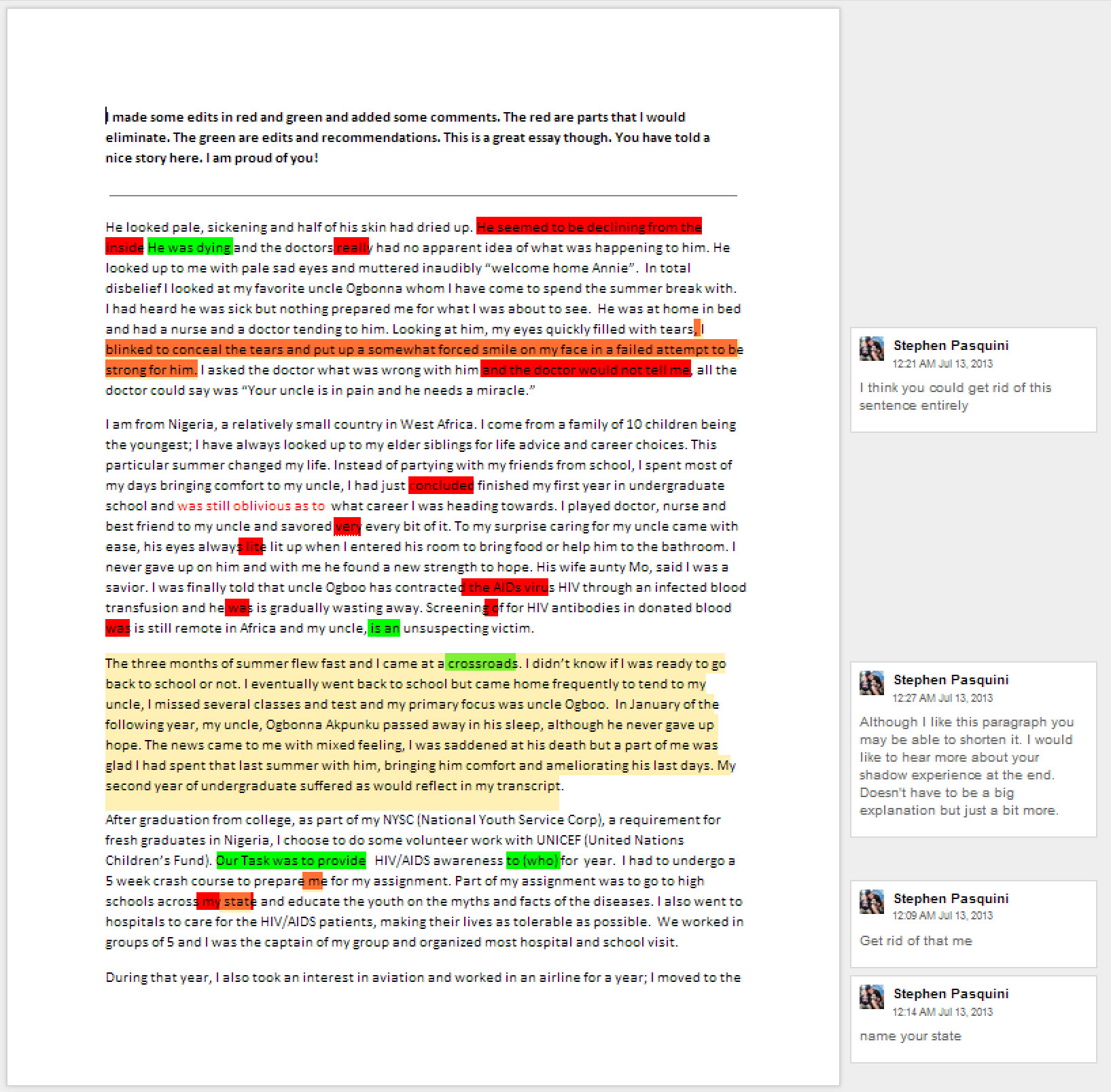 To collaborate, we use Google Drive. Google Drive is free, has an intuitive interface with integrated live comments in the sidebar, the ability to have a real-time chat, to collaborate effortlessly, and to compare, revise, or restore revisions on the fly. Google Drive also has an excellent mobile app that will allow you to make edits on the go!
Our team has worked with hundreds of PA school applicants within the Google Drive environment, and we have had enormous success.
The Physician Assistant Essay and Personal Statement Collaborative
I have set up two options that I hope will offer everyone a chance to participate:
- One-of-a-kind, confidential, paid personal statement review service
- A collaborative, free one (in the comments section)
Private, One-On-One Personal Statement Review Service
If you are interested in the paid service, you may choose your plan below.
The Personal Statement Review Service is:
- Behind closed doors within a private, secure network using Google Drive.
- It is completely interactive, meaning we will be able to provide real-time comments and corrections using the Google Drive interface.
- Telephone consultations are included with all edits above the single edit level. It’s often hard to communicate exactly what you want hundreds of miles away; for this reason, we offer the option to edit right along with us over the telephone while sharing in real-time over Google Drive. This is an option available to all our paid clients who purchase above the single edit level.
- We provide both revision and editing of all essays. What’s the difference? See below
- We will provide feedback, advice, and help with brainstorming and topic creation if you would like.
- We will help with a “final touch-up” before the big day, just in case your essay needs a few minor changes.
Why Choose Our Service?
- It’s not our opinion that matters. We have gone the extra step and personally interviewed PA school administrators from across the US to find out exactly what they think makes a personal statement exceptional.
- We are a team of PAs and professional writers, having worked over ten years with PA school applicants like yourself, providing countless hours of one-on-one editing and revision.
- Our clients receive interviews, and many go on to receive acceptance into their PA School of choice.
Because we always give 100%, we will open the essay collaborative for a limited number of applicants each month and then close this depending on the amount of editing that needs to be done and the time that is available.
Our goal is not quantity but quality. We want only serious applicants who are serious about getting into PA school.
Writing is not a tool like a piece of software but more like how a photograph can capture your mood. It’s more like art. The process of developing a unique, memorable personal statement is time-intensive, and it takes hours to compose, edit, finalize, and personalize an essay.
As Antoinette Bosco once said:
And this is why I am charging for this service. We love helping people find stories that define their lives, and we love helping individuals who have the passion to achieve their dreams. It’s hard to describe the feeling I get when an applicant writes back to tell me they were accepted into PA school.
There is no price tag I can place on this; it’s the feeling we get when we help another human being. It’s just like providing health care. But this takes time.
Interested? Choose your plan below.
Read more client testimonials.
Free Personal Statement Review
Post your essay in the comments section for a free critique
We want to make this opportunity available to everyone who would like help with their essay, and that is why we are offering free, limited feedback on the blog.
You post your essay in the comments section, and you will get our critique. It is that easy. We will try to give feedback to every single person who posts their COMPLETE essay here in the comments section of this blog post.
Also, by posting your comment, we reserve the right to use your essay.
We will provide feedback on essays that are complete and fit the CASPA requirements (View CASPA requirements here). We will not provide feedback on partial essays or review opening or closing statements. Your essay will be on a public platform, which has both its benefits and some obvious drawbacks. The feedback is limited, but we will try to help in any way we can.
Note: Comment Rules: Remember what Fonzie was like? Cool. That’s how we’re gonna be — cool. Critical is fine, but if you’re rude, I will delete your stuff. Otherwise, have fun, and thanks for adding to the conversation! And this should go without saying: if you feel the need to plagiarize someone else’s content, you do not deserve to go to PA school.
* Also, depending on the time of year, it may take me several weeks to reply!
We love working with PA school applicants, but don't just take our word for it!
How to submit your essay for the paid service
If you are serious and would like to have real, focused, and personalized help writing your personal statement, please choose your level of service and submit your payment below.
After you have submitted your payment, you will be redirected to the submissions page, where you can send us your essay as well as any special instructions. We will contact you immediately upon receipt of your payment and essay so we may begin work right away.
Pricing is as follows:
Choose your plan, then click "Buy Now" to submit your essay, and we will get started right away!
Every purchase includes a FREE digital copy of our new 100-page eBook, How to Write Your Physician Assistant Personal Statement, Our 101 PA School Admission Essays e-book, the expert panel audiobook, and companion workbook. This is a $65 value included for free with your purchase.
All credit card payments are processed via PayPal over a secure HTTPS server. Once your payment is processed, you will be immediately redirected back to the essay submission page. There, you will submit your essay along with some biographical info and all suggestions or comments you choose to provide. You will receive immediate confirmation that your essay has been securely transmitted as well as your personal copy of "How to Write Your Physician Assistant Personal Statement." Contact [email protected] if you have any questions, comments, or problems - I am available 24/7.
The hourly service includes your original edit and one-on-one time over Google Drive. It is simple to add more time if necessary, but you may be surprised at what a difference just a single edit can make. We find our four-hour service to be the most effective in terms of time for follow-up and full collaboration. We are open to reduced-rate add-ons to suit your individual needs.
Writing and Revision
All writing benefits from rewriting when done well.
When you are in the process of writing a draft of an essay, you should be thinking first about revision, not editing.
What’s the difference?
Revision refers to the substantial changing of text. For example, it may include re-organizing ideas and paragraphs, providing additional examples or information, and rewriting a conclusion for clarity.
Editing, on the other hand, refers to correcting mistakes in spelling, grammar, and punctuation.
We perform both revision and editing on all submissions.
How to submit your PA school essay for the FREE editing service
Follow the rules above and get to work below in the comments section. I look forward to reading all your essay submissions.
– Stephen Pasquini PA-C
View all posts in this series
- How to Write the Perfect Physician Assistant School Application Essay
- The Physician Assistant Essay and Personal Statement Collaborative
- Do You Recognize These 7 Common Mistakes in Your Personal Statement?
- 7 Essays in 7 Days: PA Personal Statement Workshop: Essay 1, “A PA Changed My Life”
- PA Personal Statement Workshop: Essay 2, “I Want to Move Towards the Forefront of Patient Care”
- PA Personal Statement Workshop: Essay 3, “She Smiled, Said “Gracias!” and Gave me a Big Hug”
- PA Personal Statement Workshop: Essay 4, “I Have Gained so Much Experience by Working With Patients”
- PA Personal Statement Workshop: Essay 5, “Then Reach, my Son, and Lift Your People up With You”
- PA Personal Statement Workshop: Essay 6, “That First Day in Surgery was the First Day of the Rest of my Life”
- PA Personal Statement Workshop: Essay 7, “I Want to Take People From Dying to Living, I Want to Get Them Down From the Cliff.”
- Physician Assistant Personal Statement Workshop: “To say I was an accident-prone child is an understatement”
- 9 Simple Steps to Avoid Silly Spelling and Grammar Goofs in Your PA School Personel Statement
- 5 Tips to Get you Started on Your Personal Essay (and why you should do it now)
- How to Write Your Physician Assistant Personal Statement The Book!
- How to Write “Physician Assistant” The Definitive PA Grammar Guide
- 101 PA School Admissions Essays: The Book!
- 5 Things I’ve Learned Going Into My Fourth Physician Assistant Application Cycle
- 7 Tips for Addressing Shortcomings in Your PA School Personal Statement
- The #1 Mistake PRE-PAs Make on Their Personal Statement
- The Ultimate PA School Personal Statement Starter Kit
- The Ultimate Guide to CASPA Character and Space Limits
- 10 Questions Every PA School Personal Statement Must Answer
- 5 PA School Essays That Got These Pre-PAs Accepted Into PA School
- 7 Questions to Ask Yourself While Writing Your PA School Personal Statement
- 101 PA School Applicants Answer: What’s Your Greatest Strength?
- 12 Secrets to Writing an Irresistible PA School Personal Statement
- 7 Rules You Must Follow While Writing Your PA School Essay
- You Have 625 Words and 2.5 Minutes to Get Into PA School: Use Them Wisely
- What’s Your #1 Personal Statement Struggle?
- 31 (NEW) CASPA PA School Personal Statement Examples
- How to Prepare for Your PA School Interview Day Essay
- Should You Write Physician Associate or Physician Assistant on Your PA School Essay?
- Meet the World’s Sexiest PA School Applicants
- PA School Reapplicants: How to Rewrite Your PA School Essay for Guaranteed Success
- How to Write a Personal Statement Intro that Readers Want to Read
- PA School Reapplicant Personal Statement Checklist
- How to Deal with Bad News in Your Personal Statement
- Inside Out: How to use Pixar’s Rules of Storytelling to Improve your PA Personal Statement
- Ratatouille: A Pixar Recipe for PA School Personal Statement Success
- Personal Statement Panel Review (Replay)
- Mind Mapping: A Tool for Personal Statements, Supplemental Essays, and Interviews
- Start at the End: Advice for your PA School Personal Statement
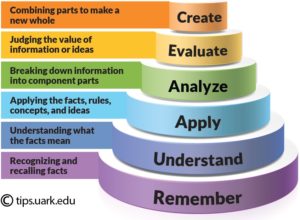
- Elevate Your Personal Statement: Using Bloom’s Taxonomy for Impactful Writing
- How to Write a Captivating Hook for Your PA School Personal Statement
- 3 Surprising Truths About the New CASPA Life Experiences Essay (And Why You Can’t Ignore It)
- 3 PA School Personal Statement Mistakes Our Editor Sees Again and Again
You may also like
 Elevate Your Personal Statement: Using Bloom’s Taxonomy for Impactful WritingThe most common advice writers often give pre-PAs is to "show, don't tell" in your essays. (Though we like to encourage showing …
 Who Gets Into PA School in 2026? Here’s What You Need to KnowLeslie Mean is a 23-year-old single white female who presents to the PA school admissions committee on her second attempt to get …
 Start at the End: Advice for your PA School Personal StatementNot sure what to include in your personal statement? Start at the End! The conclusion should summarize your entire essay. Consider the …


CASPA Personal Statement Help
 We offer comprehensive, start-to-finish personal statement assistance or help to perfect a draft you already have. We have services to fit every budget.
 Schedule a Live Recorded PA School Video Interview

We offer 60-minute mock PA school interviews with post-interview feedback and advice. Includes a recorded video of your interview that you can watch, download, or share with family and friends. There is no better way to prepare!
Schedule an InterviewPre-PA Consulting and Advising
 Our pre-PA coaching service consists of a 1-hour phone consultation focused on addressing your specific questions or concerns about becoming a PA and applying to PA school.


I want to help people. This may sound simple, but it has always been the central value that guides my decisions. To me, it means making human connections while enabling others to face life’s challenges with the confidence that they are supported. As I have gained life experience, that end goal has been constant, but how I would accomplish that goal has evolved. I tried several paths, but none felt like the right fit until I found the PA profession.
As a child I dreamed of becoming a teacher, thinking this would allow me to continue learning and share my passion while making connections with my students. However, in high school I had my own encounter with the medical field when I needed an ACL reconstruction. I was introduced to the fields of surgery and physical therapy, and I took classes to expand my understanding of these paths. While I ultimately decided both careers had too narrow a scope for my preference, I developed a lifelong love of the human body and its complex systems.
College introduced me to the world of psychology, and following my undergraduate education I assumed a graduate degree was the next step. I made a cross-country move to pursue a master’s degree in the field without thinking it through. I soon realized the psychometric specialty I was pursuing lacked the holistic, patient-focused components that I craved. I allowed myself to leave the program and spent the next few years evaluating what I really wanted in my career.
It was while working as a rehab tech with a handful of physical and occupational therapists that I was introduced to the PA profession. The providers I worked with described the features of the job – continual learning, hands-on collaborative work, meaningful human connections, and opportunities to help people in concrete ways. It seemed like the perfect fit but after my previous hasty career decision it was important to me that I take the time to thoroughly understand the PA role.
From there, I began working as a phlebotomist on blood drives. I learned new skills such as taking a medical history and vital signs and, of course, drawing blood. I found that I loved the technical side of things and getting to connect with the diverse populations in my community. I was also pleasantly surprised by how often I got to enact my original mission in this role, to connect with and care for patients.
Kaitlyn was a repeat donor that had made it through countless donations without incident, but today was different. As I was preparing the supplies for my next donor, I made eye contact with Kaitlyn and instantly knew something was off. I paused my current task and made it to her just in time to catch her as she slumped off the chair and onto the gym floor. As the lead tech I spent the next hour taking her vitals and easing her anxieties while delegating tasks to the other phlebotomists to continue the flow of donors. When Kaitlyn felt back to normal, she stressed how grateful she was for my quick response. Supporting individuals like her gave me confidence that I am on the right path in pursuing the PA profession and inspired me to expand my daily responsibilities.
In my current role, as a medical assistant, I have continued to develop my skills and learned how to do an EKG, administer vaccines, and send in prescriptions. I have also watched clinicians work in collaboration, helped patients navigate insurance and referrals, and seen firsthand what a difference it makes to have a primary care provider that acts as the backbone of one’s medical journey. Daily, I get to see the trust build between patients and their clinician as they manage all facets of their health.
What solidified my decision to become a PA was Denise, the PA from my time as a phlebotomist. While PAs may be best known for their key role in direct patient care, Denise exemplified the versatility that comes with their broad range of expertise. She works mostly behind the scenes to determine treatment plans for patients that need therapeutic apheresis procedures. I was impressed as I watched her create plans of care. She had a vast knowledge of illnesses and the body and oversaw every step of the procedures while collaborating with patients’ physicians. She explained the pros and cons of treatment plans to doctors and educated teams about her specialty. Denise was continually reading to keep up with the latest research. Her passion for learning and commitment to holistic patient care helped me envision the type of PA I wish to be.
Helping people is still my guiding principle and while it took time for me to choose the role that will allow me to do that, I am confident that PA is the correct decision. This career will enable me to work in a team, build relationships, and grants the flexibility for my career to grow with me through all phases of life. As a PA, I will dedicate all that I know and all that I have experienced to serving my community. I will be a steady presence for each of my patients as their paths evolve.
Hi Jade,
Kaitlyn is a great story. You caught her eye, knew something was off, and got to her as she slid off the chair. Then you ran the drive as lead tech while you monitored her. That shows exactly how you work under pressure.
Denise is an unusual and memorable reason to choose PA. Most people don’t know PAs run therapeutic apheresis plans. Keep it.
I’d change the opening. “I want to help people” is one of the most common first lines out there, and you admit it’s simple. Start with Kaitlyn instead.
The middle section on teaching, ACL surgery, PT, and the psychology master’s is honest, and leaving a program that wasn’t right shows maturity. It’s long, though. Get it down to a few sentences.
Your MA paragraph is a list of skills (EKGs, vaccines, prescriptions). One patient would do more.
Last, be careful with “grants the flexibility for my career to grow with me through all phases of life.” It reads like a lifestyle reason. And fix the parallel structure in that sentence: “work in a team, build relationships, and grants” should be “and grant.”
Stephen
Two shots of heparin daily, seven days a week, for thirty-five weeks. This was my mother’s routine she had to endure to manage her high-risk pregnancy with me while battling lupus. I grew up watching her navigate a healthcare system where patients with autoimmune diseases often feel unheard and struggle to manage their symptoms. Frequent clinic visits were met with minimal answers, leaving her left with feelings of frustration. These feelings I witnessed as a child became my reality when I was diagnosed with an autoimmune disease as I entered high school. Being exposed early to this reality of healthcare sparked my desire to become a clinician that will advocate for patients while maintaining high-quality, compassionate care. The physician assistant (PA) profession embodies these values through its patient-centered approach, autonomy, and ability to address gaps found in healthcare. It is my goal to become a PA who ensures patients are heard, understood, and feel supported in managing their health.
While working a shift as an inpatient phlebotomist, I unexpectedly had my first encounter with a PA in the elevator. Until then, I had only researched the profession and had not seen the role in practice. After asking to shadow her, I observed her manage complex cases from the trauma bay to the operating room. This experience was my first introduction to the teamwork required in a fast-paced specialty as she worked closely with nurse practitioners and her supervising physician. Her autonomy in evaluating, diagnosing, and treating patients while collaborating with the healthcare team solidified my decision to pursue the PA career.
Although shadowing exposed me to the profession, my role as a dermatology medical assistant deepened my understanding of the roles they exercise daily. I supported two PAs with differing scopes, one focused on skin cancer screenings and surgeries, the other managing chronic skin conditions.
Working alongside the surgical PA allowed me to interact closely with patients in an outpatient setting. I have frequent opportunities to learn their stories and help them feel comfortable during procedures. This experience shifted my perspective from an observer to an active contributor in patient care. From this, I realized that building a connection with a patient is just as important as the procedure. These moments often provide reflection of my mother’s experiences – where visits lacked guidance – willing me to create a different experience for the patients I care for.
As I worked closely with the surgical PA, I learned about her background in general surgery and observed how her skills transitioned to dermatology. This allowed her to reduce wait times for skin cancer screenings and surgeries, which enabled patients to receive timely care. Observing her transition between these specialities demonstrated the profession’s versatility and how transitioning between specialities can expand access to care.
This flexibility became especially meaningful to me when I saw its impact on patients from rural and remote populations. Many patients were referred to our clinic from *redacted*, a town of approximately 400 residents, where specialty services such as dermatology are unavailable. Though I did not grow up in a rural community, listening to patients describe the time and cost involved in accessing care shifted my mindset on understanding healthcare disparities.
Patients requiring skin cancer excisions were able to be treated by the surgical PA, rather than having to wait weeks to see the physician, significantly expediting their care. This has motivated me to pursue this career path to continue bridging the gap for these communities.
Becoming a PA is a goal that I have been actively and intentionally pursuing. In addition to my clinical roles, I have remained committed to serving my community through volunteering as a youth mentor and assisting nursing staff in the emergency department. After graduating, I continued to challenge myself by completing rigorous science coursework, including organic chemistry and biochemistry while working full-time as a medical assistant. Balancing these commitments has required strong time-management skills, organization and responsibility, all of which have prepared me for PA school.
Viewing healthcare through the dual lens of witnessing my mother’s struggles and managing my own health has given me a unique understanding of the importance of validation and kindness. As a future PA, I hope to care for patients with compassion and empathy, while ensuring their concerns are being addressed. My goal in PA school is to strengthen my patient care while also mastering the clinical knowledge and skills required to care for others. I look forward to further developing qualities such as resilience, emotional intelligence, and professionalism. My experiences have prepared me well, and I am ready to take the next step toward becoming a PA.
Hi Erin, I replied to your newer version from April 27, so check that one for my notes.
Stephen
“Than-k yo-u… no, re-really…thank you”. Larry’s strenuous effort to speak was as clear as his heartfelt gratitude for the relationship we had built over the months. At 55, Larry faced an ALS diagnosis and a swift transition into our facility without family support. During my CNA work, I spent my breaks at his bedside watching the St. Louis Cardinals game, restocking his beloved Peanut M&Ms, and attentively listening as he grieved the loss of his marriage and a broken relationship with his son. Larry (and I) deeply treasured these moments, and I learned that clinical care is incomplete without human connection. PAs support vulnerable patients through patient-centered care, and I intend to carry this patient-centered mindfulness into every room, cognizant that tending to a patient’s emotional needs is as vital as towards the diagnosis, such as ALS.
Clank-clank. One afternoon working as a Medical Assistant (MA) in an outpatient multispeciality clinic, I was rooming a patient from an inpatient psychiatric facility, “James”, whose metal ankle shackles clanked with each step. I sensed the harsh judgemental looks and darting eyes cast upon him in the waiting room. Still, I greeted him with a warm smile, patiently explained the clinical workflow, and positively carried on genuine conversation with James to settle the apprehensive tension. By the end of the encounter, we were laughing together over his overflowing bag of strawberry lollipops, which he proudly offered me from his pocket. My innate amiability and desire to treat all people with dignity will allow me to thrive as a PA that builds relationships on trust rather than judgment. PA’s work with a diverse range of patient populations, and this encounter deepened my resolve to work with underserved and stigmatized populations as a PA.
Shadowing in Pediatric Cardiothoracic Surgery further affirmed my alignment with the PA profession, where I felt the vital role of the PA among the diverse medical team. As the lead surgeon removed the clamp and the little boy’s heart “bum-bump, bum-bumped” seemingly back to life, I felt surprised the lead surgeon soon after left the OR. Yet, the PA, Laura, stayed to close his chest and coordinate alongside anesthesia to awaken the boy, wiggling his tiny feet, gently whispering “‘Tommy’, are you up?”. I witnessed Laura as the first face the child saw upon waking and the last member of the surgical team to leave the PICU after transferring Tommy and briefing the family and PICU nurses. As the PA, Laura bridged the gap between the lead surgeon’s blade and the patient’s recovery; she was the steady presence Tommy woke to and the educator who tenderly explained the surgical outcome for his family. This integration of multidisciplinary collaboration with patient education mirrors my own experience as an anatomy Teaching Assistant (TA), where I thrived amongst a diverse dissection team and passionately educated peers.
As the selected TA, I worked exhaustive weekly hours alongside professors and graduate students to prosect the cadavers, including volunteer late-nights to harvest the brain. If I faced uncertainty, such as when I struggled to identify intestinal abnormalities during the abdominal dissection, I consulted with the lead professor. Seeking guidance allowed me to perform the prosection more confidently, and thus feel more empowered to teach the anatomy to my peers. During open lab lessons, I possessed a natural aptitude to shift my teaching style at the individual level, ensuring each student felt comfortable understanding the complex material. I embraced adaptability, strengthened my collaboration skills with experienced supervisors, and ignited my passion for education. My time in the anatomy lab parallels the PA foundation of bridging gaps, both among medical teams and between a patient’s diagnosis and their health literacy. Thriving as the anatomy TA reflects my preparation and future success as both a PA student and PA-C. I am eager to bring my coachability, collaborative spirit, and love for education to the PA profession.
I thrive when working alongside a collaborative team, allowing me to provide more compassionate and resilient care for those who need it most. My experiences supporting patients like Larry, James, and watching Laura support Tommy have empowered me to bring my empathy to every patient interaction by building trusting relationships, meeting individuals needs, and offering comforting presence.
Hi Olivia,
Larry, James, and Tommy are three strong stories, and they’re the best part of this. Laura closing Tommy’s chest and whispering to him as he woke up is a great why PA moment.
Where you lose ground is when you describe yourself. “My innate amiability,” “I possessed a natural aptitude,” and “Thriving as the anatomy TA reflects my preparation and future success” all praise you directly. Admissions readers trust actions more than adjectives, and you already have the actions. Cut those lines.
The TA paragraph runs long. Keep asking the professor for help with the intestinal abnormalities, since that shows humility, and trim the rest.
Fix a few sentences. “Larry (and I) deeply treasured these moments” is awkward. “Tending to a patient’s emotional needs is as vital as towards the diagnosis, such as ALS” doesn’t parse. And “PA’s” should be “PAs.”
Your conclusion is short and general. End on Larry or Tommy.
I saw you posted an earlier version on March 16 too. These notes are for this one.
Stephen
“Than-k yo-u… no, re-really…thank you”. Larry’s strenuous effort to speak was as clear as his heartfelt gratitude for the time I spent attending to him. At 55 years-old, Larry battled an unexpected ALS diagnosis and a swift transition into our skilled nursing facility without family support. During my CNA work, I took the initiative to spend my rare free time watching the St. Louis Cardinals game at his bedside, restocking his beloved Peanut M&Ms, or attentively listening as he grieved his rocky divorce and relationship with his son. Larry treasured our connection and it showed me the true magnitude of my impact. These precious moments spent with Larry taught me that PAs have the power to support vulnerable patients through patient-centered care, inspiring me to mindfully treat every patient with their unique needs at the forefront of my care.
As a Medical Assistant (MA) in an outpatient multispecialty clinic, I worked closely with patients from all walks of life. Clank-clank. One afternoon, I was tasked with rooming a patient from an inpatient psychiatric facility, “James” whose metal ankle shackles rattled with each step. Rather than withdrawing, I greeted him with a warm smile, patiently explained the clinical workflow, and listened as he shared his concerns about the visit. Throughout the appointment, I was engaging with James in light conversation, which helped dissolve the initial tension. By the end, we were laughing together over his overflowing bag of strawberry lollipops, which he proudly offered me from his pocket. This experience challenged my assumptions and taught me how genuine care and empathy can transform a clinical encounter, making healthcare welcoming for all. Working with underserved populations has deepened my resolve to meet patients where they are and treat them with dignity, a principle that inspires me to pursue the PA profession, where patient-centered care is paramount.
While shadowing in Pediatric Cardiothoracic Surgery, I saw firsthand how PAs bridge gaps among medical teams. As the lead surgeon removed the clamp, the little boy’s heart seemingly came back to life, rhythmically booming “bum-bump, bum-bump” throughout the anticipating OR. As the OR transitioned into closing, I felt surprised as the lead surgeon quietly exited the OR. Yet, the PA Laura stayed to close his chest with precision and coordinate with anesthesia to awaken the boy, wiggling his tiny feet, gently whispering “‘Tommy’, are you up?”. I witnessed Laura as the first face the child saw upon waking and the last member of the surgical team to leave the PICU after transferring Tommy and briefing the PICU nurses regarding the surgery. I understood her role in bridging the gap between the surgeon’s blade and his PICU recovery bed and I realized I want to be a PA that has a steady presence for my own patients within the healthcare team.
My academic experience as a selected undergraduate Teaching Assistant (TA) strengthened my leadership and collaborative skills, as I worked exhaustive weekly hours alongside professors and peers to prosect cadavers and translate complex anatomy for the next cohort. I took initiative in high-pressure situations, volunteering for late-night prosection sessions and consulting with faculty when uncertainty arose during the craniatomy, ensuring quality education for my students. This role taught me the value of teamwork and adaptability, as well as how to mentor others while learning from experienced guides. These experiences mirror a PA’s responsibility to bridge gaps between medical complexity and patient understanding through patient education, and I am eager to bring my coachability and collaborative spirit to the PA profession.
I thrive when working alongside a collaborative team, allowing me to provide more compassionate and resilient care for those who need it most. My experiences supporting patients like Larry, James, and watching Laura support Tommy have empowered me to bring my empathy to every patient interaction by building trusting relationships, meeting individuals needs, and offering comforting presence.
Hi Olivia, I replied to your March 17 version, so you’ll find my notes there.
Stephen
Chaos has a way of revealing who people are. I learned this the night a car crash happened outside my house, and I felt an overwhelming need to help. I did not know exactly how in that moment, but the instinct to move toward uncertainty, rather than away from it, continues to reside in me. This instinct has emerged in every clinical environment I have set foot in since. Whether in the emergency department or the operating room, I am drawn to moments when patients are most vulnerable and to the responsibility of being present for them. It is within these moments that I realized my desire to become a physician assistant.
My interest in medicine began in seventh-grade life science. I was captivated by learning how the body functions as a unit, the trillions of cells working together to sustain life. My curiosity only deepened when I entered high school, taking anatomy and Project Lead the Way courses to learn more about the medical world. What began as fascination evolved into a purpose; I wanted to care for patients during moments of uncertainty in their lives.
While in high school, I explored different paths in healthcare, including physical therapy and medical laboratory science. I first learned about the physician assistant profession during the COVID-19 pandemic, glued to my laptop for school, socialization, and everything in between. While scrolling on YouTube for something to watch, a video from creator Adanna the PA came up in my recommendations: “Everything you need to do to get into PA school.” Having extra time during the lockdown allowed me to immerse myself in learning about the profession, and I quickly felt it aligned with what I valued in medicine. I ultimately realized I wanted to be directly involved in diagnosing and treating patients. I was drawn to the clinical intensity of medicine rather than the rehabilitative focus of PT, and more patient interaction than a laboratory role could offer. Becoming a PA allows me to practice medicine broadly and serve in different capacities throughout my career.
Emerging into my first clinical role as an ER tech, I worked alongside PAs in the emergency room and shadowed in various specialties to gain more exposure. Working in a level I trauma center provided insight into how PAs functioned as the first provider a patient would see in triage, rapidly initiating care while assessing the patient. In cardiothoracic surgery, I observed PAs play an integral role during a CABGx3, meticulously grafting vessels and managing critical components of patient care. While shadowing an inpatient psychiatric PA, I saw her calm, deliberate communication create a space for patients during vulnerable conversations. These experiences showed me how versatile the PA role is and how it can make a meaningful impact on patients across specialties.
Working in emergency medicine has shaped my clinical skills and character. I participated in multiple codes, performing compressions until the time of death was called. I cared for pediatric trauma patients, supporting both the patient and their family by providing a comb and a toothbrush to restore a sense of dignity. A chronic respiratory patient was clinically declining, and I witnessed a former ICU PA perform an upright intubation, securing the airway and saving this patient from further decline. These moments taught me how essential composure, humility, and compassion are in practicing medicine.
Within my various patient care settings, I frequently saw patients from underserved populations and how their health was affected. In older patients, I learned that many do not fully understand their diagnoses or medications, often being left with more questions than answers. While my current role allows me to assist in care, I often feel limited, unable to fully answer questions or take ownership of clinical decisions. Becoming a PA would allow me to bridge that gap and provide comprehensive, patient-centered care.
I have prepared for the rigor of PA school through academic discipline, developing a strong clinical background, and self-reflection. As an honors health science student, I sought coursework that strongly emphasized health equity, communication, and patient-centered care. Within my degree, organic chemistry challenged me, ultimately resulting in two Cs. I adjusted my study strategies, sought help from my peers and professor, and learned how to persevere through difficulty—skills essential for success in PA school and beyond.
As a future PA, my goal is to create an inclusive environment where patients feel heard, respected, and informed. I aspire to provide evidence-based care while serving as a source of comfort and education for my patients. I am drawn to chaos while being grounded in compassion, and I am ready to grow into a provider my patients can trust.
Hi Ashlyn,
“Chaos has a way of revealing who people are” is a good first line, but the car crash right after it stays vague. What happened, and what did you do? If you didn’t do anything, it’s fine to say so. Wanting to help and not knowing how is a real starting point.
Seventh-grade life science and Project Lead the Way can go. Finding PA through an Adanna the PA YouTube video during lockdown is honest, and I’d keep it to a sentence.
Your ER tech paragraph has the best material: doing compressions in codes, and giving a pediatric trauma patient a comb and a toothbrush. Tell us more about that kid. That small act says a lot about you.
You own the two Cs in organic chemistry well. Keep that.
One caution on the ending. “I am drawn to chaos” can read like you’re chasing adrenaline. You don’t mean that, so tie it back to staying calm for patients when things are chaotic.
Stephen
Hey! This is my first cycle applying. I have a rough draft of my personal statement but am not sure if I should add more PCE/volunteering explanations etc. or keep it about a unique story to me and use the life experiences essay to explain those things? Would love some feedback on if my writing is in the right direction. Thank you!
Growing up, my brothers and I used to role-play the people we aspired to be. While my brothers wore my dad’s construction hat and played with his toolbelt, I wore my mom’s stethoscope and dragged her medical bag everywhere I went. My room turned into an all-in-one classroom and clinic filled with pretend assignments and patient notes written in colored pencil. Thankfully, my brothers survived my care without any major complications. We were teachers, doctors, construction workers; anyone who made us feel like grown-ups.
Years later, those childish games took on a different meaning.
The patient was a forty-six-year-old male under observation for alcohol poisoning, noticeably disoriented and cycling through memories he once shared with his ex-wife. I stayed beside him patiently, remaining present through each familiar story, while ensuring he remained safe until his condition stabilized in the morning. I was no longer pretending to be a provider. My first patient was my dad.
His alcoholism shaped my childhood in ways I didn’t fully understand then. For years, 5pm marked when I’d start to see my dad’s personality fade. He taught me patience when progress felt impossible and empathy when that was all I had to offer. At first, my only concern centered on his health and well-being, but as I grew older my perspective shifted. I gave up on his sobriety and began to look at my dad not with anger or resentment, but with curiosity. I wanted to understand how a substance could repeatedly override someone’s ability to choose. What was the science behind addiction?
That resolve carried into my education, particularly in science. As I began excelling academically, I developed a genuine fascination with biology, the brain, and the human body. I looked forward to my anatomy lab; learning the complexity of the skeleton, or dissecting specimens to understand how structure and function intertwine. While others hesitated, I was fascinated by the body in its most tangible form, realizing my passion wasn’t just a reaction to my past.
I sought exposure wherever possible, through research or by shadowing physicians across various specialties. These experiences helped clarify my priorities: I valued versatility, collaboration, and continuity of care with patients over specialization alone. Still, I struggled to find my place in healthcare. Although I worked alongside physician assistants while shadowing, I hadn’t fully understood their role until one pivotal day in the operating room.
The patient was a young man, not even twenty-five, who had been hit by a car a week prior. After emergency surgery to relieve cerebral swelling, he needed a cranial reconstruction. I was shadowing a neurosurgeon, but spent the day with his physician assistant, observing her involvement at every stage of care. Before the procedure, she reviewed imaging, assessed his neurological status, and eased his anxiety with a calm familiarity that reflected an established relationship.
Later in the operating room, I watched her move with a quiet confidence as she positioned him, coordinated with nurses and technicians, and worked alongside the neurosurgeon in a balance of autonomy and teamwork. Then came the moment I’ll never forget. The neurosurgeon carefully lifted a section of his skull, revealing the human brain. I stood in awe as he explained how each region controlled vital functions, and how precise every decision had to be to avoid irreparable damage. In that moment, I felt the immense privilege and responsibility of being trusted during someone’s most vulnerable moments.
After the procedure, I followed the physician assistant to the recovery unit, where she updated the patient’s family and guided the transition into postoperative care. In her, I saw the provider I hope to become: empathetic, adaptable, and able to balance skill with compassion while bridging surgeon, patient, and team.
Watching the collaboration unfold throughout the hospital reminded me of something my mom once told me when I asked what she loved most about medicine. Without hesitation, she said, “The people. The community. No matter how hard your day is, you’re never in it alone.” From then on, I finally understood what she meant. Medicine is a shared commitment strengthened by teamwork, and physician assistants play an essential role; a community I deeply admire and hope to be a part of.
That experience was a turning point. I recognized how my childhood, curiosity about addiction, and passion for science had shaped my path toward the physician assistant profession. Watching the PA balance autonomy with teamwork and lead with compassion showed me the kind of provider I hope to become. Grounded in resilience, empathy, and a strong academic foundation, I am prepared for its rigor. Somewhere along the way I stopped pretending to be a provider. What began as a little girl playing with a stethoscope in her mom’s white coat became my reality.
Hi Shelby,
To answer your question: yes, you need your own patient care experience in this essay. Shadowing shows you know what a PA does. PCE shows you can do it.
Here’s the good news. Your father’s alcoholism, and how it turned into curiosity about the science of addiction, is a mature, unusual story. “What was the science behind addiction?” is a great line. Keep that paragraph as is.
Two changes. Cut the toy stethoscope opening. Playing doctor as a kid is one of the most common openings there is. Start with your twist instead: the forty-six-year-old male under observation for alcohol poisoning who turns out to be your dad. And cut the neurosurgery shadowing in half. Your observations of her are excellent, but you spend almost 200 words on what she did, and you need that space for yourself.
Then add a paragraph about a patient you cared for in your own job. If what you went through with your dad helped you be patient with someone difficult, connect those dots.
You’ve got this.
Stephen
At 14 years old I was getting ready for an early softball game when I suffered multiple grand mal seizures. Far away from home, I was rushed to the nearest children’s hospital, where a diverse group of medical professionals worked together to solve this sudden event. A Physician Assistant (PA), Tracy, consoled me as an epileptic diagnosis was one of the scariest times of my life. Simple acts, such as giving me a toothbrush when I did not have one, stood out to me and reminded me of thoughtful, compassionate care that made me feel seen and valued as a patient. Through my experiences as a phlebotomist and shadowing a PA in rural family medicine, I have been inspired to embark on a career as a PA where I can continue to give patient-centered and empathetic care, as Tracy did for me.
As a phlebotomist in a rural hospital, I started to gain insight into the world of medicine, not as the patient, but as the person they look to for support. Each day, I meet patients from infancy through geriatrics who present with their own mix of fears and emotions. One winter afternoon, “Bob” presented without a valid lab order, which usually meant we would send him home and ask him to return with a proper order. However, I took it upon myself to accompany Bob to the physician’s office and clarify the order directly. As part of a small community hospital, I leveraged the close relationships established among the physicians by consistently communicating patient needs to the provider, ensuring effective continuity of care. Due to this extra step, I collected Bob’s blood sample that day; he thanked me many times, and I saw firsthand how my willingness to help saved him time and gave him greater access to care. Although this gesture was small, Bob reinforced that small actions can make a substantial difference in patients’ experiences, and personal convenience does not override patients’ needs. Helping Bob strengthened my values that empathy, teamwork, and advocacy are principles I am committed to upholding as a future PA.
While continuing to work as a phlebotomist, I strengthened my commitment to advocacy through volunteering as a student notetaker for my university’s Accessible Campus Community and Equitable Student Support program. As a notetaker, I completed detailed, organized, and thorough lecture notes alongside students with a disability to help them succeed in their academic journey. One of the students I assisted, “Jon,” had a confident and strong personality. We often stayed after the lecture to review key points using diagrams, concept maps, or charts. I frequently translated complicated science terms into definitions he could understand. When Jon was disappointed by a bad exam grade, I engaged in self-reflection and positive communication by active listening, asking questions, and maintaining positive body language to answer any of Jon’s questions. By enabling this type of behavior, Jon calmly and efficiently asked the appropriate questions to better understand the material. Through this experience, I learned to communicate clearly with my academic peers and applied those skills to my patients. My ambition for the role as a PA is further strengthened by my ability to guide others with disparities and advocate for equal opportunities through compassionate care.
While shadowing Lily Shively, PA-C, in rural family medicine, I watched as she connected patients and opened doors for safe communication. From elementary sports physicals to Medicare wellness visits, I was exposed to a variety of patients, but one stood out to me. “Betty” came into the clinic after several missed appointments, noticeably dehydrated, and had blood in her abdominal drain. Lily expressed her concerns about dehydration and excessive blood loss to ensure Betty knew the severity of her condition. Lily proceeded in collaborating with her attending physician and the hospital’s emergency department (ED) by making numerous phone calls and ordering labs and imaging to create an effective care plan for Betty. I saw firsthand how Lily played a crucial role in coordinating care by alerting the ED of her critically ill patient and talking with her medical assistant to schedule follow-up appointments to continue monitoring Betty’s condition. Lily’s dedication to providing high-quality care through patient communication showed me how a PA can bridge gaps, cultivate trust, and make a lasting difference in patients’ lives. This experience motivated me to pursue a career as a PA, where I can collaborate to build trusting relationships and provide exceptional, compassionate care.
Reflecting on my journey to the role of a PA, navigating my own medical uncertainties, advocating for patients like Bob, encouraging peers like Jon through positive communication, and seeing Lily support patients like Betty have strengthened my commitment to becoming a PA. PAs exemplify teamwork with autonomy, which first drew me to medicine. My first-hand experiences providing compassionate, collaborative care have strengthened my commitment to serve all of my future patients. I strive to continue the excellence of the PA profession through empathetic, adaptable, and detail-oriented patient care.
Hi Kylie,
The toothbrush is the best detail in your essay. A small act like that, plus Tracy the PA, says more about what good care looks like than any paragraph could. Get to Tracy faster by cutting “where a diverse group of medical professionals worked together to solve this sudden event.”
Bob is a great story too. You stepped outside your job to help him. End the paragraph on that, and cut the line that lists your values afterward. You already showed them.
The Jon paragraph is the one to rewrite. “Engaged in positive communication by… maintaining positive body language” sounds like a textbook, and “enabling this type of behavior” sounds a little condescending. Just tell me what you did. Did you put your notes down, listen, and help him break down what he missed? Then connect that to teaching patients.
Lily’s paragraph passes the why PA test. Keep it, though “Lily proceeded in collaborating” can just be “Lily collaborated.”
A few small things: “embark on a career” is a cliché, “At 14 years old” needs a comma, and your conclusion doesn’t need to recap Bob, Jon, and Betty. Look ahead instead.
Trust your stories. They’re good.
Stephen
One belief I hold about health and patient care is that no plan is one-size-fits-all, and a lack of discipline or motivation is rarely the reason a patient cannot adhere to their care plan. This notion was introduced to me through the fitness sphere, as I learned about the complexity and barriers that can surround exercise. Early on I learned that health is not built in a single appointment or a single workout, but through consistent, informed choices over time, with appropriate support. This understanding—shaped by my passion for fitness and reinforced through my clinical experiences—has guided me toward a career as a physician associate.
My initial exposure to the PA profession was during my time as a Unit Aide in the Cardiac ICU, where a team of five PAs were heavily involved in each patient’s care. These PAs acted as the backbone of the unit, as they effectively collaborated and communicated with staff from the aides to the attendings. Furthermore, they helped the patients improve medically while connecting with them emotionally, which created a bond of trust and a more positive experience for patients going through difficult surgical journeys. I was more of a background character in my role, and observing the unit PAs on a daily basis made me realize my desire to fill a more involved position in healthcare which would allow me to be a part of a patient’s medical team while having a direct impact on their health and well-being.
This led me to my position as an inpatient care assistant float. As a PCA in the float pool, I was often tasked with being the ‘sitter’ for patients admitted for self-harm, eating disorders, or conditions which required a 1:1. This aspect of my job quickly taught me that while one patient may like having a 1:1 to keep them company, another will feel like they’re under a microscope. I learned how to read different situations and tailor my interaction to keep the patient as comfortable and safe as possible. These experiences brought the concept of individualized care to life, and I now approach patient situations ready to meet them where they are. I am eager to carry this mindset forward into a role that allows me to pair patient-centered care with clinical reasoning and continuity, and build relationships that extend beyond a single shift.
Working at Connecticut Children’s allowed me to work alongside and observe PAs at the bedside, in rounds, and in procedural settings. Seeing PAs move seamlessly between these backdrops highlighted their continuity of care, collaborative team-based approach, and flexibility across specialties. Due to my previous experiences in the medical field, these traits felt like a natural next step rather than a new discovery. These aspects only fed my excitement about pursuing a career as a PA, as I enjoy being able to work in various settings and value the ability to follow patients over a period of their lifetimes with the support of an attending physician.
My various roles in the medical field have deepened my understanding of the PA profession and equipped me to take this next step in my career. My passion for fitness taught me how health is built incrementally, while my clinical experiences showed me the impact compassionate, accessible medical care can have. As a PA, I plan to combine these perspectives to empower patients toward sustainable health while practicing within a collaborative, patient-centered model.
Hi Ali,
I like the honesty of calling yourself a “background character” in the cardiac ICU. Watching those five PAs and wanting more is a believable reason to make this move.
The sitter paragraph is your best insight. One patient likes the company and the next feels like they’re under a microscope. But it’s still general. Give us one patient you sat with and how you read the situation.
That’s the main gap: there isn’t a single specific patient in this essay. The opening is an idea (“no plan is one-size-fits-all”), and the Connecticut Children’s paragraph is about PAs in general. Start with a person, maybe someone from the fitness side whose barriers you learned about, and the fitness theme will hold the essay together better.
Stephen
Hi! This is my first rounds of applications and im struggling with my personal statement. I would love some critiques. Thank you!
My grandfather was reading Seabiscuit in the delivery room the day I was born. Throughout the years, this became a joke in my family. Maybe this is the reason why I developed a love for horses. What started as a joke has now come full circle, contributing to my understanding of the healing process and my initial experience in the healthcare industry.
As a sophomore in high school, my love for horses led me to Cooper’s Crossroad (CC), a nonprofit organization that offers Equine-Assisted Psychotherapy (EAP) for children who have experienced significant trauma. I volunteered for the organization before they officially opened their doors, working with the horses and volunteers and researching the benefits of EAP. After COVID-19, the organization reopened its doors, and I spent most of my afternoons after school at the barn, assisting clinicians during therapy sessions and teaching children to build trust through their interactions with the horses. Watching children who had difficulty expressing their emotions begin to open up through this form of therapy was a profound experience for me. I realized that the healing process does not necessarily need to involve the physical aspects of medicine; it was the intention behind the healing, patient-centered care, and compassion that was most important.
As I began my college journey, I was looking to find my niche in healthcare. I expanded my interest in psychology by taking as many courses as possible in this field. However, despite my growing knowledge in this field, I was unable to manage my own mental health issues. As a junior, I hit a brick wall as my grades began to slip, and I felt as if I had no control over my life. Seeking help was not easy, but it was through this journey that I was introduced to Kerry, a physician assistant who has changed my life and my perception of healthcare forever. She diagnosed me with a case of Major Depressive Disorder, most importantly, she listened to me and made an effort to understand my situation, validating my concerns and treating me as a whole person, not just a diagnosis. Through her care, she introduced me to the field of physician assistants. She showed me what a healthcare worker with compassion and empathy looked like, and she encouraged me to learn what it means to be a true physician assistant.
As I learned about the role of a physician assistant, I realized that this is what I had been searching for my entire life: a patient-centered care model that values medical knowledge as well as patient connection and care. With my newfound enthusiasm, I applied to work as a medical assistant at the Community Health Centers of Burlington (CHCB), where I worked on the OB team, assisting with procedures such as colposcopies and IUD insertions. However, the most rewarding part of my job was the relationships that I had with my patients, whom I saw every week for their prenatal and postpartum care.
I witnessed the prevalence of prenatal and postpartum depression and anxiety, especially among immigrant and minority women. I also witnessed the tendency to ignore or dismiss these issues. However, the patient who had the greatest impact on me was an immigrant woman who was pregnant for the first time and struggling with severe prenatal anxiety that permeated every aspect of her life. I went above and beyond for this patient. I walked her to the pharmacy to ensure that she received the appropriate medication. I spent extra time with this patient to ensure that she understood everything. I also called the patient through an interpreter to check on how she was doing. I went above and beyond for this patient because I witnessed her struggling and the positive impact it had on her. I also witnessed the fact that this patient had a healthy pregnancy and child. I realized I had the opportunity to be part of this patient’s care, and this experience reaffirmed my commitment to being an advocate for patients who need medical advice and human support. During my time at CHCB, I have tried to model myself after the physician assistants I work with. They managed to integrate efficiency with compassion, advocacy, and trust. Every time I interact with patients, I become increasingly convinced that I want to be in this profession. I believe the profession of physician assistant aligns with my values and abilities. I have come to realize that, from Cooper’s Crossroad to the exam rooms at CHCB, healing begins with the patient feeling heard, seen, and supported. I want to be a physician assistant because I want to practice medicine that is accessible, continuous, and compassionate, while providing high-quality care to all populations. I also want to be able to be present with my patients. I want to adapt to the patient’s needs while remaining committed to their care.
Hi Ava,
Equine-assisted psychotherapy makes you memorable, and you handle your GPA dip with real maturity. Two parts need work, though.
First, the clinic paragraph. You say “I went above and beyond” twice, and when you praise yourself, it reads less genuine, not more. Let the actions do it: you walked her to the pharmacy, followed up with an interpreter, and saw her deliver a healthy baby. That’s plenty. Almost every sentence in that paragraph also starts with “I,” so combine a few.
Second, the line that healing “does not necessarily need to involve the physical aspects of medicine.” For a medical program, that can make you sound like you’d be happier in counseling or social work. Reframe it as treatment working best when it comes with trust and compassion.
“What it means to be a true physician assistant” doesn’t say much. What did that PA actually do? Explain your medication? Work with her supervising physician? And for why PA, patient-centered care describes nursing and medicine too. Talk about the team you saw at the Burlington clinic and the generalist training that lets PAs move between specialties.
One small note: “physician assistant” only needs capitals before a name.
You’re on the right track!
Stephen
During Sunday morning church, my younger sister and I often hold hands during prayer. Her spastic cerebral palsy causes tightness in her right arm, so I take a moment to gently stretch it after prayer, paying attention to when her muscles relax and when they resist. It is a small, quiet act, but it has taught me that effective care isn’t always defined by intervention, but by attention. I have learned that care is not about doing more but about responding thoughtfully to someone’s needs. Those moments with my sister have shaped how I see people and how I want to show up for them. Compassion is not loud or dramatic. It is steady, patient, and intentional.
Growing up alongside my younger sister shaped my understanding of healthcare long before I had the language for it. During her routine therapy sessions, which my mom often brought me along to, I watched providers explain each movement to her, ask for her input, and adjust their approach based on her responses. I noticed how much it mattered that they spoke directly to her, even when she seemed uninterested or distracted. What stood out to me was not the technical complexity of the care, but the respect shown by treating my sister as an active participant in her own treatment. Patients with physical disabilities often rely on others not only for assistance, but for awareness. Through experiences like this, I learned that effective healthcare depends as much on communication, empathy, and observation as it does on clinical knowledge. These lessons became the foundation of what I believe good care should look like.
When I began looking for my first job at sixteen, my experiences with my sister naturally led me toward healthcare. I wanted a hands-on role where I could apply what I had learned. I became a CNA providing in-home care, working closely with patients managing both chronic and acute conditions. One patient, May, had recently suffered a badly broken arm and required assistance with bathing, dressing, and meal preparation. Supporting her taught me how to balance providing help with preserving independence. I learned to notice subtle signs of discomfort, adjust my approach in real time, and communicate clearly to build trust. I also learned how meaningful it is to be invited into someone’s daily life during a vulnerable time. These experiences made me realize that I wanted a career where I could combine direct patient care, observation, and collaboration, which ultimately led me to pursue the physician assistant (PA) profession.
My clinical experience expanded further when I worked as a CNA in a nursing home, where I supported residents with a variety of medical and mobility needs while collaborating with nurses and other healthcare professionals. This environment reinforced the importance of teamwork, clear communication, and adaptability in providing effective care. These were the same skills I had first observed caring for my sister and later practiced with May and other patients. I saw how providers worked together to address both immediate concerns and long-term health needs, and I began to understand how advanced clinical training directly shapes patient outcomes. These experiences strengthened my commitment to pursuing a career as a PA, a role that allows me to remain hands-on while taking on greater responsibility in assessment, decision-making, and coordination of care. I wanted a career where I could support patients both emotionally and medically.
That clarity came fully into focus as I shadowed a PA in a family medicine clinic. I was drawn to the PA’s ability to build long-term relationships with patients, address a wide range of concerns, and collaborate closely with physicians and other healthcare professionals. The flexibility of the PA role, combined with its emphasis on patient-centered, team-based care, aligned closely with the values I had developed through my personal and clinical experiences. I saw in the PA profession an opportunity to combine strong clinical knowledge with attentiveness, adaptability, and advocacy. These were qualities I had been developing for years, often without realizing that they were preparing me for a specific path.
My journey toward wanting to become a PA was not defined by a single moment, but by a progression of experiences that shaped how I understand care. From quietly stretching my sister’s arm during church, to supporting May through her recovery, to collaborating with healthcare teams in a nursing home, I have learned that meaningful care begins with noticing and responding thoughtfully to each patient as an individual. I am particularly drawn to primary care or family medicine, where I can continue building relationships and supporting patients across their lifespan. I am eager to bring my perspective, work ethic, and commitment to compassionate, patient-centered care to PA school and eventually to a career serving patients with respect, empathy, and clinical excellence.
Hi Kaya,
Stretching your sister’s arm after prayer at church is a beautiful opening. It’s quiet and specific, and it explains a lot about how you care for people.
Right after it, though, you add a string of short lines: “Compassion is not loud or dramatic. It is steady, patient, and intentional.” The scene already says that, so cut them and trust it.
Watching her therapists speak directly to her is a strong detail. So is May and her broken arm. Starting as a CNA at sixteen also tells admissions a lot about you.
The nursing home and family medicine paragraphs are where it goes general. You say you saw providers work together and were drawn to long-term relationships. Show one moment from that family medicine shadowing. What did the PA do with one patient that made you think “that’s the job”?
Your conclusion recaps the essay. A sentence about primary care and your sister is enough.
Stephen
Being a reapplicant for PA school has given me the opportunity to reflect deeply on my journey, my growth, and the intentional steps I have taken to become a stronger, more prepared applicant. While my passion for the PA profession is genuine, I now recognize that passion alone is not enough. Over the past year, I have focused on gaining deeper clinical insight, strengthening my professional maturity, and refining my understanding of what it truly means to serve patients as a PA. My initial inspiration to pursue the PA profession began during a difficult period when my “Mamaw” (grandmother) was hospitalized with chronic health conditions. Spending countless hours at her bedside allowed me to observe the PA who was an integral part of her care team. I watched as the PA explained diagnoses, discussed treatment options, and provided reassurance to both my grandmother and our family during moments of uncertainty. At the time, I was struck by the PA’s ability to combine clinical knowledge with compassion and clear communication. Looking back now, I better understand that what impressed me most was not only what the PA did, but how they did it—advocating for the patient, collaborating with the healthcare team, and ensuring dignity during vulnerable moments. This experience created the foundation for my pursuit of this profession.
Since my previous application, I have continued to seek experiences that moved me beyond observation and into active participation in patient care. Working as a Nursing Care Technician in a high-acuity Emergency Department has been one of the most formative experiences in my growth. The fast-paced environment allows me to develop resilience, adaptability, and confidence while caring for patients during some of the most stressful moments of their lives. I learned how to prioritize patient safety, communicate effectively under pressure, and support interdisciplinary teams. One trauma case involving a young adult injured in a motor vehicle accident particularly shaped my understanding of the PA role. I observed the PA manage acute injuries, coordinate with consultants, and simultaneously address the patient’s fear by explaining each step of care. This experience reinforced my understanding of the PA as both a clinician and an advocate—roles I am now better prepared to embrace.
I have recently taken on an additional part-time job working as a Patient Care Technician at Baptist Health Lexington on a telemetry unit, which has further strengthened my clinical foundation and reinforced my readiness for PA school. These experiences helped me appreciate the versatility of the profession and the importance of lifelong learning. I now better understand the responsibility that comes with PA autonomy and the value of collaboration within healthcare teams. Compared to my previous application, I am more confident in my understanding of the profession’s demands, challenges, and rewards. Working in a telemetry unit that specializes in complex patients with multiple comorbidities, palliative care, colorectal surgeries utilizing progressive ERAS protocols, and patients with multidrug-resistant organisms has challenged me to think critically, remain vigilant, and deliver compassionate care in high-acuity situations. I have gained experience monitoring cardiac rhythms, recognizing early signs of patient deterioration, adhering to strict infection control measures, and supporting patients and families through difficult conversations surrounding goals of care. These experiences have strengthened my clinical judgment, communication skills, and ability to function as a reliable member of an interdisciplinary healthcare team which are skills I am eager to apply and further develop in PA school.
PAs are more than just medical providers, they are highly skilled clinicians who bridge the gap between physicians, nurses, and patients while also ensuring high-quality care and allowing easier access to healthcare. Their ability to diagnose, treat, and manage diverse cases while adapting to unpredictable settings makes them an integral part of the healthcare system. Beyond their clinical expertise, PAs represent the perfect balance of autonomy and collaboration from working alongside interdisciplinary teams to improve patient outcomes. Through my experiences, I have seen firsthand how PAs excel in different situations, build strong patient relationships, and serve as advocates for vulnerable populations. These experiences have increased my desire to become a PA who not only provides exceptional medical care but also brings compassion, adaptability, and patient advocacy to every interaction.
Reapplying has required resilience and self-reflection. Not being accepted during my previous cycle was humbling, but it motivated me to grow rather than retreat. I used that experience as an opportunity to strengthen my clinical exposure, refine my communication skills, and mature both personally and professionally. I now approach challenges with greater perspective, patience, and determination. These qualities have been reinforced through long shifts in the ED, emotionally difficult patient interactions, and continued commitment to my goal despite setbacks.
Today, I am a more prepared applicant because I have taken the time to grow intentionally. My experiences have confirmed that the PA profession aligns with my values of service, collaboration, and compassionate care. I am motivated not only by my passion for medicine, but by a realistic understanding of the responsibilities and resilience required to succeed in PA school and beyond. I am eager to bring my strengthened clinical foundation, perseverance, and commitment to patient advocacy into a PA program where I can continue to grow into a capable and compassionate provider. Reapplying is not a step backward for me—it is a reflection of my determination, maturity, growth, and unwavering commitment to becoming a Physician Assistant.
Hi MacKenzie,
You’ve clearly grown since last cycle. The high-acuity ED job and the telemetry PCT role are both solid additions. The essay spends too much time telling us that, though.
Don’t open with being a reapplicant. Start with your Mamaw and the PA at her bedside. That’s your story. Then show your growth instead of saying “I am a more prepared applicant” three different ways. Right now three paragraphs are about reapplying, which is about two too many. One short paragraph is enough.
Cut the paragraph that starts “PAs are more than just medical providers.” Admissions committees know what PAs are. They want to know who you are.
Your telemetry paragraph reads like a job description (ERAS protocols, MDROs, cardiac rhythms). Replace most of it with one patient you cared for.
The MVA trauma PA is a good observation. Pair it with a moment where you were the one helping.
Stephen
During my sophomore year of high school, I spent four months swimming in the lane next to Amber. Amber had autism and joined the swim team despite struggling with swimming due to her low muscle tone and poor motor skills. Everyday, Amber and I would swim our warm up laps together, except for the days that we had a swim meet. Amber was unable to complete a full lap of the pool, meaning she was never able to participate in a race. Despite this, Amber showed up to every practice and meet, cheered on the entire team, and pushed herself to the very limit of her abilities. It wasn’t until the final meet of the season, four months after Amber joined the team, where Amber succeeded in swimming a full lap and ultimately had the opportunity to compete in a race. Amber’s accomplishment is what initially set me on the path towards healthcare and I found myself wanting to have a more profound effect on Amber and other people with disabilities. This motivated me to go to college for occupational therapy. After completing my first semester studying occupational therapy, I felt that something was missing. While taking Anatomy and Physiology, I discovered my passion for science, and more importantly medicine. As my interest in anatomy grew, my desire to become an occupational therapist declined as I found that the profession focused more on executing therapy plans and functional rehabilitation, as opposed to providing hands-on, direct patient care through diagnostics and medical treatment.
While exploring healthcare career options, my cousin had experienced a serious health scare. She became very sick with a fever, gastrointestinal issues, and confusion. She saw multiple healthcare providers that dismissed her symptoms as a flu-like illness despite her worsening condition. It wasn’t until she nearly lost consciousness that she was rushed to the hospital and diagnosed with toxic shock syndrome. While visiting her in the hospital, I met her Physician Assistant (PA) who had aided in diagnosing her and I was introduced to the occupation for the first time. Witnessing a PA diagnose and treat my cousin left a substantial impact on me, but I was also frustrated by seeing how women can be misdiagnosed and dismissed in healthcare. Following this experience, it was only when I shadowed a physician assistant (PA) that I could see that this is the profession for me. This profession allows me the opportunity to do what the PA did for my cousin; diagnose, treat, and form meaningful connections with patients while aiding in pivotal, life altering moments. The PA profession offers me what occupational therapy could not; a position of autonomy, opportunities for lateral movement, and the ability to perform direct, fundamental medical care.
While shadowing a general surgery PA who acted as the first assistant to the surgeon, I had the opportunity to observe an exploratory laparotomy on a middle aged woman who had unexplained stomach pain. After performing the extensive procedure, they had found nothing and sewed the patient back up. I was shocked that, even after undergoing such a profound surgery, the patient still had no answers despite everything she went through. I then observed as the PA greeted the patient after she woke up from surgery, and sat down beside her to explain that they had found nothing. She sat by the patient, who was visibly upset, held her hand and explained to her what the next steps were in order to find the problem. It was then that I knew I wanted to have the knowledge to perform a procedure like that, and be in a position to emotionally connect with patients.
Beginning my journey in healthcare, I began working as a certified nursing assistant (CNA) in a nursing home. Working as a float CNA, I was initially frustrated as I struggled to work in various settings, but it has resulted in me becoming more adaptable, resilient, and has confirmed my desire to work in a profession that offers lateral movement. While working with memory care patients can present many challenges, it has taught me how to work with a diverse range of patients. Experiencing patients of various needs has taught me how to be an empathetic and compassionate healthcare provider as I have learned how to treat everyone with respect, especially when they are angry, aggressive, or upset. Being a CNA has been a pivotal part of my journey so far because it has been deeply rewarding to be able to help patients perform simple, necessary tasks. Helping the people who are the most vulnerable gives me a sense of purpose and fulfillment, and I find motivation in it as I strive to deliver the care the patients deserve.
Amber may have inspired me to work in healthcare, but being exposed to a PA, and working as a CNA has shown me that being a PA is the only job for me. I strive to work as a PA so that I have the opportunity to form connections with patients, while having the knowledge and skills to improve their lives.
Hi Kay,
Your cousin’s toxic shock misdiagnosis gives you a real mission: making sure patients, especially women, don’t get dismissed. “I was also frustrated by seeing how women can be misdiagnosed and dismissed in healthcare” is your best sentence, so lean into it.
One thing could hurt you, though. Saying OT lacks “hands-on, direct patient care” isn’t accurate. OTs are very hands-on, and an OT on the committee would notice. The real difference is focus. You want to diagnose the problem; OT is about restoring function.
Your CNA paragraph tells instead of shows. Give one story about a confused or aggressive patient in memory care and how you handled it.
Small things: “Everyday” should be “Every day,” mention lateral mobility once instead of twice, and you can drop Amber from the conclusion.
Stephen
As I step off the plane, the winter cold has now turned into a winter heat. My father directs me to the escalator, and as we make our way down, I look up and see a sign that reads “Welcome to Nigeria”. Seven years have passed since that day, and my life has never been the same since. Those two months I spent in Nigeria changed my whole perspective on life and gave me a new mission. As I saw the homeless and the way my family back home was suffering, my passion for healthcare grew even stronger. In my opinion, our desire to help those in need shouldn’t end with bettering our own local communities, but bettering underserved communities all across the world. And I feel that a great stepping stone for any individual who wishes to impact lives would be working as a physician assistant in the medical field.
However, the more I pondered on this new purpose, the more I struggled to find the right path to help me achieve that goal. Thankfully, for the past 4 years since graduating, I have worked as a CCMA in the medical field, and it has been nothing short of enlightening. The most important goal for me when graduating from UGA in 2022 was to get experience in both in-patient and out-patient facilities located in the underserved community I grew up in. It felt like I was finally giving back to the community that raised me. I took it upon myself to work as a CNA in the Neuro Medical Telemetry unit of Wellstar Cobb Hospital. The unit was labeled as the most intensive unit in the facility, but I did not let that stop me from gaining the experience I needed. I also jumped at any opportunity to float around to different units. I learned significant bedside manners before now working as a CCMA in outpatient facilities.
On top of that, I had never heard of “urgent care” before working at Peachtree Immediate Care, so it was a very rewarding learning experience. Nevertheless, the lack of a PCP in a patient’s life is an enormous issue in the nation. Ever since the COVID-19 pandemic, there have been too many individuals who cannot receive a new PCP or see their usual PCP without booking an appointment several weeks/months in advance. So after 1.5 years in urgent care, I took my talents to primary care. I have always been up for a challenge and primary care has by far been the most demanding field I’ve worked in. At the end of the day, the care of a patient starts from the home. In my opinion, primary care is the foundation of healthcare. Every patient needs a PCP. While working in primary care, I felt a sense of fulfillment that I’ve been looking for ever since I came back from Nigeria 7 years ago.
Lately, I’ve even pondered on the differences between a MD, PA, and NP. I came to find out that I chose the right path. The one thing I love about PAs is how humble they were. Since they started off as technicians as well, they never hesitated to help me and other MAs with performing our tasks. Their humility made it easier for patients to open up to them and feel like they were finally being heard. Most doctors I worked for lacked this humility. Whereas, the nurse practitioners I worked with were very similar to PAs, but they didn’t seem to have the same confidence in their abilities as a PA does. I also loved the PA’s willingness to keep learning no matter how much experience they had.
Now before I wrap, I can’t talk of all my accomplishments without mentioning my failures. I have failed often, but failure has made me better at what I do. In 2018, due to my low academic performance, I had to leave UGA for nearly 2 years before I could return. I was dealing with several medical and financial issues that negatively impacted my grades. On top of that, I tried juggling several different extracurricular activities such as being the 5th President of the Minority Student Science Association, a young minority pre-health organization that I transformed into one of the fastest growing clubs at the University of Georgia. Dropping out of college was a huge embarrassment, but I could not let that stop me. During those two years out of school, I went to Nigeria for the first time in 2018 and came back with even more vigor to succeed. My passion for medicine and my resilience were the main things that got me through that difficult time.
Ultimately, the things that’ll make me a great PA one day will be all the things I learned outside of the classroom. College taught me a lot, but most importantly, it taught how to be there for myself while being there for others. It’s one thing to be a leader in the classroom, but a different story when you need to be a leader for your community. Impacting communities should always be the #1 goal when choosing to work in the medical field. By becoming a physician assistant, I will have the chance to combine my dedication to lifelong learning, my commitment to providing exceptional patient care to underserved communities, and my desire to positively impact both patients and a community.
Hello Oluwatobi,
Your resilience is all over this essay: CNA work on a demanding unit, CCMA in urgent care and primary care, and a real comeback from your academic struggles. But one section needs to come out before you submit anywhere.
That’s paragraph 4. Saying most doctors you worked with “lacked this humility” and that NPs didn’t seem as confident as PAs will hurt you. Physicians and NPs may well be reading your application. Rewrite your why PA around what the PAs did well: the team model, being able to switch specialties, the medical model of training. Don’t compare them to other professions.
Two phrases also send the wrong message. “Stepping stone” makes PA sound like a stop on the way to something else. “Took my talents” to primary care sounds like a pro athlete announcing a trade. Try “I moved to primary care to build long-term relationships with patients.”
The Nigeria opening is a common type, and “my passion grew stronger” doesn’t tell us much. Give us one person or moment you saw there. And “winter heat” doesn’t quite work. “Humid” or “stifling” heat would.
In your clinical paragraphs you explain why PCPs matter. The admissions committee already knows. Replace that with a patient from neuro telemetry. What did you do for them?
Your academic paragraph is actually your strongest. Keep it, and add your GPA after you came back if it’s good.
Chapter 2 of our book covers show-don’t-tell if you want help with that patient story.
You have a good story, Oluwatobi. Make the writing match it.
Stephen
First draft (I thought I posted before but I can’t find it anywhere)
At five years old, I sat upright in a hospital bed with an oxygen mask pressed to my face–and surprisingly, I was not afraid. Severe asthma meant frequent hospitalizations, being rushed to the ER during flare-ups, and admitted stays filled with breathing treatments. The healthcare team created a sense of safety, and their reassurance helped to calm my breathing even before the medications took effect. Their gentle explanations and acts of reassurance shaped my understanding of healthcare long before I realized I wanted to be part of it. My goal as a PA is to make sure my patients feel the same sense of comfort that I felt as a child.
From the very first class in college, I was set on being a PA. I did not wait for my first co-op to get experience; instead, I took the initiative to get my CNA license and start working at an assisted living center because I was eager to be working with patients. I quickly noticed patients often lose their autonomy when entering care facilities. One resident in particular tended to be harsh with newer aids; after some trial and error, I earned her trust by going through her closet with her every morning to pick out the exact leggings and shirt she wanted to wear that day. Taking a few extra moments to honor these little preferences taught me that medicine is most meaningful when it is done with patients, rather than to them.
By my second year of undergrad, I joined Alpha Phi Omega, where I later served as Vice President of Service. Coordinating service events across Boston taught me to lead with empathy and consistently show up for people in meaningful ways, gaining practical skills that were just as important as the clinical knowledge needed for PA school.
In my continued undergraduate years, my clinical experiences only evolved, having chosen Northeastern due to its access to hospitals. I began my first hospital role as a PCT at Beth Israel Deaconess Medical Center. Within my second week in the cardiology unit, a routine wash-up quickly escalated into a cardiac emergency while I was alone with the patient. Instead of freezing, I stayed grounded, confident in what needed to be done. Within a second I yelled for help and activated the emergency signals. The calm and quick problem-solving I had observed in many PAs were now instincts I found in myself.
Still wanting more hands-on work, I spent the summer after my first co-op ended, not at the beach, but working in the ER at Holy Family Hospital. I remained composure in the constant alarms and pressure by knowing the ER inside and out, which allowed me to quickly set up for what each case demanded and anticipate the team’s needs. When a patient arrived with a LUCAS device performing CPR, my first time seeing mechanical compressions, I did not hesitate. I ran to grab monitor leads and oxygen-saturation stickers. In such a critical situation, I felt at ease as I performed my role while working around the rest of the healthcare team.
My experiences volunteering on a pediatric unit and in pediatric research naturally led me to pursue my second co-op in the pediatric emergency department at MGH. Now I was the one providing the comforting care that I once had to the broad range of children coming in. Small gestures such as a sticker, a toy, or even just explaining that a blood pressure cuff “is giving a hug” helped me ease the patients’ fear so that I could take their vitals. The PAs around me were inspiring as they never hesitated in critical cases and worked through many solutions to find the right one for each patient. To date, I have accumulated over 2500 hours of patient care, I have practiced the qualities essential for a strong provider.
As a Physician Assistant, my goal is to bring the same sense of safety that I experienced as a child during my hospital stays, combined with the knowledge and expertise to assess, diagnose, and treat patients. I hope to build care around partnership and creating open dialogue so that patients feel seen and know the hospital is a place to get better. My extensive clinical experiences, from shadowing PAs to caring for my own patients, have ingrained in me that a collaborative and attentive approach is both meaningful and effective for finding the right diagnosis.
The PA role embodies exactly the kind of provider aspire to be: collaborative, accessible, attentive, and solution-oriented. Working alongside PAs who never hesitated to engage, explain, or empower has not just clarified my path, but made it feel inevitable. Years later, holding a one-week-old infant for a spinal tap procedure in the emergency department, I felt that same responsibility shift onto me; the responsibility to be a grounded presence in someone’s most vulnerable moments. Choosing the PA profession means choosing a career built around shared decision-making, compassion, and problem-solving, which are all values that have guided me from the very beginning and will continue to define the care I provide.
Hi Grace,
Starting as a five-year-old patient and ending with you holding an infant for a spinal tap is a great structure. I wouldn’t touch the ending.
The leggings story is the best thing in the essay. Going through her closet every morning to pick out exactly what she wanted shows you protecting a patient’s dignity. Keep it as is.
The part I’d change is the ER paragraph. “Instead of freezing, I stayed grounded” and knowing the ER “inside and out” come across a little overconfident for a pre-PA. Focus on how you fit into the team in that moment, following protocol and doing your part, rather than on not freezing.
For why PA, collaborative, accessible, attentive, and solution-oriented describe a lot of providers. Connect them to how PAs train and work on a team so it’s clear this isn’t a shortcut.
A few fixes: “At five years old, I sat upright” works better as “When I was five, I sat upright.” “Remained composure” should be “remained composed.” And “provider aspire to be” is missing the “I.” You can drop the 2,500 hours, since that’s already in CASPA, and use the space on the blood pressure cuff “hug.”
You’re very close.
Stephen
As my patient’s eyes filled with tears, mine did too. As her smile slipped through the cracks, mine mirrored it. And as she longed for a deep breath, we took one together. One morning at 7:30 a.m., this patient showed me what it truly means to work in healthcare—what it means to be present, selfless, and human. In that moment, she revealed the person I strive to become. She showed me the qualities I hope to bring into every interaction, whether in healthcare or beyond. She is my “why Physician Assistant.”
It was early in the morning when I walked into her room to take her vitals. She seemed confused, distressed, emotionally drained, and, truthfully, exhausted. I wrapped the blood pressure cuff around her arm, clipped on the pulse oximeter, and as the numbers began to register, she started talking. She told me she felt unheard. I gently asked her why, wanting to better understand her mindset, but I wasn’t prepared for the story she shared.
She told me about a surgery she once underwent—a procedure she hadn’t fully understood. When she woke up from anesthesia, she realized her body was not the same.
She explained what she lost that day, the miscommunication that led to it, and the emotional toll it took. She described feeling helpless, misunderstood, and completely unheard. Then she looked me straight in the eyes and said, “Please do not be that type of person.”
She continued to speak through tears, sharing deeper details of the pain and isolation she endured. In that moment, all I wanted to do was help her—to be the person she needed years ago, to advocate for her, and to do better.
Becoming a Physician Assistant is more than helping people; it is becoming the individual someone didn’t realize they needed. My patient needed an advocate. She needed someone to listen. She needed to be heard. She taught me that working in healthcare requires more than knowledge—it requires heart. I will never forget her words, and I strive every day to become the Physician Assistant she hoped I would be.
Hi Ellie,
This is a touching story about a patient who needed to be heard. But right now it’s one anecdote, not a personal statement. You’re using maybe 30% of the 5,000 characters, and a statement that short makes it look like you don’t have much to say.
Here’s what to do. Keep the patient, but condense her to a paragraph or two and tone down the opening. Mirroring her tears in the first line feels a bit scripted. Something like “I walked into Room 302 at 7:30 a.m. to take vitals, expecting a routine check” is grounded and still draws the reader in. Also be specific about her surgery. “Her body was not the same” is vague, and the details are what explain why she felt unheard.
Then add what’s missing: your academic path, shadowing a PA, and your own clinical role. “Becoming the individual someone didn’t realize they needed” describes a good person, not a PA. Show us you love the medicine too, not only the listening.
You have the hook. Now write the rest!
Stephen
Hello I am working on cycle number 3. Here is my rewrite
What keeps a medical facility running isn’t just stethoscopes, X-rays, or EMR; it’s the coffee. In every clinic I’ve worked in, coffee has been the early-morning routine that energizes physicians, PAs, nurses, and front desk staff even before the first patient arrives. While coffee fuels our mornings, what truly sparked my desire to become a physician assistant (PA) was witnessing the patient-centered care that changed my family’s life. Coffee unites people together, and caring for patients brings purpose.
That lesson brewed into focus during my sophomore year of high school when my uncle Umar, a well-respected cardiologist I had always known to be unshakably strong, developed encephalitis. Watching him transition from provider to vulnerable patient was frightening. Amid uncertainty, I vividly remember the PA who cared for him, offering calm explanations of medications, steady clarity around follow-ups, and grounded reassurance. That presence planted a conviction I could not name then, but I knew I wanted to offer that same blend of steadiness, clarity, and empathy to future patients and families.
My commitment to equity deepened through my family’s roots in Jambi, Indonesia, a region shaped by medical underservice. I watched loved ones, including my 14-year-old cousin, succumb to preventable illnesses, simply because resources were scarce or fragmented. Those losses have instilled a sharp awareness of health disparities and a commitment to serve underserved communities with cultural humility and empathy. They continue to shape how I interact with patients, reminding me that education and advocacy are as vital as the treatments themselves. With advanced PA training, I hope to provide culturally responsive care and ensure marginalized patients have the tools and knowledge to advocate for their health.
Working as a medical assistant has allowed me to live out that commitment. In both primary care and specialty clinics, I learned that technical skills matter, but connections and bedside manner build trust. With Anita, an 81-year-old patient with severe bilateral knee osteoarthritis. I held her hand through countless steroid injections, reassured her so she felt in control, and persistently appealed insurance denials until she received hyaluronic acid treatments. During a challenging platelet-rich plasma blood draw, the patient suggested warming her arm and repositioning; together, we succeeded and shared a high-five, reminding me that patients are partners in care.
More recently, a cardiology patient became anxious about his low heart rate. I showed him how to safely monitor it with his Apple Watch, giving him confidence and knowledge to track his heart rate at home and manage his health proactively. Each of these patient experiences reinforced that care is collaborative and that empathy, adaptability, and guidance are as powerful as technique.
Shadowing Bianca, a primary care PA, helped me see the profession up close. I admired how she incorporated relatable analogies, like comparing hypertension to a garden hose under pressure, to explain complex conditions. I watched her guide shared decision-making, conduct physical exams, and build trust with every patient in the room. Watching her interact with patients felt like watching a barista in their element – every detail intentional, every exchange warm. She treated every patient as an equal partner in their care, communicating with clarity and compassion. She welcomed my questions, involved me in patient exams, and showed me what it looks like to combine confidence, empathy, and teamwork. Every shift ended with the same thought, “This is the kind of provider I want to be.”
Since my last application cycle, I’ve grown academically and clinically. In cardiology, my days involve prepping complex charts, running ECGs, placing heart monitors, and tracking labs for arrhythmias and heart failure. These tasks sharpen my clinical judgement, teach me to anticipate next steps, and strengthen communication with providers. The more I interact with cardiac patients, the more I feel the same familiar pull I once felt in sports medicine, when I lingered over ultrasound images wanting to explain them myself. In cardiology, that desire has only deepened: I want to interpret the data I help collect, guide the conversations, and be the provider patients trust. To strengthen my academic foundation, I enrolled in upper-division science courses through the University of New England’s Post Baccalaureate Health Professions program, ensuring I enter PA training with confidence in both clinical and scientific knowledge.
The advocacy I practiced with Anita, the collaboration I experienced from challenging procedures, the patient education I now provide in cardiology, and the cultural lens I carry from Jambi all point to one path: becoming a PA. The profession blends autonomy, collaboration, and continual growth. My work as an MA has prepared me to stay calm under pressure, communicate with empathy, and build trust with patients from all backgrounds.
I am ready for the journey ahead, as I envision a future where I sit across from a patient over a metaphorical cup of coffee, not just delivering diagnoses but brewing trust, easing anxieties, and offering a rich blend of comfort, clarity, and care, just as Umar’s PA once did for my family. I aspire to be the kind of PA who advocates for the unseen, champions patient voices, and leads with compassion and competence.
Hi Nadia,
A third cycle takes grit, and it shows. Anita, your insurance appeals, and the growth in your cardiology work all show you’ve used this time well.
But I’d cut the coffee. The opening about coffee keeping a medical facility running is fluff, and it clashes hard with the next paragraph about encephalitis. Start with your uncle instead: “My uncle Umar was a well-respected cardiologist I had always known to be unshakably strong, until he developed encephalitis.” That’s your hook.
The same goes for comparing Bianca to a barista. I know you mean it as a compliment, but it makes the PA role sound smaller than it is. Keep the garden hose analogy for hypertension, because that shows you can explain medicine, and drop the barista line. Then end on advocacy instead of a “metaphorical cup of coffee.”
Your cardiology paragraph (prepping charts, running ECGs, placing monitors, and wanting to interpret the data instead of just collecting it) is exactly what a reapplicant should write. Don’t change a word.
Stephen
At five years old, I sat upright in a hospital bed with an oxygen mask pressed to my face–and I was not afraid. Severe asthma meant frequent hospitalizations as a child, yet the clinicians who cared for me always made the unit feel unexpectedly safe. Their calm explanations and acts of reassurance shaped my understanding of healthcare long before I realized I wanted to be part of it. Years later, holding a one-week-old infant for a spinal tap procedure in the emergency department, I felt that same responsibility shift onto me. I understood how much it matters to be a steady presence in such a frightening moment at such an early time of a child’s life. Those early experiences formed the foundation of the clinician I hope to become: someone who brings clarity, calm, and dignity to patients at their most vulnerable and scary moments.
I began my own clinical journey as a CNA at an assisted living and rehabilitation center. I quickly noticed that a lot of patients often lose their autonomy in a lot of ways when entering care facilities. For this reason, I made it my mission to preserve their say in the little things, such as the timing of their daily routine or what clothes they wanted to wear. Taking a few extra moments to honor these preferences taught me that medicine is most meaningful when it is done with patients, rather than to them. The residents I cared for respected me more because they knew I respected them and their autonomy, reinforcing the importance of partnership and patient-centered care.
Early volunteering in hospitals sparked a growing curiosity about the clinical environment, leading me to seek out shadowing early in my undergraduate years with many PAs and physicians. Comparing these roles firsthand, I was particularly interested in the levels of patient-centered communication, collaboration, and approachabilty among the PAs, leading me to spend more time shadowing them. At the beginning of my undergraduate years, I felt overwhelmed about the possibilities of healthcare, but resonated with the connection that PAs showed to their patients because they aligned with the type of clinician I aspire to be.
In my continued undergraduate years, my clinical experiences only evolved. I gained my first hospital experiences as a PCT at Beth Israel Deaconess Medical Center. My assigned patients were often there for longer periods of time, which allowed me to form a greater sense of trust and connection with them, allowing me to confidently provide care which was important as I spent more time with them than any other provider. Having a deeper connection with patients helped with my confidence in this very new environment of healthcare. In the summer, I gained my first emergency department experience at Holy Family Hospital. I applied the same skills, but under pressure. I was up for any challenge, whether it be splinting the child with a broken arm or stepping in on a code to place heart monitor leads. I knew how important my role was, which helped me to be calm during such unpredictable times that come with working in the emergency department. Anyone and everything could walk through those doors, and I was ready to adapt to whatever the scenario may be.
Volunteering on the pediatric unit at my local hospital and working with children as a researcher quickly taught me my calling for pediatrics, leading me to my pediatric emergency department co-op as MGH. Now I was the one providing the comforting care that I once had to the broad range of children coming in, strengthening my desire to provide the same reassurance to children and their families. Small gestures such as a sticker, a toy, or even just explaining that a blood pressure cuff “is giving a hug” helped me ease the patients’ fear and build trust. As I remembered, the passion and communication of the medical team around me was just as inspiring as I was able to see PAs coordinate care with empathy and precision for such a vulnerable population.
As a Physicians Assistant, my goal is to bring the same sense of safety that I experienced as a child during my hospital stays. I will establish this sense of safety by being in partnership with my patients, allowing a communicative path in their recovery. My extensive clinical experiences, from shadowing PAs to caring for my own patients, have ingrained in me that a collaborative and attentive approach is both meaningful and effective. The PA role embodies exactly the kind of provider I hope to become– collaborative, accessible, attentive, and wholly centered on bringing out the patient’s voice in their own care. Working alongside PAs who never hesitated to engage, explain, or empower has not just clarified my path but made it feel inevitable. Choosing the PA profession means choosing a career built around shared decision-making, compassion, and presence, which are all values that have guided me from the very beginning and will continue to define the care I provide.
When I was growing up, my family gathered around the dinner table and listened to my dad recount his law enforcement work week. Most stories involved how much money his K9 police dog found in drugs, what “bad-guy” he chased, or what gruesome scene he oversaw. He told us almost everything that he thought we were old enough to handle. From a young age, I thought that the majority of people were hostile, drunks, dangerous, or manipulative. Still, I hoped that it wasn’t entirely true and that there would be a more vulnerable side of humanity once I was old enough to experience the world myself. I’ve spent most of my life searching for kindness and generosity instead of the hostile and scary place I imagined when I was young. Fortunately, I have found healthcare, where most people are in a vulnerable state and allow you to meet them with compassion.
It was not a big, pivotal moment when I decided that I wanted to become a physician assistant. In my first quarter of college, during a casual conversation with my roommate, she mentioned that she was interested in the PA role. Curious, I researched more about the profession and learned that it aligned more with my personal and professional goals than becoming a veterinarian. I started college with the intent to treat animals, but I enjoyed that people were able to give me verbal feedback. I also liked the idea of having lateral mobility within various specialties. Overall, I was excited that I would be able to make a difference in not only the lives of others but also a community as a whole.
While I had some shadowing experience before my first clinical role, nothing compared to the perspective I gained while working as a medical assistant at St. Peter’s Health. I was fortunate enough to share a small office with the physician assistant I worked with. Through her willingness to teach, I learned the realities and responsibilities of the profession. I was able to witness her dedication and compassion to not only her career, but to every patient that came into the clinic. I noticed the challenges, such as how stressed or overwhelmed she became from caring for the lives of others as well as taking work home with her. One patient encounter that highlighted this was when a patient came in with new-onset severe headaches and blurred vision. STAT imaging was performed, which revealed a partially dissected carotid artery. The patient was immediately airlifted to a more appropriate facility for treatment. Weeks later, she returned to the clinic with a hand-picked bouquet from her garden, thanking us, especially the PA, for listening to her. This moment solidified my desire to become a PA and provide the same level of care.
I struggled academically for my first two years of college, but once I transferred universities, my academic performance and overall well-being drastically improved. I had a significant upward trend in my grades and even graduated with honors. While my cumulative GPA still reflects my academic struggles, this experience has motivated me to continuously improve other aspects of my application. I have gained many hours of rural clinical experience, became involved in local non-profits, and strengthened my interpersonal skills.
While working in rural healthcare over the last several years, I have learned to approach every patient and coworker with respect and empathy. Many people who seemed frustrated during my interaction with them were often influenced by outside factor. I began to notice that if my attitude was always positive and compassionate, people responded well to it. Those who saw me another day often thanked me for my kindness during their difficult times.
Working as a float medical assistant has exposed me to many clinical specialties and a diverse patient population. On a particularly busy day, I was pulled to three different specialties, which forced me to quickly adapt to a new team, patient needs, and different clinical procedures and protocols. This day reaffirmed my desire to work in primary care as I enjoy being exposed to a wide range of medicine. The diversity enables me to be committed to lifelong learning and remaining adaptable as a healthcare provider. These experiences have provided me with a strong foundation to succeed in PA school and ultimately serve patients in a rural community.
Throughout my life, I have been searching for vulnerability in others so that I can meet it with kindness and compassion. By becoming a physician assistant, I will have the chance to combine my dedication to lifelong learning, my commitment to providing exceptional patient care to underserved communities, and my desire to positively impact both patients and a community. Living in a rural area has shown me how important it is to have someone be a beacon of light in a small area. I aspire to be a community member that others can depend on in times of vulnerability and uncertainty.
Hi Isabella,
Growing up with a K9 officer dad is a memorable start, and being a float MA proves you can adapt. Admissions committees love that.
Two things to fix. First, the why PA. “My roommate mentioned it” makes the decision sound accidental, and switching from animals to people because people give “verbal feedback” is a common line for former pre-vets. Cut the roommate and talk about what your research showed you. You already mention lateral mobility, so build on it.
Second, put yourself in your stories. In the carotid dissection case, the patient thanks the PA, and you’re watching. Did you take her vitals? Notice something was off? Help coordinate the airlift? Even a small role counts.
Shorten the list of hostile people from your dad’s stories and get to your thesis sooner: “I’ve spent most of my life searching for kindness… Fortunately, I have found healthcare.”
Fix “outside factor” to “outside factors,” and swap the line about your positive attitude for one difficult patient you calmed down.
Stephen
I’m a first-time applicant and would appreciate any and all feedback as I am working on finishing all my applications for this cycle.
I felt invincible, untouchable and with no thought or worry regarding death. I didn’t care what I did, what I ate, how fast I was going on the freeway. I felt that there was no way I would die or that any of my loved ones would die either, why would they? They were all healthy and had no chronic conditions to speak of.
I would see my grandmother, walk, eat, and complain about her day as she didn’t want to do anything but relax and watch TV. She would get up and eat, cook, and do other activities throughout the day to keep herself occupied. I would just watch as she would do what she wanted, she had gone to the doctor multiple times a year ago and she was the picture of health for her age, no chronic illnesses to speak of. The way she moved, walked, and acted showed no signs that she was going to die soon. I didn’t have to worry at all, she was going to live a long life. I came home at midnight one night, tired from my 12-hour shift, heard her complain about the bed in her room, I dismissed it and walked to my room to sleep. Not long after 1am I heard my mother’s screams. I have never forgotten her screams that I heard that night, and I learned that my grandmother had passed. I rushed out of bed, contacted 911 and helped my younger sibling perform CPR. Even after all the attempts, she was not resuscitated, and I comforted my mother as best I could as she cried out and screamed her pain. Her screams continued to haunt me and the cause for my grandmother’s passing. It was never resolved; it was ruled out a natural death and I never learned what the reason was.
I begin to recall her actions, who she was and realize how no one is invincible, I’m not and neither are other people, we can all die at one point or another. I don’t want to live without knowing what the cause for her passing was and think back on if I had noticed something I could have prevented it. I should take into consideration how valuable time is and cherish each moment with the other person. Just like cause and effect, I want to investigate, learn the cause and prolong life as much as possible, so people can enjoy more time with each other and cherish their time. The knowledge that I helped brings back some happiness knowing that what I went through won’t happen to another person.
I didn’t have this goal and had no idea this profession existed until I began working in the medical field. I have always worked full time while going to school for my old major. I didn’t excel in math and purposefully avoided any subject that contained it, I struggled. I understand that it is a highly competitive program where the students should have excellent academic education, I have some discrepancies in my transcript, and I have no excuses for my grades. I ensured that even though I struggled, I made sure that I put in the effort to pass all my required courses for this program. Getting into the program is a new beginning for me in reaching towards my goal and understanding what the cause is for the people I meet in the future.
I know that each day I come to work I learn something new, it is always a mystery needing to be solved as a career for physician assistants, you work to discover and find out what the problem is. I am fortunate to have been able to experience and learn from the people I work with and get the privilege of witnessing what they do and work towards each day in the hospital. I strive to be like the PA’s I have met throughout the hospital as they have left a big impact on me, I want to be able to help people and improve their health after they come to the hospital. I am determined and that this is my purpose, to pursue this career. Outside of my qualifications from my education and work experience, I have been told that I am a compassionate, friendly, and strong person. I chose this profession as I want to make a difference, work in a team, and know that I am helping another person. Getting into the program is a new beginning for me in getting to reach my goal and become a journey for me to be able to reach it.
Growing up, I watched my grandparents endure chronic pain with quiet endurance. My grandpa carried years of back pain without ever voicing it. In our Asian household, pain was often internalized, something to be tolerated, not treated. I only noticed it in his limp or the way he’d wince when he thought no one was watching. As the youngest, I was often asked to walk on his back to relieve the discomfort he wouldn’t talk about. At the time, I thought I was helping in the only way I could. In families like mine, silence was mistaken for strength.
Looking back, I realize I was learning an early lesson in caregiving: that it’s not just about helping, it’s about listening, anticipating, and showing up, even when it’s hard. That lesson stayed with me until years later when I experienced my own medical emergency — appendicitis. I remember trying to push through the pain, conditioned by what I’d seen growing up. But when I finally ended up in the ER, everything shifted. A physician assistant (PA) was the first person who made me feel heard. He explained the next steps, comforted me, and became my anchor through the uncertainty. For the first time, I understood what it meant to be seen, not just as a patient with symptoms, but as a person with a story. His presence didn’t just ease my fear—it redefined what it meant to care for someone. In that moment, I saw the kind of provider I wanted to become.
That experience stayed with me. It challenged the silence I grew up with and opened my eyes to a different kind of strength, the kind that comes from compassion and communication. It was also the moment I knew I wanted to become a PA. Working as a nursing assistant (NA) confirmed that my instinct to care deeply wasn’t just a family trait, it was a professional strength. Beyond assisting with daily tasks, I found myself attuned to patients’ emotional needs: calming anxiety, listening when they felt alone, and advocating when they couldn’t speak for themselves. I wasn’t just providing support; I was earning trust. Those moments made it clear that I wanted to take on a greater role in patient care, combining compassion with clinical skill.
I have had various interactions with patients, both rewarding and difficult, but what truly motivates me is watching someone recover and knowing I played a role in their healing. That is the most fulfilling part. Over time, I began to see that my desire to help didn’t stop at the bedside. I wanted to expand the ways I could support people through different stages of illness and recovery, especially in underserved communities. That’s what led me to the PA profession. With its strong foundation in team-based care and its adaptability across specialties, the role offers the chance to reach patients in diverse settings and to fill critical gaps in care, something that deeply resonates with my commitment to service.
However, my journey hasn’t been without challenges. Balancing long shifts as a NA with the demands of rigorous coursework tested my resilience. There were moments I questioned whether I could handle both. I also faced emotionally taxing situations, such as de-escalating verbally and physically aggressive patients, where I had to stay calm and compassionate in the face of fear. These experiences taught me how to manage stress, adapt quickly, and remain grounded in empathy.
Through it all, I’ve developed a foundation that I know will serve me as a future PA: effective communication, emotional resilience, and an unwavering commitment to patients. My path has been shaped by silent strength, personal vulnerability, and professional growth all of which have prepared me to embrace the responsibility and privilege of becoming a physician assistant.