
Are you ready to get started? Choose your package, and we will begin today!
Your success is our passion. (See just some of our 100's of testimonials and comments below). We are ready to help. Our current PA school essay editing service status (9th November 2026): Accepting New Submissions

(Photo: Me circa 1987, just thinking about my future PA School Essay)
- Are you struggling to write your physician assistant personal statement?
- Are you out of ideas, or just need a second opinion?
- Do you want an essay that expresses who you truly are and grabs the reader's attention in the required 5,000-character limit?
We are here to help perfect your PA school essay
I have written countless times on this blog about the importance of your personal statement in the PA school application process. Beyond the well-established metrics (GPA, HCE/PCE hours, requisite coursework, etc.), the personal statement is the most crucial aspect of your application.
This is your time to express yourself, show your creativity, skills, and background, and make a memorable impression in seconds. This will be your only chance, so you must get it right the first time.
For some time, I had been dreaming about starting a physician assistant personal statement collaborative.
A place where PA school applicants like yourself can post their PA school essays and receive honest, constructive feedback followed by an acceptance letter to the PA school of your choice!
I have been reviewing a ton of essays recently, so many in fact that I can no longer do this on my own.
To solve this problem, I have assembled a team of professional writers, editors, and PA school admissions specialists who worked to revise and perfect my PA school application essay.
 Beth Eakman has taught college writing and worked as a professional writer and editor since the late 1990s. Her projects have involved a wide range of disciplines and media, from editing scientific research and technical reports to scriptwriting for television. Her writing has appeared in academic, professional, and popular publications. Beth lives with her family just outside Austin, Texas. She enjoys the unique opportunity that The PA Life offers to combine her training as a writer and editor with her experience teaching in order to support PAs and aspiring PAs in achieving their professional goals.
 Dr. Jessica Ryan Wheeler, PhD holds a doctorate in Rhetoric and teaches university writing, rhetoric, and professional communication in Texas. Alongside Beth Eakman, Ryan co-leads editorial operations for The PA Life Personal Statement Collaborative—specializing in helping pre-PA and healthcare applicants organize complex clinical, academic, and life experiences into clear, memorable CASPA personal statements and supplemental essays that stand out to admissions committees while sounding unmistakably like you.
 Carly Hallman is a professional writer and editor with a B.A. in English Writing and Rhetoric (summa cum laude) from St. Edward's University in Austin, Texas. She has worked as a curriculum developer, English teacher, and study abroad coordinator in Beijing, China, where she moved in 2011. In college, she was a Gilman Scholar and worked as a staff editor for her university's academic journal. Her first novel, Year of the Goose, was published in 2015, and her first memoir is forthcoming from Little A Books. Her essays and creative writing have appeared in The L.A. Review of Books, The Guardian, LitHub, and Identity Theory, among other publications.
Read more client testimonials or purchase a revision
We Work as a Team
Our team of professional editors is wonderful at cutting out the "fluff" that makes an essay lose focus and sets people over the 5,000-character limit. Their advice is always spot-on.
Led by Senior Editors Beth Eakman and Dr. Jessica Ryan Wheeler—alongside Contributing Editor Carly Hallman—our editors are amazingly creative writers who will take your "ordinary" and turn it into entirely extraordinary.
I mean it when I say this service is one-of-a-kind! We have spent countless hours interviewing PA School admissions directors and faculty from across the country to find out exactly what it is they are looking for in your personal statement.
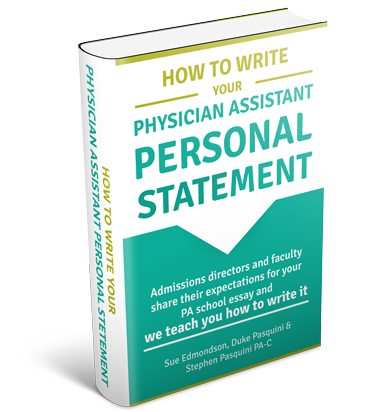
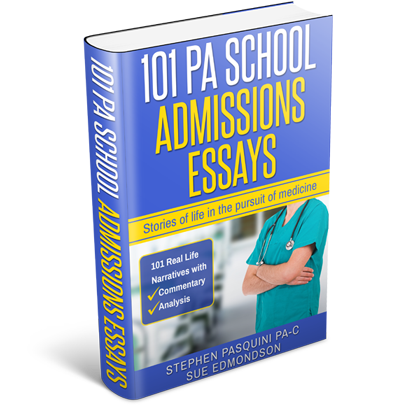
We even wrote a book about it.
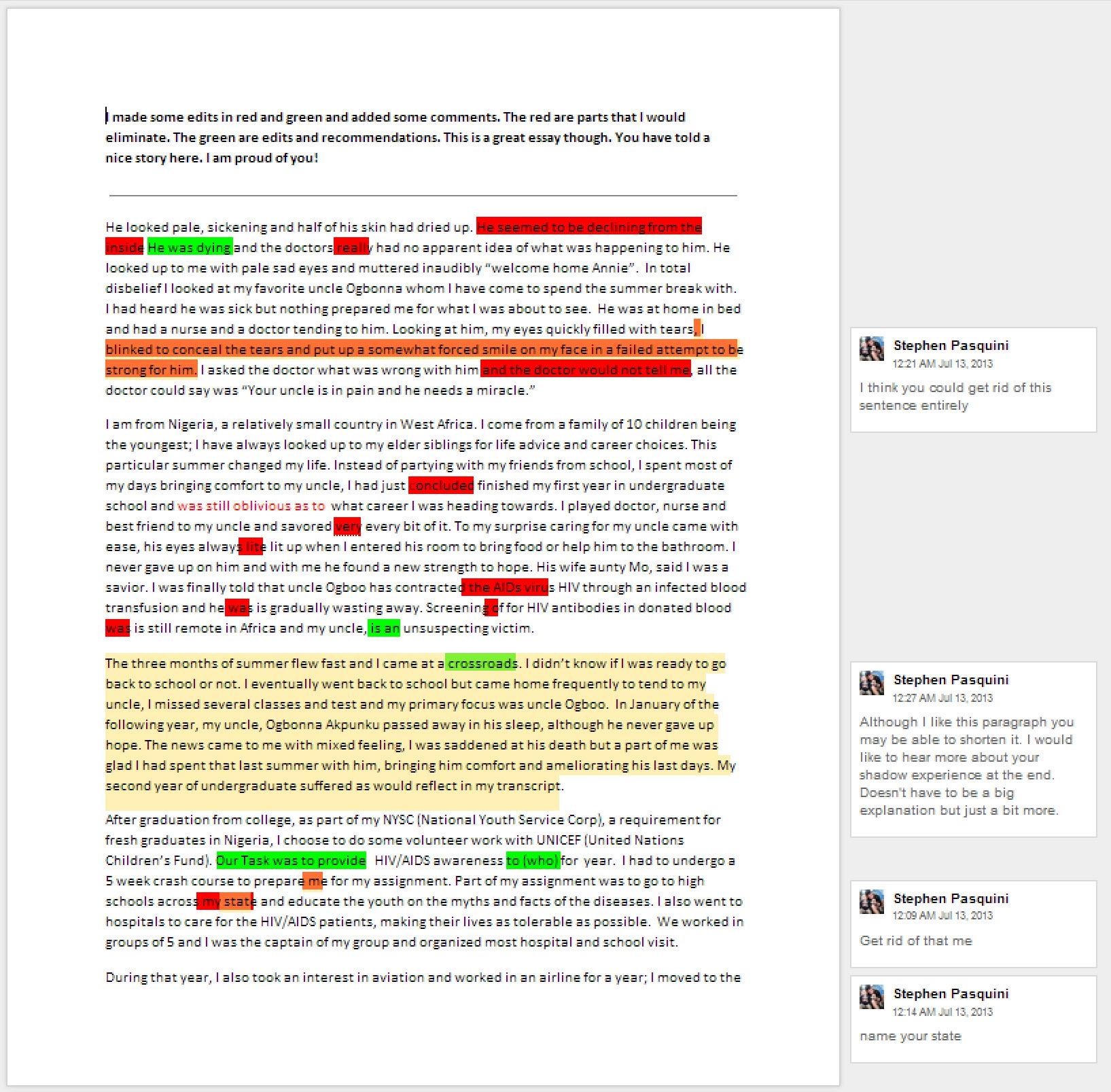 To collaborate, we use our private PA Life Editing Desk alongside Microsoft Word and Google Docs. Right after checkout, you upload your draft and any program instructions into your secure Editing Desk workspace. For every edit, your editor provides a redlined copy with tracked changes and margin comments, a clean polished copy, and detailed written editorial feedback—plus direct messaging with your editor on desktop or mobile so you can review and revise on the go!
Our team has worked with hundreds of PA school applicants through the Personal Statement Collaborative and Editing Desk, and we have had enormous success.
The Physician Assistant Essay and Personal Statement Collaborative
I have set up two options that I hope will offer everyone a chance to participate:
- One-of-a-kind, confidential, paid editing for your personal statement and every CASPA essay (Life Experiences, technology and supplementals)
- A collaborative, free one (in the comments section)
Private, One-On-One Personal Statement Review Service
If you are interested in the paid service, you may choose your plan below.
The Personal Statement Review Service is:
- Behind closed doors within our private, secure PA Life Editing Desk (supporting Microsoft Word, PDF, and Google Docs).
- Completely interactive: you receive a redlined copy showing every suggested edit and comment, a clean edited copy, and detailed written feedback—plus direct messaging with your editor.
- 1-on-1 phone consultation included with our One-on-One Collaborative package. It’s often hard to communicate every nuance of your story in writing alone—so our One-on-One Collaborative includes a 30-minute phone consultation with your editor alongside comprehensive editing and written feedback.
- We provide both revision and editing of all essays. What’s the difference? See below
- We will provide feedback, advice, and help with brainstorming and topic creation if you would like.
- We will help with a “final touch-up” before the big day, just in case your essay needs a few minor changes.
Why Choose Our Service?
- It’s not our opinion that matters. We have gone the extra step and personally interviewed PA school administrators from across the US to find out exactly what they think makes a personal statement exceptional.
- We are a team of PAs and professional writers, having worked over ten years with PA school applicants like yourself, providing countless hours of one-on-one editing and revision.
- Our clients receive interviews, and many go on to receive acceptance into their PA School of choice.
Because we always give 100%, we will open the essay collaborative for a limited number of applicants each month and then close this depending on the amount of editing that needs to be done and the time that is available.
Our goal is not quantity but quality. We want only serious applicants who are serious about getting into PA school.
Writing is not a tool like a piece of software but more like how a photograph can capture your mood. It’s more like art. The process of developing a unique, memorable personal statement is time-intensive, and it takes hours to compose, edit, finalize, and personalize an essay.
As Antoinette Bosco once said:
And this is why I am charging for this service. We love helping people find stories that define their lives, and we love helping individuals who have the passion to achieve their dreams. It’s hard to describe the feeling I get when an applicant writes back to tell me they were accepted into PA school.
There is no price tag I can place on this; it’s the feeling we get when we help another human being. It’s just like providing health care. But this takes time.
Interested? Choose your plan below
Read more client testimonials.
Free Personal Statement Review
Post your essay in the comments section for a free critique
We want to make this opportunity available to everyone who would like help with their essay, and that is why we are offering free, limited feedback on the blog.
You post your essay in the comments section, and you will get our critique. It is that easy. We will try to give feedback to every single person who posts their COMPLETE essay here in the comments section of this blog post.
Also, by posting your comment, we reserve the right to use your essay.
We will provide feedback on essays that are complete and fit the CASPA requirements (View CASPA requirements here). We will not provide feedback on partial essays or review opening or closing statements. Your essay will be on a public platform, which has both its benefits and some obvious drawbacks. The feedback is limited, but we will try to help in any way we can.
Note: Comment Rules: Remember what Fonzie was like? Cool. That’s how we’re gonna be — cool. Critical is fine, but if you’re rude, I will delete your stuff. Otherwise, have fun, and thanks for adding to the conversation! And this should go without saying: if you feel the need to plagiarize someone else’s content, you do not deserve to go to PA school.
* Also, depending on the time of year, it may take me several weeks to reply!
We love working with PA school applicants, but don't just take our word for it!
How to submit your essay for the paid service
If you are serious and would like to have real, focused, and personalized help writing your personal statement, please choose your level of service below. After checkout, you will be taken directly to the PA Life Editing Desk to upload your draft and special instructions so Beth Eakman, Dr. Jessica Ryan Wheeler, or Carly Hallman can begin work right away.
Pricing is as follows:
The Personal Statement: One-Time Edit
A one-time edit consists of so much more than a typical correction of grammar and spelling. Not only do we correct those mistakes, but we also highlight issues such as the need for stronger transitions and clinical detail, and identify awkward phrasing, flow, or theme problems.
To ensure your essay shines within the 5,000-character CASPA limit, you receive a redlined copy showing every suggested edit and margin comment, a clean polished copy, and detailed written editorial feedback illustrating how to strengthen your narrative. You can also add a discounted 2nd editing round at checkout or inside the Editing Desk.
1-on-1 Personal Statement Editing Collaborative
One-on-one personal statement editing combines comprehensive written editing with a personal 1-on-1 phone or Zoom consultation with our senior editors. We work closely with you across two full editing rounds and a 30-minute consultation to ensure your essay is polished, memorable, and ready to earn PA school interviews. (Read the reviews by many of our previous clients.)
Here are the steps we follow:
- Dedicated Senior Editor: You are matched with your professional editor in the private PA Life Editing Desk.
- First Deep-Dive Edit & Critique: We read your draft closely, tightening unnecessary words and sentences while providing detailed margin comments, structural recommendations, a redlined copy, and a clean working copy.
- 1-on-1 Phone or Zoom Consultation (30 Minutes): We schedule a time to talk through your working draft paragraph by paragraph—clarifying your strongest clinical moments and drawing out details that make your story unmistakably yours.
- Guided Revision: You refine your draft using our discussion and notes (with every version safely saved in your Editing Desk workspace or Google Docs).
- Second Polish & Final CASPA Check: Your editor completes a second comprehensive editing round so you can hit submit on CASPA with complete confidence.
CASPA Life Experiences & Technology Essay Editing
Each essay gets just 2,500 characters, so every sentence has to earn its place. Your editor helps you choose the right story, connect it to the patients you'll serve, and keep it from repeating your personal statement.
CASPA Essay Bundles
Edit your personal statement and Life Experiences essay together, so the two tell different stories instead of repeating each other. Add the technology essay with the Complete bundle. One order, one combined document per round.
Supplemental & Secondary Essay Editing
Supplemental applications are a gift to you as an applicant—an opportunity to showcase personal traits, program fit, and life experiences that weren’t covered in your main CASPA narrative. Because you usually only have 250–750 words to answer a specific prompt, every sentence needs to stay laser-focused on what that program’s admissions committee is asking.
We use a tiered pricing structure based on character and word count so you pay only for what you need (select your essay length below):
How checkout & draft upload work: All credit/debit card and PayPal payments are processed over a secure HTTPS checkout. Immediately after payment, you are directed to the PA Life Editing Desk where you upload your essay draft, share any program prompts or instructions, and access your free Personal Statement eBook & audiobook bonuses.
Also need help with your CV? Check out PA School & Clinical Résumé/CV Editing ($195) or compare all packages on our Editing Services Hub →. Questions? Email stephen@thepalife.com anytime.
Writing and Revision
All writing benefits from rewriting when done well.
When you are in the process of writing a draft of an essay, you should be thinking first about revision, not editing.
What’s the difference?
Revision refers to the substantial changing of text. For example, it may include re-organizing ideas and paragraphs, providing additional examples or information, and rewriting a conclusion for clarity.
Editing, on the other hand, refers to correcting mistakes in spelling, grammar, and punctuation.
We perform both revision and editing on all submissions.
How to submit your PA school essay for the FREE editing service
Follow the rules above and get to work below in the comments section. I look forward to reading all your essay submissions.
– Stephen Pasquini PA-C
View all posts in this series
- How to Write the Perfect Physician Assistant School Application Essay
- The Physician Assistant Essay and Personal Statement Collaborative
- Do You Recognize These 7 Common Mistakes in Your Personal Statement?
- 7 Essays in 7 Days: PA Personal Statement Workshop: Essay 1, “A PA Changed My Life”
- PA Personal Statement Workshop: Essay 2, “I Want to Move Towards the Forefront of Patient Care”
- PA Personal Statement Workshop: Essay 3, “She Smiled, Said “Gracias!” and Gave me a Big Hug”
- PA Personal Statement Workshop: Essay 4, “I Have Gained so Much Experience by Working With Patients”
- PA Personal Statement Workshop: Essay 5, “Then Reach, my Son, and Lift Your People up With You”
- PA Personal Statement Workshop: Essay 6, “That First Day in Surgery was the First Day of the Rest of my Life”
- PA Personal Statement Workshop: Essay 7, “I Want to Take People From Dying to Living, I Want to Get Them Down From the Cliff.”
- Physician Assistant Personal Statement Workshop: “To say I was an accident-prone child is an understatement”
- 9 Simple Steps to Avoid Silly Spelling and Grammar Goofs in Your PA School Personel Statement
- 5 Tips to Get you Started on Your Personal Essay (and why you should do it now)
- How to Write Your Physician Assistant Personal Statement The Book!
- How to Write “Physician Assistant” The Definitive PA Grammar Guide
- 101 PA School Admissions Essays: The Book!
- 5 Things I’ve Learned Going Into My Fourth Physician Assistant Application Cycle
- 7 Tips for Addressing Shortcomings in Your PA School Personal Statement
- The #1 Mistake PRE-PAs Make on Their Personal Statement
- The Ultimate PA School Personal Statement Starter Kit
- CASPA Character Limits: Every Essay and How to Count Them
- 10 Questions Every PA School Personal Statement Must Answer
- 5 PA School Essays That Got These Pre-PAs Accepted Into PA School
- 7 Questions to Ask Yourself While Writing Your PA School Personal Statement
- 101 PA School Applicants Answer: What’s Your Greatest Strength?
- 12 Secrets to Writing an Irresistible PA School Personal Statement
- 7 Rules You Must Follow While Writing Your PA School Essay
- You Have 625 Words and 2.5 Minutes to Get Into PA School: Use Them Wisely
- What’s Your #1 Personal Statement Struggle?
- 31 CASPA PA School Personal Statement Examples
- How to Prepare for Your PA School Interview Day Essay
- Should You Write Physician Associate or Physician Assistant on Your PA School Essay?
- Meet the World’s Sexiest PA School Applicants
- PA School Reapplicants: How to Rewrite Your PA School Essay for Guaranteed Success
- How to Write a Personal Statement Intro that Readers Want to Read
- PA School Reapplicant Personal Statement Checklist
- How to Deal with Bad News in Your Personal Statement
- Inside Out: How to use Pixar’s Rules of Storytelling to Improve your PA Personal Statement
- Ratatouille: A Pixar Recipe for PA School Personal Statement Success
- Personal Statement Panel Review (Replay)
- Mind Mapping: A Tool for Personal Statements, Supplemental Essays, and Interviews
- Start at the End: Advice for your PA School Personal Statement
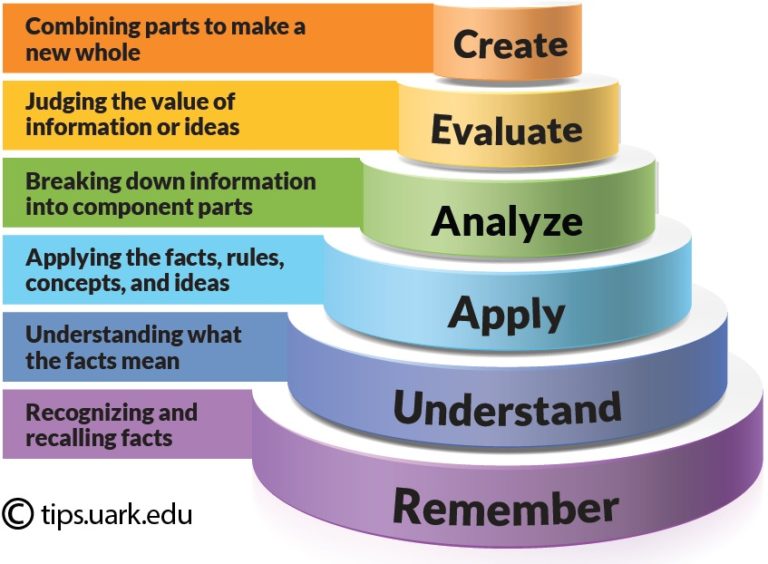
- Elevate Your Personal Statement: Using Bloom’s Taxonomy for Impactful Writing
- How to Write a Captivating Hook for Your PA School Personal Statement
- 3 Surprising Truths About the New CASPA Life Experiences Essay (And Why You Can’t Ignore It)
- 3 PA School Personal Statement Mistakes Our Editor Sees Again and Again
You may also like
 Elevate Your Personal Statement: Using Bloom’s Taxonomy for Impactful WritingThe most common advice writers often give pre-PAs is to "show, don't tell" in your essays. (Though we like to encourage showing …
 Who Gets Into PA School in 2026? Here’s What You Need to KnowLeslie Mean is a 23-year-old single white female who presents to the PA school admissions committee on her second attempt to get …
 200+ PA Schools That Don’t Require the GREAre you like me and looking to dodge the GRE? Does the thought of studying for the GRE exam make your palms …

At Hunterdon Medical Center, I was the only volunteer assigned to a floor with thirty patient rooms. My shift was a steady rhythm of shuffling feet, ringing call lights, and beeping monitors. I was quick to fall into a routine of completing tasks, knowing there was always someone waiting for help. One afternoon, a patient asked for help walking to the bathroom, and we discussed our common interest in gardening. As she spoke about the different flowers, herbs, and vegetables she planned to plant that year, I watched the tension in her face fade. After our conversation, she thanked me for listening to her stories. She shared how lonely she had felt in the hospital, and how much our conversation had cheered her up. When I walked out of the hospital that day, I realized the importance of addressing someone’s emotional needs as well as their physical needs. Since then, I have become more intentional about slowing down and connecting with patients.
As I trailed behind Danielle Gogerty, PA-C, at a busy urgent care clinic, I didn’t finish closing the door before the patient expressed his frustration about his eyes. Before entering his room, the certified medical assistant (CMA) told Danielle that his symptoms had not improved since his last visit. After reviewing his chart, Danielle asked how he applied the medication. He explained that the ointment was difficult to apply and he wasn’t applying it consistently. She suggested eye drops for an easier application and provided written instructions. After we left the room, she explained that the medication’s effectiveness depends partially on the patient’s ability to follow the treatment plan. She clarified that while an antibiotic ointment can be an effective treatment, it is not the best option for every patient. This experience demonstrated that effective clinical decision-making should consider not only medical treatment but also patient adherence. This reinforced my desire to become a PA, where I can use my medical knowledge to develop treatment plans tailored to each patient’s needs.
Throughout my CMA internship at a pediatric office, I learned to adapt my communication and use creativity to help patients feel comfortable during their visits. Part of my role was using the photo screener at two-year-old well visits to check the patient’s vision. For one patient, I had difficulty completing the vision screening because the child wouldn’t stay still. Her parents and I tried everything to capture the image, but she kept shaking her head and hugging her stuffed dog. Drawing on my experience working at a daycare, I remembered how well children respond to imitation and opportunities to participate. I started pretending to take pictures of her parents’ eyes, which caught her attention. I then asked if she would help check her dog’s eyes. She held the dog still long enough for me to complete the vision screening.
I applied what I had learned from shadowing multiple MAs and observing how they handled difficult conversations with patients and their families. One patient was due for routine vaccinations at their two-month well visit. I watched the parents’ expressions change from attentive to uneasy, leading me to ask if they had any concerns. I explained the number of injections the child would receive, reviewed each vaccine, and provided the Vaccine Information Sheets(VIS). As I observed the physician’s approach to discussing childhood vaccinations with parents, I came to understand the importance of medical knowledge in helping patients and their families make informed healthcare decisions. This experience reinforced my desire to become a PA where I can educate patients, address their concerns, and advocate for their health.
Working as a CMA in a dermatology office, I observed how a routine procedure could turn into an emotional experience for the patient. During a microneedling procedure, the physician noticed a pink spot that she expressed concern about as a possible skin cancer. After the biopsy, I reviewed the wound care instructions for the patient, and I noticed she started tearing up. She explained her husband had passed away from melanoma and that she was anxious about what her own results might reveal. I reassured her and listened as she shared her fears, and in that moment I realized she needed support during an uncertain time. At her next full-body skin check, she expressed her gratitude to the entire staff for our support.
My healthcare experiences have strengthened my interest in continuing to learn, expanding my clinical skills, and developing trusting relationships with patients. As a PA, I aim to apply my medical knowledge and clinical decision-making skills while collaborating with other healthcare professionals. I hope to develop individualized treatment plans that address each patient’s needs and ensure they feel supported and informed throughout their care.
Hi Shalini,
You added a PA. Danielle and the eye ointment is exactly the kind of scene I was hoping for: she checks the chart, asks how he’s actually using the medication, and switches him to drops he can manage. That’s clinical reasoning a reader can watch. The bathroom repeat and the postpartum lines are gone too.
What’s left:
The ending. You cut the old tangled recap, but a new one grew back in its place. That last paragraph could sit at the end of anyone’s essay. Your dermatology patient thanking the whole staff at her next skin check is still the right final image. I wrote a post on endings if it helps:
https://www.thepalife.com/start-at-the-end-advice-for-your-pa-school-personal-statement/
Why PA. After the Danielle story you write that you want to “use my medical knowledge to develop treatment plans tailored to each patient’s needs.” A physician or NP could say the same. What did you see in her, specifically, that made this the job you want?
The vaccine paragraph is muddy. You explain the injections, then “observed the physician’s approach.” Who did the talking? Make your part clear.
Small things: “become a PA where I can” shows up twice and needs a comma both times. “Sheets(VIS)” needs a space, and the CDC calls them Vaccine Information Statements.
Stephen
At Hunterdon Medical Center, I was the only volunteer assigned to a floor with thirty patient rooms. My shift was a never-ending rhythm of shuffling feet, ringing call lights, and beeping monitors. I was quick to get into a routine and complete tasks as quickly as possible, since there was always someone waiting for help. One afternoon, a patient asked for help walking to the bathroom. As I guided her towards the bathroom, we discussed our common interest in gardening. As she expressed her passion for gardening, I watched the tension in her face fade. After we talked for a few minutes, she thanked me for taking the time to talk to her. She expressed how lonely she felt in the hospital and how this improved her mood. When I walked out of the hospital that day, I realized that taking care of someone goes beyond their physical needs, and it is important to meet their emotional needs as well. From that moment, I became more deliberate about slowing down and connecting with patients outside of their primary needs.
Shadowing a physician assistant at a hematology and oncology practice and observing her patient interactions reinforced my interest in the profession. When the PA had a question about the medication dosage, she discussed it with the physician to ensure the correct dosage. Their collaboration illustrated how PAs contribute their clinical expertise while working alongside physicians to make informed decisions. I was also drawn to the PA’s part in addressing the patient’s concerns. When a patient was confused about their treatment plan, the PA explained that the medication needed insurance approval and assured the patient that the treatment plan wouldn’t be affected. After speaking with the patient, she explained her clinical reasoning behind how she approached each visit and assessed what was best for the patient, which deepened my interest in the PA profession. I am eager to pursue a career as a physician assistant for its focus on medical knowledge and clinical skills, including the ability to assess patients, diagnose conditions, and develop individualized treatment plans.
As a part of my medical assistant program, I completed an internship at a pediatric office. This experience taught me that treating children often includes supporting their families as well. For all well-child visits up to 6 months, we were required to have the mother fill out a postpartum depression screening. The providers would assess their answers and provide the appropriate resources needed. I shadowed multiple medical assistants and observed how they handled difficult conversations with patients and their families. These experiences taught me that patient-centered care involves not just addressing the patient’s concerns but also their support system. I applied this to my own patient interactions. One patient was due for their two-month vaccinations at their well-child visit. I watched the parents’ expressions change from attentive to uneasy, leading me to ask if they had any concerns. I explained the number of injections the patient would receive and reviewed each vaccine. I also provided the parents with the vaccine information sheets so they could make an informed decision. I observed how the provider validated their concerns while explaining the importance of immunizations. Once the parents had all of the information, they were able to make an informed decision to vaccinate their child. This interaction allowed me to communicate clearly with the patient’s parents by addressing each concern, which helped them feel at ease with their care. This interaction reinforced the importance of helping patients and their families feel informed and supported when making healthcare decisions.
Working as a medical assistant in a dermatology office, I observed what started as a standard appointment for the patient evolve into an emotional experience. During a microneedling procedure, the physician noticed a pink spot that stood out as possible skin cancer. Once the area was removed, I discussed how the patient would care for it over the following week, and I noticed the patient started to tear up. She explained that her husband had passed away from melanoma and that she was anxious about what her own results might reveal. I reassured her and listened as she voiced her fears, realizing in that moment she needed someone who would recognize her concerns. This encounter taught me that even short interactions can have a lasting effect when patients feel heard and supported during uncertain moments. At her next full-body skin check, she expressed her gratitude to the entire staff for supporting her during an uncertain time. As a future physician assistant, I aim to build trusting relationships with patients by integrating empathy along with my clinical knowledge that also addresses the fears and uncertainties that come with their care.
Hi Shalini,
This draft is a lot stronger. You moved the gardening patient to the top, cut the “confident in my skills” ending, and “physician assistant” is lowercase all the way through now.
The new dermatology story is the best thing in the essay. A routine microneedling visit, a pink spot, and a woman in tears because her husband died of melanoma. Then she comes back for her next skin check and thanks the whole staff. That’s your ending. Right now you go one sentence further with “integrating empathy along with my clinical knowledge that also addresses the fears and uncertainties,” which is a recap, and a tangled one. Stop on her.
Why PA is still the weak spot. “Assess patients, diagnose conditions, and develop individualized treatment plans” describes physicians and NPs too. You watched that PA check a dose with the physician and then walk you through her reasoning. What about that made you want this role and not another? One or two honest sentences would do it.
Watch the lesson sentences: “This experience taught me,” “These experiences taught me,” “This encounter taught me,” and two “This interaction” sentences back to back in the pediatrics paragraph. Your stories already make those points, so cut most of them. That paragraph also says “informed decision” twice, and the postpartum screening lines don’t connect to anything you did.
Small fixes: “walking to the bathroom. As I guided her towards the bathroom” repeats itself, and “the PA’s part” reads better as “role.”
You’re right up against the 5,000-character limit, so those cuts also buy you room for the why PA lines.
Stephen
When the teacher explained the group activity for the day, my mind played through all the worst-case scenarios if I volunteered. What if I made the wrong cut and ruined the dissection for the entire class? Even though I was anxious, I volunteered, and my teacher asked me to come to the front of the room. I stared down at the cow eye as my hands shook while I picked up the blade. As my teacher guided me through each step of the dissection, my confidence increased with each incision. I have always been shy and reserved in class, so volunteering in front of my classmates was a turning point. Through this experience, I learned that my curiosity outweighed my fear. While I was intimidated by the challenge, my excitement at learning a new skill led me outside my comfort zone. What started as a decision to challenge myself led me to pursue a career as a Physician Assistant to develop clinical skills to care for patients.
During my time shadowing at an oncology and hematology practice, what stood out to me was the collaborative dynamic between the physician assistants and physicians. When the PA had a question about the medication dosage, she discussed it with the physician to ensure the correct dosage. Their collaboration illustrated how they worked together to ensure that patients received the appropriate care. When a patient called the office, confused about their treatment plan, they were scheduled with the physician assistant the next day. The PA explained that the medication needed to be approved by insurance and assured the patient that this wouldn’t affect their treatment plan. This interaction helped me understand how PAs can improve patients’ access to care by promptly addressing their concerns. When I began volunteering at the hospital, I applied what I had observed while shadowing by creating an environment where patients felt comfortable asking questions.
At Hunterdon Medical Center, I was the only volunteer assigned to a floor with thirty patient rooms. My shift was a never-ending rhythm of fresh linens, call lights, monitors beeping, and helping patients in and out of bed. This made it easy to get into a rhythm and complete tasks as quickly as possible, since there was always someone waiting. One afternoon, a patient asked for help walking to the bathroom. As I guided her towards the bathroom, we discussed our interest in gardening. As she expressed her passion for gardening, her tense expression softened. After we talked for a few minutes, she thanked me for taking the time to talk to her. She expressed how lonely she feels in the hospital and how this improved her mood. When I walked out of the hospital that day, I realized that taking care of someone goes beyond their physical needs, and it is important to meet their emotional needs as well. From that moment, I became more deliberate about slowing down and connecting with patients outside of their primary needs. I realized how much I enjoyed interacting with patients, which inspired me to pursue a medical assistant program to take on greater responsibilities in patient care.
As a part of my medical assistant program, I completed an internship at a pediatric office. I shadowed multiple medical assistants and watched them handle difficult conversations with patients and their support systems. I was able to take what I have learned from them and apply it to my own patient interactions. One patient was due for their two-month vaccinations at their appointment. I watched the parents’ expressions change from attentive to uneasy, leading me to ask if they had any concerns. I was able to guide the conversation toward discussing each vaccine and the total number of injections the patient would receive. I also provided the parents with the vaccine information sheets so they would be better informed and could ask any questions. After our discussion and a conversation with the physician, the parents felt comfortable agreeing to have their child vaccinated. This interaction allowed me to communicate clearly with the patient’s parents by addressing each concern, which helped them feel at ease with their care. This taught me the importance of addressing the concerns of the patient’s support system as well.
Through increasingly difficult experiences, I have matured from someone shy, reserved, and uncertain into someone very confident in their clinical, interpersonal, and communication skills. The opportunities I have had in healthcare have allowed me to deepen my knowledge, build meaningful relationships, and handle difficult conversations with confidence. These experiences have taught me to welcome new challenges as a way to continue growing and identify my strengths. As I reflect on my own growth, I am eager to take on the new challenges of PA school as I continue developing professionally and personally toward becoming a physician assistant.
Hi Shalini,
The two-month vaccine visit is your best moment. You saw the parents go from attentive to uneasy, asked what was worrying them, walked them through each shot, and gave them the vaccine information sheets. That paragraph shows the communication skills you claim at the end better than the claim does.
Here’s what I’d work on, in order.
Open with a patient, not the cow eye. The dissection is a nice story about getting past shyness, but the jump from a classroom to “pursue a career as a Physician Assistant” is too big. The vaccine visit or your gardening patient at Hunterdon would hook a reader faster.
Your shadowing paragraph describes what the PA did more than what it meant to you. Why PA and not nursing or medicine? This is the spot to say it.
Cut the last paragraph down hard. “Someone very confident in their clinical, interpersonal, and communication skills” is you grading yourself. Let the stories do that, and end on a patient instead of a recap.
A few small fixes: “how lonely she feels” should be “felt,” and “what I have learned from them” should be “had learned.” You also switch between “Physician Assistant” and “physician assistant,” so pick lowercase and stick with it.
You’re at about 4,900 characters, so trimming that last paragraph also buys you room.
Stephen
When the teacher explained the group activity for the day, my mind played through all the worst-case scenarios if I volunteered. What if I made the wrong cut and ruined the dissection for the entire class? Even though I was anxious, I volunteered, and my teacher asked me to come to the front of the room. I stared down at the cow eye as my hands shook while I picked up the blade. As my teacher guided me through each step of the dissection, my confidence increased with each incision. I have always been shy and reserved in class, so volunteering in front of my classmates was a turning point. Through this experience, I learned that my curiosity outweighed my fear. While I was intimidated by the challenge, my excitement at learning a new skill led me outside my comfort zone. What started as a decision to challenge myself led me to pursue a career as a Physician Assistant to develop clinical skills to care for patients.
During my time shadowing at an oncology and hematology practice, what stood out to me was the collaborative dynamic between the physician assistants and physicians. When the PA had a question about the medication dosage, she discussed it with the physician to ensure the correct dosage. Their collaboration illustrated how they worked together to ensure that patients received the appropriate care. When a patient called the office, confused about their treatment plan, they were scheduled with the physician assistant the next day. The PA explained that the medication needed to be approved by insurance and assured the patient that this wouldn’t affect their treatment plan. This interaction helped me understand how PAs can improve patients’ access to care by promptly addressing their concerns. When I began volunteering at the hospital, I applied what I had observed while shadowing by creating an environment where patients felt comfortable asking questions.
At Hunterdon Medical Center, I was the only volunteer assigned to a floor with thirty patient rooms. My shift was a never-ending rhythm of fresh linens, call lights, monitors beeping, and helping patients in and out of bed. This made it easy to get into a rhythm and complete tasks as quickly as possible, since there was always someone waiting. One afternoon, a patient asked for help walking to the bathroom. As I guided her towards the bathroom, we discussed our interest in gardening. As she expressed her passion for gardening, her tense expression softened. After we talked for a few minutes, she thanked me for taking the time to talk to her. She expressed how lonely she feels in the hospital and how this improved her mood. When I walked out of the hospital that day, I realized that taking care of someone goes beyond their physical needs, and it is important to meet their emotional needs as well. From that moment, I became more deliberate about slowing down and connecting with patients outside of their primary needs. I realized how much I enjoyed interacting with patients, which inspired me to pursue a medical assistant program to take on greater responsibilities in patient care.
As a part of my medical assistant program, I completed an internship at a pediatric office. I shadowed multiple medical assistants and watched them handle difficult conversations with patients and their support systems. I was able to take what I have learned from them and apply it to my own patient interactions. One patient was due for their two-month vaccinations at their appointment. I watched the parents’ expressions change from attentive to uneasy, leading me to ask if they had any concerns. I was able to guide the conversation toward discussing each vaccine and the total number of injections the patient would receive. I also provided the parents with the vaccine information sheets so they would be better informed and could ask any questions. After our discussion and a conversation with the physician, the parents felt comfortable agreeing to have their child vaccinated. This interaction allowed me to communicate clearly with the patient’s parents by addressing each concern, which helped them feel at ease with their care. This taught me the importance of addressing the concerns of the patient’s support system as well.
Through increasingly difficult experiences, I have matured from someone shy, reserved, and uncertain into someone very confident in their clinical, interpersonal, and communication skills. The opportunities I have had in healthcare have allowed me to deepen my knowledge, build meaningful relationships, and handle difficult conversations with confidence. These experiences have taught me to welcome new challenges as a way to continue growing and identify my strengths. As I reflect on my own growth, I am eager to take on the new challenges of PA school as I continue developing professionally and personally toward becoming a physician assistant.
Hi Shalini,
I replied to the other copy of this essay you posted on October 18, so you’ll find my notes there.
Stephen
One rarely expects a gynecological appointment to change how they understand patient care. And yet – as my OBGYN physician assistant Laura explained exactly what to expect and my right to decline at any point – I felt that my expectations for patient-provider communication had been irreversibly raised. Laura made me feel comfortable and confident at a time that was decidedly uncomfortable and vulnerable. In my paper gown, sitting at the very end of a cold exam table, I thought, “I want to be able to do what she does.” While Laura may have been my introduction to the physician assistant field, her influence was not the last. Through experiences with both providers and patients alike, I developed a desire to diagnose, create treatment plans, and have the flexibility to pursue different fields of interest throughout my career.
In my work at Roswell Park Comprehensive Cancer Center, an unfortunate but unavoidable occurrence is caring for patients and interacting with family members during the worst time in their lives. This has required me to carry out my responsibilities effectively toward people in pain and in distress. Patients may receive unexpected news about their prognosis or may be navigating difficult decisions about their course of care. In these situations, I am continuing to develop an ability to respond effectively to patients’ needs in the way that Laura responded to mine. A time in which I felt proud of the quality of patient care that I provided was when assisting a patient experiencing anxiety during the last hours of their life. During this experience, I notified the assigned nurse and attempted to comfort the patient until the appropriate medication was administered. The patient was experiencing anxiety in conjunction with declining oxygen levels, in a cycle of increasing breathlessness and distress. In an effort to distract the patient, I commented on their well-maintained silver nails, pointing out that silver really goes with any color, including the blue hospital gowns (which are notoriously difficult to make fashionable). In this way, we discussed the ins and outs of nail care until the patient became comfortable again and we parted ways. When I think of this woman now, I wonder: what more could I have done for this patient had I been her provider?
Shadowing in the Cardiac ICU helped me to understand the role that the patient-provider relationship plays in providing quality care. A non-English speaker had refused a pacemaker procedure and requested to leave against medical advice. Trailing a provider on the way to the patient’s room, I puzzled over the patient’s refusal of a relatively standard, low-risk procedure and, importantly, what the provider intended to do about it. The patient insisted on leaving the hospital so that he could speak with his family members before deciding on the surgery. Between the communication barrier and a lack of patient-provider rapport, the provider was not able to dissuade the patient from his decision, despite the inherent risk. Ultimately, the patient refused the pacemaker procedure and left against medical advice with a bradycardic heart rate of 40 bpm. In that moment, I saw a colossal divide between the provider’s intended message and the patient’s reception. Watching their interaction, I wanted to use the interpersonal skills I learned through my patient care experience to build the patient’s trust, but I also needed the medical experience to earn it. I wondered: what could I have done differently had I been his provider?
I feel that a physician assistant degree will help me to answer these questions. My undergraduate education, particularly through my chemistry coursework, has helped prepare me to handle rigorous, fast-paced learning environments. In my first-year general chemistry courses, I struggled to make connections between new material and prior knowledge, which was reflected in my grades. Recognizing a need to change my approach, I began to focus my studying on applying and relating concepts. By organic chemistry and, later, biological chemistry, I had made significant progress both academically and in understanding how I best learn difficult material. In all, these courses taught me to approach challenges with a willingness to adapt and grow.
In all, a physician assistant education would provide me with the medical knowledge to complement the interpersonal skills I have developed during my clinical experience. I believe that this degree will allow me to find a fulfilling career in medicine, providing high-quality care through genuine human connection.
Hi Grace,
Thanks for posting your essay. The paper gown on the cold exam table and the conversation about silver nail polish are two of the best moments I’ve read in a while. Build the whole essay around them.
Start in the room. “One rarely expects a gynecological appointment to change how they understand patient care” is a lot of warm-up before the good part. Try opening with “In my paper gown, sitting at the very end of a cold exam table…” and let Laura explaining your right to decline do the work. Later in that paragraph, the line about wanting to “diagnose, create treatment plans, and have the flexibility to pursue different fields” is the one spot that sounds like everyone else’s essay. Tie it to something you saw, or cut it.
At Roswell Park, tell us what your job is. Are you a patient care tech, a volunteer, something else? The reader needs that before the story lands. I’d also rework “an unfortunate but unavoidable occurrence is caring for patients.” Caring for patients is the job you want. What you mean is being with people on the worst days of their lives. The silver nails story itself I would barely touch. “Notoriously difficult to make fashionable” made me smile.
In the CICU story, was the provider you shadowed a PA? If so, say so. Right now Laura is the only PA in your essay. Keep the focus on the gap you noticed between what the provider meant and what the patient heard, so it doesn’t read like you’re criticizing the provider.
You end two paragraphs asking what you could have done “had I been” the provider. I like that as a refrain, but the ending has to answer it. Right now the last paragraph turns to finding “a fulfilling career in medicine,” which is about you, not your patients. Go back to Laura or the woman with the silver nails and tell us what kind of PA you’ll be for the next patient sitting in that gown.
The chemistry paragraph is fine, but it can be two or three sentences. Spend the space you save on the CICU reflection or on why PA.
A couple of small things: you start two sentences in a row with “In all,” and most of the “I feel that” and “I believe that” phrases can go. Run the final version through a character counter to make sure you’re under CASPA’s 5,000 characters with spaces.
This is a strong draft. The stories are already there. It mostly needs trimming and a better ending.
If you want more help, my book How to Write Your Physician Assistant Personal Statement walks through all of this, and our editors can work with you one on one.
Keep up the great work, Grace!
Best,
Stephen