
Are you ready to get started? Choose your package, and we will begin today!
Single Edit One-on-one Service Supplemental Essays
Your success is our passion. (See just some of our 100's of testimonials and comments below). We are ready to help. Our current PA school essay editing service status (20th October 2026): Accepting New Submissions

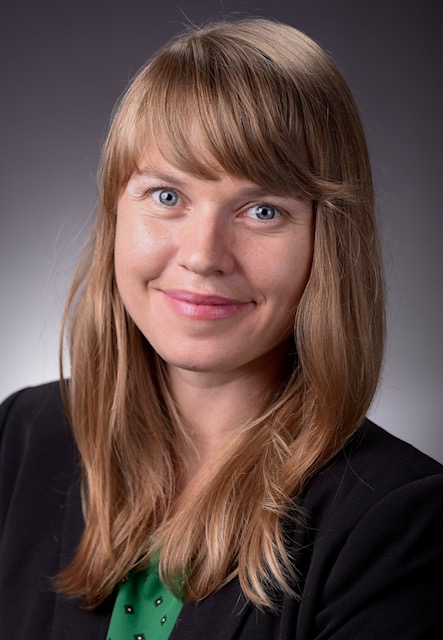
(Photo: Me circa 1987, just thinking about my future PA School Essay)
- Are you struggling to write your physician assistant personal statement?
- Are you out of ideas, or just need a second opinion?
- Do you want an essay that expresses who you truly are and grabs the reader's attention in the required 5,000-character limit?
We are here to help perfect your PA school essay
I have written countless times on this blog about the importance of your personal statement in the PA school application process. Beyond the well-established metrics (GPA, HCE/PCE hours, requisite coursework, etc.), the personal statement is the most crucial aspect of your application.
This is your time to express yourself, show your creativity, skills, and background, and make a memorable impression in seconds. This will be your only chance, so you must get it right the first time.
For some time, I had been dreaming about starting a physician assistant personal statement collaborative.
A place where PA school applicants like yourself can post their PA school essays and receive honest, constructive feedback followed by an acceptance letter to the PA school of your choice!
I have been reviewing a ton of essays recently, so many in fact that I can no longer do this on my own.
To solve this problem, I have assembled a team of professional writers, editors, and PA school admissions specialists who worked to revise and perfect my PA school application essay.
 Beth Eakman has taught college writing and worked as a professional writer and editor since the late 1990s. Her projects have involved a wide range of disciplines and media, from editing scientific research and technical reports to scriptwriting for television. Her writing has appeared in academic, professional, and popular publications. Beth lives with her family just outside Austin, Texas. She enjoys the unique opportunity that The PA Life offers to combine her training as a writer and editor with her experience teaching in order to support PAs and aspiring PAs in achieving their professional goals.
 Carly Hallman is a professional writer and editor with a B.A. in English Writing and Rhetoric (summa cum laude) from St. Edward's University in Austin, Texas. She has worked as a curriculum developer, English teacher, and study abroad coordinator in Beijing, China, where she moved in 2011. In college, she was a Gilman Scholar and worked as a staff editor for her university's academic journal. Her first novel, Year of the Goose, was published in 2015, and her first memoir is forthcoming from Little A Books. Her essays and creative writing have appeared in The L.A. Review of Books, The Guardian, LitHub, and Identity Theory, among other publications.
Read more client testimonials or purchase a revision
We Work as a Team
Our team of professional editors is wonderful at cutting out the "fluff" that makes an essay lose focus and sets people over the 5,000-character limit. Their advice is always spot-on.
Sue, Sarah, and Carly are amazingly creative writers who will take your "ordinary" and turn it into entirely extraordinary.
I mean it when I say this service is one-of-a-kind! We have spent countless hours interviewing PA School admissions directors and faculty from across the country to find out exactly what it is they are looking for in your personal statement.
We even wrote a book about it.
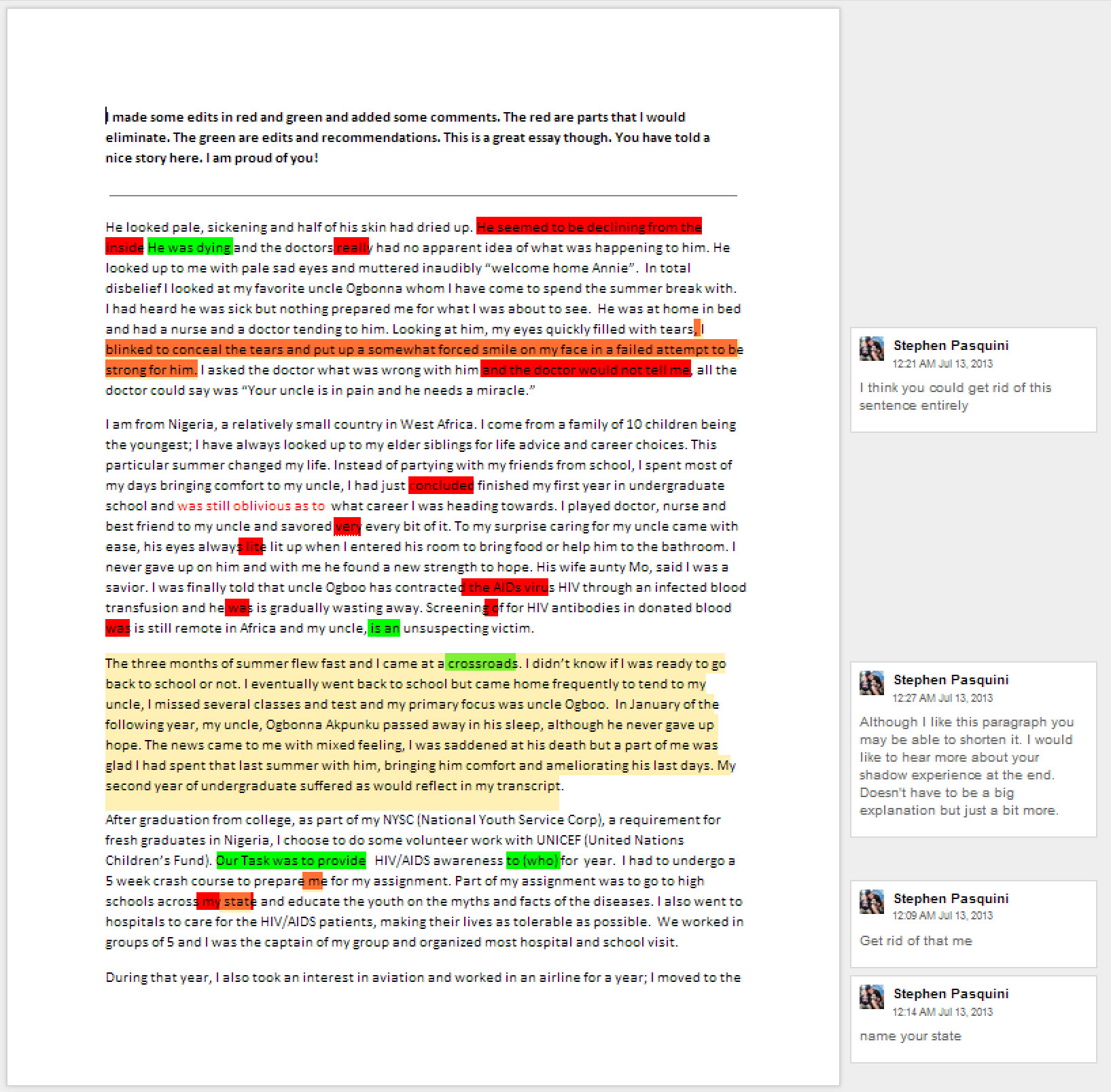 To collaborate, we use Google Drive. Google Drive is free, has an intuitive interface with integrated live comments in the sidebar, the ability to have a real-time chat, to collaborate effortlessly, and to compare, revise, or restore revisions on the fly. Google Drive also has an excellent mobile app that will allow you to make edits on the go!
Our team has worked with hundreds of PA school applicants within the Google Drive environment, and we have had enormous success.
The Physician Assistant Essay and Personal Statement Collaborative
I have set up two options that I hope will offer everyone a chance to participate:
- One-of-a-kind, confidential, paid personal statement review service
- A collaborative, free one (in the comments section)
Private, One-On-One Personal Statement Review Service
If you are interested in the paid service, you may choose your plan below.
The Personal Statement Review Service is:
- Behind closed doors within a private, secure network using Google Drive.
- It is completely interactive, meaning we will be able to provide real-time comments and corrections using the Google Drive interface.
- Telephone consultations are included with all edits above the single edit level. It’s often hard to communicate exactly what you want hundreds of miles away; for this reason, we offer the option to edit right along with us over the telephone while sharing in real-time over Google Drive. This is an option available to all our paid clients who purchase above the single edit level.
- We provide both revision and editing of all essays. What’s the difference? See below
- We will provide feedback, advice, and help with brainstorming and topic creation if you would like.
- We will help with a “final touch-up” before the big day, just in case your essay needs a few minor changes.
Why Choose Our Service?
- It’s not our opinion that matters. We have gone the extra step and personally interviewed PA school administrators from across the US to find out exactly what they think makes a personal statement exceptional.
- We are a team of PAs and professional writers, having worked over ten years with PA school applicants like yourself, providing countless hours of one-on-one editing and revision.
- Our clients receive interviews, and many go on to receive acceptance into their PA School of choice.
Because we always give 100%, we will open the essay collaborative for a limited number of applicants each month and then close this depending on the amount of editing that needs to be done and the time that is available.
Our goal is not quantity but quality. We want only serious applicants who are serious about getting into PA school.
Writing is not a tool like a piece of software but more like how a photograph can capture your mood. It’s more like art. The process of developing a unique, memorable personal statement is time-intensive, and it takes hours to compose, edit, finalize, and personalize an essay.
As Antoinette Bosco once said:
And this is why I am charging for this service. We love helping people find stories that define their lives, and we love helping individuals who have the passion to achieve their dreams. It’s hard to describe the feeling I get when an applicant writes back to tell me they were accepted into PA school.
There is no price tag I can place on this; it’s the feeling we get when we help another human being. It’s just like providing health care. But this takes time.
Interested? Choose your plan below.
Read more client testimonials.
Free Personal Statement Review
Post your essay in the comments section for a free critique
We want to make this opportunity available to everyone who would like help with their essay, and that is why we are offering free, limited feedback on the blog.
You post your essay in the comments section, and you will get our critique. It is that easy. We will try to give feedback to every single person who posts their COMPLETE essay here in the comments section of this blog post.
Also, by posting your comment, we reserve the right to use your essay.
We will provide feedback on essays that are complete and fit the CASPA requirements (View CASPA requirements here). We will not provide feedback on partial essays or review opening or closing statements. Your essay will be on a public platform, which has both its benefits and some obvious drawbacks. The feedback is limited, but we will try to help in any way we can.
Note: Comment Rules: Remember what Fonzie was like? Cool. That’s how we’re gonna be — cool. Critical is fine, but if you’re rude, I will delete your stuff. Otherwise, have fun, and thanks for adding to the conversation! And this should go without saying: if you feel the need to plagiarize someone else’s content, you do not deserve to go to PA school.
* Also, depending on the time of year, it may take me several weeks to reply!
We love working with PA school applicants, but don't just take our word for it!
How to submit your essay for the paid service
If you are serious and would like to have real, focused, and personalized help writing your personal statement, please choose your level of service and submit your payment below.
After you have submitted your payment, you will be redirected to the submissions page, where you can send us your essay as well as any special instructions. We will contact you immediately upon receipt of your payment and essay so we may begin work right away.
Pricing is as follows:
Choose your plan, then click "Buy Now" to submit your essay, and we will get started right away!
Every purchase includes a FREE digital copy of our new 100-page eBook, How to Write Your Physician Assistant Personal Statement, Our 101 PA School Admission Essays e-book, the expert panel audiobook, and companion workbook. This is a $65 value included for free with your purchase.
All credit card payments are processed via PayPal over a secure HTTPS server. Once your payment is processed, you will be immediately redirected back to the essay submission page. There, you will submit your essay along with some biographical info and all suggestions or comments you choose to provide. You will receive immediate confirmation that your essay has been securely transmitted as well as your personal copy of "How to Write Your Physician Assistant Personal Statement." Contact [email protected] if you have any questions, comments, or problems - I am available 24/7.
The hourly service includes your original edit and one-on-one time over Google Drive. It is simple to add more time if necessary, but you may be surprised at what a difference just a single edit can make. We find our four-hour service to be the most effective in terms of time for follow-up and full collaboration. We are open to reduced-rate add-ons to suit your individual needs.
Writing and Revision
All writing benefits from rewriting when done well.
When you are in the process of writing a draft of an essay, you should be thinking first about revision, not editing.
What’s the difference?
Revision refers to the substantial changing of text. For example, it may include re-organizing ideas and paragraphs, providing additional examples or information, and rewriting a conclusion for clarity.
Editing, on the other hand, refers to correcting mistakes in spelling, grammar, and punctuation.
We perform both revision and editing on all submissions.
How to submit your PA school essay for the FREE editing service
Follow the rules above and get to work below in the comments section. I look forward to reading all your essay submissions.
– Stephen Pasquini PA-C
View all posts in this series
- How to Write the Perfect Physician Assistant School Application Essay
- The Physician Assistant Essay and Personal Statement Collaborative
- Do You Recognize These 7 Common Mistakes in Your Personal Statement?
- 7 Essays in 7 Days: PA Personal Statement Workshop: Essay 1, “A PA Changed My Life”
- PA Personal Statement Workshop: Essay 2, “I Want to Move Towards the Forefront of Patient Care”
- PA Personal Statement Workshop: Essay 3, “She Smiled, Said “Gracias!” and Gave me a Big Hug”
- PA Personal Statement Workshop: Essay 4, “I Have Gained so Much Experience by Working With Patients”
- PA Personal Statement Workshop: Essay 5, “Then Reach, my Son, and Lift Your People up With You”
- PA Personal Statement Workshop: Essay 6, “That First Day in Surgery was the First Day of the Rest of my Life”
- PA Personal Statement Workshop: Essay 7, “I Want to Take People From Dying to Living, I Want to Get Them Down From the Cliff.”
- Physician Assistant Personal Statement Workshop: “To say I was an accident-prone child is an understatement”
- 9 Simple Steps to Avoid Silly Spelling and Grammar Goofs in Your PA School Personel Statement
- 5 Tips to Get you Started on Your Personal Essay (and why you should do it now)
- How to Write Your Physician Assistant Personal Statement The Book!
- How to Write “Physician Assistant” The Definitive PA Grammar Guide
- 101 PA School Admissions Essays: The Book!
- 5 Things I’ve Learned Going Into My Fourth Physician Assistant Application Cycle
- 7 Tips for Addressing Shortcomings in Your PA School Personal Statement
- The #1 Mistake PRE-PAs Make on Their Personal Statement
- The Ultimate PA School Personal Statement Starter Kit
- The Ultimate Guide to CASPA Character and Space Limits
- 10 Questions Every PA School Personal Statement Must Answer
- 5 PA School Essays That Got These Pre-PAs Accepted Into PA School
- 7 Questions to Ask Yourself While Writing Your PA School Personal Statement
- 101 PA School Applicants Answer: What’s Your Greatest Strength?
- 12 Secrets to Writing an Irresistible PA School Personal Statement
- 7 Rules You Must Follow While Writing Your PA School Essay
- You Have 625 Words and 2.5 Minutes to Get Into PA School: Use Them Wisely
- What’s Your #1 Personal Statement Struggle?
- 31 (NEW) CASPA PA School Personal Statement Examples
- How to Prepare for Your PA School Interview Day Essay
- Should You Write Physician Associate or Physician Assistant on Your PA School Essay?
- Meet the World’s Sexiest PA School Applicants
- PA School Reapplicants: How to Rewrite Your PA School Essay for Guaranteed Success
- How to Write a Personal Statement Intro that Readers Want to Read
- PA School Reapplicant Personal Statement Checklist
- How to Deal with Bad News in Your Personal Statement
- Inside Out: How to use Pixar’s Rules of Storytelling to Improve your PA Personal Statement
- Ratatouille: A Pixar Recipe for PA School Personal Statement Success
- Personal Statement Panel Review (Replay)
- Mind Mapping: A Tool for Personal Statements, Supplemental Essays, and Interviews
- Start at the End: Advice for your PA School Personal Statement
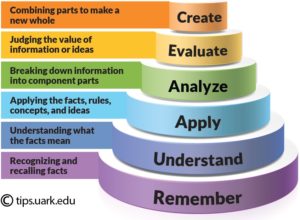
- Elevate Your Personal Statement: Using Bloom’s Taxonomy for Impactful Writing
- How to Write a Captivating Hook for Your PA School Personal Statement
- 3 Surprising Truths About the New CASPA Life Experiences Essay (And Why You Can’t Ignore It)
- 3 PA School Personal Statement Mistakes Our Editor Sees Again and Again
You may also like
 Elevate Your Personal Statement: Using Bloom’s Taxonomy for Impactful WritingThe most common advice writers often give pre-PAs is to "show, don't tell" in your essays. (Though we like to encourage showing …
 Who Gets Into PA School in 2026? Here’s What You Need to KnowLeslie Mean is a 23-year-old single white female who presents to the PA school admissions committee on her second attempt to get …
 Start at the End: Advice for your PA School Personal StatementNot sure what to include in your personal statement? Start at the End! The conclusion should summarize your entire essay. Consider the …


CASPA Personal Statement Help
 We offer comprehensive, start-to-finish personal statement assistance or help to perfect a draft you already have. We have services to fit every budget.
 Schedule a Live Recorded PA School Video Interview

We offer 60-minute mock PA school interviews with post-interview feedback and advice. Includes a recorded video of your interview that you can watch, download, or share with family and friends. There is no better way to prepare!
Schedule an InterviewPre-PA Consulting and Advising
 Our pre-PA coaching service consists of a 1-hour phone consultation focused on addressing your specific questions or concerns about becoming a PA and applying to PA school.


My eyes wonder as I walk through a crumbling neighborhood. Houses stand on each other with some not having roofs or walls. The recent rain brings up sewage from the poor drainage system. The smiles on the locals’ faces contrast the environment around me. We made it to our “clinic” on the side of the road. It’s a desk and bench we use as a station for patients to come get their blood pressure taken, blood oxygen read, and blood glucose checked. It is not much but it works. I notice the patients staring at me intensely. I remind myself I am in the slums of Buenos Aires, Argentina and I look like I do not belong here. I am here to volunteer at a medical clinic. I take the patients’ blood pressure and listen to their stories. The Argentinian Spanish was an adjustment, but I understood most of them. There was some frustration when I couldn’t hear the heartbeat due to stray dogs barking, trucks going by, or other patients talking with a cigarette in their mouth. As I volunteered, I realized that I was smiling right along with the locals. PAs have more opportunities and flexibility to go to communities like this one and provide outstanding care. It does not matter the socioeconomic status of a patient, they still need the best care. This experience has made me more understanding and more driven to help those in underserved communities. It was truly an unforgettable experience that fueled my passion for working in healthcare and I hope to return as a physician assistant some day.
I am sitting with my 7-year-old client, Andrew. He can speak, but chooses not to with anyone at the center where I work. I hear the sound of a box falling off the windowsill followed by Andrew’s cute, but alarming laugh. I know what is coming because he never laughs like this unless he has an agenda. He sprints to a room in the back. I enter the room just in time to see him grab a box of Legos and throw it across the room, Lego pieces rain to the floor. Andrew turns to bolt from the room, but I stand calmly blocking his only exit. Andrew grabs a black marker and creates artwork on the walls. I start to panic looking at the mess, but take a deep breath and approach him. In a calm voice, I tell him to hand me the marker and slowly take it from him. I lower to his eye level and explain that we cannot draw on walls or throw Legos. Together, we pick up the Legos. I felt relieved that I controlled the situation so it did not escalate. Each day as a Registered Behavior Technician (RBT) at a center for children with autism was a new experience because I never knew what would happen. There were days filled with tantrums and days filled with laughter. My experiences as a RBT taught me how to be calm and patient. The Lego incident with Andrew was one of many times I had to stay calm during an intense situation. As a PA there will be days when a patient receives bad news, I have to navigate a stressful situation, or even work with a patient with autism. Through my experience, the PA profession focuses more on being personable or soothing with patients than other professions. My impulse to calm others down during tough situations will help me provide exceptional care as a PA.
After growing up surrounded by teammates on a soccer team, I knew I wanted to work in a collaborative environment. The PA profession stood out to me because PAs have strong team values, more so than other professions. I see this first hand at my job as an MA at a dermatologist office. The PA I work with and mentor, Kelly, has shown me the importance of working within a team. It’s so inspiring seeing PAs and doctors bouncing ideas off each other and coming together to solve an interesting case. The healthcare team provides a support system for each individual so no one is left to struggle alone. The team also includes the MAs to ensure the best care is provided. I see Kelly treat patients with confidence and compassion all day. Since I’m a part of her team, it motivates me to also provide the highest quality care. I get the patient comfortable in the room so when Kelly comes in, the patient is comfortable enough to talk about their medical needs. One patient said to me “thank you for being here, you made me feel so comfortable”. The reassurance that I was making an impact on patients only motivated me more. I thrive in a team environment which will allow me to be an excellent PA.
After reflecting on my personal experiences and professional experience as a RBT and MA, I am confident the PA profession is the right path for me. Through volunteering in Argentina my eyes opened to the opportunities to help those in underserved areas. As a RBT, I practiced patience and staying calm during difficult situations. As an MA and watching my mentor, I have seen how a PA should give care and the importance of PAs in the healthcare team. These experiences undoubtedly helped solidify my decision to pursue the PA path and will help me provide compassionate care to my patients as a PA in the future.
I couldn’t help but think about how the melanoma that Dr. B excised was the same type of cancer that took my grandmother’s life, and the lives of so many others. In the moment I shared with the patient before the procedure, I mentioned how lucky I thought she was to catch this melanoma in situ—so early in her diagnosis. I also noted how fortunate she was to have a dedicated team right there in front of her, ready to intervene and help stop the growth. Although I didn’t have detailed information about her condition, I instinctively saw an opportunity to connect. My goal was to provide a smooth, comforting experience for the patient, knowing that the lidocaine would only work so well.
There she was, perched high in our exam chair, her long blonde curls cascading over the back of the headrest—floating above the floor, as if under a spell. Her demeanor was relaxed, a stark contrast to the bloody scene just five feet away, where the surgeon and physician assistant excised the cancerous tissue using a scalpel, electrocautery, sutures, and dressing. The procedure itself took only twenty-nine minutes, yet it could potentially save her life. She walked out of the clinic able to bear weight on her foot, though with a prescription for crutches if she chose to use them. All in all, the procedure was a success: the area was excised, and a tissue sample was sent to pathology for examination.
My role as a medical assistant is crucial to the overall success and reputation of the clinic. Without proper preparation and preliminary testing, providers would face increased difficulty performing their jobs. Over the years, I have learned that being a skilled medical assistant means that providers have fewer questions and requests once they are with the patient, allowing them ample time to focus on the chief complaint and any concerning details. My experience working as an MA in various settings has been overwhelmingly positive and has undoubtedly influenced my decision to become a PA. From emergency medicine to plastic reconstructive surgery, each PA I met was extremely different from the next, offering unique insights into their profession.
I believe that, because of my life experiences and strong interpersonal skills, I can help improve the patient’s experience, no matter the setting. Whether it’s preparing the procedure room, addressing a patient’s needs above the standard protocol, or even laughing at a patient’s joke—especially someone going through an extremely challenging time—sometimes that’s all you can do. These actions exemplify my passion for providing quality patient care. In such polarizing, precarious, and unprecedented times, patients need so much more. As a future PA, I will incorporate my direct-patient care skills and approach to meet their needs.
Every patient I’ve worked with and every procedure I’ve assisted has shaped the clinician I strive to become. I believe in treating patients like people—not just names or chart numbers. Something as simple as making eye contact, using a patient’s name, or offering a moment of real presence can create immediate comfort, even with someone I’ve just met. I don’t see these interactions as extraordinary; I see them as the foundation of meaningful care. These experiences have fueled my desire to become a PA, giving me a clear understanding of the responsibility and empathy the role requires. I’ve seen firsthand how impactful a PA can be, and I’m eager to build on my foundation in patient care to make a meaningful difference in the lives of others.
Hi Gregory,
Comforting a patient before her melanoma excision while thinking of your grandmother, who fought the same cancer, is a great opening. Make that link clear in the first lines.
After that, this essay mostly needs proof. You say you connect with patients, so show one moment. Pick one story from the ER or plastics instead of naming both. And tell me why PA. Did you see a PA in surgery balance working independently and with the team?
“Polarizing, precarious, and unprecedented times” can just be “challenging times.”
Stephen Pasquini, PA-C
Hi, I am 500 characters over the limit so I would appreciate if you can let me know where I can cut stuff of or shorten parts. Thank you for taking your time reviewing my work.
As my dad and I walked into the hospital, the blinding fluorescent lights welcomed us, along with the unique hum of the unit. Heart monitors beeped, soft conversations echoed, and call lights chimed like a strange melody. We passed CNAs helping patients walk, others wheeled to procedures, and providers rounding. We finally found my mom in a patient room, calmly administering medications and reassuring her patient—that moment, the teamwork, compassion, and clinical focus stuck with me. Though subtle, the moment was decisive, marking the beginning of my path into medicine. A year later, I returned to that same hospital as a CNA, and eight years later, I remained committed to a life in healthcare.
As I stepped into my role as a CNA, what began as a spark of interest transformed into a clear conviction that medicine was the right path for me. At only 16 years old, I floated to pediatrics to care for a 15-year-old girl named Elly. They placed her on one-to-one suicide precautions, and I was responsible for monitoring her emotional and physical state to ensure her safety. The first day I was with her, she barely spoke. Although we were the same age, I felt ill-equipped—too young, too inexperienced, and unfamiliar with the complexities of mental health. That night, I researched conditions on my own, determined to do better. The next day, when I was assigned to Elly again, I applied what I learned and created a space for her to talk. Slowly, she began opening up—sharing painful stories of family trauma and mental health struggles. Before I left, she looked at me and said, “Thank you.” In that moment, I learned that care goes beyond the physical and involves building rapport with patients. Since then, I have embodied the mindset of a lifelong learner, pursuing every opportunity to personalize care and meet each patient’s needs.
While continuous learning has shaped me professionally, a meaningful experience motivated me to become a PA. After years of caring for countless patients, I faced a profound challenge when the person I loved most, my mom, became my patient. To support my mom in her battle against breast cancer, I accompanied her to nearly every consultation, radiology session, chemotherapy treatment, and follow-up appointment. Her primary care PA explained the prognosis, medications, and treatment thoroughly while ensuring my mom remained actively involved in each decision. In a time of uncertainty, that interaction left our family feeling informed and empowered. It inspired me to educate others by volunteering at Gateway to Science, a children’s museum, where I use the Anatomage table to teach families about the human body in ways that children can easily understand. This solidified my future as a PA and an educator who empowers patients to take an active role in their care.
Seeking to understand the clinical reasoning behind my mom’s care, I transitioned into the lab, where diagnostics guide clinical decisions. Every lab order felt like a mystery to solve, filled with burning questions: Why check hemoglobin? Were they concerned about bleeding, blood loss, or something deeper? In each interaction, I explain the lab tests I’m drawing and their purpose so patients feel informed and included. To me, this reflects one of the most essential qualities in healthcare—patient-centered care—something every PA must prioritize.
Fueled by curiosity and a desire to understand how diagnoses are made, I transitioned into the ER, where each shift pushed me to think critically, act quickly, and grow as a future provider. As the sole ER phlebotomist in a Level II trauma center, I draw labs for nearly every patient who walks in—from acute conditions to trauma codes. The most memorable moment came during a code—CPR in progress, nurses pushing meds and starting IVs, the physician calling out orders, and a PA intubating with a respiratory therapist assisting. Amid the organized chaos, everyone moved with purpose, each person aware of their role. With both arms occupied, I drew from the patient’s foot, ran the EPOC, and handed the results to the physician, who quickly adjusted the treatment. Moments later: “Check for pulse.” A nurse called out, “We’ve got one.” My heart pounded—not just from adrenaline, but from knowing that I had played my part. No one single-handedly saved the patient, but we gave the patient another chance to live together. These moments affirmed that the most competent providers can think critically, act decisively, and work collaboratively within a team—skills I’ve practiced and will carry with me into the PA role.
From a naive 16-year-old to a confident, contributing team member, my growth has been shaped by every challenge, every question, and every patient. With a multifaceted background spanning long-term care, inpatient units, clinics, the ER, and soon the OR, I’ve developed a deeper understanding of how care is delivered—and where it can be improved.
My college journey began during a difficult time—navigating my mom’s diagnosis and the impact of COVID-19. After taking a break to reset, I returned more focused and resilient in my pursuit of becoming a PA. Since then, I have demonstrated consistent academic growth.
I am ready to take the next step—not just to assist but to lead with clinical insight, educate with empathy, and diagnose with purpose. Becoming a PA is not the beginning of my story but the next chapter in a life committed to learning, teamwork, and patient-centered care.
Hi Anjelle,
You need to cut about 500 characters, and you can do it without losing anything that matters.
Opening: condense “soft conversations echoed” and “call lights chimed like a strange melody” into one line about your mom giving meds.
Elly: cut “I felt ill-equipped—too young, too inexperienced…” since the scene already shows it. “Thanks for listening” works as well as “Thank you.”
Your mom’s cancer stays. Shorten Gateway to Science to one sentence about teaching kids about health, and drop the Anatomage explanation. In the lab paragraph, the rhetorical questions (“Why check hemoglobin?”) eat space, so just say you explained tests to keep patients informed.
The code blue, where you drew from the foot, ran the EPOC, and felt the pulse come back, is the best moment in the essay. Cut the list of what everyone else was doing so your role stays central. If a PA was part of that code, say so. That’s your why PA.
Combine the last two paragraphs and drop the college and COVID section.
Little cuts add up too: “As I stepped into my role as a CNA” becomes “As a new CNA,” “calmly administering medications” becomes “giving meds,” and drop “thoroughly” and “the mindset of.”
Rooting for you!
Stephen Pasquini, PA-C
I rushed into the room, drawn by the loud thump of a grown man falling to the floor. I kneeled to his side, yelling for help, but quickly realized no one was around. Alone, I used what little strength I had to help him up onto the couch to a safe position. He held his head with trembling hands, groaning in pain as I ran to get water and ibuprofen. I sat on the floor, watching as he threw up in a small plastic trashcan, my head spinning with what could be wrong. At age eight, I had my first patient, my father.
Surrounded by addiction at a young age, I quickly learned how to take care of those around me. By the time I began learning how to drive a car, I was already an expert in treating hangovers, supervising withdrawals, patching wounds, and babysitting addiction highs and lows. Over time, I learned how to remain calm in chaotic situations, how to be patient with those facing their biggest fears, and how to have compassion for those after everyone else gave up. While these experiences pushed me to be independent, I valued the teamwork that my mother and I had established to get through these challenges. While it was a collection of these moments that initially drove me into medicine, it is the core principles of the physician assistant (PA) role that make me feel at home.
Growing up in a low-income community exposed me to the realities of healthcare inaccessibility. Watching as friends and family struggled to find help due to the lack of health insurance, or personal finances, drilled in me a passion for serving the underserved. Following my passion, I traveled to Riobamba, Ecuador to volunteer at a mobile clinic over spring break. Working alongside a range of different providers allowed me to see various approaches to medicine, and it was here that I had my first ever encounter with a PA. Throughout the week, I watched as the PA diagnosed a range of conditions such as food-borne illnesses, sexually transmitted diseases, and even melanoma. While each of the providers showed great compassion for their patients, it was this deeper level of understanding of multiple specialties that inspired me to want to be a PA. After returning home, I researched the profession and found that PA programs teach with a general medicine approach instead of specializing. Due to this broad range of knowledge allowing me to access a diverse patient population, I changed my career track from pre-med to pre-PA.
In order to expand my knowledge of the medical field and PA role, I started a job as a medical assistant at an OBGYN office. Soon after starting, I found myself assisting a physician assistant in an IUD insertion. After much effort, the PA could not get the patient’s cervix to dilate enough to insert the device. Noticing the patient’s distress, the PA asked me to go find the supervising physician to come help. I found this shocking as I had never witnessed a provider seek help from another, but I soon recognized the value of this teamwork. After the physician came into the room, the two providers collaborated and were able to dilate the cervix, making the rest of the procedure go by seamlessly. Growing up I always felt as if asking for help was the equivalent of admitting failure; however, through my experiences I have found that it is the complete opposite. The PA was able to recognize the value that this collaboration may have for the quality care of the patient and because of her role, she had the opportunity to ask for help.
Through my time shadowing physician assistants in other specialties, I have also witnessed the great level of autonomy that the PA role offers. For example, the PA I shadowed in rapid care, was the only provider in office. She saw over sixty patients that day and was able to use her training to properly assess and diagnose each patient independently. I highly value this level of autonomy while also having the collaboration of supervising physicians to turn to. Through the struggles of my childhood, I became self-reliant and always tried to solve problems on my own. While most of the time I was able to do so, it was only when I decided to let others, such as my mother, help me problem-solve, that I noticed a great change to how I approached challenges. This balance between autonomy and teamwork is one of the many reasons I have decided to become a physician assistant.
While I may have only found out about the physician assistant role a few years ago, I have spent my entire life practicing the very values that are at the core of the position. I believe that my unique perspectives and experiences have not only equipped me to be a better person but have developed a great baseline for my potential as a physician assistant. Physician assistants are trained on a medical model which allows for the great depth of knowledge required to care for a diverse population of patients. This characteristic, along with autonomy, teamwork, and a patient-centered approach, would expand my ability to reach those in underserved communities. I strive to be a physician assistant so that I may help those like my father, who may need assistance far beyond what an eight-year-old girl can provide. With this motivation, I am confident in my ability to complete the rigors of a PA program and beyond.
Hi Avery,
Caring for your dad young and growing up around addiction gives you a strength most applicants don’t have.
The collapse scene leans dramatic, and starting with a crisis is common. Try jumping in with something like “At age eight, I had my first patient, my father,” or “Surrounded by addiction at a young age, I quickly learned how to take care of those around me.” Then go from there.
Your background in a low-income community is your reality, not just a cause. One memory, like a friend who couldn’t afford a checkup, would ground it. In Ecuador, find the moment that flipped you from pre-med to pre-PA. The IUD insertion story nails teamwork, and the rapid care PA would be even better with one thing she did on her own.
Ending back on your dad works. Make the goal specific, like serving uninsured families. “Assistance far beyond what an eight-year-old girl can provide” could be “care I couldn’t give at eight,” and “drilled in me a passion” could be “sparked my passion.”
You handle the addiction piece with the right amount of detail. Keep it there.
Stephen Pasquini, PA-C
Instead of Barbies and tutus, I was intrigued by the complexities of the human body and how each part functions. At two, I received my first play toolkit after attempting to “surgically” correct my father’s crooked big toe in his sleep with a pair of plyers he had accidentally left out. I vividly remember running surgical simulations on my rainbow-striped zebra Webkinz doll one day after Pre-Kindergarten using an empty Yoo-hoo carton as a ventilator, the straw as an endotracheal tube, a star sticker for the IV, and a plastic butter-knife as the scalpel to mimic various procedures I had overseen while my mom would tune into the latest episode of Grey’s Anatomy. As I grew, so did my passion for medicine and science, as each science class brought new words of knowledge, excitement, and challenging ideas.
My early childhood dream of going into medicine was often met with skepticism until I was reassured by my ninth-grade biology teacher on the dreaded frog dissection day. While most of the class gagged at the pungent smell of formaldehyde and the slime of the amphibious skin, I became intrigued and became the chief examiner teaching the next few classes how to conduct the dissection.
My educational experiences solidified my path to becoming a physician assistant. I studied a plethora of rigorous subjects, including cancer biology, medical and veterinary entomology, bacteriology, comparative vertebrate anatomy, and microbiology. The versatility of my courses expanded my thought processes and challenged my ability to adapt and overcome when met with resistance; succumbing to failure was not an option. When reattempting organic chemistry, I sought new approaches to solving problems as I spent the summer flipping, expanding, and reducing carbon rings all over the page until a solution was met. At Georgia Southwestern State University, I confronted any issue head-on by applying the same method I used in organic chemistry: persistence until an innovative solution is reached, one that both doctors and patients expect from their physician assistants.
Georgia Neurosurgical Institute is where my desire to become a physician assistant was confirmed as I shadowed a surgical PA. This opportunity allowed me to see patients in the office after their operation and to see how much their daily lives have improved because of their procedures. In one particular instance shadowing at GNI, I remember a case where the patient had vision changes, problems with dizzy spells, and extreme fatigue, which their primary care provider had dismissed as symptoms of aging. The PA listened to the concerns of the patient, recognized the acute onset of these systems, and ordered an MRI of the patient’s brain, revealing a fast-growing golf ball-sized tumor in the patient’s left occipital lobe. When the PA asked if I wanted to scrub in to more closely observe the operation and assist with suction, I jumped at the opportunity, both intrigued and ready for whatever happened next. I assisted as the PA carefully shaved the hair surrounding the incision site, saving as much hair as possible, and swabbed betadine over the site. The next three hours were fascinating as a section of the skull was temporarily removed, the tumor was resected, and the removed section of the skull was carefully fixed back onto the skull. The next day I had the pleasure of seeing the patient in the neurological intensive care unit, and the patient thanked the PA for saving most of their remaining hair as the patient showed us photos of their young child. Six weeks later, the patient came back in with their child for a follow-up office visit and was functioning again at full capacity and was cancer-free. This patient’s positive outcome was not only because of the PA’s ability to listen and respond appropriately to patient complaints, but also because of her reassuring, welcoming, and personable attitude towards the patients, personality traits I admire and find relatable.
Being a physician assistant would allow me to advocate for patients, solve their medical issues, and ensure that they have the best quality of life, which sometimes includes saving a few strands of hair to boost a patient’s confidence. My patients would benefit from my situational awareness, vested interest in their wellbeing, compassion, attention to detail, and steady hands, which were once used on my beloved first patient, a zebra Webkinz doll. In the future, my goal is to add a scalpel and needle driver to my tool kit so that as a PA I can make a positive impact on my patients’ lives, by providing compassionate, high-quality patient-centered care in their time of need.
Hi Sydney,
The pliers on your dad’s toe and the Webkinz zebra on a Yoo-hoo carton ventilator are great details. Combine them into one sentence to save space. Make it clear Grey’s Anatomy was your mom’s show so it doesn’t read as TV-inspired.
The frog dissection works. Add a line connecting it to where you’re headed. For your classes, pick one moment, like organic chemistry finally clicking, instead of listing courses.
The Georgia Neurosurgical Institute tumor case is the heart of this. Put us in your head while you were in there. The detail about saving her hair is perfect, so keep it. Then show where you’ve given patients that same warmth.
Ending back on the Webkinz is smart. Just make the future more specific than “advocate” and “solve issues.”
Two fixes: “systems” should be “symptoms” in the tumor story, and “new words of knowledge” can just be “new insights.”
Best,
Stephen Pasquini, PA-C
When I was little, my aunts and uncles always asked me, “What do you want to be when you grow up?” I always said I wanted to become a doctor because that was all I knew. To have a successful and fulfilling life, I had to become a doctor. I had to follow in my dad’s footsteps.
I clung to this belief throughout my adolescence into adulthood. When I reached college, I convinced myself that getting the best grades would land me a spot in medical school. However, this proved challenging once my second year began. What I thought was a passion transformed into an obsession: an obsession to be the best, to be perfect. I became a machine that studied for countless hours. By spring, I realized and accepted that becoming a doctor was never the answer to a fulfilling or successful life. Emulating my dad was never the answer.
I remained in a limbo until my third year of college. Having no idea what I wanted to do after graduating, I reached out to my Hill-Lopes Program director for guidance. She reassured me that it was okay to be unsure about my future, even over halfway through my degree. Through her encouragement, I explored the pharmaceutical industry and research. Although interesting, there was no excitement to learn. Deflated that I still had not found my answer, my research partner mentioned she was applying for physician assistant school. I had heard of it, but I was not knowledgeable about the responsibilities of a physician assistant. After researching, it was apparent that this was a field I would enjoy. It explained my love for anatomy–it challenged me to think creatively and persevere. Understanding the intricacy of my body fascinated me. I enjoyed tutoring my classmates; whether it was a scribbled diagram or a strange analogy, watching their eyes light up when they understood a concept felt rewarding. I wanted to utilize these qualities I developed to help others.
The summer after graduating, I began working as a medical assistant in a pain management clinic. Between taking patients’ vitals and collecting samples, I love hearing their plans for the holidays, how their grandkids are, and most importantly, how they are doing. One patient in particular always has a smile on his face, despite being in severe pain and hobbling with a cane. As I was entering his vitals, he said, “Karoll, I go to a lot of doctor’s appointments, but this is the only one I get excited about. I love seeing you and everyone else, because you are all so kind, patient, and take amazing care of me.” As I was packing up samples, I heard a patient say to the doctor, “That girl, Karoll, is so lovely and patient.”
Hearing those words made me realize that helping others was the answer to a successful and fulfilling life. My excitement comes from stepping foot into the doctor’s clinic, wondering what the day will offer. Success and fulfillment come from patients’ satisfaction and confidence to tackle another day. I provide limited support for patients as a medical assistant, but I want to be more actively involved. I would have a more direct role with patient care as a physician assistant. Horizontal flexibility would allow me to challenge myself and continuously learn. I may never be regarded as a doctor like my father, but people will remember me as the girl who always served with a heart full of perseverance and compassion.
Hi Karoll,
Going from your dad’s dream of you being a doctor to finding your own path is a real story, and I like that you don’t pretend it was a straight line.
Ground the opening in one memory, like your dad telling you that you’d be a doctor too. Then show us the exact moment you knew medicine wasn’t it. Was it a late night with anatomy that felt like a chore? Same with pharma and research: what made you realize you missed people?
When you get to PA, skip phrases like “horizontal flexibility” and tell me what got you excited. The patient with the cane is great. Stay with him longer. Did you talk about his grandkids? Did his pain ease for a minute?
Since you struggled in college, admissions will wonder about your academics. Mention a strong course or something recent that shows you’re ready now.
End with the PA you’ll be, not how others see you.
Best,
Stephen Pasquini, PA-C
Hi there! Second-time reapplicant here. This was the personal statement I submitted on my first cycle. I’m not even 100% sure if it was read since I submitted a bit late. Still, I would greatly appreciate some feedback. Currently working on rewriting/revising for my second time applying this coming cycle and want to know what I could improve on.
Growing up, I was exposed to different health conditions through my family members. Around the time I was in middle school, my paternal grandpa started to develop Parkinson’s disease dementia. Eventually, I began to notice his steady decline. He started to lose his muscle strength and mobility, and his cognition started to decline. These unfortunate circumstances caused him to become more dependent as he slowly required more care. So I spent most of my afternoons watching him after school. On the other hand, my maternal grandma suffered from terrible arthritis and kidney failure amongst other health conditions. The pain from her arthritis was debilitating, often causing her to complain about her knees. She was always weak and exhausted after her dialysis treatment. Despite her desire to be independent, I often took care of her. It was then I realized the roles had reversed. Unbeknownst to me at the time, these underlying streams of events where I was faced with the task of caring for others catalyzed my career in healthcare.
It wasn’t until a few months after I graduated college that I discovered the physician assistant profession. As a person with a variety of interests, I was excited to discover that the PA profession consists of lifelong learning and lateral mobility. Although I have not had much contact with PAs, I believe that I would be a great candidate for a PA program. I learned from a tender age that healthcare is a privilege since not everyone has access to it. My grandparents came from developing countries where healthcare was either lacking in quality or accessibility. This made it difficult to provide and receive healthcare similar to the advanced Western medicine available in the States. As a minority, I understand the impact of these disparities in healthcare. I feel immense compassion for those who are unable to receive healthcare. I resonate with those who find it difficult to build a connection with a provider. For that reason, I believe that everyone deserves quality healthcare despite their socio-economic status. As a PA, I will work collaboratively with my team to assure my patients receive high-quality care by reducing bias and expanding access to healthcare.
During the Fall semester of my collegiate senior year, I started working as a certified medical scribe in Family Medicine where I gained valuable healthcare experience. I was continuously learning and putting my knowledge to use through practicing medical terminology, anatomy, and physiology as I assisted with patient care and documented patient encounters. We saw an array of diagnoses which refined my attention to detail.
Dr. Murphy, the physician I worked with, had a very impacted schedule and he would often run late. It was normal for us to attend appointments back to back. At first, it was difficult to manage my responsibilities in this type of fast-paced work environment as I was the only scribe in the office. After gaining more experience, I was able to overcome this obstacle and excel in my position. In turn, I improved my time management skills. I learned how to remain calm and collected while managing stressful situations. That is why I am confident that I will be able to successfully handle the responsibilities that come with the PA profession.
With each patient we saw, the more I realized I wanted to be able to provide the same care as Dr. Murphy. He was caring and compassionate towards his patients. For example, he saw patients regardless of their insurance status. He consistently reassured his patients that he would take the time they need to assure all their needs have been met despite falling behind. It was then that I recognized how important patient-centered care is. He created a true bond with his patients outside of the doctor-patient relationship. Similarly, I strive to make connections with my patients and become part of their support system.
I am continuously reassured in my decision to become a PA through my personal and professional experiences. I have enhanced the skills and knowledge that are necessary to become a successful PA student and provider. I was able to successfully manage my time while excelling in school and participating in multiple extracurricular activities. As a medical scribe, I was able to practice my active listening skills and interpersonal communication. I improved my ability to recognize any underlying issues and find a solution for them. I am capable of effectively communicating with a patient by exploring all treatment options after understanding their needs. With my leadership abilities and strong work ethic, I am confident that I will be able to excel in a collaborative work environment. As a PA, I will proudly use my position to advocate for the underserved and underrepresented communities. So they may have more accessible, affordable, and empathetic healthcare leading to an improved quality of life. I wish to provide the care I had hoped my grandparents would receive.
Hi Zabrina,
Caring for your grandparents is a real reason to be here, and it isn’t overdone. Make it vivid with one moment, like rubbing your grandma’s knees after dialysis. And swap “unbeknownst to me” for something direct.
Your scribe job is your proof that you can handle the pace. Instead of listing terminology and time management, tell me about a time you caught something in a chart that helped Dr. Murphy. When you describe his compassion, bring it back to you. When did you reassure a nervous patient the same way?
“Lifelong learning” and “lateral mobility” are fine, but what grabbed you about PA? As a reapplicant, show what’s new this cycle: shadowing, a course, more hours. Your point about disparities is strong. Tie it to your grandparents’ access to care, or to bias you’ve seen in clinic.
Small one: “these underlying streams of events” can just be “those moments.”
You’ve got this.
Stephen Pasquini, PA-C
Hi PA Stephen!
Thank you for your feedback. Your notes and suggestions were immensely helpful. I have since completed my rewrite/revision, and I’m feeling more confident with this one. If you have any feedback that would be great! Here it is:
There was no drastic moment or life-changing experience that drew me to healthcare. Rather, it was my childhood that planted the sprout of desire to lend a helping hand. If you were to ask me what I wanted to be when I was a little girl, I would have answered with “maid.” It often elicited a chuckle, as it was a far cry from the typical answer of “princess,” but it was true and here’s the backstory. Coming from a Southeast-Asian family, it was common to have a multigenerational household. So, I grew up watching my lola (grandma in Tagalog) partake in housekeeping as her way to provide for the family. I observed and admired her dedication and willingness to help around the house, even without being asked to do so. Eventually, I decided that I wanted to become a maid so I could help others selflessly just as my lola did.
By the time I reached middle school, my lola suffered from terrible arthritis and kidney failure amongst other health conditions. The pain from her arthritis was debilitating, often causing her to complain about her knees. Her dialysis treatment left her frail and exacerbated her pain. I distinctly remember the smell of the Efficascent Oil I used to rub on her knees, wishing I could ease her pain. Despite her desire to be independent, I spent most of my afternoons taking care of her after school. It was during these afternoons, as I cared for her, that I realized the roles had reversed and caused the little sprout to bud.
In college, I obtained my license as a certified medical scribe and began working in Family Medicine. Dr. Murphy, the physician I worked with, had a very impacted schedule which led to a fast-paced work environment that required constant support and communication amongst the staff to guarantee quality care. In turn, I quickly mastered the ability to keep my composure while managing stressful situations in a dynamic environment by multitasking to improve workflow efficiency. It was at this time that I truly understood the gravity of balance and team-based medicine.
In the last two years, I have been proudly working as an Ophthalmic Technician. During this time, I have been able to grasp the importance of interpersonal communication through extending empathy, having patience, creating good rapport and a safe space for my patients; skills that are essential for a PA. Recently, I screened an older gentleman who was Spanish-speaking only. Unfortunately, he lost his vision after he was violently and physically assaulted on the streets. The young couple that brought him in said they met him in the county’s office attempting to apply for medical insurance. They also explained how he was homeless with no family nearby. Due to his prior medical history and the slight language barrier, I knew this would be a more complicated visit, but I was more than willing to provide the thorough care he deserved. In order to ensure the patient was comfortable and fully understood the purpose of his visit, I carefully explained each test and exercised patience while conducting the tests due to his decreased vision.
It is experiences like these that solidify my desire to pursue a career as a PA. I learned at a tender age from my grandparents that healthcare is a privilege as not everyone has access to it. My grandparents came from developing countries—Myanmar and the Philippines—where healthcare was either lacking in quality or accessibility. This made it difficult to provide and receive healthcare similar to the advanced Western medicine available in the States. As a minority, I understand the impact of these disparities in healthcare and am empathetic towards those who are unable to receive healthcare, similar to my grandparents and the patient I recently encountered. It is circumstances like these that fuel my belief of providing quality healthcare despite socio-economic status.
As I continue my journey in healthcare, I remember why I chose PA. I was immediately drawn to this career, as opposed to MD or NP, because of the appealing opportunity for lateral mobility, allowing me to explore diverse specialties like my initial interest in dermatology alongside the many others that have since piqued my interest through my experiences. Furthermore, the comparatively shorter time commitment would enable me to begin directly serving my community sooner; an aspect that deeply resonates with my personal and professional dedication to helping others. As a PA, I will work collaboratively with my team to ensure patients receive high-quality care by actively reducing bias and expanding access to healthcare. I will work tirelessly to carry on the memory of my grandparents by continuing to bridge the gap in healthcare disparity by providing and advocating for underserved and underrepresented communities who often feel unseen.
What is arguably the most important in a medical facility isn’t the stethoscope, the x-ray, or even the EMR –it’s the coffee. In every clinic I’ve been a part of, nearly everyone drinks coffee. From the physicians, to the PA, the nurses to even the receptionists, we all need our morning espresso to fight the burnout and depresso.
Coffee is what energizes my clinic everyday, but what originally energized me to become a Physician Assistant (PA) was witnessing firsthand the importance of the role exemplified through my uncle Umar’s care team. My uncle was a well-known cardiologist before suffering from encephalitis during my sophomore year, transforming him into a patient struggling with basic motor functions. I learned the importance of showing empathy towards patients through the respect they had for my family and the dedication they had for Umar’s well being, leaving me with a sense of security and trust. Although I lacked the expertise at the time, I was determined to understand medical diagnoses and provide the same feeling of empathetic care and trust for my patients in my future career as a PA.
My family hailed from Jambi, Indonesia, a medically underserved area where I have seen firsthand the injustices of medical underservice. Members of my own family succumbed to preventable infections due to inadequate resources and the inability to share medical records with covering providers. With this lens, I am committed to serving the underserved communities as a PA, bridging gaps in access to care and advocating for patients’ health and wellness. With the advanced training I would receive as a PA, I would be able to continue my support for patients with similar backgrounds through my existing knowledge of cultural competency. Moreover, I want to be a PA to aid and educate patients in underserved communities on resources they could use to advocate for their own health.
To gain patient care experience, I worked as a medical assistant (MA) in both primary care and Spine and Sports Medicine. Working as an MA, I have demonstrated my compassionate care by spending time with each patient and explaining procedures in a concise manner which made them feel less daunting. Specifically, one patient comes to mind: Anita, an 81-year-old who presents to the clinic with bilateral knee osteoarthritis. During each visit I monitored her reactions looking out for possible signs of inflammation or lightheadedness and comforted her through each injection by holding her hand and reassuring her while also assisting the provider with the ultrasound.
Despite the patient’s insurance consistently denying her hyaluronic acid treatments, I persisted in submitting appeals for them demonstrating how my role extends beyond simple comfort and reassurance. I explained to her insurance that because of her age and lack of transportation it is difficult for her to continually visit the clinic making it medically necessary she received these injections. The insurance then overrode the decision and Anita received her injections. If it were not for me advocating for her care, she would not have received further medical attention. This experience taught me patient advocacy skills which I plan to build upon and use in my future role as a PA.
Eager to understand more about the PA’s role, I shadowed Bianca, a PA in primary care. Bianca’s approach, coupled with her dedication to patient education, resonated deeply with me. I observed how to critically analyze a patient’s medical history prior to meeting the patient. I have seen her take the extra time to educate patients with background information on their condition and explain each medication before prescribing them. She appreciated my questions and taught me to teach patients through analogies such as a garden hose and a faucet to represent hypertension which elicited patient understanding and engagement. Through each patient exam, I received step by step explanations of what is being accessed. Additionally, I observed how Bianca’s proactive approach to patient care extended beyond clinic walls as she connected with Dr. Butler to coordinate follow-up care for her patients.
The PA role embodies the balance I crave for in a future career- autonomy to independently treat patients coupled with the support from a supervising physician. While my experience as a medical assistant has provided me with a degree of fulfillment, what truly drives me is creating meaningful connections with my patients and empowering them with knowledge about their health following them throughout the full course of their treatment.
Hi Zahraa,
Uncle Umar and Anita are the two stories that carry this essay. Holding Anita’s hand and fighting her insurance company shows exactly the kind of advocate you’ll be. Trim the insurance back-and-forth and stay on you comforting her.
The coffee opening is fun, but it takes a while to reach PA, and the jump to Umar is sharp. If you keep it, tie it to Umar fast. With Umar, tell us what the PA on his team did that stood out. Your Indonesia background is a strength, so give us one specific memory, like a relative who couldn’t get care.
With Bianca, pick one patient. The hose analogy is a great one. Then trim the hypertension explanation and “presents to the clinic” so you have more room to reflect.
Best,
Stephen Pasquini, PA-C
Thank you so much! I have rewritten my essay and I hope this is beginning to sound more like what it should.
What keeps a medical facility running isn’t just the stethoscopes, the x-rays, or even the EMRs—it’s the coffee. In every clinic I have worked in, from primary care to specialty practices, coffee fuels the team—the physicians, PAs to the nurses and front desk receptionists. But while coffee energizes our mornings, what truly sparked my desire to become a Physician Assistant (PA) was witnessing firsthand the empathetic, patient-centered care that changed my family’s life.
That lesson brewed into focus when my uncle Umar, once a well-respected cardiologist, suffered from encephalitis during my sophomore year of high-school. Watching him transition from a provider to a vulnerable patient was jarring. Yet it was the unwavering empathy of his care team, including the PAs, that left an indelible mark on me. In particular, I remembered a time where the PA’s steady voice brought us hope when breaking down Umar’s meds and follow up treatment plans. His ability to communicate clearly, offered us comfort, and maintained our family’s trust during an overwhelming time. This inspired my commitment to pursue a career centered around compassionate care. Even without the necessary clinical expertise, I knew I wanted to give future patients and families the same sense of hope and support that they instilled in my family.
My passion for equitable healthcare stems from my family’s roots in Jambi, Indonesia—a region burdened by medical underservice. I witnessed loved ones, such as my 14 year old cousin, succumb to preventable illnesses due to scarce resources and fragmented care. I carry these experiences as a driving force, aiming to bridge gaps in access and empower similar underserved communities. With the advanced training a PA education provides, I am committed to offering culturally sensitive care and ensuring patients, especially from marginalized backgrounds, have the tools to advocate for their own health.
My work as a medical assistant (MA) strengthened this commitment. In both primary care and Spine and Sports Medicine clinics, I sought not just to assist patients but to connect with them as well. I remember Anita, an 81-year-old patient battling bilateral knee osteoarthritis. At each visit, I held her hand through hyaluronic acid injections, monitored her for signs of inflammation, and reassured her when treatments became overwhelming. When her insurance repeatedly denied coverage for necessary injections, I advocated persistently on her behalf—successfully overturning the decision. This experience taught me that patient care extends beyond the limited face to face interactions and reinforced my dedication to fighting for those who may not have a voice.
Wanting a deeper understanding of the PA role, I shadowed Bianca, a primary care PA whose approach resonated with me deeply. I admired how she made complex conditions tangible through simple analogies—like comparing hypertension to a garden hose under pressure—empowering patients to truly understand their health. Watching Bianca thoughtfully review medical histories, collaborate seamlessly with supervising physicians, and educating patients showed me how PAs provide both clinical excellence and holistic care. I often found myself thinking, “This is the kind of provider I aspire to be.” Bianca welcomed my questions, guided me through patient exams, and showed me that a PA isn’t just a medical provider—they’re an educator, a partner, and a constant presence in a patient’s journey.
The advocacy I showed with Anita, the curiosity I brought while shadowing Bianca, and the cultural lens I carry from Jambi all point to one path: becoming a PA. I’m drawn to the profession because it offers the perfect balance—autonomy to treat patients independently, with collaboration and growth alongside physicians. My work as an MA has prepared me to stay calm under pressure, communicate with empathy, and connect with diverse patients on a human level.
I imagine a future in which one day, I hope to sit with a patient over a metaphorical cup of coffee—comforting them, educating them, and empowering them just as Umar’s care team once did for my family. I desire to be the kind of PA who advocates for the unseen, and builds trusts that will last. I am eager to embrace the journey ahead as a Physician Assistant.
I am a re-applicant and not sure why the spacing did not show in this version. I am assuring you that I did put paragraph spacing for this.
One moment you are a well-known cardiologist, and the next you have to relearn how to walk. This was the reality for my uncle, Umar. His sudden diagnosis of encephalitis during my sophomore year sparked my interest in the medical field and the beginning of my journey of becoming a physician assistant (PA). Witnessing the collaboration between doctors and PAs on his care team was both inspiring and enlightening. The empathy they had for my family and dedication they had for Umar’s well being left an indelible mark on me. This instilled a deep respect for the PA profession and a desire to provide the same feeling of empathetic care and trust for my future patients.
Growing up I heard countless stories of my family’s experiences in Jambi, Indonesia, a medically underserved area where access to quality health care was often limited. Members of my own family succumbed to preventable infections due to inadequate resources and the inability to share medical records with covering providers. These stories coupled with my own observations during visits to Indonesia exposed me to the harsh realities of medical underservice and the injustices faced by vulnerable communities. It was these experiences that fueled my determination to serve underserved populations and advocate for their health and wellbeing.
As a medical assistant (MA) ) in both primary care and Spine and Sports Medicine I was able to put my passion into action. One patient, Anita, stands out in my memory. Despite her elderly age (81) and debilitating bilateral knee osteoarthritis, Anita faced numerous challenges in accessing the care she desperately needed. Her insurance consistently denied coverage for her hyaluronic acid treatments, citing it was medically unnecessary. However, I refused to accept defeat. I advocated tiressely on Anita’s behalf submitting appeals providing detailed explanations to why these injections were medically important for her to receive. Eventually, my persistence paid off, and Anita received the care she deserved. This experience taught me patient advocacy skills which I plan to build upon and use in my future role as a PA.
During each visit with Anita, I monitored her reactions closely looking out for signs of inflammation, lightheadedness or discomfort. I provided comfort throughout her treatments, holding her hand and reassuring her during each injection. I wanted to ensure she felt safe and supported. Simultaneously, I assisted the provider with the ultrasound, demonstrating my ability to multitask and collaborate effectively in a clinical setting.
When she thanked me for making her feel comfortable, I knew I succeeded in both patient advocacy and empathy.
Eager to understand more about the PA’s role, I shadowed Bianca, a PA in primary care. Bianca’s approach, coupled with her dedication to patient education, resonated deeply with me. I observed how to critically analyze a patient’s medical history prior to meeting the patient. I have seen her take the extra time to educate patients with background information on their condition and explain each medication before prescribing them. She appreciated my questions and taught me to teach patients through analogies such as a garden hose and a faucet to represent hypertension which elicited patient understanding and engagement. Through each patient exam, I received step by step explanations of what is being accessed. Additionally, I observed how Bianca’s proactive approach to patient care extended beyond clinic walls as she connected with Dr. Butler to coordinate follow-up care for her patients.
Through Bianca, I gained a deeper understanding of the lateral mobility inherent in the PA profession- the ability to transition between different specialties and settings while upholding the focus on patient centered care. This versatility intrigues me, as it aligns perfectly with my own aspirations for a dynamic and fulfilling career in healthcare.
Looking ahead, I am excited about the prospect of becoming a PA and embracing the flexibility this profession offers. Whether practicing in primary care or exploring other specialties, I am eager to leverage my advanced training to bridge gaps in access to care, empower patients with knowledge and advocate for their health and well-being. As a PA, I aspire to embody the balance of autonomy and collaboration, creating meaningful connections with patients and guiding them through healthcare journeys with compassion and expertise.
Hi Nadia,
This version, opening with Uncle Umar’s encephalitis, is much stronger than starting with coffee. It hooks fast and gets to PAs right away. Add one moment with the PA to lock it in, like the PA explaining Umar’s medications to your family.
Your Indonesian background gives you a sharp reason to care about disparities. One specific memory from Jambi, like a relative who couldn’t get care, would make it stick.
Anita is still the best story you have. Cut some of the insurance back-and-forth and stay on the moment with her. A clinical detail, like checking her pulse, would show your skills too.
With Bianca, skip “lateral mobility” and give me one patient moment.
The conclusion is broad. Paint a specific picture of your future, like helping rural families manage chronic illness the way people in Jambi needed.
Fix “tiressely” to “tirelessly,” add a few commas, and mention a course that sharpened your clinical thinking.
Stephen Pasquini, PA-C
I didn’t have a dramatic turning point or single moment of clarity that led me to healthcare. Instead, it was a quiet pull, a growing curiosity that started in high school and never let go. Volunteering in different settings, I kept returning to those that weren’t just about medicine, but about compassion, teamwork, and genuine human connection. What began as simple exploration slowly transformed into purpose. Patient care felt like something I was meant to do, and over time, I developed a deep passion for a career rooted in service. The physician assistant role stood out as the perfect fit for everything I value: adaptability, collaboration, lifelong learning, and the chance to make a real impact.
My first steps in healthcare were grounded in service—volunteering in the surgical unit and NICU at Hurley Medical Center and providing in-home hospice care. These experiences gave me a front-row seat to patient vulnerability, healing, and resilience. I learned that healing isn’t always about curing; sometimes, it’s about being present, offering dignity, and building trust. One moment that stayed with me was watching a physician assistant care for one of my hospice patients during her final days. The PA’s calm, confident approach, blending clinical skill with compassion, showed me that the role of a PA is so much more than just providing care—it’s about being a steady, compassionate presence.
My clinical journey began when I earned my CNA license in college and worked at a nursing home, learning that small acts of compassion often carry the most profound impact. I remember one patient, bedridden and struggling with depression, who rarely spoke or made eye contact. I made it a point to sit beside her each morning, talking to her about anything from the weather to her past experiences. Over time, she began responding with small smiles and occasional words. This simple act of showing up day after day taught me that presence, even without words, can bring comfort and healing. It also solidified my belief that compassionate care isn’t always about what you do—it’s about who you are for the patient in that moment.
As meaningful as that work was, I found myself increasingly drawn to the emotional and psychological aspects of health. For the past two years, I’ve worked as a behavioral therapist, supporting children with autism and developmental disorders. This role has been incredibly rewarding, opening my eyes to the complexity of mental health and the resilience of the human mind. I’ve also expanded my passion through volunteering as a crisis text line counselor and at Whaley Children’s Center, a group home for children healing from trauma and navigating psychiatric conditions. These roles have sharpened my ability to listen without judgment, meet people where they are, and advocate for those who often feel unseen—all of which I believe is essential for a PA.
Healthcare has pushed me to grow in ways I didn’t expect. While coursework and licensure have given me a strong clinical foundation, my experiences in behavioral health have taught me patience, emotional regulation, and the power of empathetic communication. One moment that stands out is when I worked with a nonverbal child who had been struggling to communicate their needs. Using visual aids and simple gestures, I spent hours sitting with the child, patiently guiding them to express what they wanted. It was a slow process, but as the child began to point to pictures to communicate, I saw their frustration start dissipate and I realized that in those quiet moments of effort, true connection was being made; I learned that sometimes, the most powerful form of care offering space for people to process and feel understood.
These moments weren’t learned in a classroom, but they’ve shaped the kind of provider I hope to become—someone grounded, adaptable, and deeply connected to the human side of medicine. I know PA school will challenge me, both intellectually and emotionally, but I welcome that challenge. I’ve already learned how to balance high-stakes environments with empathy, and I’m ready to dive into a rigorous, collaborative program where I can continue learning, growing, and ultimately become the kind of PA my patients can trust.
Working with individuals who are often overlooked has reinforced my belief in equity-driven, trauma-informed care. I’ve seen the impact of team-based medicine—especially in emotionally demanding environments—where no one works in isolation, and every role is vital. I feel most fulfilled in these settings, working with others towards a shared goal. As a PA,I want to serve where I’m needed, adapt as care evolves, and bring both clinical skill and emotional intelligence to every patient interaction.
From bedside care to crisis intervention, every step of my journey has confirmed that this is where I belong. Becoming a PA is the next step, and I’m ready to take it with purpose, empathy, and unwavering dedication to the patients I will serve.
Hi Katie,
I liked that you call it a “quiet pull” toward healthcare instead of inventing a dramatic moment. It reads as honest.
The bedridden nursing home patient and the nonverbal child are your best stories. After each one, add a sentence about how that patience will carry into how you practice as a PA. Smooth the move into behavioral health so the jobs feel connected, and end with the patients or specialty you’re drawn to.
Fix the missing space in “As a PA,I want to serve.” Nicely done.
Stephen
PA PERSONAL STATEMENT
After years of introspection and personal development, I decided to pursue a Physician Assistant (PA) career. This decision stems from my life experiences and my strong desire to significantly improve the lives of others. I recognize the importance of this choice, not only as a career goal but also as a vocation consistent with my basic values of compassion and service.
When I was 7 years old, I witnessed an event that forever shaped my understanding of life’s fragility. My grandfather collapsed on the floor, clutching his chest in front of me. The scene is etched in my memory – my mother’s frantic calls for help and the blaring sirens of the approaching ambulance filled me with an overwhelming sense of helplessness. That was the moment my family made me understand what a heart attack was. As the sirens rang near our house, panic grew inside me, I was full of unanswered questions. However, I observed the unrelenting dedication of physicians and other medical personnel towards my family; at that time, they seemed like superheroes to me. From their immediate response during an emergency to the point of full recovery, they are not just present for a moment but for months, helping people recuperate and get back on their feet. This scenario instilled in me a drive to understand how I could one day be a source of calm and expertise during similar crises, inspiring my early aspirations to pursue a career in the healthcare field.
However, it wasn’t until later in life that I discovered the pivotal role of PAs, their role during emergencies & in providing accessible care for all. This realization became the foundation of my path to a profession in healthcare. The PA’s ability to adapt and deliver comprehensive medical services, especially in underserved areas, inspired me deeply. The PA profession’s origin — to address healthcare shortages resonated deeply with me, as it emphasizes compassionate, adaptable care, values that mirror my own.
During college, I experienced a medical challenge when I underwent a kidney stone removal procedure. I noticed something remarkable while doctors had to step away after the procedure due to their busy schedules: the PAs were constantly present for me. I was struck by how PAs took time to connect on a personal level and supported me both medically and emotionally. They answered all my questions and explained the procedures. Witnessing their adaptability and unwavering presence showed me how impactful they could be in maintaining the delicate balance between delivering expert medical care and forming meaningful patient relationships. This, again, left me thinking about their compassionate care for patients, the same care and dedication I want to offer my patients in the future.
My parents’ unwavering encouragement has been the cornerstone of my journey, as they encouraged me to pursue a career that would allow me to positively touch the lives of others. Specifically, as a PA, I could be a trustworthy and caring presence for people experiencing health crises, similar to the support networks I observed in my community when others encountered identical difficulties. Seeing the fortitude of people and families in the face of adversity helped me appreciate the value of compassionate care. I want to return the
favor by providing that same comfort and support to others, enabling them to face their
health challenges with dignity and confidence.
My journey in healthcare started with working as a medical assistant at N.K. Shah Medical PC was a pivotal experience that solidified my passion for patient care and my aspiration to become a PA. It taught me to pay attention to detail and communication when I served as the first point of contact for patients. Volunteering at Stony Brook Hospital, where I contributed 100+ hours engaging with vulnerable patients aged 65 and older. I gained a profound understanding of the importance of empathetic care in promoting patient well-being. At the Long Island State Veterans Home, I supported OTs & PTs, ensuring that veterans received rehabilitation services that enhanced their mobility and independence. I saw how care can directly influence a patient’s recovery process has motivated me to aspire to a career as a PA. In all these roles, I recognized that the PA profession uniquely balances technical knowledge, autonomy, and collaborative care—all of which align with my personal and professional values.
In the decades to come, I envision myself working in an environment where I can serve
underserved communities and ensure that nobody is left without essential care. Given the ever-evolving nature of healthcare, I am committed to lifelong learning and growth to remain at the forefront of patient care. In addition to reaching my objectives, becoming a PA will enable me to fulfill an everlasting duty to improve the lives of others. I am prepared to fully embrace this calling, combining my passion for health care with my dedication to bettering the
world.
Hi Mauli,
Your grandfather’s heart attack and your own kidney stone experience with PAs are the two strongest things you have. Build around them.
Right now the opening is general, and “stems from my life experiences” doesn’t tell us which ones. Start with your grandfather. Keep it plain, though. “The scene is etched in my memory – my mother’s frantic calls for help and the blaring sirens of the approaching ambulance filled me with an overwhelming sense of helplessness” is a lot. Something like: “At age 7, I watched my grandfather collapse from a heart attack. When the emergency responders arrived, I was struck by how calm they were.” Then let that lead you toward medicine.
The move from that early interest to PA specifically is abrupt. Your kidney stone story can bridge it. Tell us what those PAs actually did for you.
Your work experience paragraph is crowded. Pick one or two jobs and tell a story from each instead of listing them all.
You want to serve underserved communities, and I love that. Which ones? Same with “positively touch the lives of others.” Show me what that looks like.
Last, proofread for phrases like “identical difficulties” and “everlasting duty,” and keep each paragraph to one main idea.
Stephen
“Juana’s life is now burdened by an impossible obstacle and will never be normal again.”
That’s not what was said, but it’s what her worried parents assumed that morning at the endocrinology clinic. Juana was diagnosed with Type 1 Diabetes Mellitus (T1DM). As the medical scribe in attendance, I attentively took down every concern. What were they supposed to feed her? Could she still play like the other kids? Juana’s mother made plans to throw out everything in their kitchen, and that’s when PA Chris, the provider I’d accompanied, stepped in. He reassured her that Juana’s condition, though lifelong, was treatable in a way that would minimize the strain on her everyday routine. He guided them through exactly what T1DM was, answering their questions before they could even think to ask. Juana didn’t have to start her life over; she simply needed to reinvent parts of it.
After PA Chris finished speaking with them, I walked them through how to compute the insulin doses he’d assigned and how to administer them. Slowly, I watched the anxiety behind their eyes give way to relief. It wasn’t impossible; it was a pivot. That day, I left the room with a new sense of satisfaction and an eagerness to learn more about the world I was working in. I wanted to be a physician assistant. After all, as I saw with that little girl, being able to offer knowledge to a patient can make all the difference.
With my background in computers and emerging technology, I took for granted how intuitive they felt to me. I soon realized that what was second nature to me could be a major hurdle to others. In the clinic, I saw how the increasing reliance on technology had the potential to both improve and complicate patient care. Take, for example, an AI-assisted insulin pump. Such a device can mimic a pancreas and lessen diabetes’s footprint on a patient’s life. However, the same complexity that grants them freedom can also be a hindrance. Repeatedly, I saw patients give up on new technology due to the fear of the steep learning curve or a few troubleshooting issues. Sometimes, it would take a long conversation with providers, medical assistants, or me to inform them otherwise. Still, it disheartened me that such empowering machines could instead become barriers to healthcare.
My perception of technology in healthcare evolved. It isn’t all just buttons and screens. It represents freedom, relief, and security for so many people. I wanted to give more to patients than just showing them where to click; I wanted to tailor a treatment plan to their lifestyle and needs, while assuring them they could control their health journey and not be controlled by it. Melding these two worlds would be a reinvention of my own.
With my interest piqued in the clinic, I started educating myself, researching every term I heard about at work, even beyond the clinic’s specialty. I noticed and attributed lab results and symptoms to plans of treatment. I was intrigued by how subtleties in the non-medical determinants of healthcare altered the physician’s choices of the medications prescribed. My genuine interest made me a more efficient scribe; I anticipated what providers would need sent, pulled up, or recorded before they said a word. It was gratifying to help patients navigate the intricacies of labs, referrals, diagnostic testing, and future scheduling within a time constraint to create a care plan for them.
Through my time shadowing and working alongside PAs, I enjoyed their active focus on patient care through collaboration. I’ve felt that satisfaction of shared support before: I would work with providers, medical assistants, educators, and researchers to make our patients’ visits successful and informative. Furthermore, with my sweeping curiosity across several fields of medicine, I would be able to adapt to the needs of my community.
Being a PA would mean that I could begin to address these demands as soon as possible. As I grew up, I recognized the disparities in access to basic resources around me. I saw neighbors struggle to find reliable healthcare, often delaying treatment due to financial constraints or a lack of providers who understood their unique needs. Joining Engineers Without Borders made it clear that a one-size-fits-all approach to healthcare was less than helpful when there were issues such as sanitation and waste removal, as I saw with our latrine project in Nicaragua. These patients’ difficulties extended beyond medical conditions and into the social and technological realms, realms that I now hold proficiency in.
Just as Juana faced a seemingly insurmountable challenge to her health, she was able to pivot with the help of shared knowledge, technological advancements, and a reassuring smile from her physician assistant and care team. Now, I, too, am ready to face a challenge of my own, offer guidance and comfort, and help bridge the gap between technology and patient care to ensure that innovation serves everyone, not just those who find it easy.
Hey Richie,
Juana’s story is a great way to start. Her parents learning to manage T1DM shows exactly what patient education can do. Just set the scene a bit first: where are you, and what’s your role in the room?
Your point about technology both empowering and intimidating patients is a lens I don’t see often. Keep it. In the scribe paragraph, give one example of anticipating a provider’s needs. And I’d like one PA in here who inspired you. You say you’ve worked with PAs, so tell me about one.
Ending back on Juana works. Expand it a little to show how you’ll bring your tech background into patient care. Engineers Without Borders feels disconnected, so either work it in or cut it.
One line to tighten: “That day, I left the room with a new sense of satisfaction and an eagerness to learn more about the world I was working in.” You could just say you walked out knowing you wanted to be a PA.
Most of all, keep answering why PA, not just why healthcare. You’re close.
Rooting for you,
Stephen Pasquini, PA-C
For years, I believed my path would lead me to a classroom, teaching students, and helping them navigate complex ideas. As an aspiring educator, I found joy in simplifying difficult concepts and guiding others to success. As I explored more about healthcare, I realized that the role of a teacher extends far beyond the classroom- especially in the medical field. Physician assistants are multifaceted educators. They help patients understand their diagnoses, guide them through treatment plans, and empower them with knowledge to make informed decisions regarding health. I realized that as a physician assistant, I could blend my passion for education with my desire to make a tangible and direct impact on others lives. Becoming a physician assistant would allow me to provide meaningful guidance, educate patients, and make a long-lasting impact by creating relationships built on trust and empathy.
My journey into healthcare began as a medical assistant for Golden Years assisted living facilities, where I worked for Nurse Practitioner Tara Okullo caring for elderly patients. Many residents faced multiple chronic conditions and cognitive decline, making patient education and advocacy essential parts of their care. I assisted with medication management, monitored vital signs, and helped facilitate provider visits. Beyond clinical tasks, I learned how important it was to communicate effectively- not just with the patients but with their families who often felt overwhelmed, anxious, and confused navigating a loved one’s care. I saw how a well explained care plan could ease anxiety and build confidence in decision-making. These moments reinforced my passion for educating and supporting others even in the most challenging circumstances.
After the assisted living, I began working as a medical assistant at Bayou City Dermatology, I was able to deepen my understanding of the importance of detailed, compassionate clinical care by being introduced to a different pace and scope of care. I assisted with procedures such as biopsies, cryotherapy, and excisions. I was also responsible for preparing pathology requisitions and coordinating follow-ups based on the dermatopathology results. Working alongside a physician and a physician assistant, I’ve seen how essential collaboration, communication and patient education in providing high quality, and efficient care. I also have the privilege of walking patients through pre- and post-operative instructions, ensuring they feel safe, confident and informed. Watching physician assistant Hayden in this setting handle complex cases with both expertise and compassion reaffirmed my desire to pursue this path.
My academic journey has been anything but linear. In the early stages of college, I struggled academically. I faced many challenges that affected my performance. I struggled to find direction and lacked tools to manage my time and responsibilities. This led to grades that didn’t reflect my capabilities or my commitment. However, these difficulties ultimately became valuable and lessons to learn from pushing me towards growth, accountability and perseverance. I learned how to manage my time, ask for help when needed, and develop a strong discipline necessary to succeed. As my approach and outlook of learning evolved, so did my academic performance. While my path wasn’t without setbacks, I’ve grown stronger and more determined because of them. The lessons I’ve learned through these struggles have prepared me to tackle the rigorous demands of physician assistant school and continue growing as a student and future healthcare provider.
What excites me most about the profession of physician assistant is the ability to combine my passion for education with my desire to have a direct and positive impact on peoples lives. I am eager to help patients understand their health, give them the knowledge to make informed choices, and offer them support as well as reassurance throughout their medical journeys. I know that being a physician assistant will challenge me intellectually and emotionally, but it will also provide me with the opportunity to continue learning and growing in a dynamic and rewarding field. I am excited to take the next step in my journey being confident that my background in education, communication and hands-on healthcare experience has prepared me to be an effective, compassionate and knowledgeable physician assistant.
Hi Rylee,
PAs as “multifaceted educators” is a great angle, and it’s yours. Most essays don’t have a thesis this clear.
Open with a moment instead of the idea. Something like explaining a med plan to a worried daughter at Golden Years and watching her relax. Trim a sentence of the teaching background so you get to healthcare faster.
At Golden Years and Bayou City Dermatology, you list tasks (vitals, med management, biopsies, cryotherapy). Swap the lists for one patient each. Maybe a resident who finally understood their diabetes plan after you explained it, or a patient who relaxed once you walked them through a procedure. What did working with PA Hayden teach you? Instead of “Hayden handled complex cases with expertise,” show us one thing Hayden did.
I respect that you own your academic struggles, but that paragraph runs long. A few sentences on what went wrong and how you turned it around is enough.
For the ending, picture the PA you’ll be. “I am excited to take the next step” doesn’t say much. And fix “peoples lives” to “people’s lives.” Reading it out loud will catch the rest.
Best,
Stephen Pasquini, PA-C
My interest in healthcare came freshman year of highschool. My school offered a Health and Wellness Academy starting sophomore year. By the time I found out about it, the deadline to apply passed. I remember building up the courage to talk to the teacher in person and make my case for why I should be accepted to the program. In the end, she accepted me and I started the following fall. From there, my interest only grew and I became fascinated with the intricacies of the human body, continually eager to learn more. This program laid the foundation for a career as physician assistant (PA).
While the decision to pursue medicine was made early on, the path to get there was not always linear. I spent my first three years out of highschool as a veterinary technician– a job that was extremely fulfilling and largely contributed to the person I am today. I learned skills through my position that I will take with me to PA school and ultimately into practice. But in the end, it is not the field I saw myself permanently in. I always knew I wanted more.
Eager to make the transition to human medicine, I began volunteering as a scribe at a free clinic. Living in an affluent area of California, I was naive to the large population of low-income and uninsured individuals. Most of the patients spoke Spanish and did not have access to traditional medicine. I accompanied the providers to the appointment, transcribing any information I could understand. Oftentimes, the patients had chronic, untreated, or undiagnosed medical issues. Through the clinic, they received all services and lab work completely free of cost. I was witness to transformations that would not have happened because of our current healthcare inequity. From this experience, I knew I wanted to continue serving these populations.
Mental health is something that is extremely important but is oftentimes extremely overlooked and undertreated. Individuals that would otherwise live a normal life corrupted by an illness no fault of their own and who are heavily stigmatized because of it. Through my work as a scribe for a psychiatrist at a non-profit, I have observed first hand the deterioration that is caused by untreated mental illness– the patient who disemboweled himself because of delusions, the patient who believes he is a child of angels, or the patient who suffers from treatment resistant depression. I have grown to know these individuals, have comforted them on their hardest days, and have applauded them on their progress in treatment. While I only sit behind a screen and document the worst aspects of their life, I have become a familiar face in which they trust. I work alongside the rest of their team– case managers, clinicians, psychiatric technicians, and medical assistants– to contribute to their care. The idea of collaborating with a physician and other members of the healthcare team to ensure high quality care is part of the reason a career as a PA stands out to me.
Shadowing PAs in various specialities has been crucial in my understanding and desire to pursue the career myself. One PA, Ben, made an impact on me. He has a diverse background, from practicing in remote areas of Alaska, working with Native populations, and now works as a PA at a free clinic while teaching at a local PA school. While shadowing him, I saw the care and determination he had for his patients. He prides himself on his work, never turning a patient away. This allowed me to recognize my own desires to be a fierce advocate for my patients, especially those who can’t advocate for themselves.
In addition to my experiences, my education has prepared me for the challenges PA school inevitably brings. The core of Cal Poly’s undergraduate education is through the “Learn by Doing” model, which exhibits a hands-on approach to learning. I spent two years learning lab techniques, dissecting organs, and working with my peers on group projects. In my immunology course, our professor, who is a physician, gave us a quarter-long case study. He gave us lab results and patient findings and said “diagnose them”. Each week, as we put more pieces of the puzzle together, we got new information to help hone in our research. After ten weeks, my group and I successfully diagnosed our patient with Non-Hodgkins Lymphoma. This type of education is invaluable and undoubtedly prepared me for the rigor of PA school.
The culmination of my experiences drive me to become a PA. I’ve witnessed the way underserved populations suffer– a life I have been privileged to not know. A privilege that I want to give back. I am confident that my skills and education will translate into a successful, compassionate provider. The ability to continue learning even after PA school, as medicine will inevitably evolve, is something I look forward to in order to provide high quality care.
Hey Jordan,
Your psychiatry section is the best thing in here. The patients with delusions, the angels, the depression, and being the face they trusted. That’s the real, messy side of mental health, and you clearly get it. One small detail, like a patient thanking you for listening, would make it even better.
The opening about walking up to the Health and Wellness Academy teacher shows guts, but it starts in high school. I’d start in the free clinic instead, with a patient who finally got care they couldn’t afford. If you keep the academy, zero in on one moment, like a dissection, that hooked you.
Calling the vet tech job a detour is honest. Show one thing it taught you, maybe staying calm when an animal crashed. With Ben, tell me one time he advocated for a patient. The Cal Poly lymphoma case study is good detective work. Cut the “quarter-long” detail and connect it to diagnosing in clinic.
The ending is general about underserved patients. Name who you want to serve.
Small fixes: “highschool” is two words, add a comma after “Oftentimes,” and swap “I was witness to transformations” for an actual patient getting better.
Best,
Stephen Pasquini, PA-C
Hi! First time applicant, here. Non-traditional applicant–a career changer. I had posted my first draft a few weeks ago, but haven’t received any comments yet, so I’m posting an updated draft! Thank you in advance for any feedback.
It was a warm September afternoon. The hallway was bustling with energy as students and teachers exchanged greetings and highlights of their summers with one another. Just then, I spotted Lily, a familiar face among the new third graders, heading toward the art room. I noticed her usual bright smile and an unusual limp that slowed her pace. The shift in Lily’s behavior only became more evident as we began our reading instruction a week later. Lily often seemed tired and detached during discussions and had difficulty with her pencil grip–something she had never struggled with previously. Concerned, I reached out to Lily’s previous teacher to ask if she had noticed a change in Lily before the last school year had ended. Her response only added to my worry. She had no idea Lily was exhibiting such behaviors. I knew something was wrong and had to keep pressing for answers. After initiating numerous conversations with Lily’s teachers, as well as her mother, it was discovered that Lily had contracted strep throat in late spring and had not completed her course of antibiotics. Persistent advocacy—despite initial dismissive responses from Lily’s mother—pushed for neurological and physical evaluations that proved crucial in identifying the underlying issue. Her diagnosis was rheumatic heart disease caused by untreated strep.
This experience was a turning point for me. It underscored the profound connection between health, behavior, and academic performance—how something seemingly small could have such life-altering consequences. As her teacher, I was able to identify changes in Lily’s behaviors that went unnoticed by many. However, my role was limited in providing her with the medical care she truly needed. It also reinforced the importance of persistence and advocacy in healthcare, qualities I had naturally embodied as a teacher, but longed to apply in a clinical setting. I was yearning for a greater role in patient care and I knew I wanted to become a Physician Assistant (PA)—where I could merge my commitment to education, my passion for medicine, and my drive to make a tangible difference in people’s lives.
As a reading teacher, I work with a wide range of students and colleagues every day. I collaborate with various service providers, from speech pathologists to psychologists, to provide the most meaningful education that best meets the needs of my students. My work goes beyond delivering purposeful instruction–I prioritize understanding the complex needs of my students—whether it is autism spectrum disorder, dyslexia, or another need. Additionally, I strive to be a strong advocate for all of my students to ensure that they have the necessary tools and resources to succeed both in and out of the classroom. Similarly, PAs, as mid-level providers, often act as advocates for their patients as they work alongside physicians. I have seen the significance of advocacy in an academic setting and believe this is just as important in healthcare, where patients often need much guidance to ensure they are receiving quality care. I am eager to bring this same level of support and care as a PA—making sure that my patients are heard and valued.
Moreover, creating an inclusive environment for my students has been central in my teaching philosophy. It starts with something as simple as making sure students’ names are pronounced correctly. This small act acknowledges each and every one of my students’ identities and fosters a sense of belonging in our community. This practice became even more meaningful to me during a pre-operative hospital visit I had three years ago. I sat there, nervously awaiting for someone to clarify the medical jargon I was unfamiliar with. A PA entered the room, greeted me, and immediately asked if they had pronounced my name correctly. This small deed left a lasting impression on me. It taught me how important it is, not just as a teacher, but also as a future PA, to approach all of my patients with respect and warmth. Even with the same diagnosis or treatment, I know that compassionate, personal attention can improve the quality of care and have a lasting impact on my patients’ lives.
While my career in education has been fulfilling, I am now eager to apply my passion and skills I have developed as an educator into a meaningful career as a PA. My experiences as an educator have sharpened my ability to adapt to changing goals, communicate effectively, and collaborate strategically—skills that will undoubtedly translate into indispensable assets as a PA. Shadowing providers has given me valuable insight into the role of a PA, and as a lifelong learner, I value the opportunities for growth and mobility within the profession. Despite the challenges of transitioning careers and balancing teaching and motherhood, I have dedicated myself to becoming a PA with diligence and grit. I am committed to becoming a PA and have dedicated myself to this goal with unwavering determination.
My goal to become a PA originated from one diagnosis: early onset Alzheimer’s. This disease, passed down from my grandmother to my mother, altered the trajectory of my life completely. Growing up, I helped my mother take care of my grandma, witnessing firsthand how Alzheimer’s slowly degrades the brain, requiring me to answer the obligatory “How’s school? Are you hungry?” questions on a three minute loop. I know exactly how it feels to see a loved one lose their cognitive function, and take care of them through it. This was my first experience acting in the role of a caregiver, and set me on course to work in the medical field. I was devastated knowing that my mom would ultimately develop the same symptoms as my grandmother: thinking my father was a burglar or asking me how my day was as though I hadn’t already told her 15 times. Coming home that summer I could already see the symptoms progressing. A woman who was once so organized and proactive was increasingly confused. When the pandemic hit, I decided to stay home for the year to help with my mom’s deteriorating health. I took on three jobs to help my family make up for the loss of income, and began my career in healthcare. Having a mother with a lifelong illness has not only made me more compassionate, motivated, and attentive, but has taught me the importance of high quality patient care. I strive every day to treat patients how I would want my mom to be treated.
Aiding my mother and working in patient care for the past three years has allowed me to grow into an attentive, compassionate, and hardworking care provider. As someone who has always been able to thrive in the midst of chaos, I have had a desire to work in the medical field for a long time. As a teenager, I was a lifeguard. During my first shift, a 6 year-old girl had slipped into the deep end of the pool and lost consciousness. I instinctively initiated CPR and the emergency action plan. Despite the stress and distractions from those around us, we were able to save Olivia that day. Years later, I was grateful I had the opportunity to teach her how to swim. Skills such as critical thinking and communication are imperative to succeeding in these situations. I believe these situations are what have allowed me to be successful as an emergency medical technician, medical assistant and even a lifeguard. Rewarding experiences like saving Olivia motivate me to widen my scope of practice to continue to help those in need.
While working in various aspects of healthcare, I have developed the core competencies of a physician assistant, such as becoming flexible and adaptable to changing environments. As a PA, I will be able to build on these skills to meet the needs of patients. Working as a medical assistant in cardiology the past year has allowed me to see the importance of PAs in healthcare. I deeply appreciate the meaningful, high quality care they provide to patients while collaborating with physicians. This is an especially attractive aspect of the profession to me, because while I am capable of being an independent leader, I strongly value collaboration in order to provide the best care possible.
If compassion, determination, attention to detail and hard work are qualities that make a successful PA, then I am confident that I have what it takes to make an excellent PA. No matter what journey I am on in life I have always taken genuine interest in helping others. I have a strong passion for making all patients feel supported and cared for. I am always willing to go out of my way to take the extra time to help people get the care they deserve. I remember one day within my first month as a medical assistant I had one patient who was severely disabled due to lack of proper care. When she came to her appointment I noticed that she had pee all over her and her legs were severely swollen. When asked, she told me the nursing staff will not bring her to the bathroom when she needs to due to difficulty as she was overweight and unable to walk on her own. She had no family to advocate for her and frequently wasn’t given her medications as the nursing home will run out and have to wait until they receive a new shipment, hence the lack of diuretics. Hearing how poorly this woman was treated broke my heart. I went straight to Dr. Block, he helped me report this to the Public Health department and gave her supplies to check her pulse and rhythm. I got her fresh clothes and she was so grateful to have been listened to and helped after being neglected for so long. Patients like her are the reason why I am so dedicated to healthcare. I believe that being a PA is the next step to allow me to continue to make a difference in patient’s lives. I am ready to utilize my intelligence, experience and compassion to help others. I look forward to learning the various fields in healthcare, seeing where improvements can be made, and working with a team. I am prepared to enter this program to learn and train for my career as a physician assistant.
I sprung from the couch, following the sounds of his screams ricocheting off the walls of our small, cluttered town home. As I veered the corner, I met eyes with his pale, bloody face as he tried to hold back the tears seemingly streaming from his blood shot eyes. I may have been smaller than him, but the adrenaline gave me a boost of strength long enough to help him up the stairs to the bathroom. As he sat on the side of our tub, I peeled what was remaining of his hoodie from his damaged skin. That night, my brother crashed his motorcycle on a gravel road, which caused continuous sections of road rash from his neck down to his ankles. I spent all night trying to calm him down as I hand-picked each piece of stone from his bloody, macerated skin. After wrapping the last of his wounds, I could see the panic dissipate from his body. A sense of purpose washed over me as the words thank you fell from his mouth.
By the age of fourteen I had learned how to take care of the people around me, spending many childhood days working to cure hangovers, patch up wounds, apply pressure to specific points during a trigeminal neuralgia onset, and babysitting during addiction highs and lows. While there were times in my life that I envied others who did not carry the responsibility that I did, I never regretted being there for my family. I learned at a young age how to remain calm in chaotic situations, how to be patient with those facing their biggest fears, and how to have compassion to those after everyone else gave up. At the time, these values were something that I used to get by, but I would quickly realize that I was being equipped with valuable skills that I would later use in my journey of becoming a physician assistant.
I first learned of the physician assistant role in my sophomore year of high school when my mother was flown to Philadelphia with a ruptured brain aneurysm. Following the next four weeks, my two brothers and I would spend our evenings in the hospital’s ICU, about a two hour drive from home. However, Thanksgiving Day was a bit different than our now normal routine, as I found myself alone at my mother’s bed side for most of that evening. That was until one of the providers, a physician assistant, entered the room. Although I was only 16, she was able to articulate her words in a manner that I could understand. She was kind and patient with me as I gathered my thoughts. Maybe it was protocol, or maybe she saw the look of hopelessness on my face, but she sat with me much longer than was needed to relay this information. In a moment that would have felt like I was holding the whole world on my shoulders, she alleviated the weight, only if for a short time. While my mother’s ruptured brain aneurysm may have been one of the most challenging times of my life, it also catapulted me into my dream as a healthcare provider. I knew that day that there would be nothing more fulfilling than to be able to give hope to someone else in the same way that she did for me.
Growing up in a low-income community exposed me to the harsh reality of the lack of accessibility in healthcare. This developed a great passion in me to help those in need who could not otherwise get it. Knowing this, I decided to volunteer at a mobile clinic in Riobamba, Ecuador. After spending weeks reading up on common illnesses, practicing vitals and perfecting the “twenty most common phrases used in medical Spanish”, I would quickly realize that quantitative medicine alone is not enough to provide quality care. This language barrier, although challenging, confirmed to me the importance of patient-centered care, something that I have witnessed in the physician assistant role throughout my journey in healthcare.
Having a need for high quality patient interaction is what led me to a job as a medical assistant in an OBGYN office. Working with pregnant women and those with recurring gynecological issues has allowed me to become familiar with some of our patients. This has taught me the importance of continuity of care, as well as knowing each patient’s unique history. Throughout my time as a medical assistant, I have assisted with countless procedures alongside physician assistants, allowing me to witness the way that they interact with the patient, diagnose a range of disorders, and come to an agreement on treatment plans. Growing up in a single-parent home has instilled a team-first mentality in me from a young age and I have come to recognize this value in the physician assistants that I have worked with. On numerous occasions, the physician assistants and doctors worked collaboratively to come up with an effective treatment plan or diagnose a complex problem. I highly value this team-work environment and the drive for patient care that is embellished through the role of the physician assistant.
While I may have only worked in healthcare for two years now, I have spent my entire life practicing the art of caring for another person. The experiences that have led me to a career as a physician assistant have been immeasurable to my ability to be a compassionate and patient provider. However, it is with rigorous training and a team of highly qualified peers that would allow me to provide true quality care. Care that is encompassed not only with personality characteristics but with the intellectual capacity to help patients understand their health. I seek the knowledge that a physician assistant program can provide so that I may help those who would have felt like the whole world was on their shoulders, so that I may assist those facing their biggest fears, and so that I can show compassion to those when everyone else gave up.
I so appreciate your time, comments, and dedication in assisting prospective PA students like myself work through this process. Being on the less competitive end of the GPA scale, I am focusing on other qualifiers. Thank You So Much Stephen
I grew up 18 months apart from my older brother, Dylan, who was diagnosed with Type 1 Diabetes at age of three. From a young age, diabetes was present in my life. I remember as a young kid playing with dolls and pretending to give them insulin after they “ate” and always being aware of carbohydrates in our packed lunches. Being this close in age, Dylan and I did everything together, and I often tagged along to his doctor’s appointments, where my interest in becoming a doctor began. Whenever asked what I wanted to be when I grew up, my answer was always “I am going to be a doctor when I am older.” For me, this dream was not for the money or the high title, but instead to help make a real difference in the lives of people suffering from Diabetes like my brother.
Knowing a healthcare career was my passion, I worked hard in high school to earn good grades while being involved in extracurriculars and volunteering as an assistant soccer coach. My efforts got me accepted into the University of Delaware as an exercise science major on an academic scholarship. However I was torn on the path I wanted to pursue, whether to aim for medical school, PA school, or physical therapy. I strived to have academic success while exploring my options. It wasn’t until I took an introduction to healthcare course that I was introduced to the physician assistant profession and immediately felt drawn to it. The versatility of the role, the reliance on team collaboration, and the opportunity for direct patient centered care all resonated with me and something I wanted to pursue. After this, I fully committed to this career and switched my major to medical diagnostics with a pre-PA concentration to ensure I met all the prerequisites necessary.
Having a clearer idea of my future, I started working as a nursing assistant at Amoroso Wellness at York, an assisted living facility, during my breaks from school to gain patient care experience. In this setting, I made an effort to develop meaningful relationships with each resident, ensuring they felt comfortable and valued. While I was dedicated to providing compassionate care, I realized this specific setting was not for me. Seeking another role that would give me a different insight, I became a Direct Support Professional/Patient Care Assistant. working with individuals with intellectual and developmental disabilities (IDDs). This experience strengthened my patience and communication skills, as each individual has unique needs. These jobs confirmed my desire to have a career that emphasises patient-centered care and meaningful relationships with patients, which are main qualities of the PA profession.
During breaks from college, I had the invaluable opportunity to shadow multiple healthcare professionals, including Daria Indeck, a PA at Lancaster General Hospital. While observing her in the emergency department, ICU, and surgery, I saw how she collaborated with other providers while still being hands-on with her patients. This reinforced my desire to be a part of a dynamic healthcare team that values their patients. Additionally, shadowing PA Noelle Dubbs in different orthopedic surgeries exposed me to another side of the PA profession in the operating room. She played a crucial role by assisting with the joint replacements, suturing, and ensuring efficient patient care working alongside Dr. Scott King. I also was introduced to the world beyond the OR role as a PA, as she conducted post-operative evaluations, educated patients on recovery, and prescribed medications. Seeing how PAs collaborate with others while making critical decisions to ensure high-quality patient care solidified my decision to pursue this career, and I strive to provide the care like the PAs I observed.
Furthering my passion for patient care, I participated in a medical service learning trip to Costa Rica through MEDLIFE during my winter break. I worked alongside trained healthcare providers in resource-limited environments, assisting with patient education and basic medical care. Many patients traveled long distances, even one family from Nicaragua, to receive treatment, which reminded me how valuable the access to healthcare is. I was able to be hands-on, working a part of the team to provide meaningful care, a glimpse of my future as a PA: providing care across various healthcare settings to improve lives.
From growing up alongside my brother with Type 1 Diabetes to working directly with different patient populations, every experience has reaffirmed my passion for medicine and my desire to become a physician assistant. Whether it was assisting individuals in the assisted living home or with IDDs, shadowing PAs in high-pressure settings, or providing care in Costa Rica, I have developed the skills, resilience, and dedication needed to succeed in this demanding profession. Not only did these experiences make me want to be a PA, but also to be a compassionate and successful provider that provides quality care.
Hi Emma!
Thanks for sharing your personal statement. Your journey, from growing up with your brother’s diabetes to exploring healthcare roles, really lays out a clear and personal reason for pursuing a PA career. You’ve got a strong foundation here, but there’s some room to refine it and make it stand out even more.
Here are some suggestions to strengthen your essay:
Opening:
Your childhood with Dylan and his Type 1 Diabetes sets a great tone—it’s relatable and shows why healthcare matters to you. Consider making this opening even more vivid with a specific memory of a doctor’s visit or a moment when you realized the impact that healthcare providers had on your brother’s life.
Body paragraphs:
-Your academic journey shows determination and thoughtful exploration of healthcare paths. However, you could more explicitly connect how your coursework in medical diagnostics prepared you for a PA career.
-Your experiences as a nursing assistant and Direct Support Professional demonstrate your commitment to patient care. To make these sections more impactful, consider sharing a brief, specific patient interaction that illustrates the skills you developed or lessons you learned.
-The shadowing experiences with PAs Daria Indeck and Noelle Dubbs are valuable inclusions. To strengthen this section, focus on one particularly memorable patient interaction you observed that exemplifies why the PA role appeals to you.
-The Costa Rica medical service trip adds international perspective. Consider connecting this experience more directly to your desire to become a PA – how did this reinforce your career choice over other healthcare paths?
Conclusion:
-Your conclusion effectively ties your experiences together, but it could be more specific about your vision for your future PA practice. What patient populations do you hope to serve? How will your unique background benefit your future patients?
Other suggestions:
-Review for conciseness – some sentences could be tightened to create room for more specific examples or reflections.
-Look for opportunities to more explicitly connect your experiences to the key attributes of successful PAs (clinical reasoning, communication, adaptability, etc.).
-Consider addressing what you’ve learned about the challenges of the PA profession and how your experiences have prepared you to meet them.
Overall, this is a solid personal statement. With a few specific examples and stronger ties to the PA profession, it’ll really shine. You’re clearly on the right track for PA school—best of luck!
As I am making my way to the next twelve hours of my day, the crisp night air is quickly replaced by the distinctive stench of alcohol, sweat, and antiseptics. My heart rate picks up, my senses ignite, and I am firing on all cylinders. As a clinical care technician (CCT), my contribution to the mosaic of kinetic energy in the ER is supportive yet vital. Along with the adrenaline rush I experience is the essential trust, committed teamwork, and readiness for anything that rolls through the doors that genuinely keeps me going. Working alongside the PAs in the ER where we treat a high volume of patients quickly, is exhilarating. One moment I am assisting with conscious sedation, and with a blink of an eye, I could be preparing for an incoming cardiac arrest. Having worked long hours with many PAs, one in particular, Josh became my mentor. He naturally exhibited confidence in his ability to think critically and act on his clinical impression while being a comforting and pleasant person. Josh trusted me implicitly, and I appreciated the autonomy he allowed but there were times when prudence and extensive self-awareness guided my decisions and actions. I have performed CPR in the ER, assisted with bedside procedures, shadowed in the operating room, and taught medical students phlebotomy techniques; all have reinforced my drive to shadow PAs in other specialties. My experiences working alongside the PAs showcased many qualities integral to who I am: empathy, collaboration, intelligence, and flexibility. Each demonstrates how PAs conduct themselves throughout the vast scope of work they are responsible for. What stands out to me is that medicine is never about any one individual but rather a coordinated team approach in which the PA plays a pivotal role.
As I end another night shift in the ED, I begin my morning not on my way home but to my second job as a per diem medical assistant (MA) at Boston Healthcare for the Homeless Program (BHCHP). As a busy primary care clinic with offshoots of psychiatry and substance use disorder services, I have become acquainted with the patients through their management of varying chronic health issues such as HIV, hepatitis, addiction, and mental health disorders. After two years, I consider BHCHP a home and value the tight-knit provider-patient bonds I witness as part of my work as a medical assistant. My work at BHCHP has helped me become a more compassionate, non-judgmental, and engaging healthcare individual who can connect with patients from any background and have a clearer view of the stigma and struggles this population faces in the medical arena and on the streets. I find the simplest gestures, such as a handshake, remembering a name, and a reassuring smile invite the patient’s trust. My position as an MA allows me to spend time with each patient and encourage them to describe their symptoms as well as their stories. I ensure that these people’s misfortunes do not alter their access or how they receive healthcare.
While taking Molly’s vital signs, her struggles are revealed through her hollowed eyes, weather-worn face, and rutted hands. “Hello, Molly.” the warmth of my touch quickly siphoned into her cold and discolored fingertips. Although she was uneasy, through my eyes, holding her hands, and a reassuring smile, I connected to Molly to help her feel welcomed, and that she genuinely matters. After completing her vitals, “Here take these,” I gave Molly my wool gloves. Is this all I can do? I felt incredibly frustrated and had a lingering sense of futility, which fuels my passion for becoming a PA. My altruistic impulses drive me to offer a more comprehensive level of care. Though not always tangible, every human connection I have made along my journey proves how strong I am and compassionate enough to relate to other people’s suffering. My commitment to working with the disenfranchised galvanizes my belief that even at the junction of homelessness and addiction, there is so much recovery, healing, and smiles going around.
I choose medicine because I know it will embody all of me, and I hope one day I can make a difference in someone else’s life. After countless hours with MDs, PAs, and RNs observing and revering their contributions, the PA role has consistently resonated with me. If compassion, collaboration, and versatility make a successful PA, then these traits define my work ethic. Every day is all there is, so everyday matters, and I define my success by the fulfillment I experience during this process. I remind myself to never give up on this goal that I can’t go a day without thinking about.
Hi Roman,
Your personal statement powerfully conveys your dedication to patient care and your thoughtful approach to healthcare.
Here are some suggestions to strengthen your essay further:
Opening:
– Your opening paragraph effectively establishes the fast-paced environment of the ER and your role within it. The description of working with Josh is excellent and highlights your understanding of the PA profession.
– Consider tightening the introduction slightly to get to your key points more quickly. Some of the descriptive language, while vivid, could be streamlined.
Body paragraphs:
– Your experience at BHCHP adds important depth to your clinical background and demonstrates your commitment to underserved populations. This is a strong section that shows your compassion and patient-centered approach.
– The story about Molly is powerful and illustrates your empathy. To make it even more effective, consider connecting this experience more explicitly to how it has prepared you for a PA career or shaped your understanding of the PA role.
– While you mention shadowing PAs in other specialties, you don’t elaborate on these experiences. If space allows, briefly describing one additional shadowing experience could strengthen your understanding of the profession.
Conclusion:
– Your conclusion effectively communicates your commitment to the PA profession and the qualities you’ll bring to it.
– The final line about not being able to go a day without thinking about your goal is heartfelt, but consider ending with a more forward-looking statement about your vision for your future as a PA.
Other suggestions:
– Throughout your essay, look for opportunities to be more specific about how your experiences align with the PA profession specifically. What aspects of the PA role, beyond those you’ve mentioned, draw you to this career path?
– Consider briefly addressing your academic preparation for PA school to round out your qualifications.
– Review for some minor grammatical issues, such as “having worked long hours with many PAs, one in particular, Josh became my mentor” which would be clearer as “After working long hours with many PAs, one in particular, Josh, became my mentor.”
Overall, your essay demonstrates your deep commitment to patient care and your firsthand understanding of the PA role.
With some refinement to highlight the specific connections between your experiences and your PA aspirations, your personal statement will be even more compelling.
Best wishes on your PA journey,
Stephen